Wow, what a morning! The sun streaming through the solarium windows as bright as could be. The temperatures already in the 70’s. This was going to be another great day. After yesterday we were slow getting up, accept our friend Marti who insisted I take him for a walk at 5:30 am and again at 6:30 am. Grrrrrrrrrr. I guess, though, that was better than him doing his business on our bedroom floor. Yes, I did get to lay back down but to no avail. Once I’m awake I find it hard to go back to sleep. I see a nap in my future today.
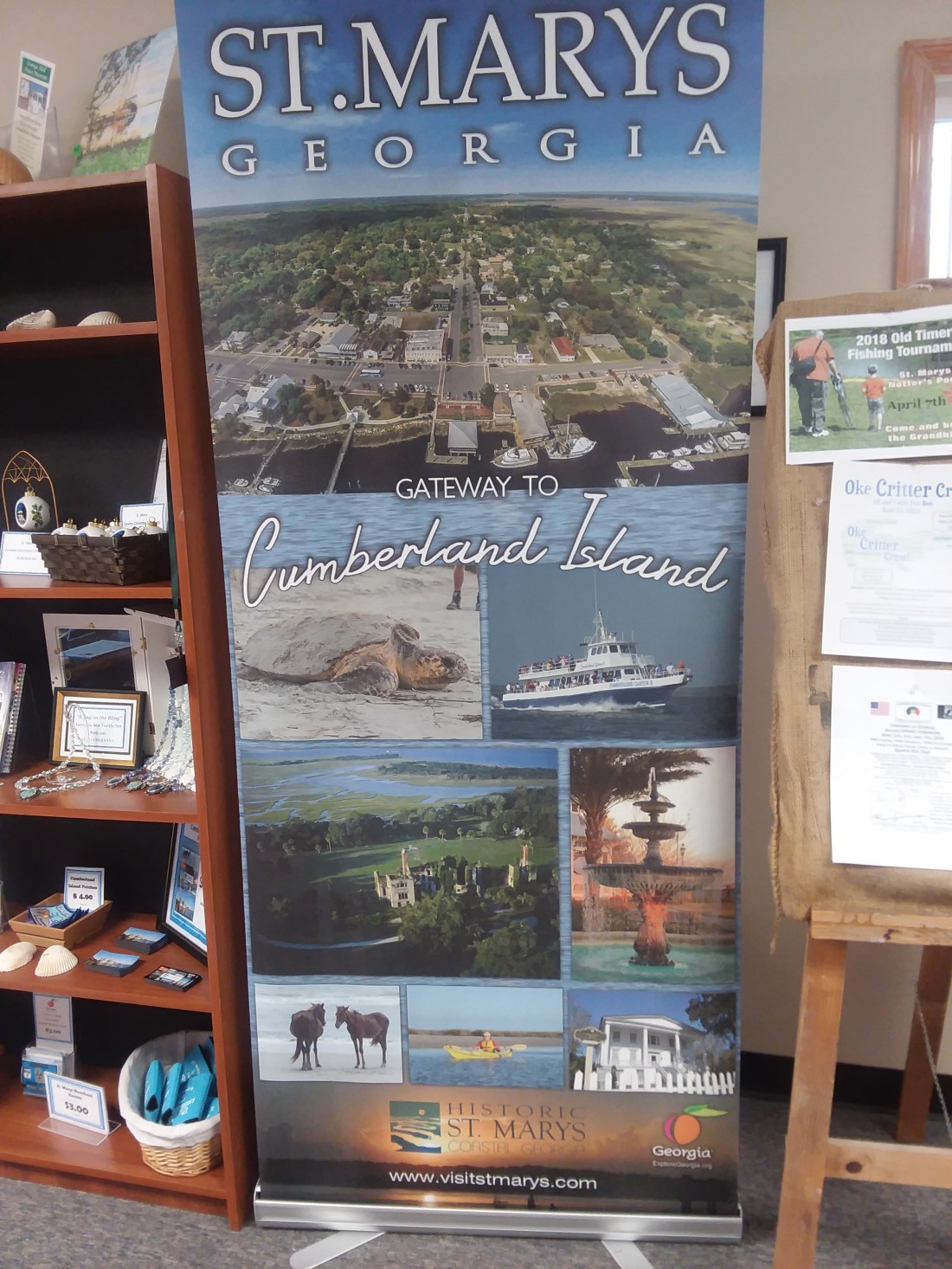
Let’s see if I can get us caught up on our Cumberland Island Tour. To begin with I have to say our tour guide, Kathy, was the best. Kathy had worked a number of years at the Cumberland Island museum on the mainland and had acquired a wealth of knowledge regarding the island. So by the time she accepted the position of tour guide she knew the history of the island backwards and forwards. There wasn’t a question that we could stump her. She knew it all and put it all together for our group in a way that made our tour a fantastic one.
Onward. We’re going to move from the south to the north. Let’s get going. In the 1880’s, Pittsburgh steel magnate Thomas Carnegie and his wife Lucy bought the majority of Cumberland Island, the largest barrier island along Georgia’s ragged coastline, from descendants of Revolutionary War General Nathaniel Greene. Within five years they constructed a magnificent palatial mansion on the spot where the Greene family had built their own grand residence, and called it “Dungeness”, after the original Greene house. In 1886, the house welcomed its first occupants, which included the nine children of Thomas and Lucy, and the many servants that were required to run a property that large. By the start of the 20th century Cumberland Island was the primary residence of the Carnegie’s. This is what the house once looked like back in its prime.
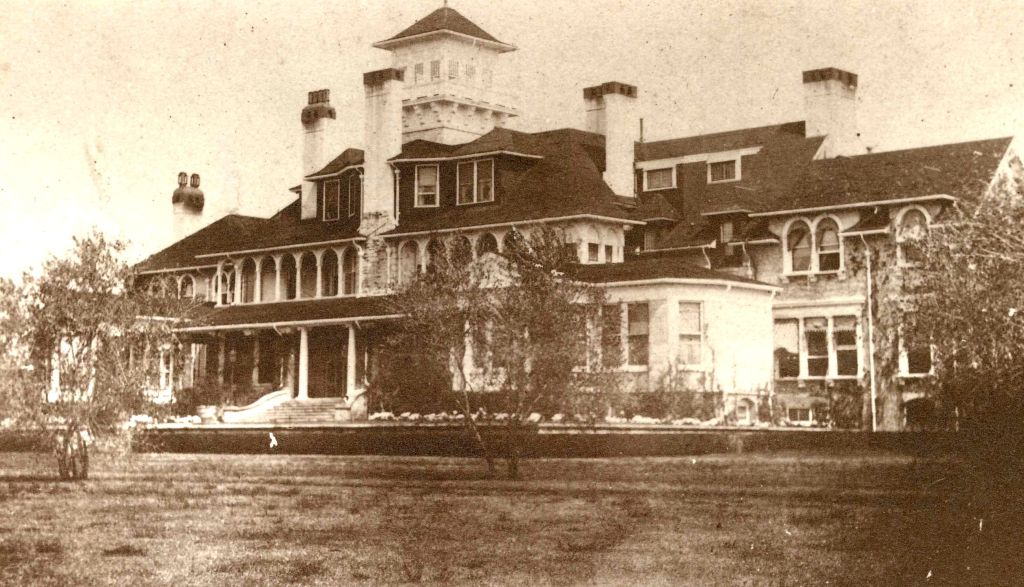
Dungeness had 59 rooms and stood over 124 feet tall at it’s highest point. The main house is just one of many structures on the site. There was also a generator plant, a laundry, a bakery, stables, servant’s quarters, utility buildings, cisterns and a variety of other structures. Unfortunately, Thomas died two years after the completion of the house. Lucy continued using the house until 1916 when she died, The family closed the house up in 1925 since nobody was using it.
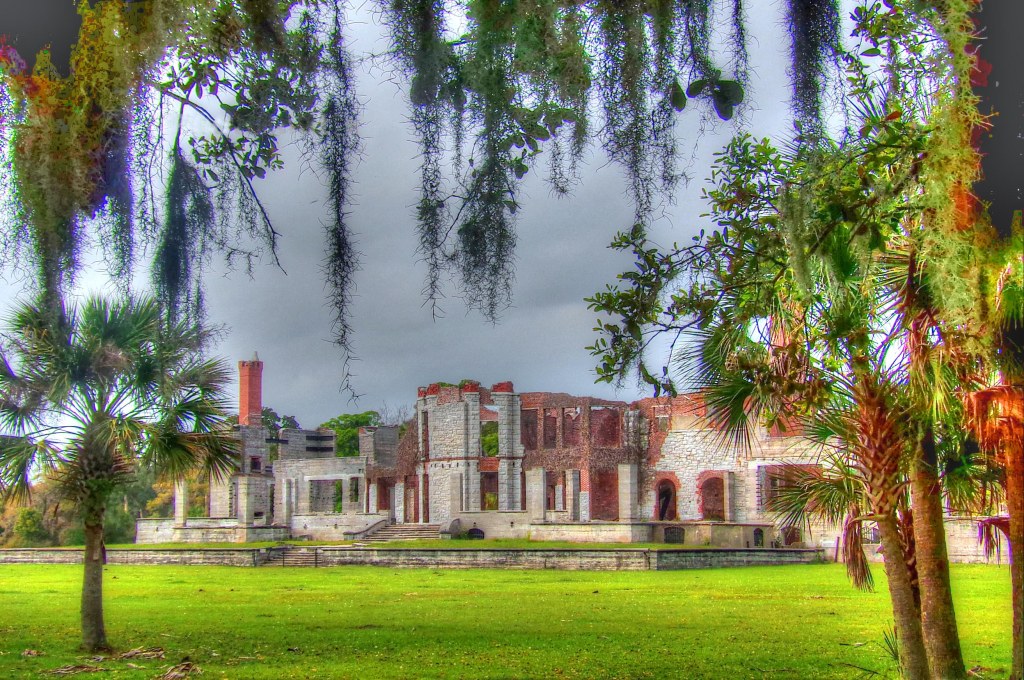
This, unfortunately, is what it looks like today. Though a conviction was never obtained, those in the know say that the fire that destroyed the house in 1959 was the work of a disgruntled poacher who had earlier been caught and evicted from the island. He later snuck back on the island and torched the house.
Until Lucy moved off the island, being the domineering and controlling mother that she was, and in order to keep tabs on her 9 children she offered each $10,000 toward the construction of a house – provided it was built on the island. Some of the other estates built were Greyfield Inn which today is a privately owned hotel; Stafford Plantation which is still privately owned and used today by the Carnegie’s; and, Plum Orchard which is owned by the Park service but open for tours.
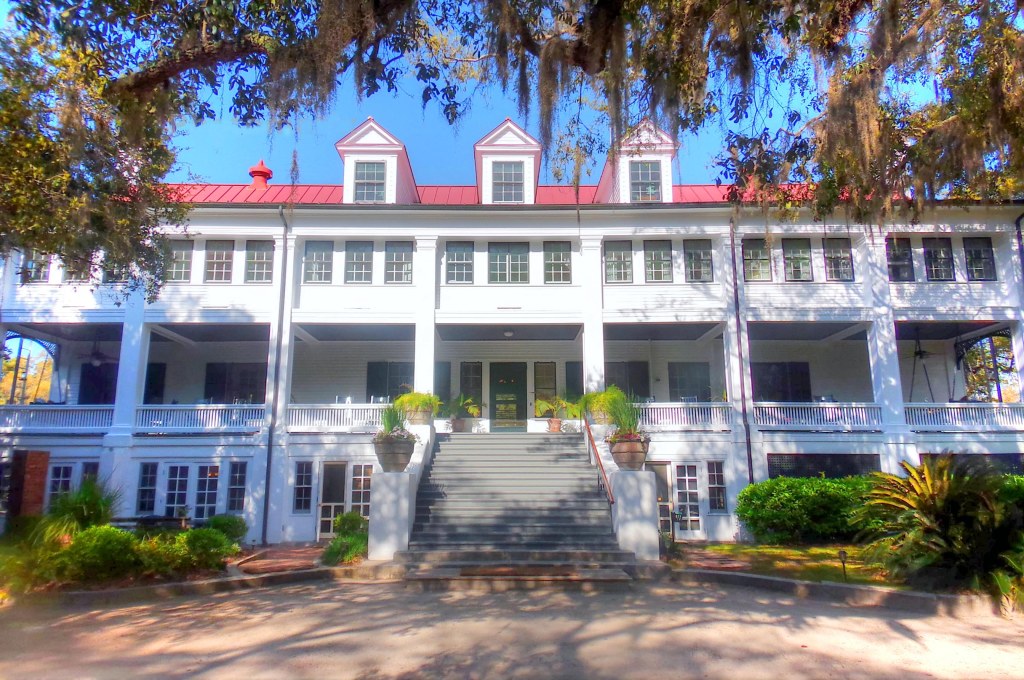
The Greyfield Inn was built-in 1901 by Lucy as a wedding present to her daughter Margaret. Afterwards, it passed down through the family and today Mitty and his wife Mary (aka Gogo) operate Grayfield Inn. This is a current picture of the Greyfield Inn. The inn offers 16 rooms in the main house and two additional cottages. Rooms typically go for $600 a night and a minimum of two nights is required. Or if you so wish you can just go for dinner which with transportation included is a mere $120 per person.
Plum Orchard is the largest remaining Carnegie Mansion on the Island but it is now owned by the Park Service. It was built-in 1898 by Lucy Carnegie, and given to her son, George, and his bride, Margaret, as a wedding present, if you can call a 106 room, 22,000 sq. ft. house a wedding present. The original house consisted only of the center section which Margaret deemed too small. She subsequently talked her mother out of $55,000 and used that to build the two wings onto the house.
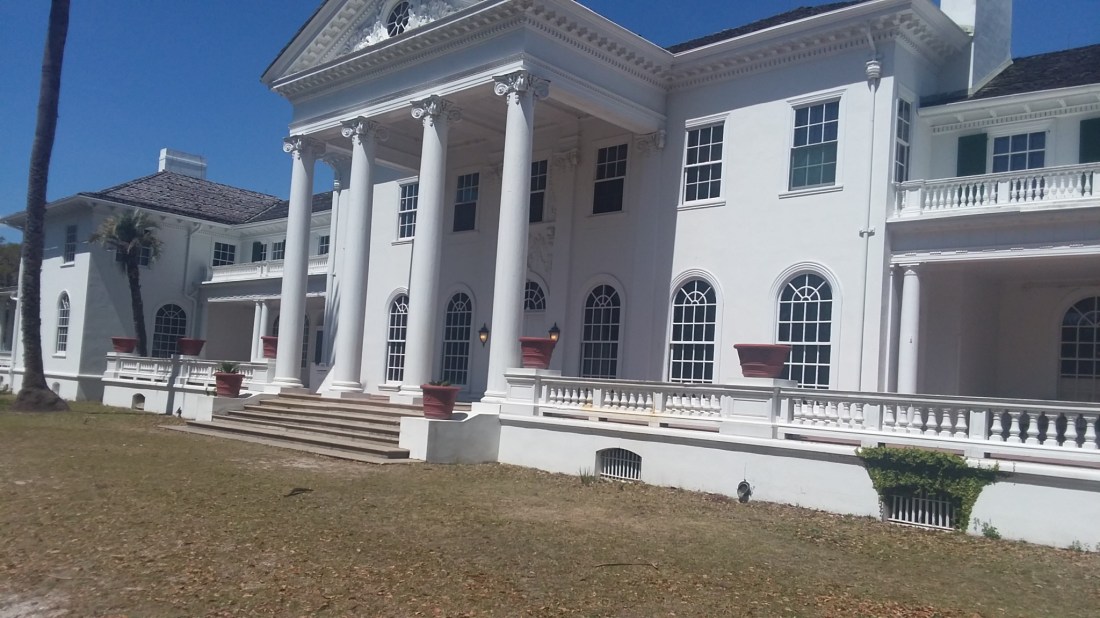
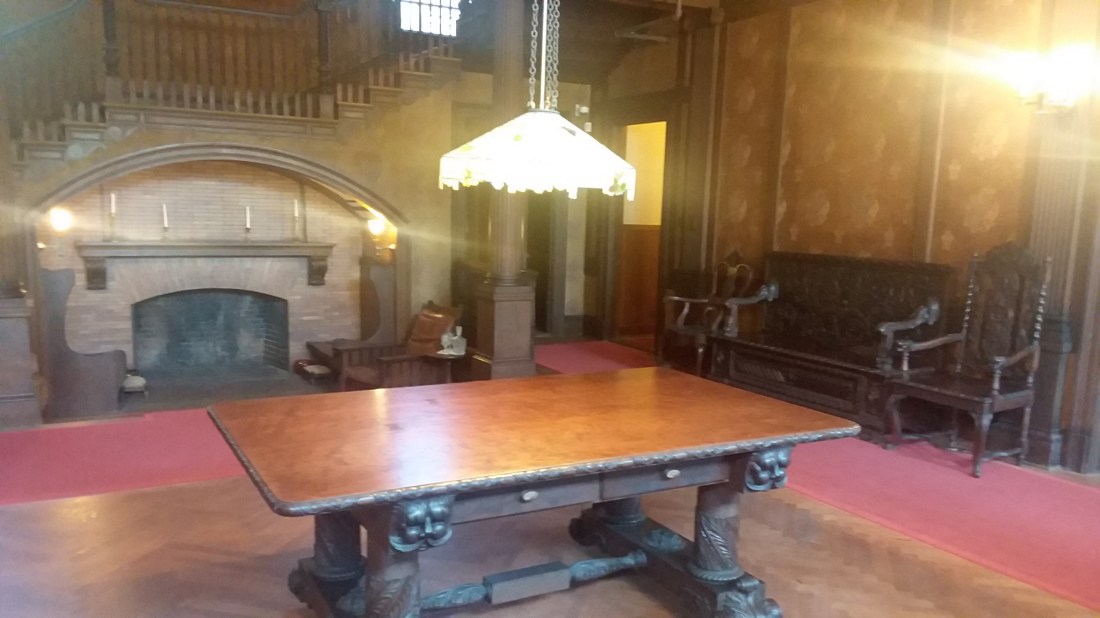
The house had the obligatory tiled heated indoor pool, and a full indoor squash court. Tiffany fixtures hung in the house, while hand printed silk and canvas wallpaper was featured throughout the residence. There were four staircases, two for the occupants of the house and two for the multiple servants who worked there. Like Dungeness it had it’s own laundry, cistern, generator plant and numerous other out buildings. Below are some pictures of the inside of Plum Orchard. This first picture is of the entrance hall.
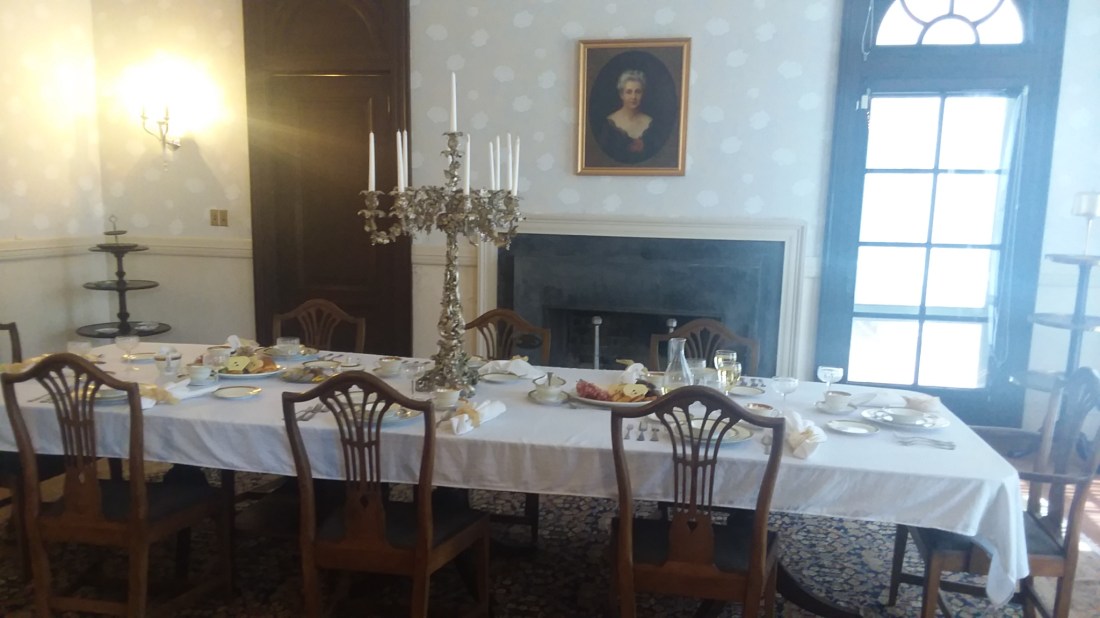
This is a picture of the dining hall. All who came to dinner were expected to dress in formal wear. In addition the table-cloth and other linens were changed after each meal.
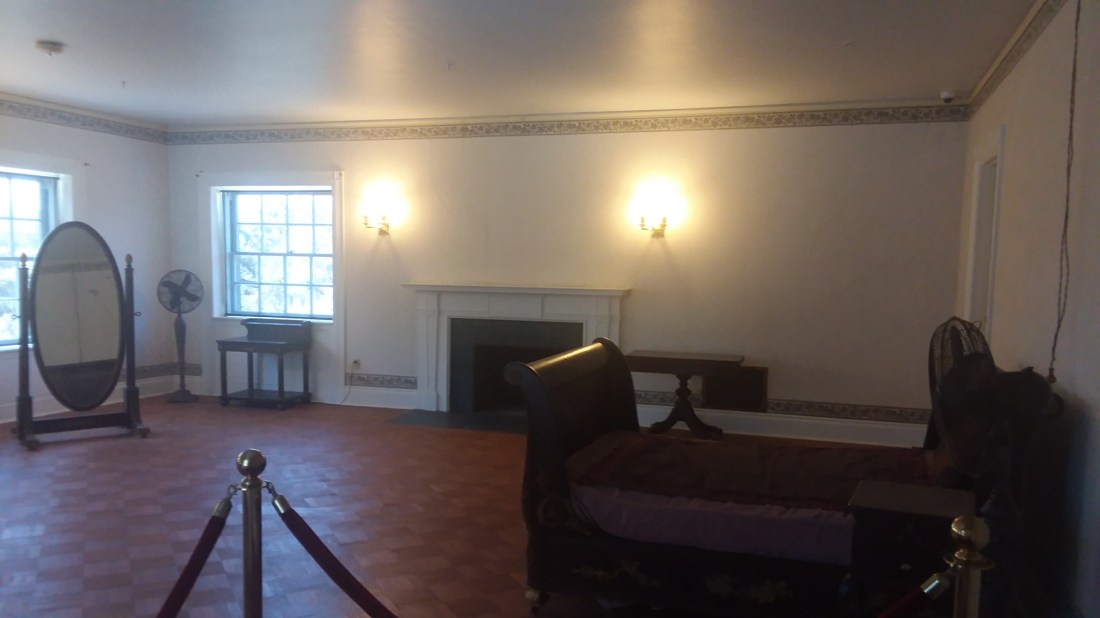
This was Margret’s bedroom. Note the pull cord over the bed. There were a total of 36 pull cords that went to a central butlers room. Anytime one was pulled a servant had to figure out what room and who was pulling the cord and response forthwith.
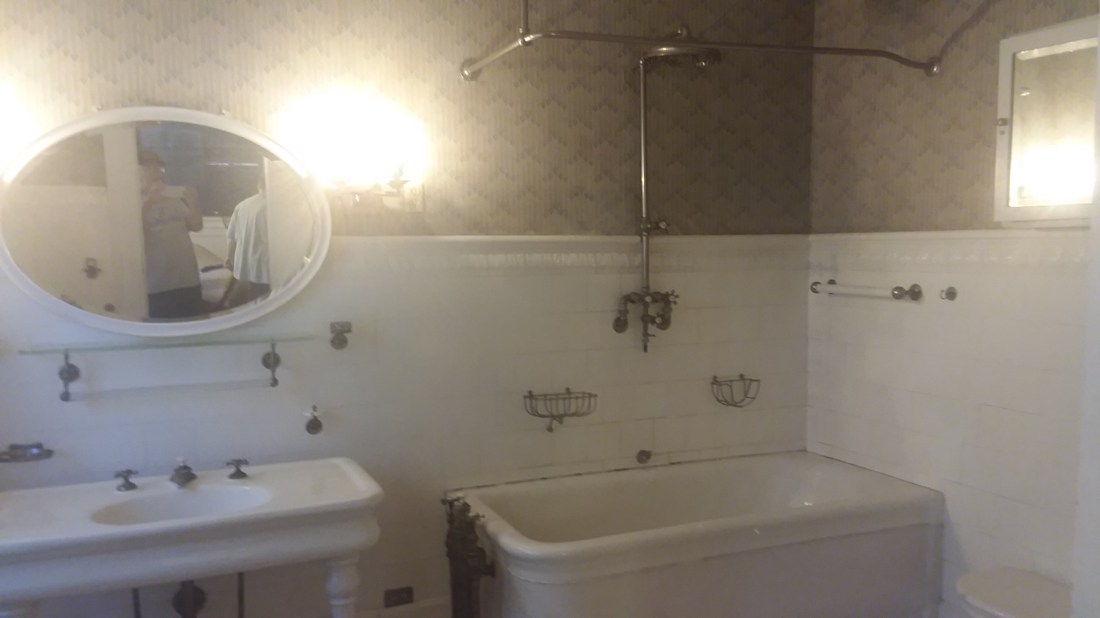
This was Margaret’s bathroom. It had a rain forest shower head, heated towel racks, dispensers for shampoo and soap, and tile everywhere.
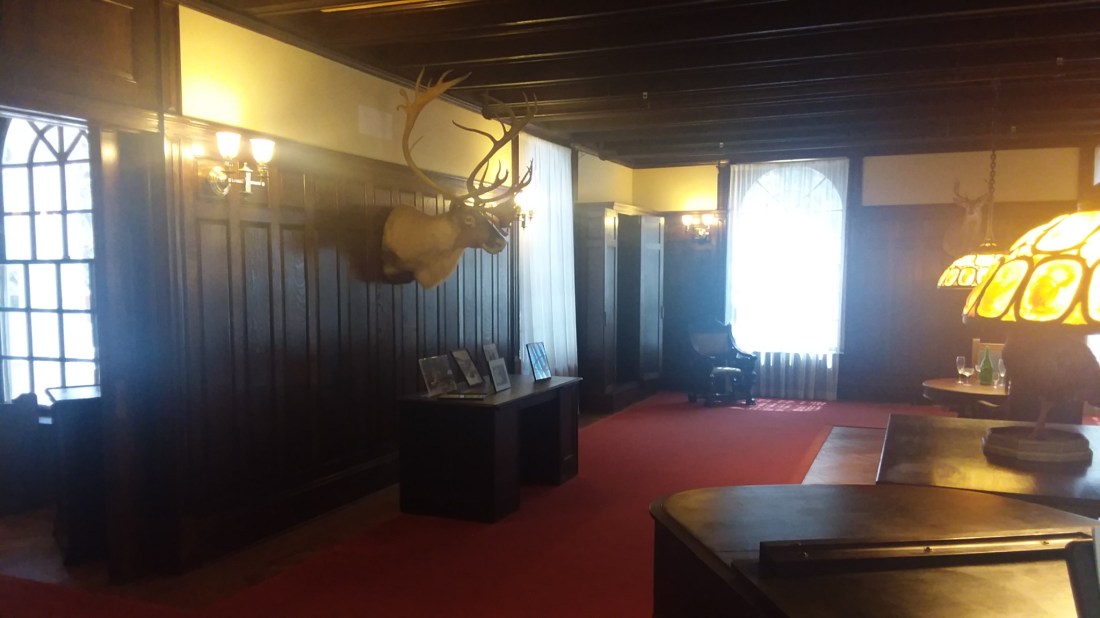
This was the man cave of the house. It had two gun closets and a safe where ammunition was kept. It also had a grand piano and, of course, a Tiffany lamp with actual sea shells embedded in the underside of the lamp shade.
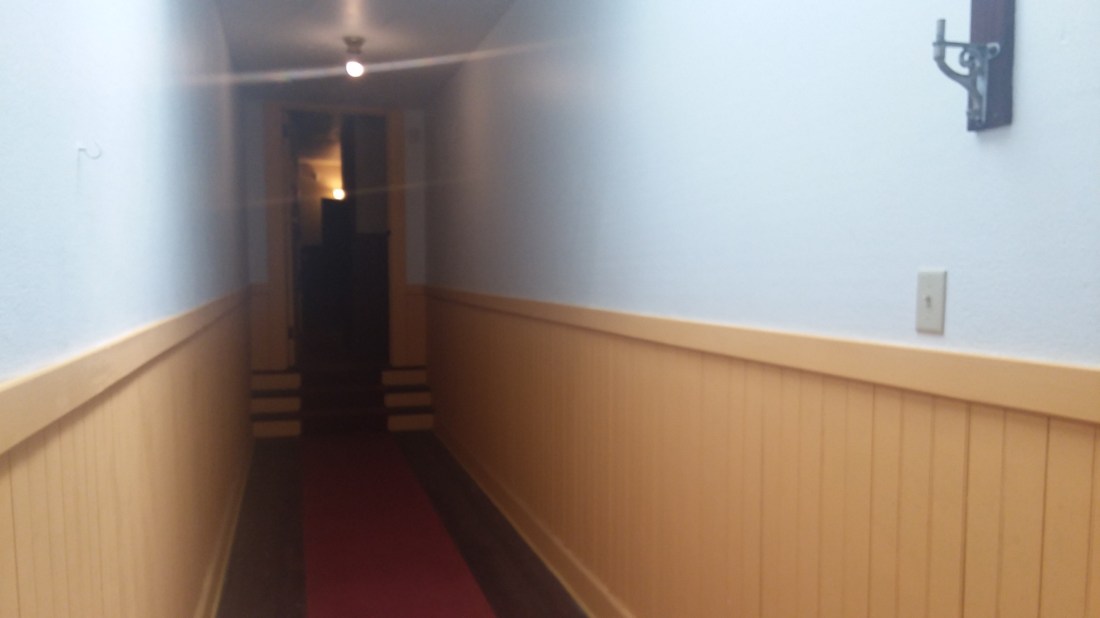
This is a picture of one of the servants hallways. They were all painted gold to distinguish them from the hallways that were for the occupants of the house. The servants were not allowed to move about in the main part of the house. They were expected to traverse the house by using the basement, one of the two staircases that were designated their’s, or one of the allowed hallways.
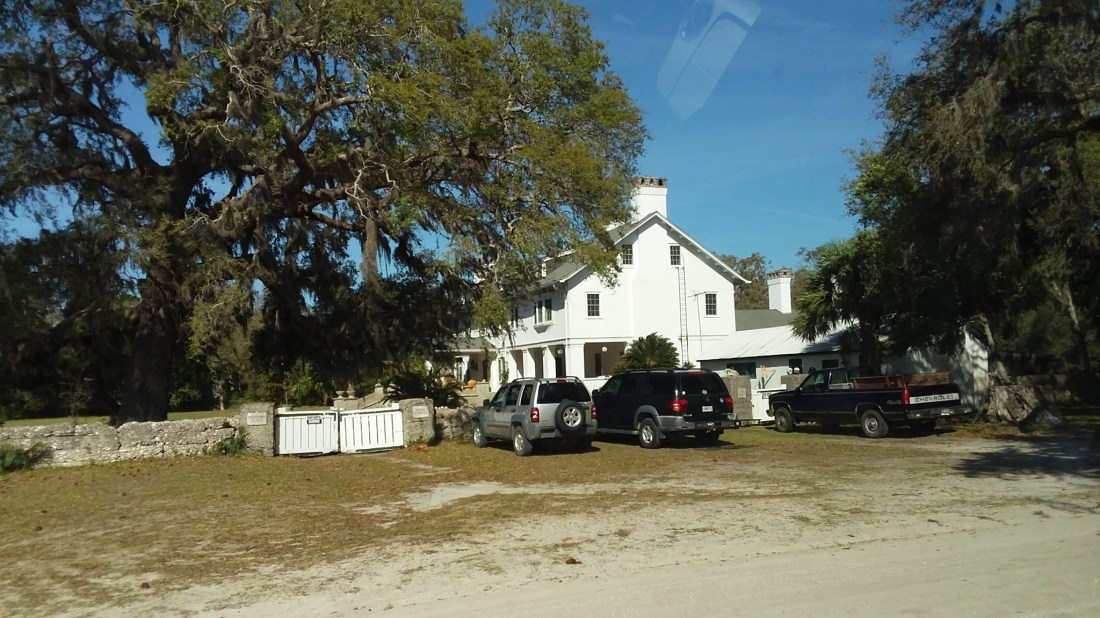
Continuing north. The Stafford Plantation is still owned and used by the Carnegie’s who fly in and out when they wish to stay here. It consists of a main house and several other houses built on and around the plantation. There are about 11 caretakers who live here full-time and look after the property.
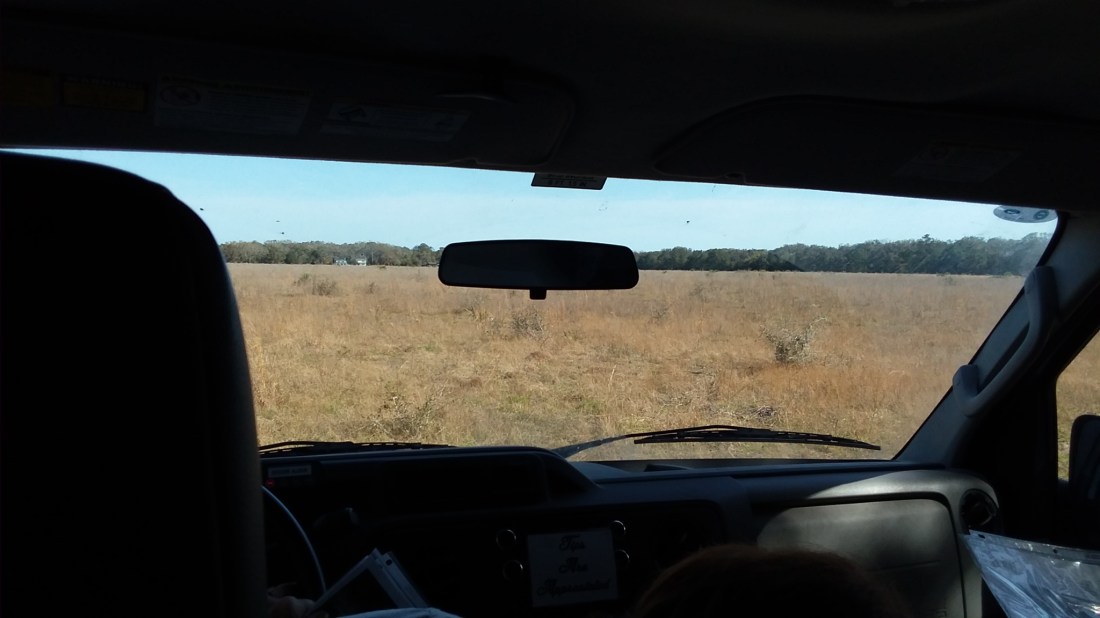
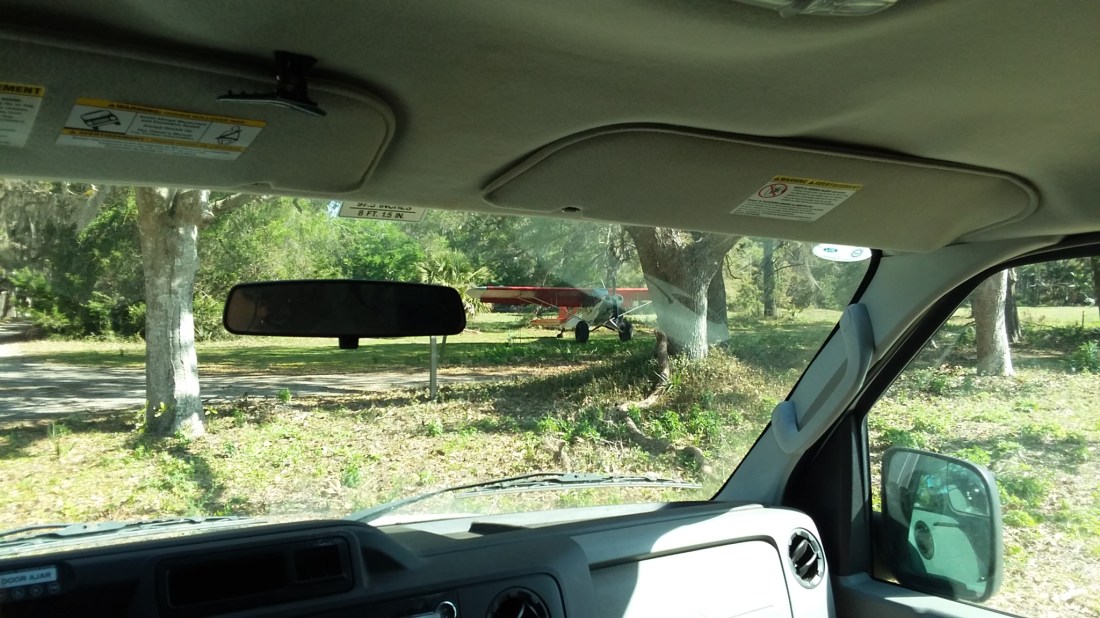
This is the grass airfield that is used today. It was once a cotton field, then a golf course, and today a grass air strip. Due to the large number of wild horses that like the grass on the air strip it is said that it is a must to first buzz the airfield to chase them off before attempting to land.
One of the planes that they use to come and go.
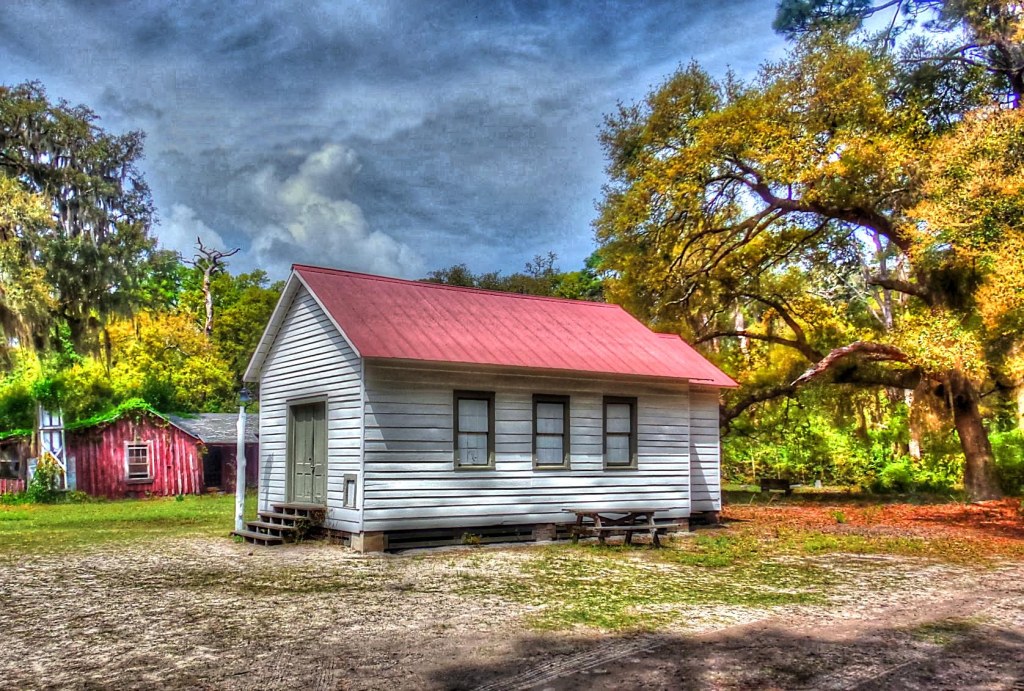
Finally we come to the very north end of the island. This is a picture of the church were John and Carolyn were married. The church was chosen by John because of its seclusion and privacy.
This is a picture of the inside of the church unchanged from that day long ago.
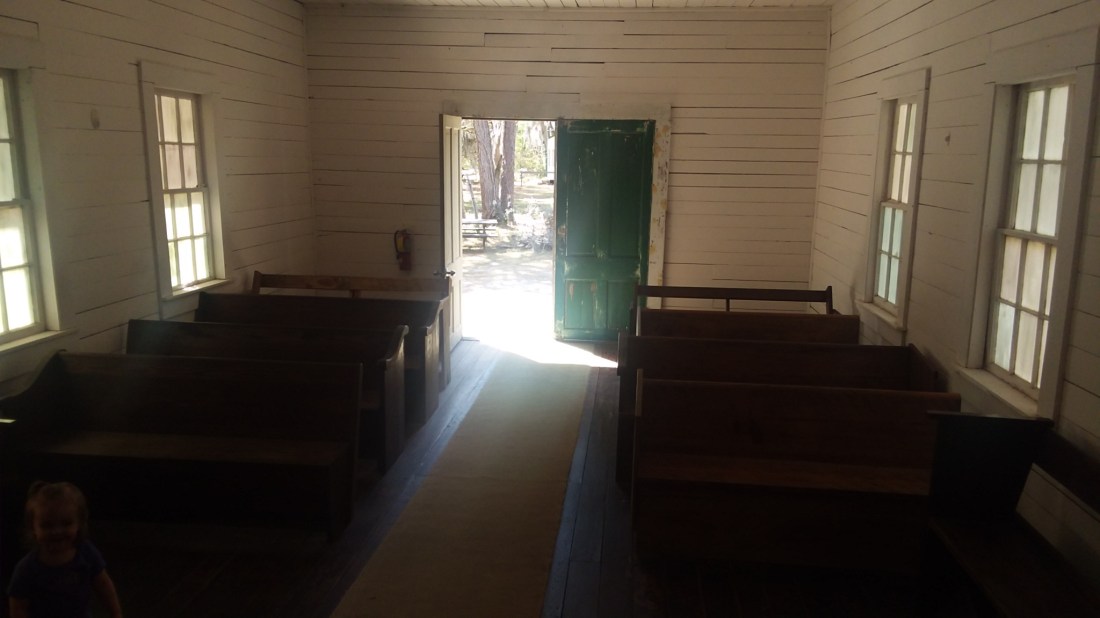
The wedding, as the story goes, was rather late at night and was conducted by flashlight because there was no electric lights in the church and candles were prohibited. The late hour was due to the fact that both John and Carolyn were late. John was late because he couldn’t find his farther’s presidential cufflinks he wanted to wear. Carolyn was late because due to the heat and humidity they had a difficult time getting her wedding dress on. The wedding reception was later held at the Greyfield Inn.
Now, we come to an individual who has been called the wild woman of the island. Her name is Carol Ruckdeschel and she has lived on the island for over 46 years and today is 76 years old. This is a picture of the house she has lived in for those 46 years.
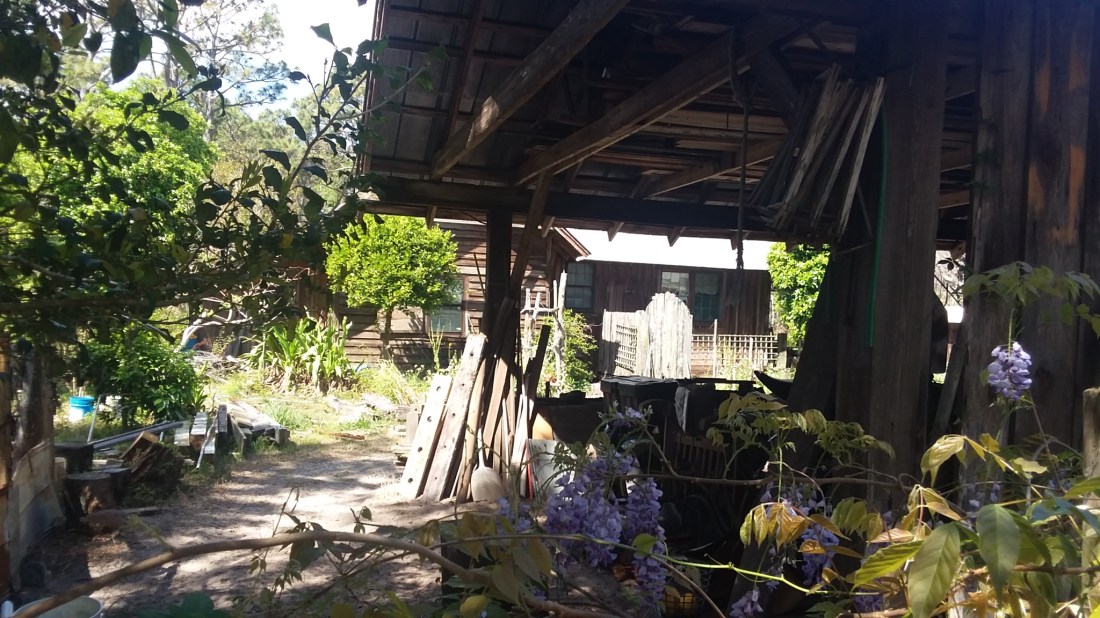
She eats roadkill, raises her own vegetables, and lives off what the island provides. Three close male companions died near her little house in the woods. There was the lover who attacked her in a drunken rage and who she shot and killed in self-defense, the friend who couldn’t swim and the husband who collapsed from a stroke on her front porch.
Ruckedeschel has been at the center of raging debates on Cumberland Island ever since she lived there. Those debates often pit this scrappy, pig-tailed naturalist in overalls and boots against well-heeled and bejeweled descendants of the nation’s industrial elite. An author who wrote a book about her states that what is most important to her is the wild, unmanipulated and unmanaged part of the island. She thinks nature should be allowed to run its course. One last note, she abhors contact with people and is a true recluse. Our guide on the tour who has had contact with her in the past did her best to coax her out of her house to meet us but she wasn’t having anything to do with a one of us.
That, then, brings us to the end of our Cumberland Island tour. There is so much more in terms of history and so many more pictures that I could not include. Do yourself a favor if you are ever in the area of Cumberland Island – make time to take the tour yourself. You will never regret it.
So for now, until later when I post today’s activities I’ll say thanks for joining us once again.




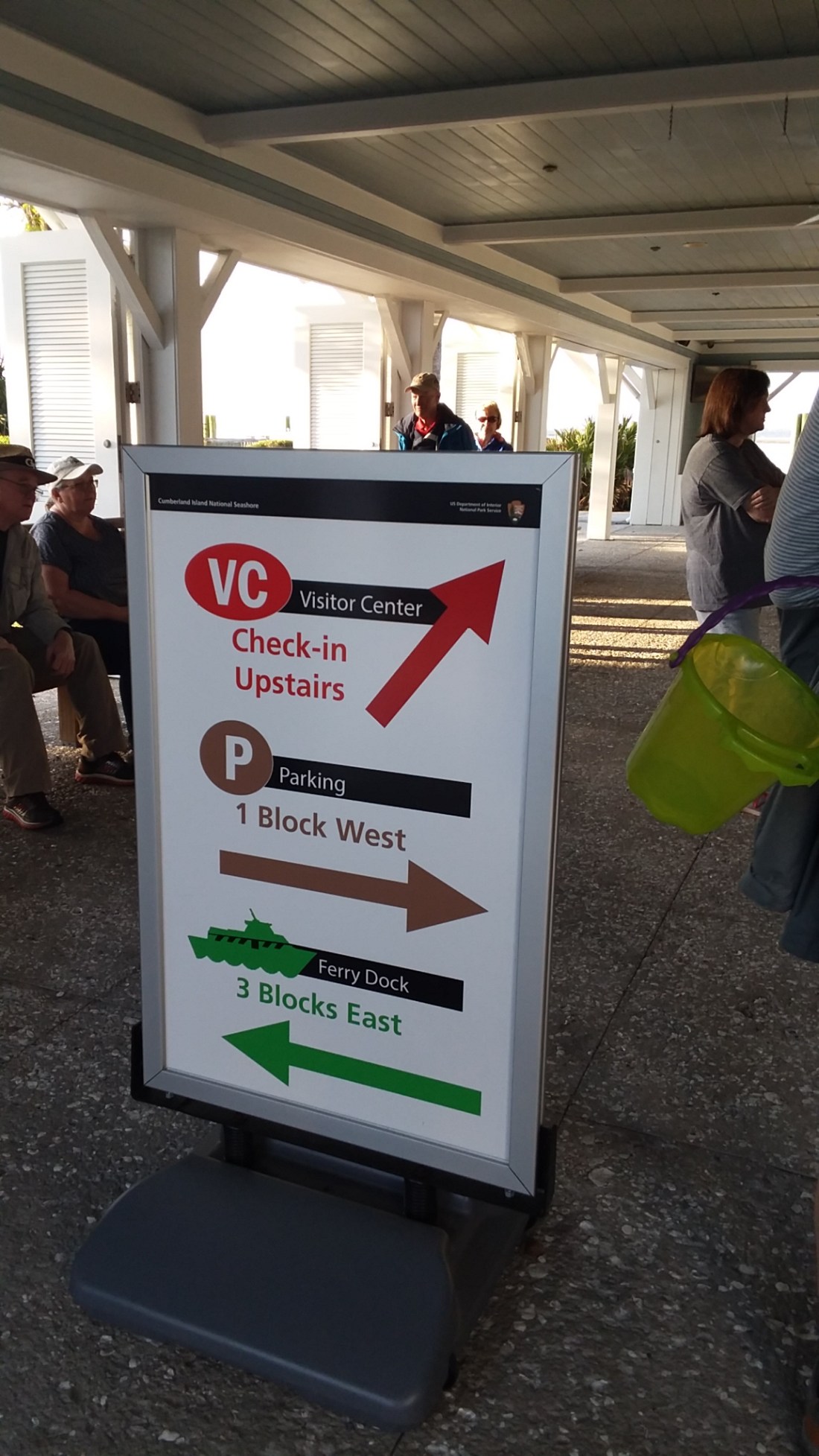
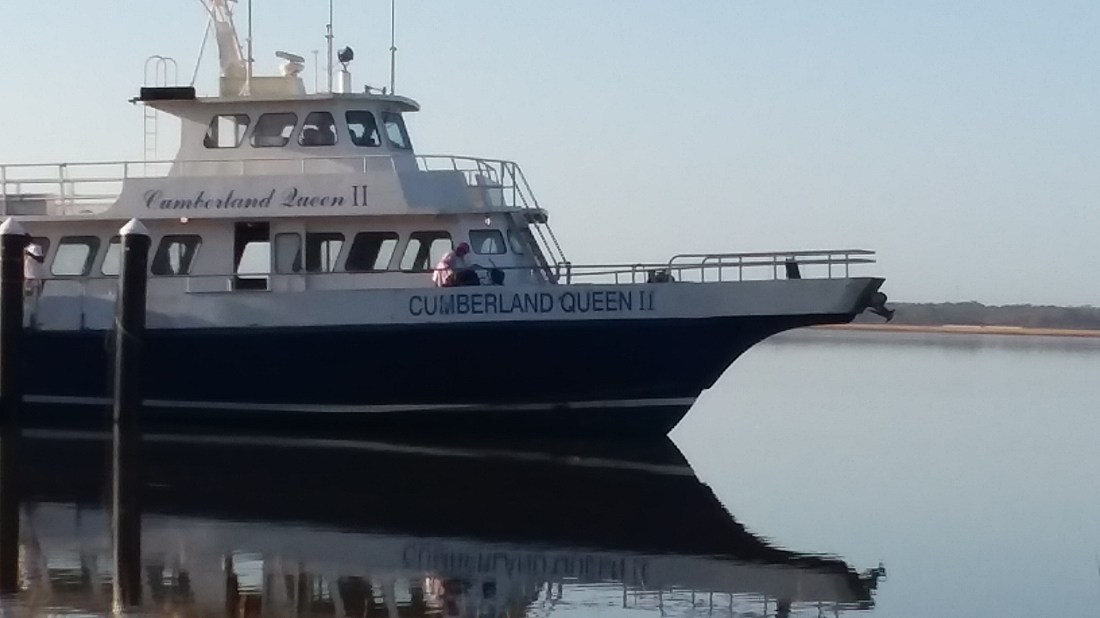
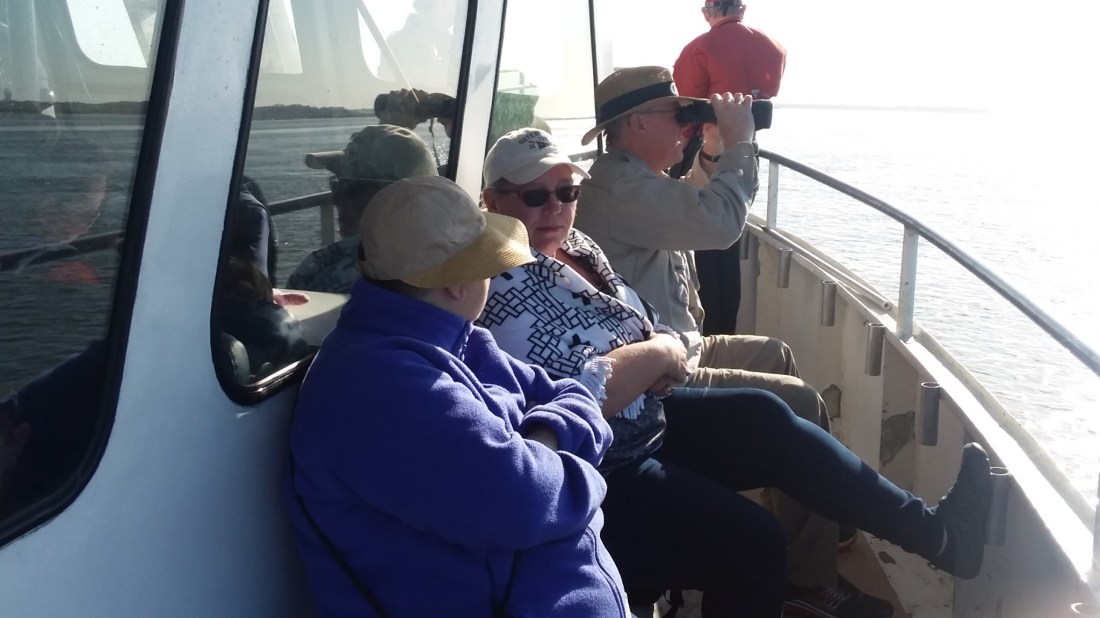
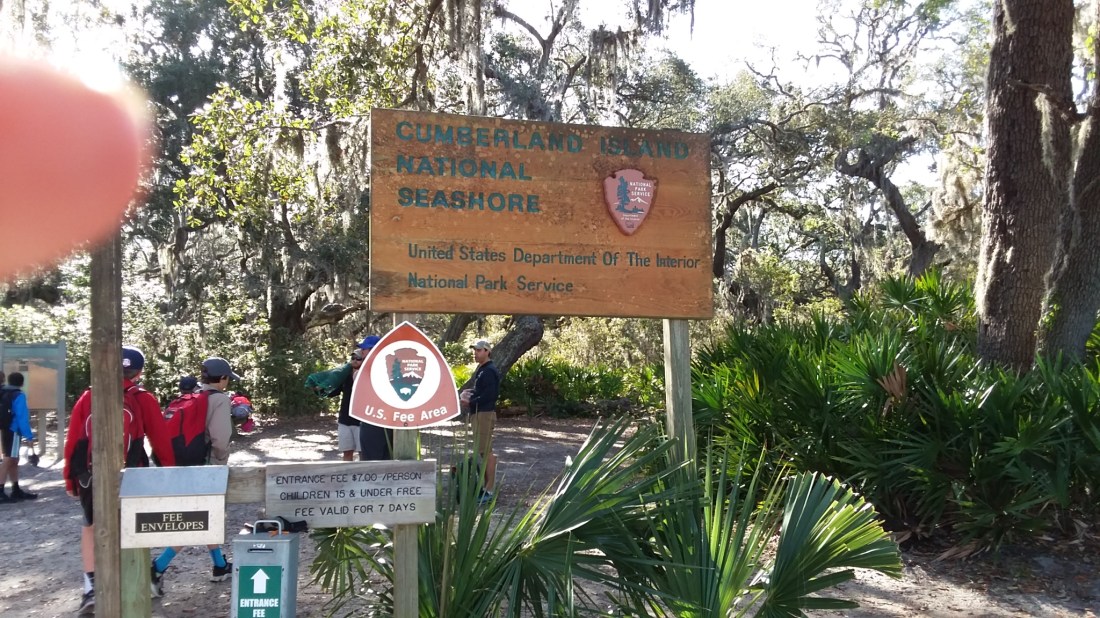
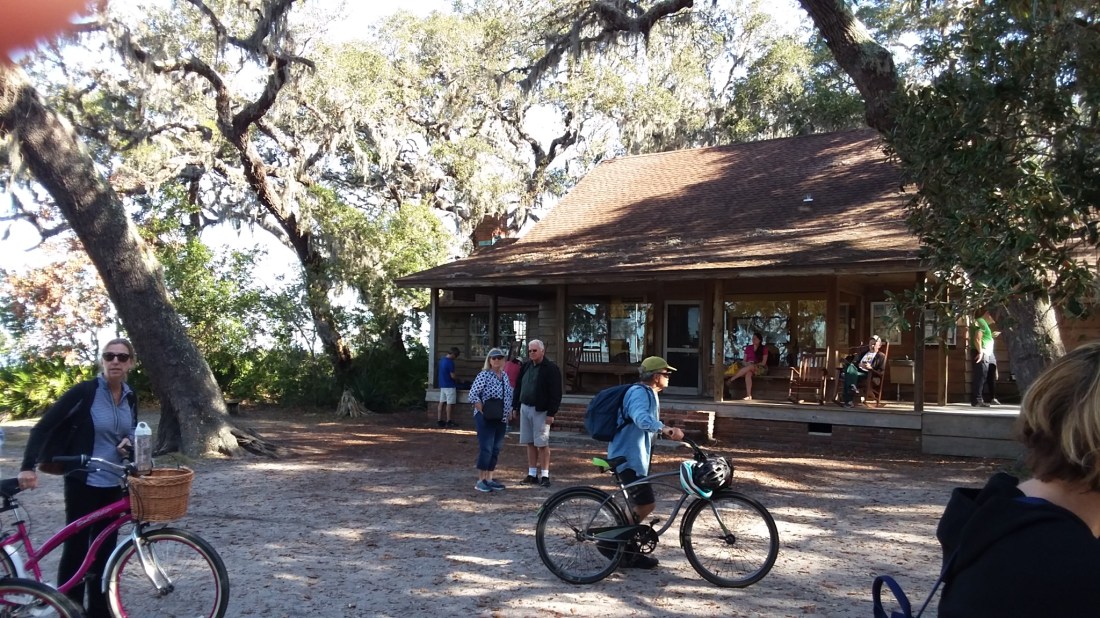
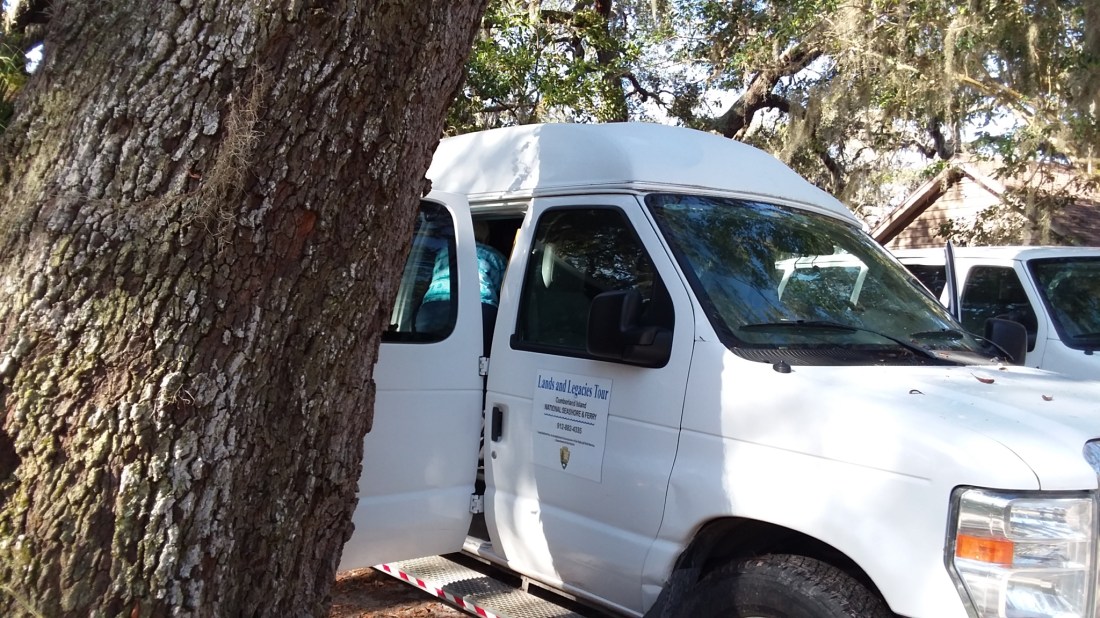 Here is a picture of Barbara on board and ready to go. What’s the hold up? Yup, nature called and they were waiting for me to come out of the bathroom. Hey, I’m getting older.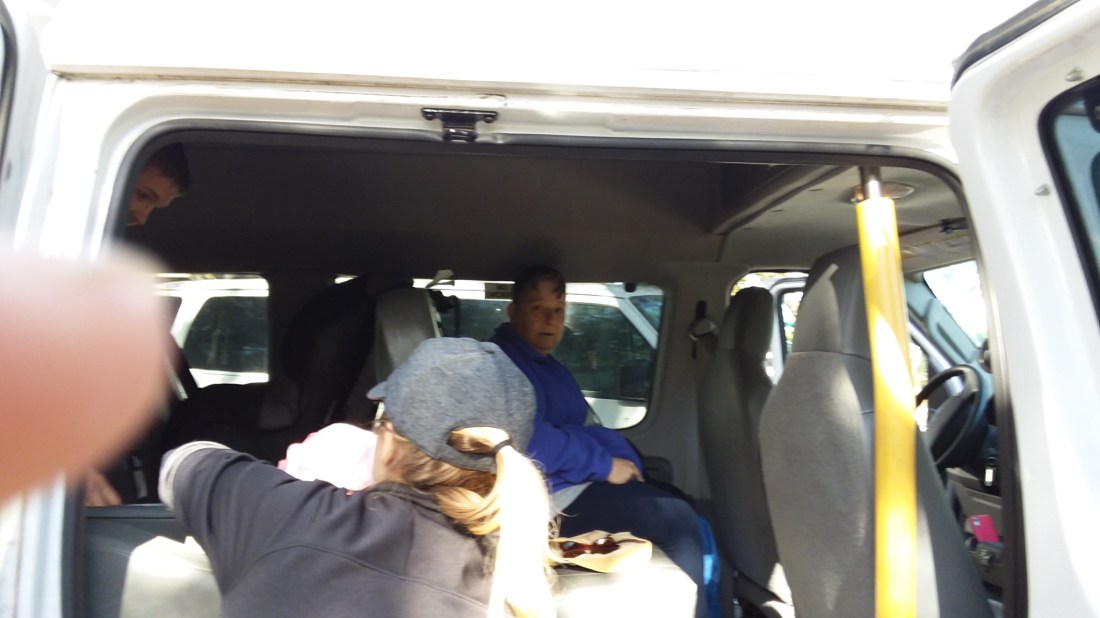
 "On The Road of Retirement"