History is all around you, if you want to find it. First things first though. Hey, please keep that cold air up north. Two days ago it was 85, this morning it was just 40 some degrees and during the day it never went above 65 degrees. Already tonight the temperature is dropping like a rock. We’re ready to head back to Florida, if only we could! Bottom line neither of us was anxious to get out from under our nice warm covers. All things though must come to an end and so with our night’s slumber. We dragged the electric heater out of the closet, yea, I know, why did we put it away. Silly us. Within a short period of time it was comfortable inside of Graybeard.
Breakfast was next on the list. Mine was juice, coffee, french toast and sausage. Barbara had her normal, that being oatmeal. Honestly, she can and has eaten it for all three meals in one day. Of course, she also had the usual cup or two of coffee.
Morning ritual out-of-the-way it was time to pack up and go exploring. We had discovered that something very significant regarding WWII had occurred in this town and we were anxious to learn all about it. Yes, even here in this little sleepy town of Colleton, SC there was history waiting to be discovered. The what was actually the Tuskegee Memorial.
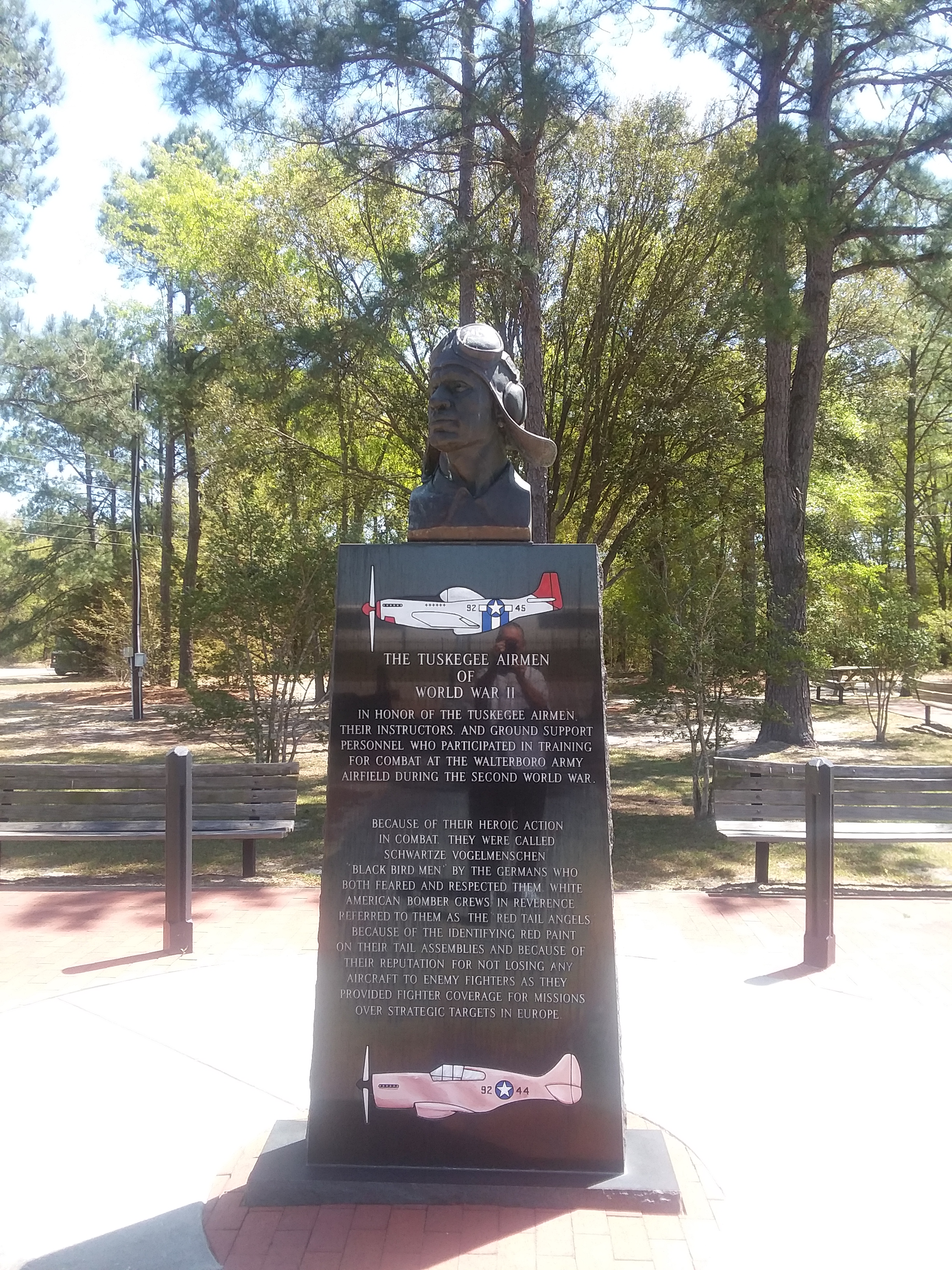
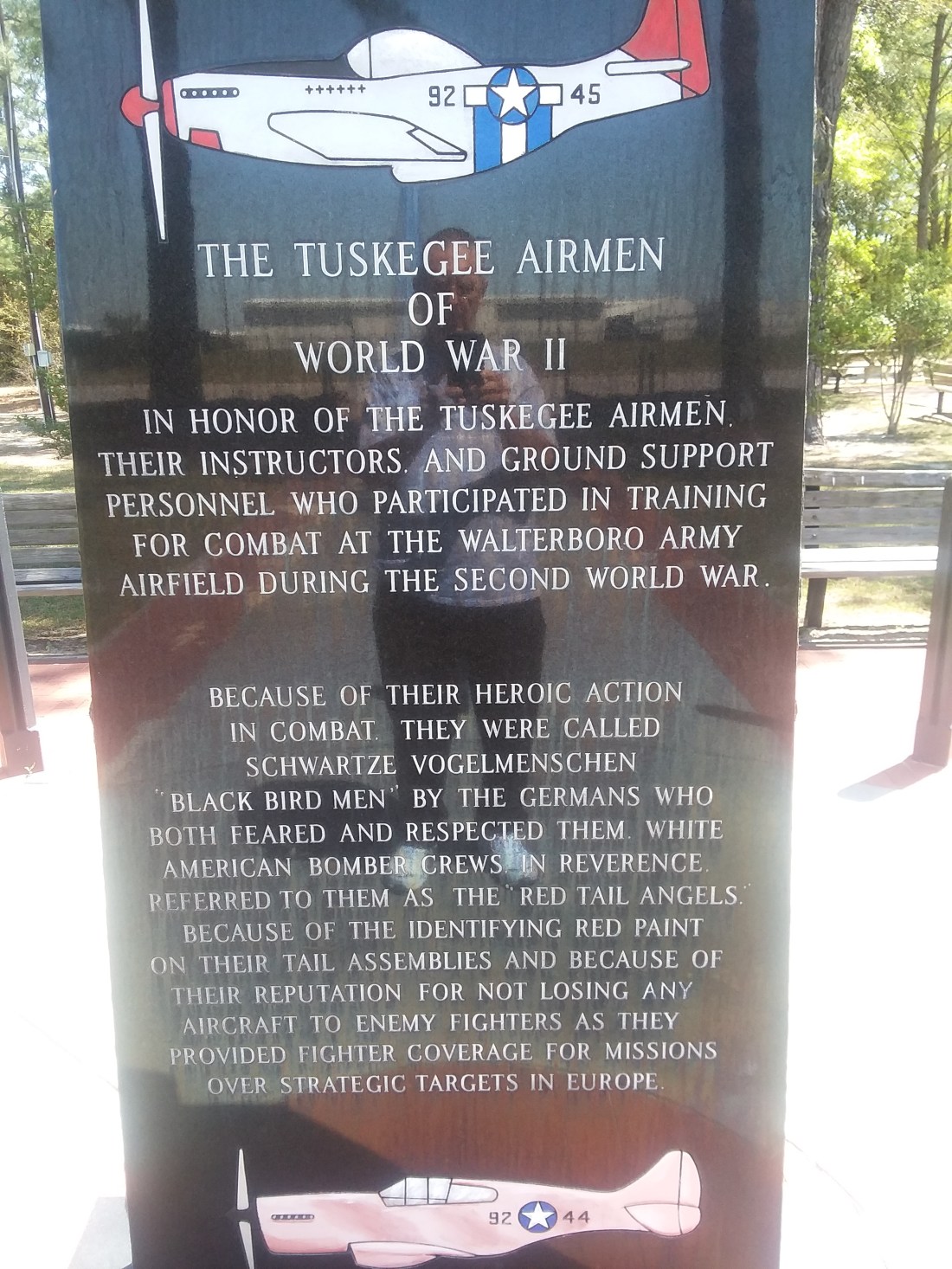
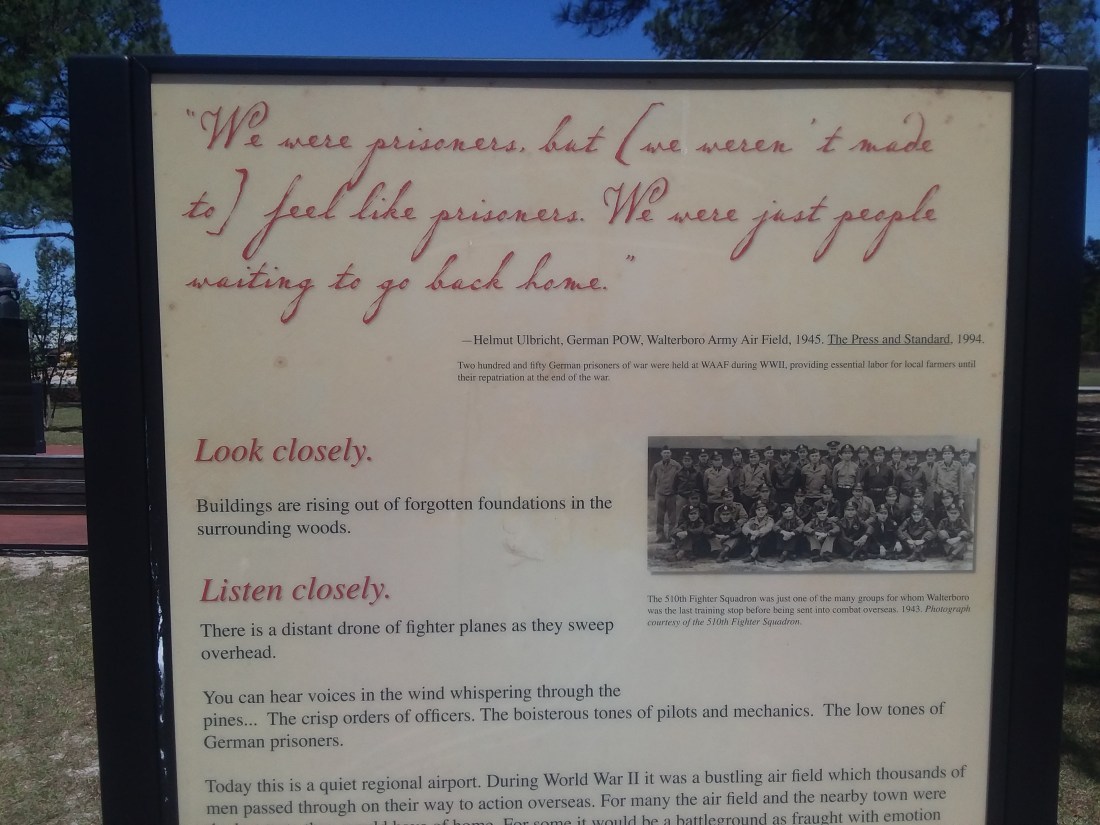
The Tuskegee Memorial is located at Walterboro Army Airfield Memorial Park which is
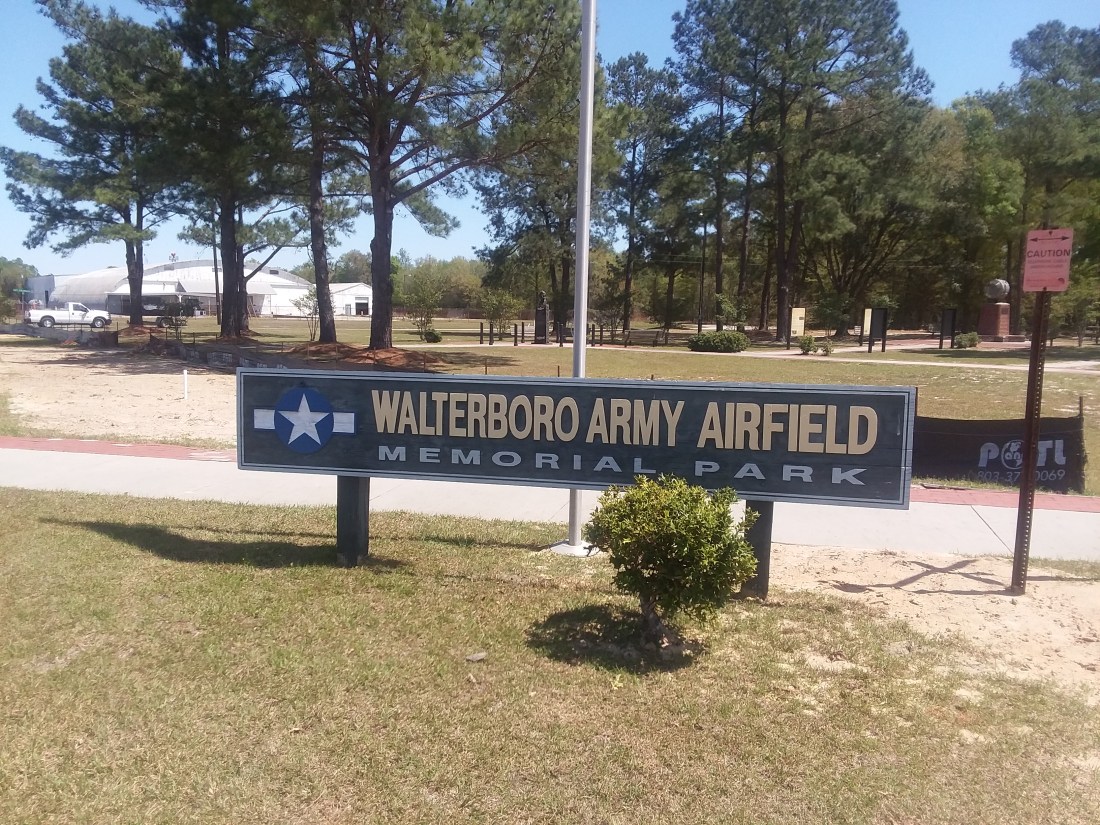
located on the grounds of the now Colleton County Regional Airport. During WWII the
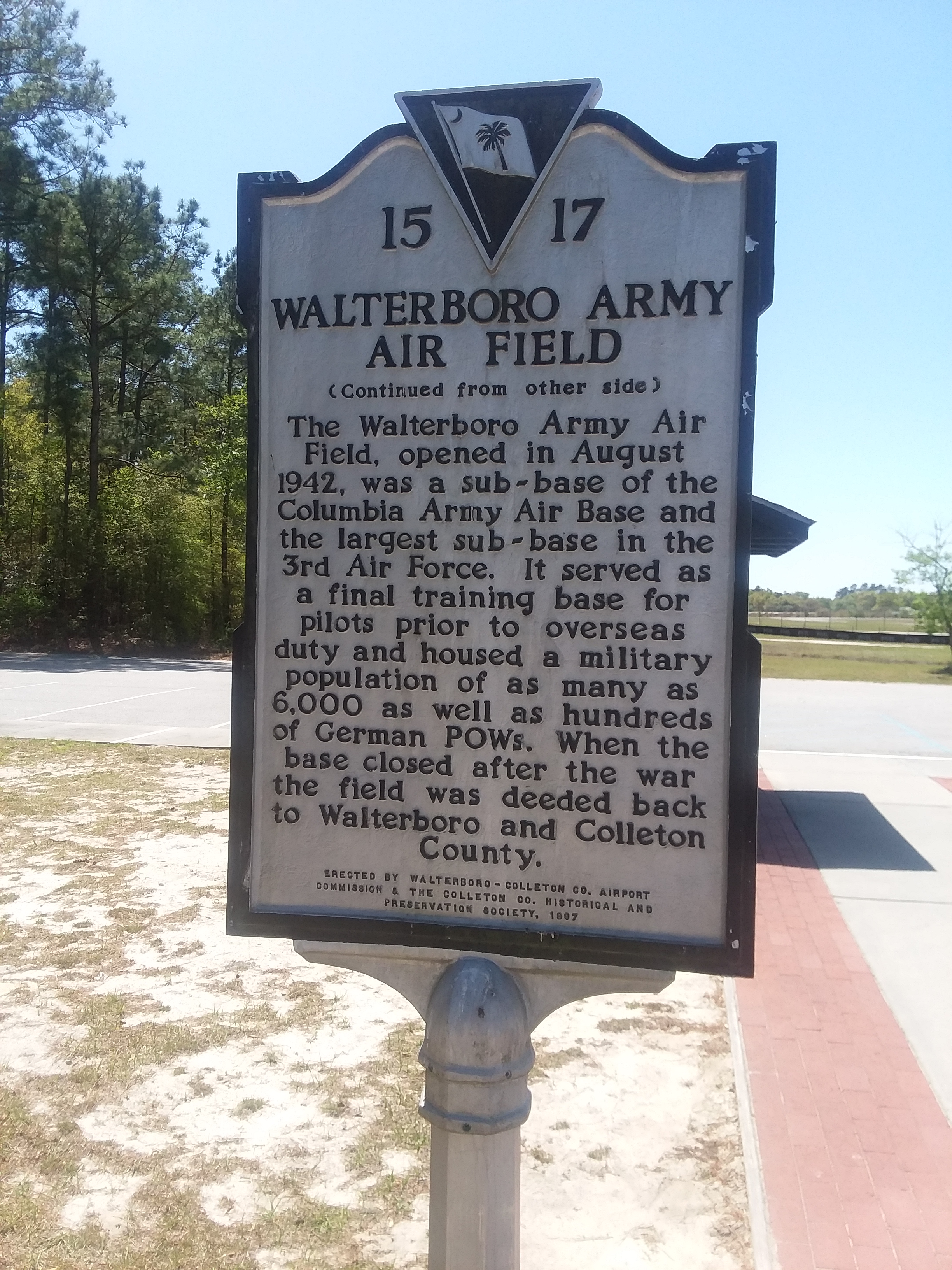
airfield was known as the Walterboro Army Air Field. The Tuskegee Memorial calls attention to the Tuskegee airmen of WWII who were dedicated, determined young men who enlisted to become America’s first black military airmen, at a time when many people thought black men lacked intelligence, skill, courage and patriotism.
The airmen began their aviation training at Tuskegee, Alabama. The program’s trainees, nearly all of them college graduates or undergraduates, came from all over the country. In addition to some 1,000 pilots, the Tuskegee program trained nearly 14,000 navigators, bombardiers, instructors, aircraft and engine mechanics, control tower operators and other maintenance and support staff. As for the pilots, who first received their aviation training at Tuskegee, before they were sent into combat they received their final training at Walterboro Army Air Field.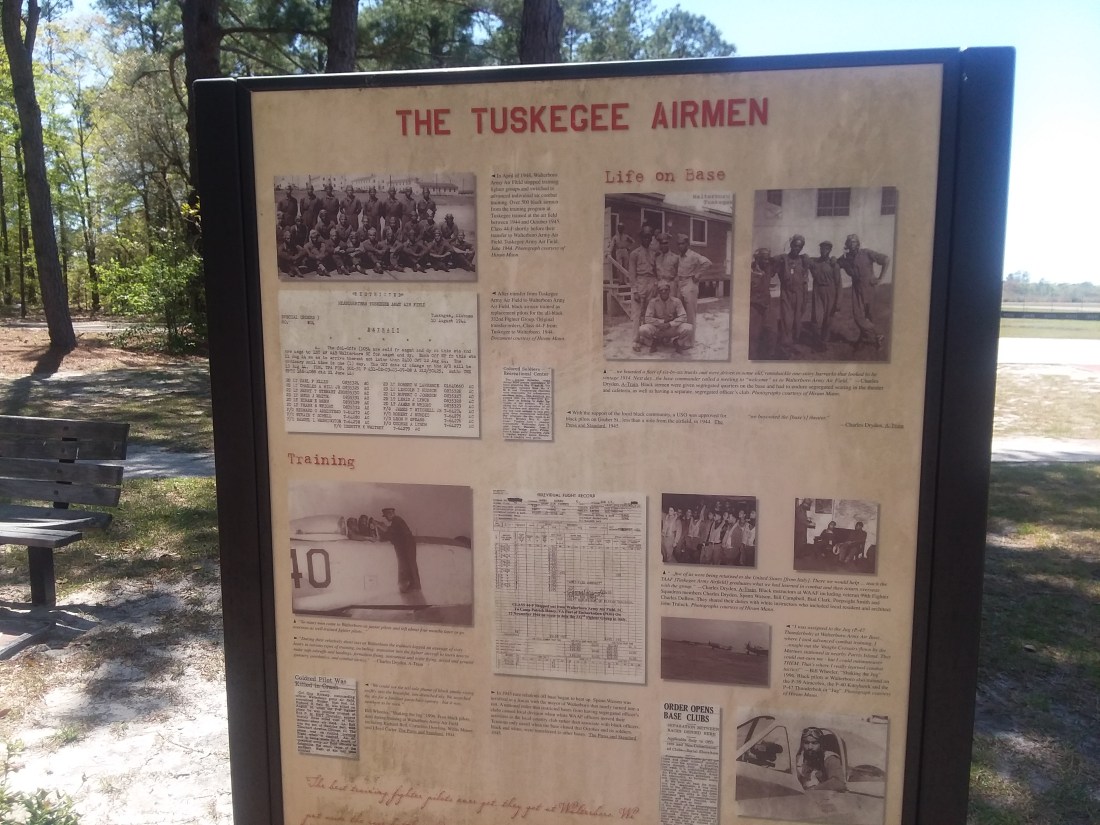
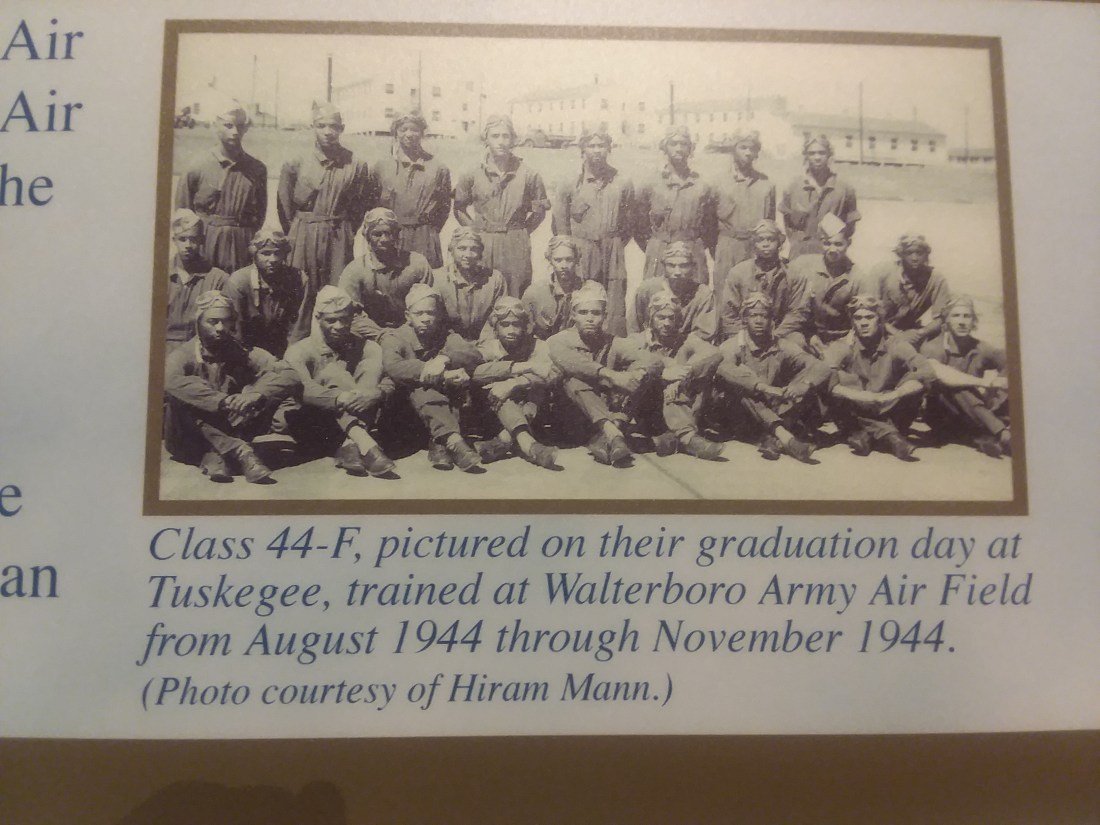
More history regarding these dedicated pilots was awaiting us and we would discover it
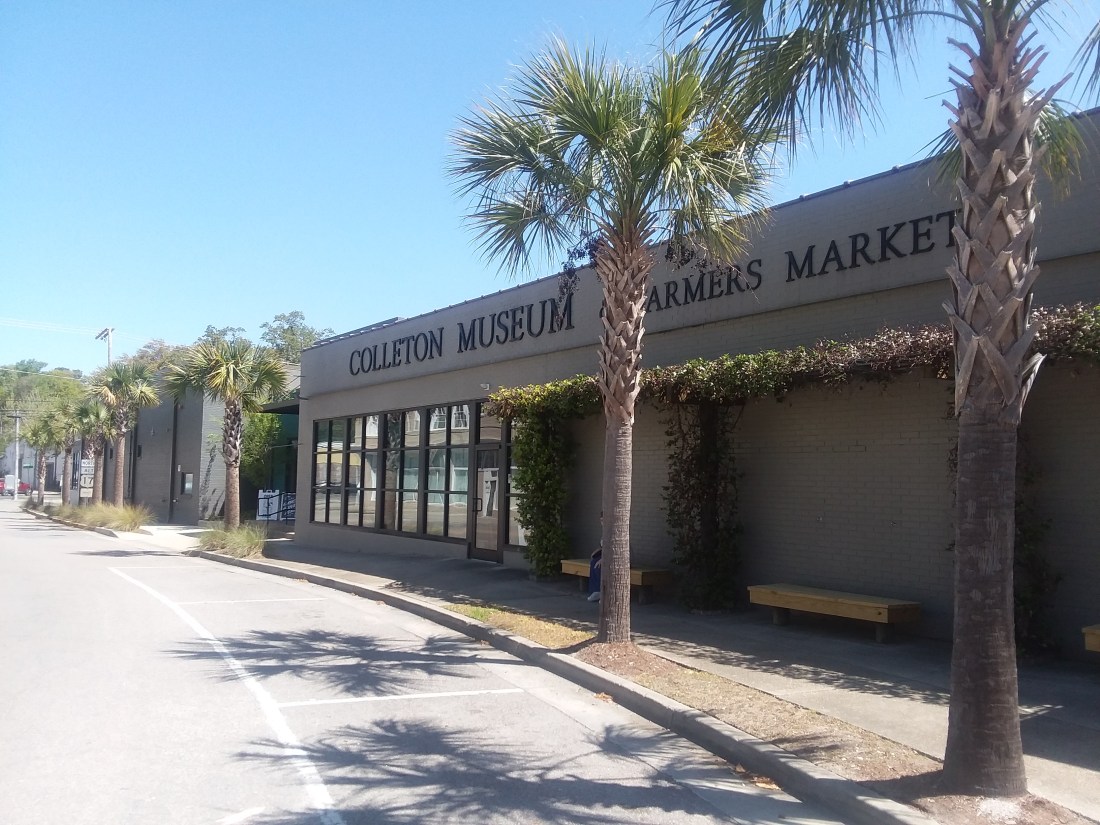
at the Colleton Museum and Farmers Market. This is a fascinating place which offers exhibits of artifacts and photographs depicting the rich history of Colleton County. However, we were here to discover more of the rich history of the Tuskegee Airmen.
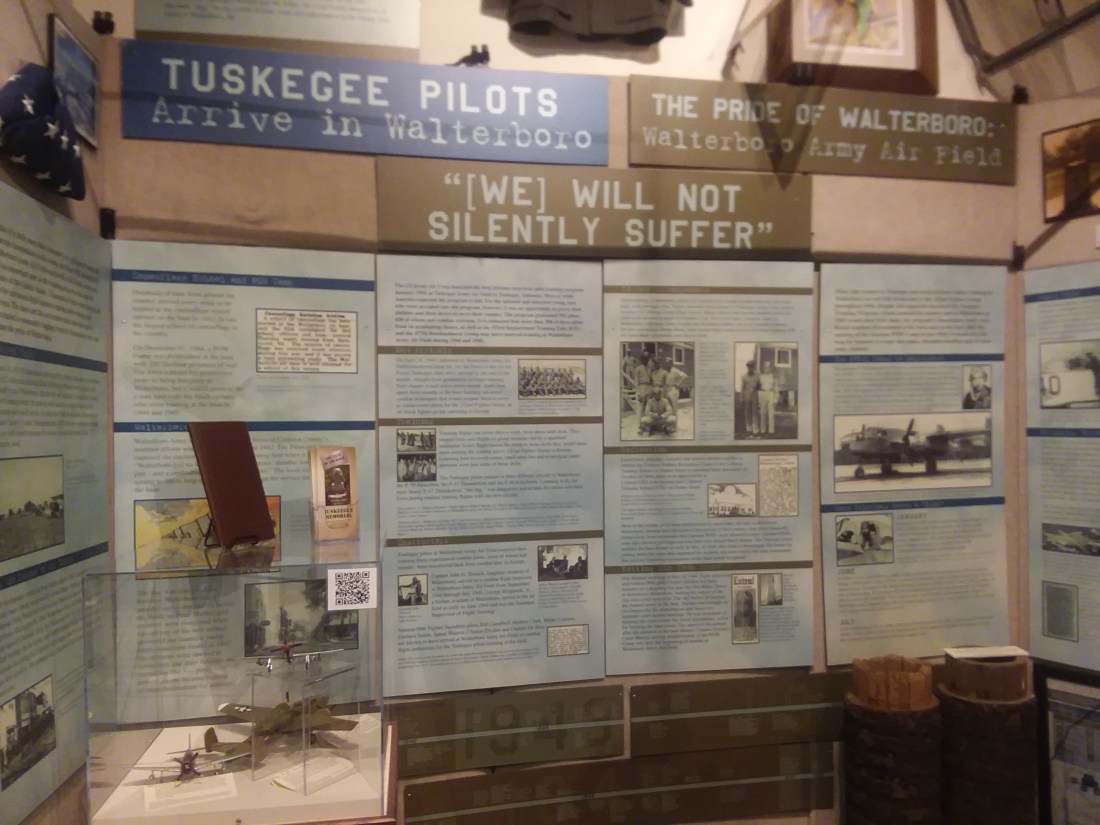
We discovered that the airmen typically trained each day from dusk to dawn for an average of three months. They learned to fly three types of aircraft. The Air Cobra, the Thunderbolt, and the Kittyhawk. The nose heavy Thunderbolt – nicknamed the Jug – was the most difficult to learn to fly. Five men died during training exercises.
We also learned that discrimination against the Tuskegee airmen was deep-seated and wide-spread because of their race. Remember, they were trained in the deep south at a time when racial segregation remained the rule. Thus it comes, unfortunately, as no surprise to learn that the 150 German prisoners of war held at Walterboro Army Air Field were treated with much more respect than the Tuskegee airmen. How sad indeed.
In February, 1944, the Tuskegee airmen were formed into the 332nd squadron. They began flying P-51 Mustangs to escort the heavy bombers of the 15th Air Force during raids deep into enemy territory. The tails of their planes were painted red for identification purposes, earning them the enduring nickname “Red Tails.”
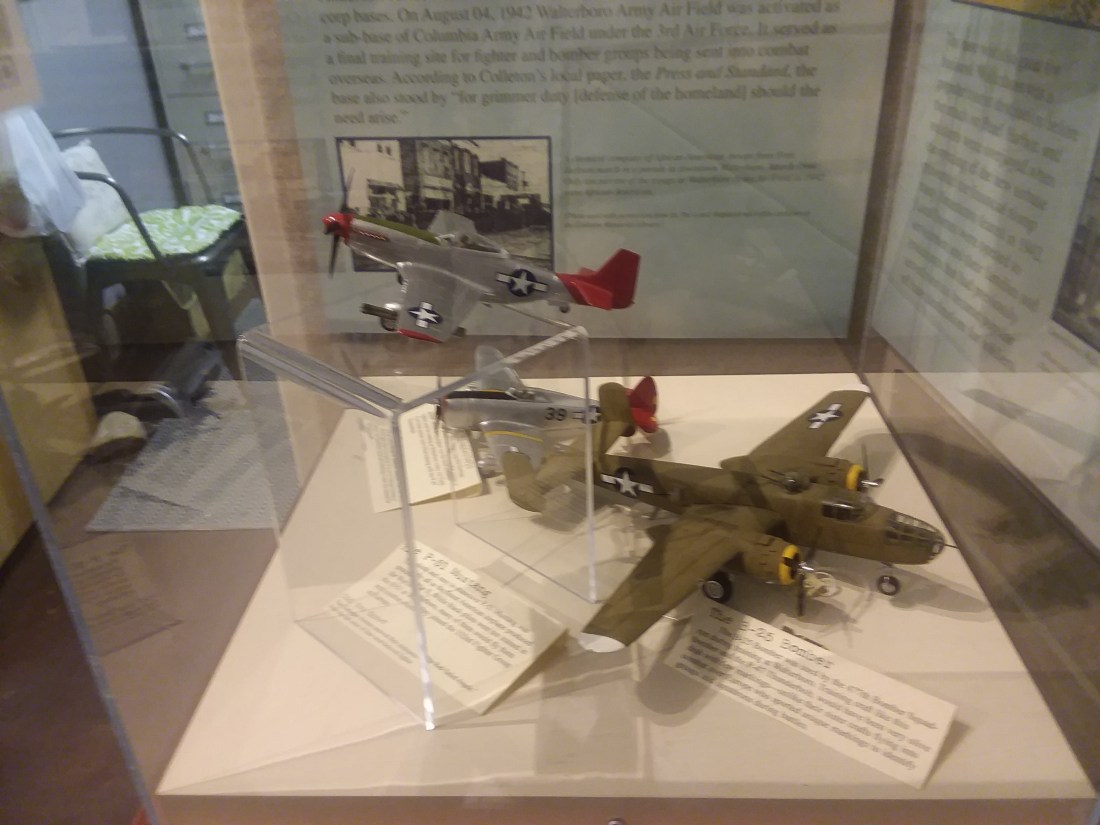
Though these were the best-known of the Tuskegee Airmen, black aviators also served on bomber crews in the 477th Bombardment Group, formed in 1944.
A popular myth arose during the war—and persisted afterwards—that in more than 200 escort missions, the Tuskegee Airmen had never lost a bomber. The truth wasn’t uncovered until years later, when a detailed analysis found that enemy aircraft shot down at least 25 bombers they escorted.
Nonetheless, that was a much better success rate than other escort groups of the 15th Air Force, which lost an average of 46 bombers.
By the time the 332nd flew its last combat mission on April 26, 1945, two weeks before the German surrender, the Tuskegee Airmen had flown more than 15,000 individual missions over two years in combat.
They had destroyed or damaged 36 German plans in the air and 237 on the ground, as well as nearly 1,000 rail cars and transport vehicles and a German destroyer. In all, 66 Tuskegee-trained aviators were killed in action during World War II, while another 32 were captured as POWs after being shot down.
Yes, history is everywhere you just have to look for it. So we looked, and we found something even here in this small town of Colleton. We were grateful to again learn about a piece of our American history and culture.
Once again, we had a great day, a day of discovery spent together. As always we traveled together side by side enjoying the day and each other’s company. Hopefully, you had as great a day. Always remember the minutes you are given in each new day can never be relived so always strive to make the most of them.

As always, if you are coming to the end of your day with concerns and worries let me suggest that you turn them over to God. After all, He is going to be up all night so why not let him handle them for you.
Time now for our evening prayers and some shut-eye. Till tomorrow. Thanks again for sharing our day with us.
These are the voyages of Graybeard and it’s occupants, four paws and two humans. Our continuing mission: to explore as many new states as possible, to seek out new acquaintances and make new friends, to boldly go where we have not been before

 "On The Road of Retirement"
And now we know “the rest of the story”. Thanks for taking us along. Hoping the warm weather moves in for you, and us. Prediction is for snow this weekend. Ugh!!
LikeLike