September 12th, Wednesday – Chase Banking, Local Branch, 124 Miles North; Fort Boonesborough, Kentucky

We awoke to a rather cool day today.  Temperatures were in the 60’s with clouds overhead.  A rather nice morning if I may say so.  So many mornings in the past were hot and humid and so uncomfortable.  But not today.  I’ll take it.

Today we had some banking to do and it could only be done by going to an actual Chase Bank branch.  I remember when our local branch was no more than 5 minutes away.  It

Image result for chase bank

was easy and convenient.  No more.  The closest branch we could find was 124 miles north in Richmond, Kentucky.  Now how about that.  No sense whining about it, only one thing to do, get in the car and go.  Go we did and in due time – like 2 hours – we were there.  Now get this, what needed to be done only took us about 15 minutes!  But it is done and that’s a great feeling.

Well, we figured why make this trip for just our banking.  Could there be something in the area that was either historical or perhaps interesting looking that merited further investigation.  Come to find out there were several sites that caught our interest.  In the end we decided to visit one, Fort Boonesbourough.

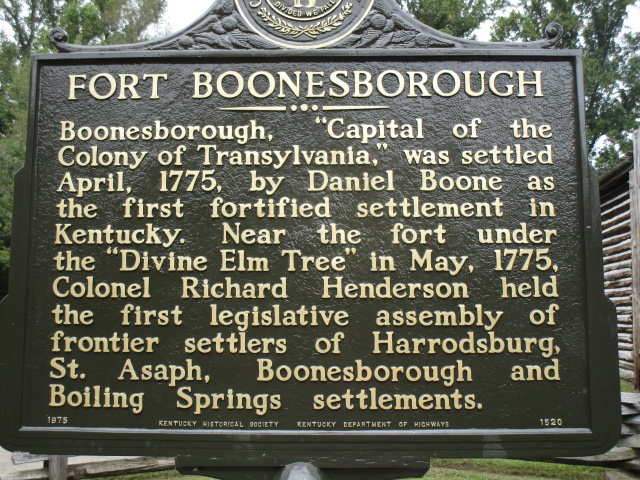
The original Fort Boonesborough was the final terminus of the epic journey that Daniel Boone and his group of trail cutters made when they carved out Boone Trace. In March

Related image


and April 1775, these men opened the first road into what was to become Kentucky. Boone Trace was essentially a bridle path large enough for those traveling by foot or horseback.
IMG_3950

During its heyday the fort was one of the centers of settlement in Kentucky. The dream of a fourteenth colony called Transylvania located in the Kentucky wilderness seemed a reality. By the summer of 1775, the fort and settlement of Boonesborough consisted of 26 one-story log cabins and four blockhouses. The cabins and stockades had small portals for guns in case of Indian attack.

Boonesborough played an important role in the founding of Kentucky and the opening of the west. However, as time passed and conditions changed, Louisville became a more dominate municipal center. Part of the reason for Louisville’s emergence was because the Wilderness Road, a formally designed and engineered wagon road, led to that Ohio River location. When activity on Boone Trace diminished, and the disbursement of settlers claiming their own lands increased after Native American attacks lessened, all that was left of Fort Boonesborough was the memory and history of this location’s importance to the founding of Kentucky and America’s westward expansion.

The memory of Fort Boonesborough remained a vital part of the Kentucky frontier experience. The need to honor this hallowed site of pioneer Kentucky saw fruition in 1963 when Fort Boonesborough State Park opened on 153 acres on the banks of the Kentucky River. On August 30, 1974 a reconstruction of the historic fort was dedicated. The reconstruction is located on higher ground than the original structure and it is made up of 10,000 southern yellow pine logs. There is a museum of Daniel Boone’s life along with cabins displaying pioneer crafts.  This is the Fort that we visited today.

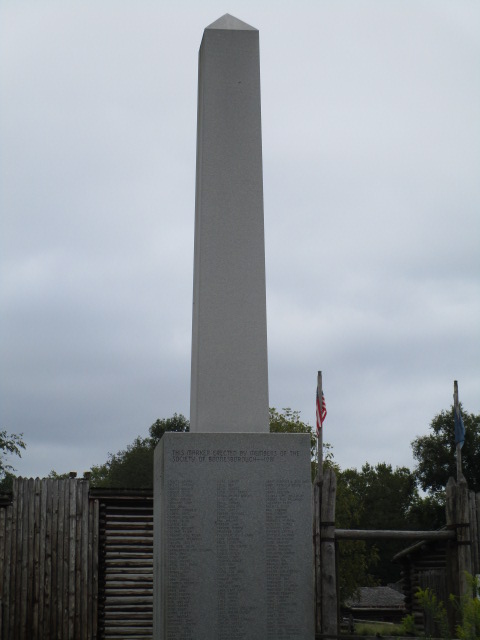
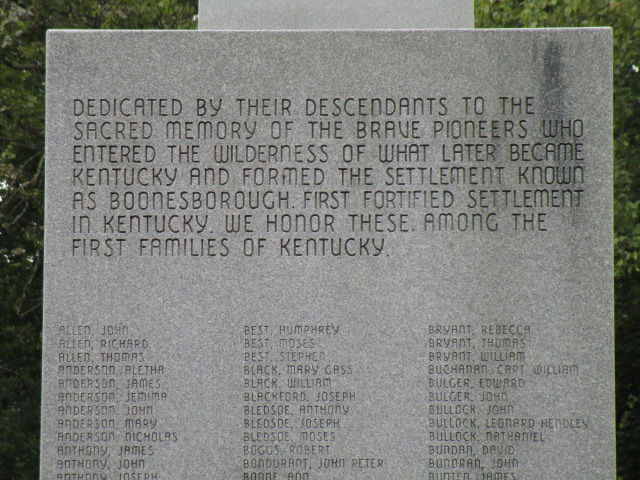
Arriving at the site of the reconstructed Fort the first item that we noticed was this monument.  It is located just in front of the gate into the Fort.  The plaque on it
IMG_3944

is self explanatory.  It is dedicated to the early settlers that made up Fort Boonesborough.
IMG_3945

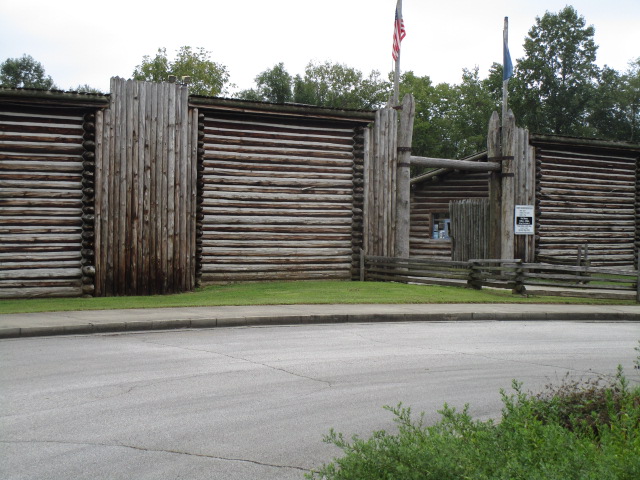
Just pass the monument is the front gate to the Fort.  Impressive walls to say the least!
 

IMG_3946

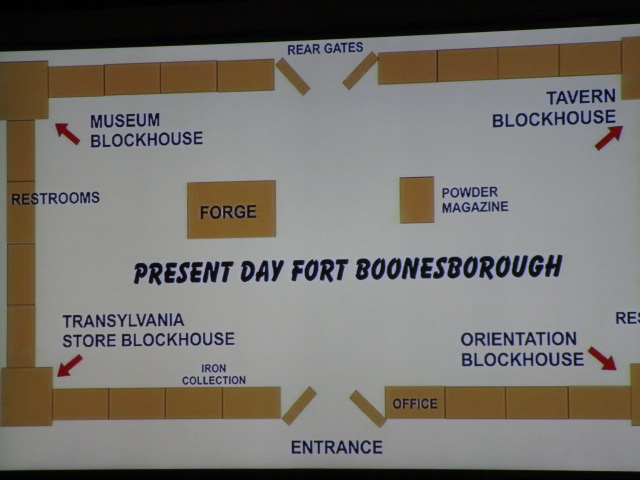
The entire Fort was not large. By the summer of 1775, Boonesborough consisted of twenty-six one-story log cabins, laid out in a hollow rectangle perhaps 260 by 180 feet. At each of the four corners was a blockhouse with a projecting second story, from which to
layout of fort

fire down on attackers. Like many of the frontier forts, Boonesborough initially had no well inside the fort. That fact created an obvious weakness in case of siege, but the settlers believed attacks tended to be quick-strikes of short duration, rather than prolonged sieges.  How wrong this proved to be.

In the autumn of 1778 a large force of Indians attacked and laid siege to Boonesborough. For nine days and nights the Indians surrounded the fort. The defenders held out and the Indians abandoned the siege.

Related image

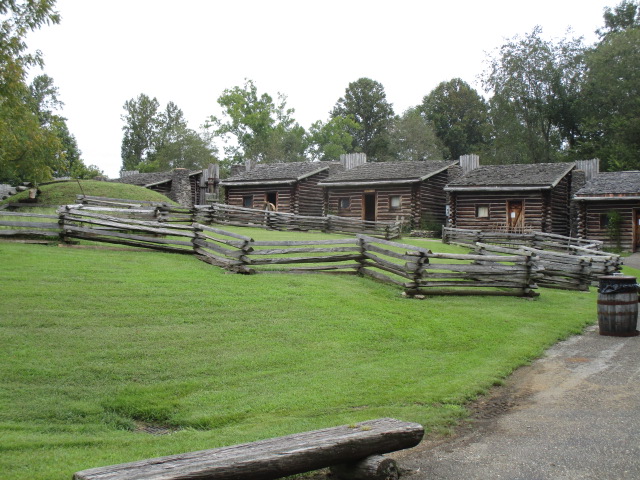
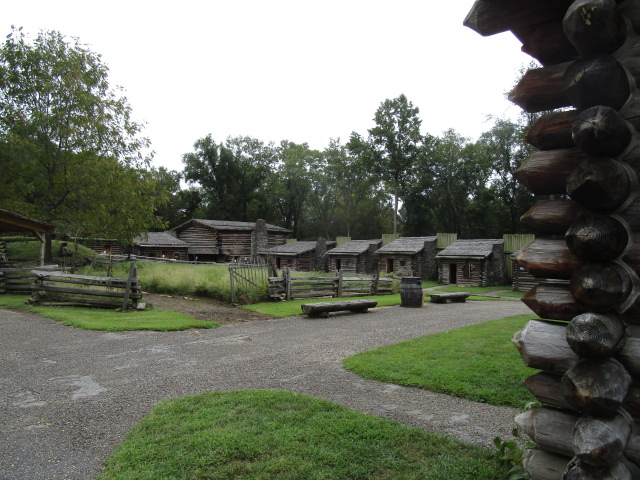
Below are some pictures of the inside of the current Fort with cabins and blockhouses.  Almost in the middle of this picture and to the back is the Tavern Blockhouse.
IMG_3953

Additional log cabins.

IMG_3956

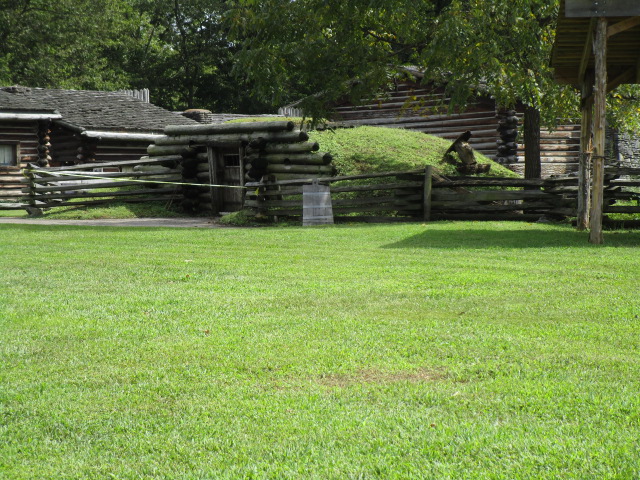
In the middle of the Fort a storage magazine was constructed for the fort’s supply of gunpowder.
IMG_4044

Life at Boonesborough during the early years of its existence offered little in the way of comfort. The cabins had only the bare minimum of comforts. A crude table made of a slab of wood, a bed with a feather tick or buffalo skins provided the early Kentucky
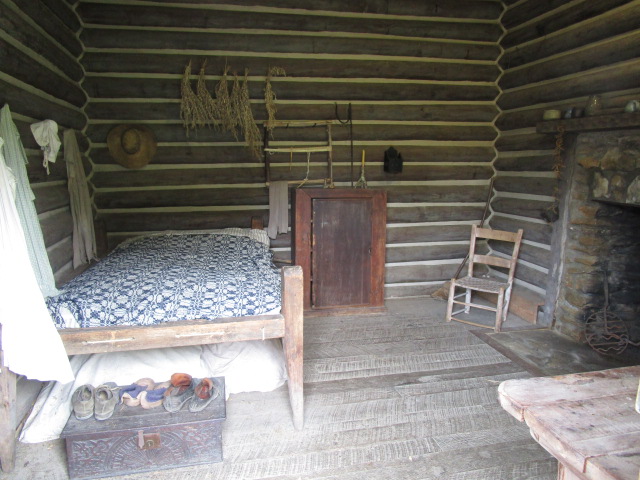
IMG_3962

householder with a dry and warm place to sleep. The fireplace provided the only source of heat for the one room that held all the pioneer family owned, as well as the pioneers
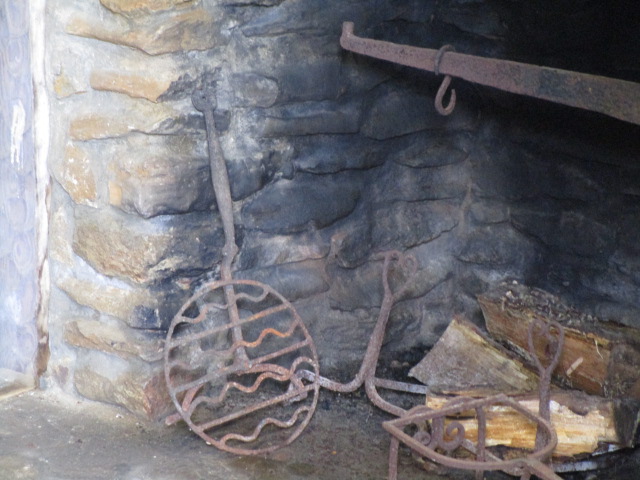
IMG_3963

themselves. The chimney of the cabin was at best crude. Made from sticks and mud, it provided a means for smoke to escape the cabin, but also posed a serious risk of fire. If a chimney fire occurred the ingenious pioneers would push the chimney away from the cabin to save it from burning.

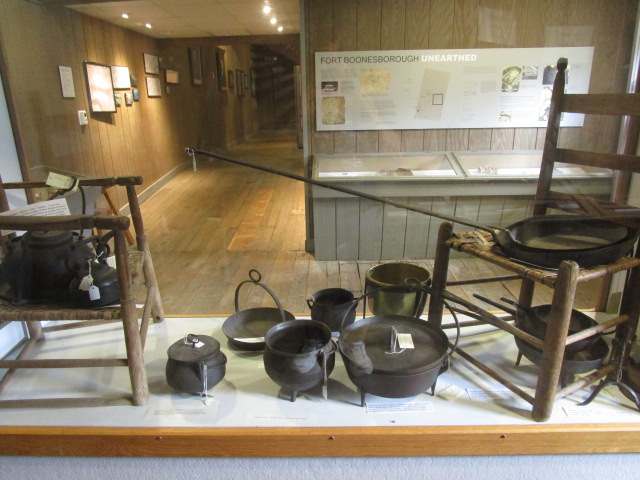
Here displayed are some of the items the early settlers would have used to cook with.  There is a dutch oven, several frying pans, pots, kettles and so forth.
IMG_4030

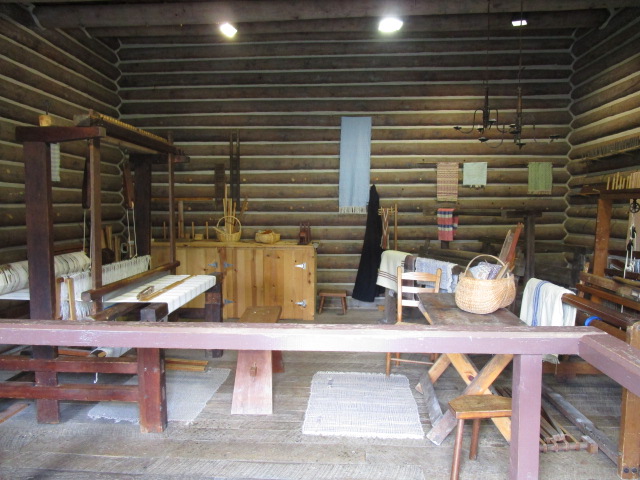
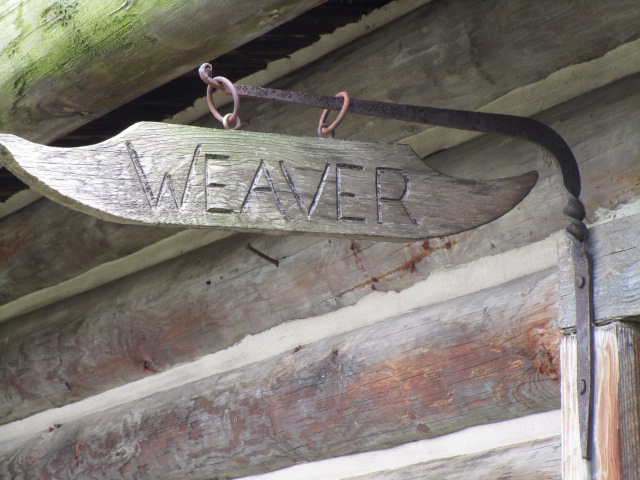
Within the Fort there were several cabins displaying pioneer crafts.  This is the Weaver’s
IMG_3974

IMG_3975

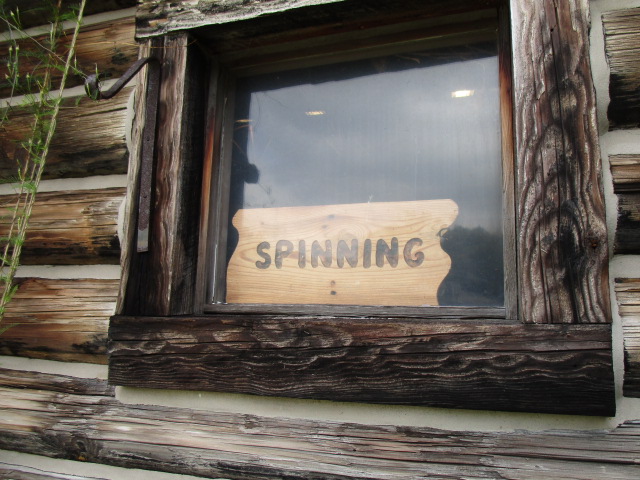
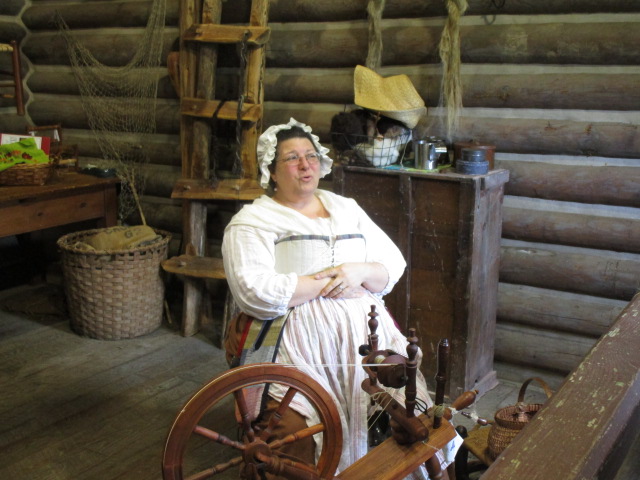
Next, we visited the Spinning cabin

IMG_3986

Inside was a docent who was very informative.
IMG_3987.JPG

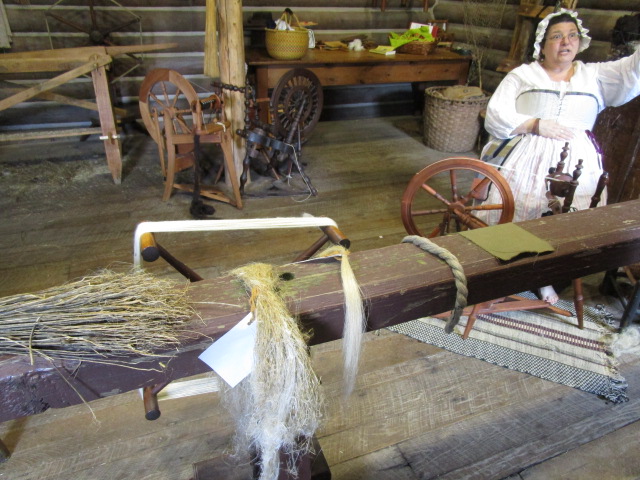
She explained to us that as important as food was, equally important was linen cloth from which clothing could be made.  Thus, each settler upon arriving would not only plant a garden but a field of flax.  The flax after it had been grown would be refined by beating until it was fit to be spun.  The flax started out as on the left, then was processed until it could be spun and eventually woven into cloth that could be used to make clothing.  No ordering from a catalog in that day.
IMG_3990

In addition she explained that usually each family had their own spinning wheel and loom or in some cases one had the spinning wheel and the other a loom.  In the latter case one spun the flax for several families in return for woven cloth being provided by the family with the loom.

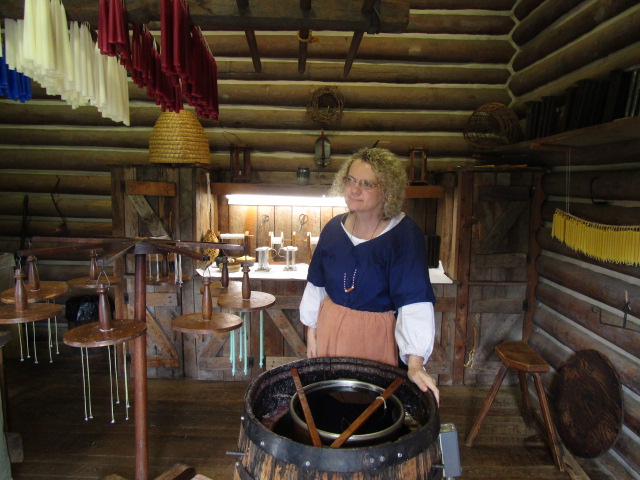
Another interesting cabin was that of the Candle maker.    She makes two types of candles, to the left are paraffin candles and to the right are yellow  beeswax candles.
IMG_4032.JPG

The paraffin candles are made by taking a rope (on the wheels to the left beside her) and dipping them repeatedly into the wax in the large barrel in front of her.  She stated that it usually takes between 30 and 40 dips into the wax to make a typical paraffin candle.  Sounds like a lengthy process but she assured us that because the wax cools so quickly by the time you are finished with one wheel another is ready to be dipped again.

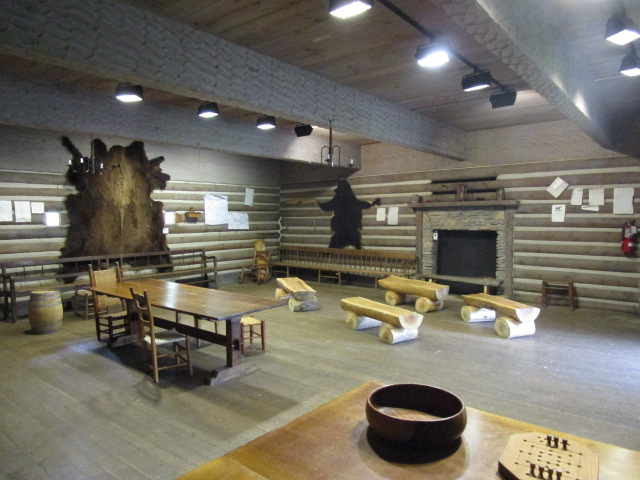
This is the inside of the Tavern Blockhouse.  In was a Tavern, a meeting house and so much more.   On the back wall, the large brown hide is from a buffalo.
IMG_3983.JPG

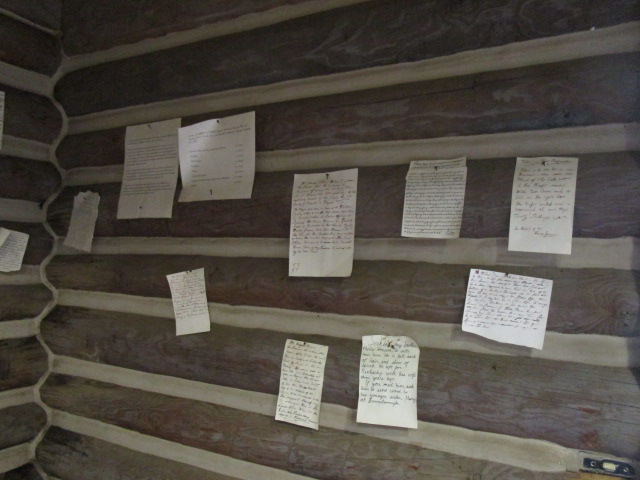
On the walls where often posted different documents requiring the attention of the settlers.
IMG_3985

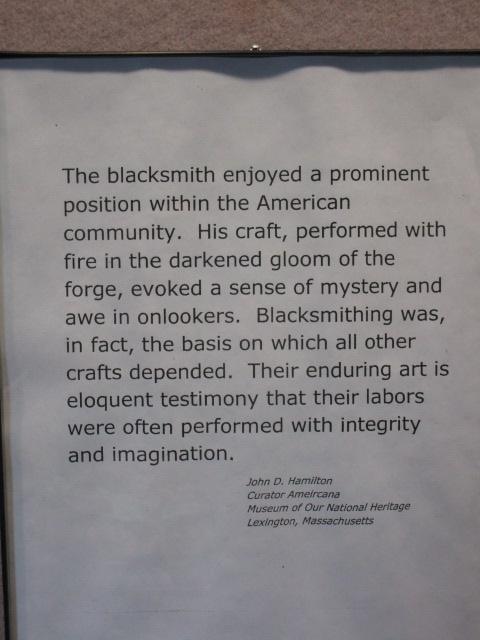
One individual that played an important role in the life of the settlers was the blacksmith.  Anything and everything that needed to be made of metal was his responsibility.
blacksmith

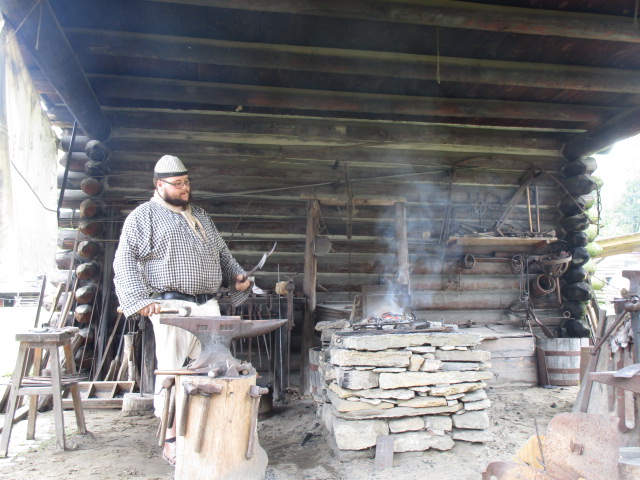
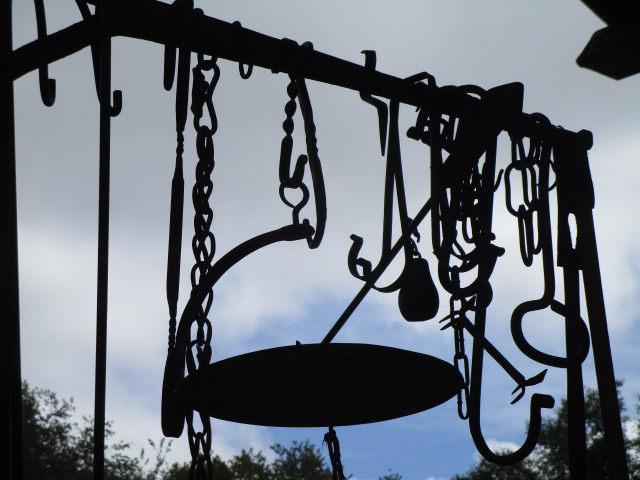
Today, within the Fort there is a blacksmith constantly working and making all kinds of metals items that the early settlers would have needed.
IMG_4008

IMG_4013

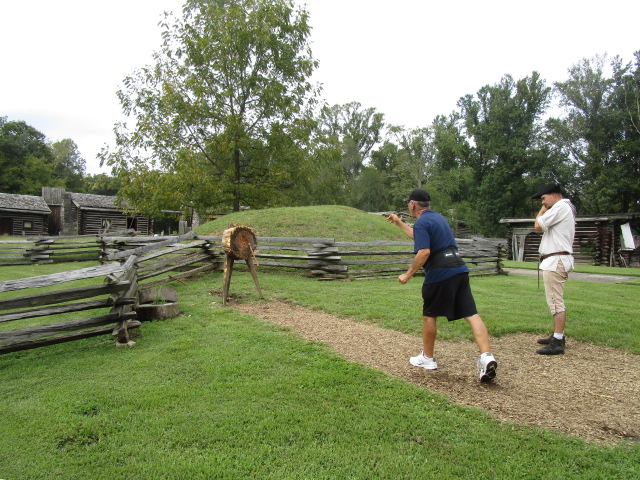
Oh yes, let me not forget.  There was also a demonstration on ax throwing, with an opportunity to try it for yourself.  The object is to throw the ax in such a way that you get it to land and stick in the log target in front of you.  Hard to see, I know but I stuck it on my second try!
IMG_4003

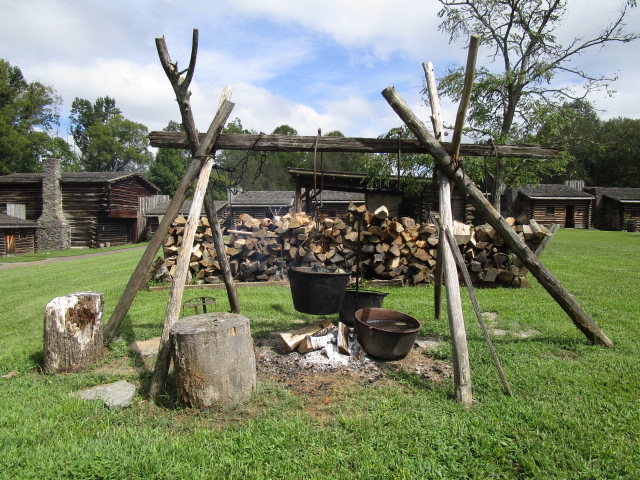
Now, when I saw this example of how meals were cooked by the early settlers all I could think to myself was I believe I’ll keep our Microwave/Convection Oven!
IMG_4043

That then was our day.  We took would could have been a negative – a two hour drive for just 15 minutes of banking – into a positive – another chance to visit an important historical site in the settlement of our great nation.  I like it when a plan comes together.

So now the day is done.  Thanks once again for coming along with us.  We hope you enjoyed your journey with us.  We had a great time, as always made better by the fact that we traveled along, hand in hand, singing our song.  I do want to also ask for continued prayers for my mom.  Though ordered to evacuate she refused to do so.  And at 92 years young she was not going to be persuaded otherwise.  I mean once she makes up her mind you can forget changing it.  She did agree, however, to ride out the storm with a neighbor whose house is on high ground.  Let’s hope not only she, but all down in her neighborhood and the surrounding area have homes to come back to.

In closing as always I want to leave you with something to think upon:

Image result for inspiring thoughts

As always,  if you are coming to the end of your day with concerns and worries, let me suggest that you turn them over to God.  After all, He is going to be up all night so why not let him handle them for you.

Time now for our evening prayers and eventually some shut-eye.  Till tomorrow.

These are the voyages of  Graybeard and it’s occupants, four paws and two humans.  Our continuing mission: to explore as many new states as possible, to seek out new acquaintances and make new friends, to boldly go where we have not been before

September 10th, Monday – Marathon Road Trip, But Not Without Some Drama

We’re back home after a marathon road trip to attend the funeral of Barbara’s cousin in St. Mary’s Georgia.  The church service was in St. Mary’s Georgia and the graveside service was in Jacksonville, Florida.

By the time all was said and done we had gone through 5 states, traveled 1100 plus miles, driven 18 plus hours in two days, had to pull over once because of blinding rain, and had some drama with the car – of course!

One thing you can say with certainty about Little Graybeard life is always interesting.  We were 6 miles from home, it was 11:30 pm and we pulled in to get gas.  Once finished we headed out, turned left onto the on ramp for the highway and the car just shut down.  No warning, no dash lights, nothing, and I mean nothing.  Exactly what it had done once before in Florida.  What to do?  Cross your fingers, put it in Park and try to restart it.  Thankfully, like the last time it started right up with no issues.  Remember the report about the Corvair Unsafe at any Speed?  The title for this car would be Unpredictable and Unreliable In Every State.  Oh, if only I could get rid of this car I would in a heartbeat.

Request please, prayers for my mom who lives in New Bern, NC right on the north or dirty side of the coming hurricane.   She will probably have to evacuate tomorrow by noon.   We do hope after all is said and done that not only will she be safe but that she will also have a home to go back to.

Time to go.  Where ever you are be safe.  We’re kicking back on Tuesday and giving ourselves some time to recover from our trip.  I just don’t seem to bounce back as quickly as I used to from road trips like this.  Could I really be getting older?

As always,  if you are coming to the end of your day with concerns and worries, let me suggest that you turn them over to God.  After all, He is going to be up all night so why not let him handle them for you.

Time now for our evening prayers and eventually some shut-eye.  Till tomorrow.

These are the voyages of  Graybeard and it’s occupants, four paws and two humans.  Our continuing mission: to explore as many new states as possible, to seek out new acquaintances and make new friends, to boldly go where we have not been before


September 8th, Saturday – The Secret City of Tennessee, Oak Ridge

Well, we went exploring again and what we discovered about the secret city of Tennessee we want to share part of with you now.  We visited the Y 12 National Security Complex, we went on a three hour DOE bus tour, and we visited the Manhattan Project National Historical Park.

IMG_3874

national park manhattan project

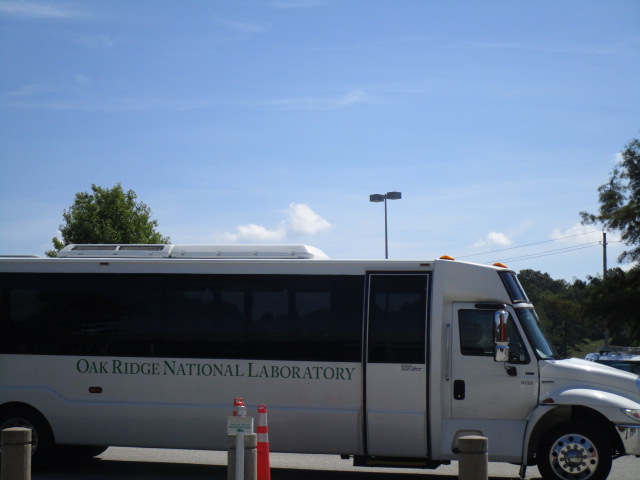
bus tour our bus for the day

Today everyone knows it as Oak Ridge, Tennessee.  During WW II it was the fifth largest city in Tennessee.  By 1945 75,000 people lived here.  There were 8,000 students in the school system.  It had the third largest bus system in the U.S.  It utilized over 13 percent of the nation’s electricity.  Then it was known only as the Clinton Engineer Works.  Yet, unless you had a need to know, you had no idea that it even existed.  Even the Governor of Tennessee at that time had no knowledge of this city.

Originally some 3,000 people resided in the area in approximately 1,000 homes scattered throughout the communities of Scarboro, Wheat, Elza and Robertsville.  These were close knit communities of hardworking farmers descended from pioneers of the region.  Few automobiles could be found in the area.  There were schools, churches, stores, and a post office.  Most everyone traveled either on foot or by horseback.  Little did they know how their lives were going to be turned upside down.

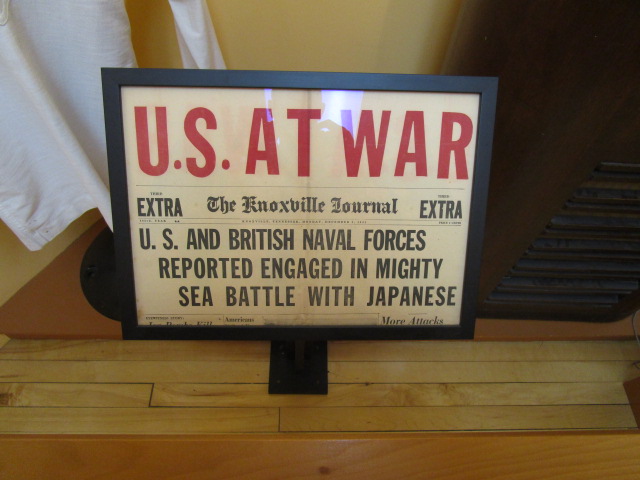
The catalyst that helped to bring about the transformation of this peaceful part of the state of Tennessee into a major secret city was in a word WAR.

history of oak ridge the beginning the us at war need for bobm

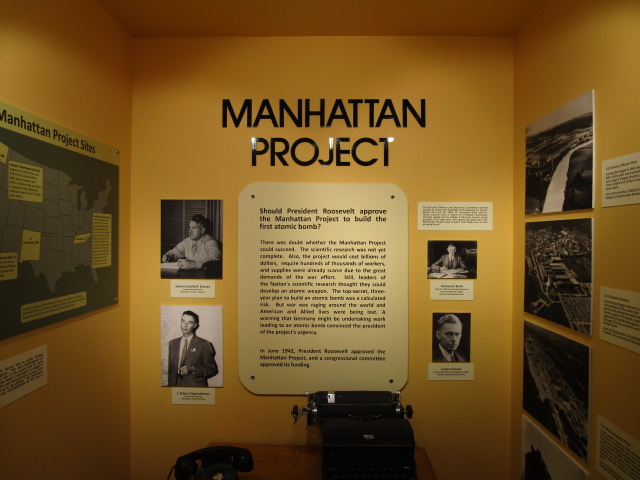
But there was more.  While war was raging around the world President Roosevelt was soon faced with a difficult decision.  Should he approve the Manhattan Project to build the first atomic bomb.  There was doubt as to whether it could be done.  The project would cost billions of dollars.  The top secret, three-year plan to build an atomic bomb was a calculated risk.  A warning, though, that Germany was already working on such a bomb convinced the President to approve the project.

history of oak ridge the beginning mahattan project display

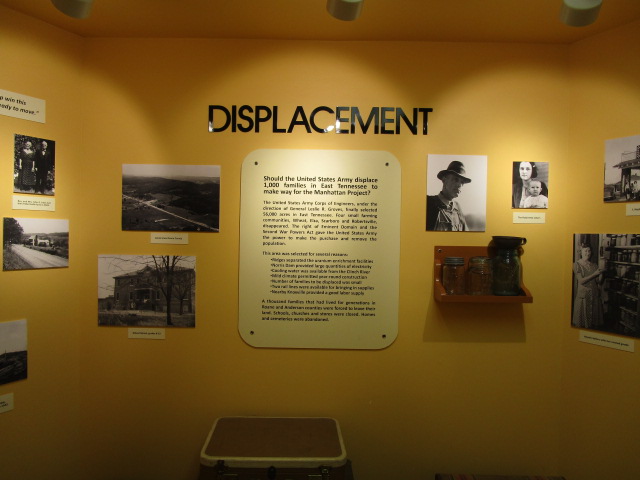
Now the question became Where to build the facilities for the Manhattan Project?  After surveying several sites in different states, the Army Corps of Engineers, under the direction of General Lesile R Groves, finally selected 60,000 acres in East Tennessee.

displacement

If it takes our home

The area was selected for several reasons:

  • Ridges separated the different facilities, the thinking being then that if something happened at one site, the others would be protected by the ridge
  • TVA could provide large quantities of electricity
  • Cooling water was available from the Clinch River
  • Mild climate permitted year-round construction
  • Two rail lines were available to bring in supplies
  • Nearby Knoxville provided a good labor supply

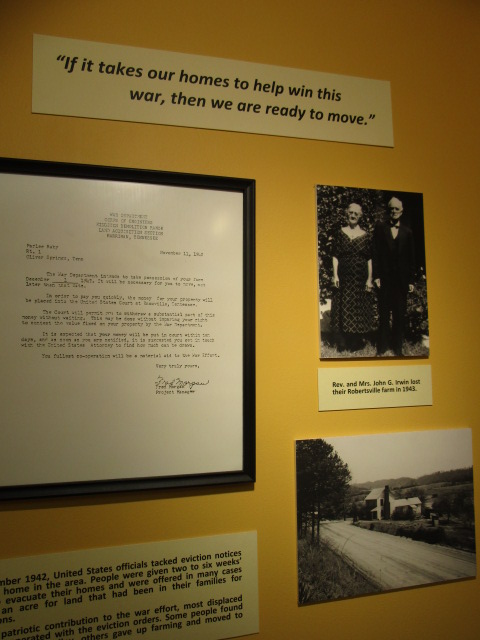
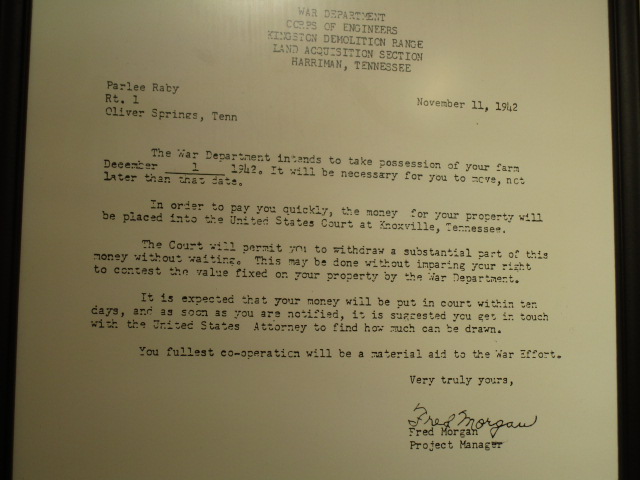
In September of 1942 the United States tacked eviction notices on every home in the area.  People were given two to six weeks to leave their homes.  All they were told was that their land was needed for a project to end the war.

oak ridge displacement picture eviction notice sent to all

As their patriotic contribution to the war effort, most displaced families moved without a fuss.  Some took jobs in Knoxville, Clinton and other regional towns.  Some found land nearby on which to continue their lives as farmers.  Almost overnight the four small farming communities that had been there disappeared.

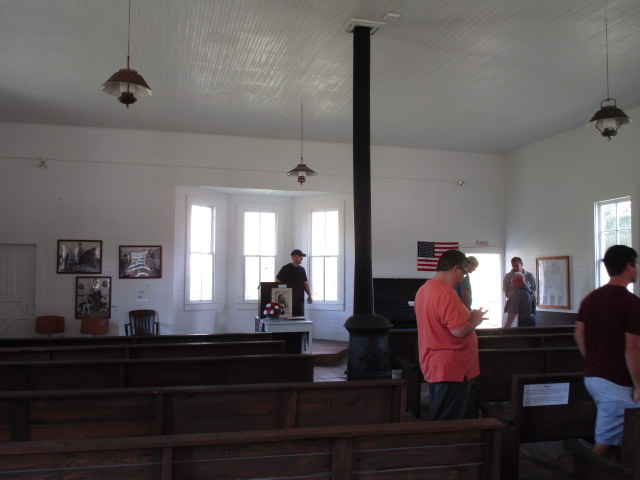
One of the interesting stories of this era is that of the Bethel Church.  Believing that their beloved church was going to be destroyed like so many other structures they erected a monument in loving memory of the church.

Monument of bethel church

However, the church is still standing today.  The government decided that

bethel baptist church outside back

bethel inside of church

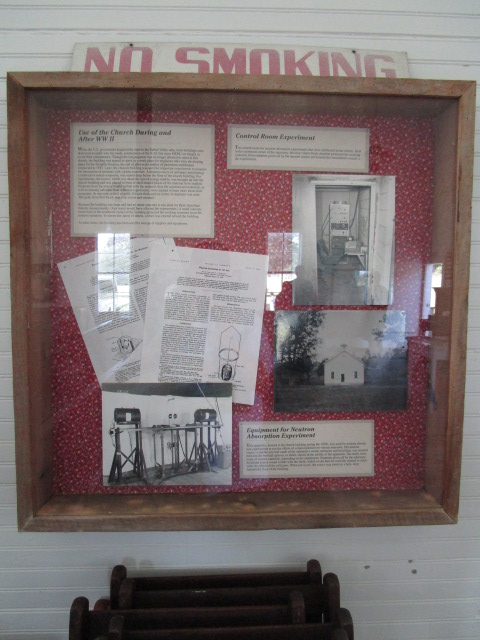
it could use the church to their advantage.  Though the congregation was no longer allowed to meet in the church, the building was spared to serve as a work place for engineers who were developing plans for the Graphic Reactor.  The church was also used for other important experiments during the Manhattan project.  Because it was large inside and had no metal structure it was ideal for these experiments.

IMG_3822

The race was now on to create an atomic bomb within three years.  Because of this even before everyone was gone and the land was completely cleared the building of the largest and most expensive secret city in the Manhattan Project had begun.

mahattan project sites

mahattan project sites oak ridge cost the most

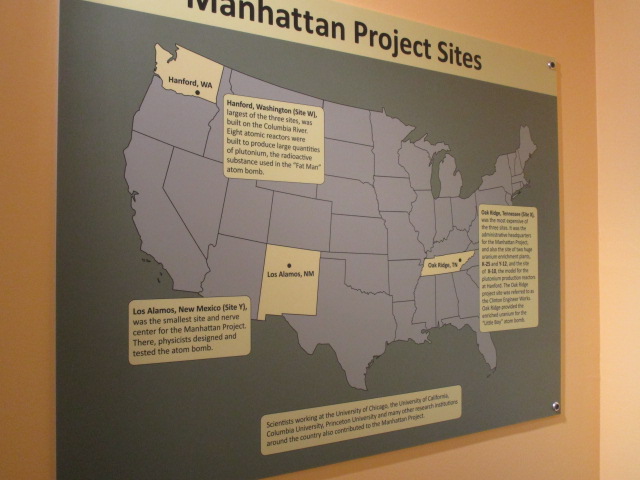
The reason that Oak Ridge existed but did not exist was of course the Manhattan Project.  The Manhattan Project was involved in collecting uranium 235 for the first atomic bomb.  Below is a map of Oak Ridge and the location of the three facilities which were there at the time.

map location of 3 different plants

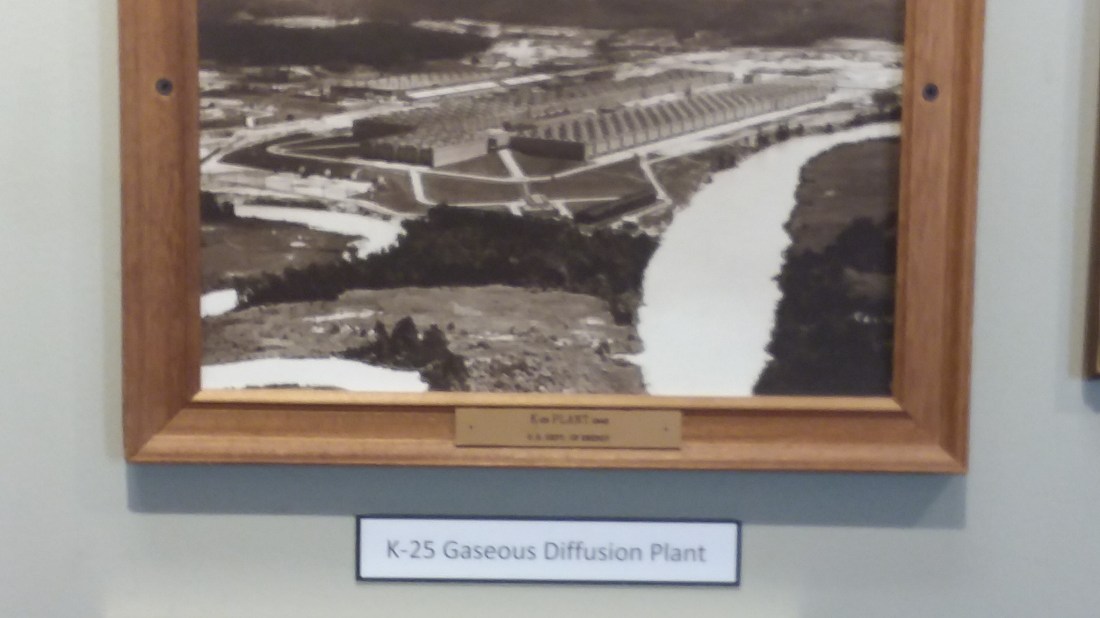
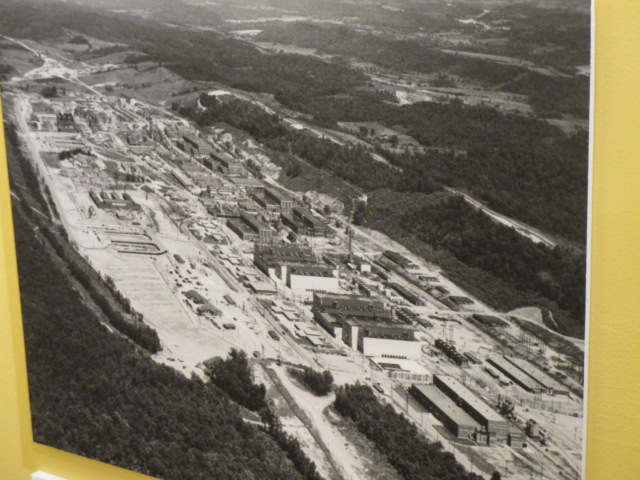
K-25 Gaseous Diffusion Plant.  Worked on perfecting a process for the enrichment of U-235.  This plant has been torn down but the National Park Service is working on a plan to build an interpretive facility and museum on the original site.

k 25 gaseous diffusion plant

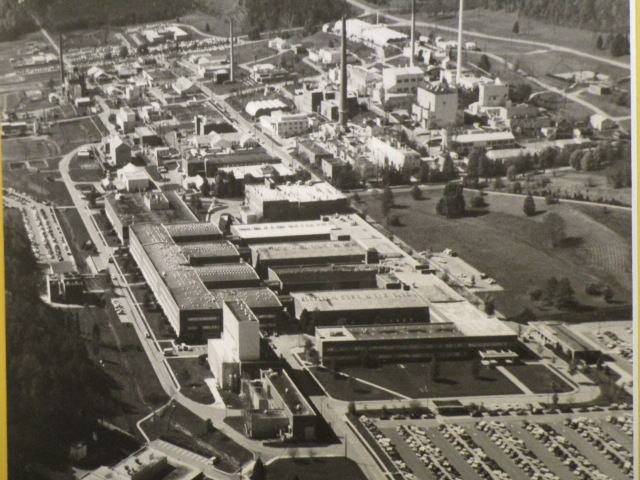
Y-12 Electromagnetic Plant.  Separated the heavier U-238 atoms from the lighter U-235 atoms.  The later was used in the first atom bomb.  Construction began in 1943 and operation began in 1944.  The plant covered 500 acres.  The cost of construction was over $300,000.  I’ll have more about this plant in a later blog.

story of oak ridge y 12 picture

X-10 Graphite Reactor.  Worked on perfecting a process for producing plutonium from uranium. I’ll have more about this plant in a later blog.

story of oak ridge x 10 graphite reactor picture

So, thousands of top scientists, engineers and military personnel were ordered to Oak Ridge.  Construction workers, secretaries, educators, and others decided to come for many reasons:  the promise of high-paying jobs, and the chance to help end the war.

oak ridge 1942 to 45 display

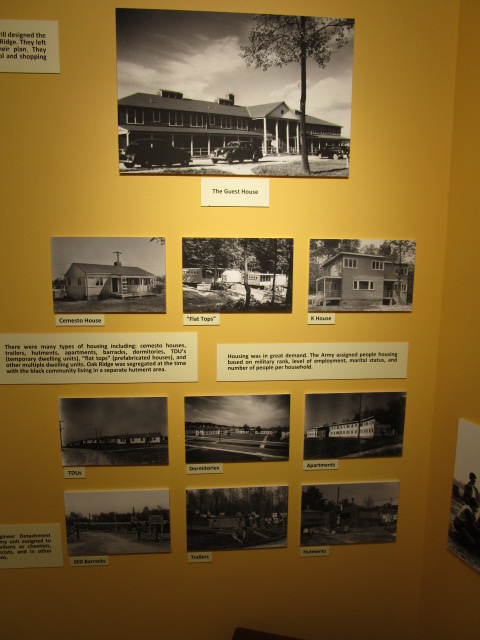
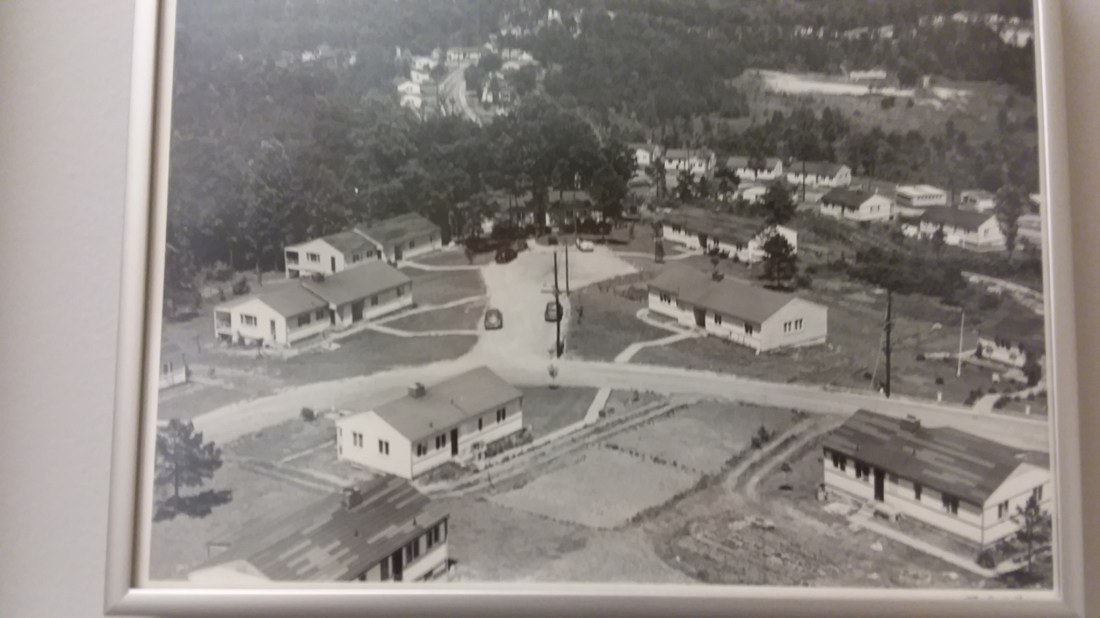
The initial plan in 1942 called for housing 13,000 residents.  By 1945, there were 75,000 residents.  It’s no wonder then that houses were constructed every 30 minutes at the height of the Manhattan Project.  There were many types of housing including:  cemesto houses (cement and asbestos homes often considered the most desirable because they were extremely well insulated), trailers, apartments, barracks, dormitories, flat tops (which were prefabricated houses) and other multiple dwellings.

oak ridge types of housing display

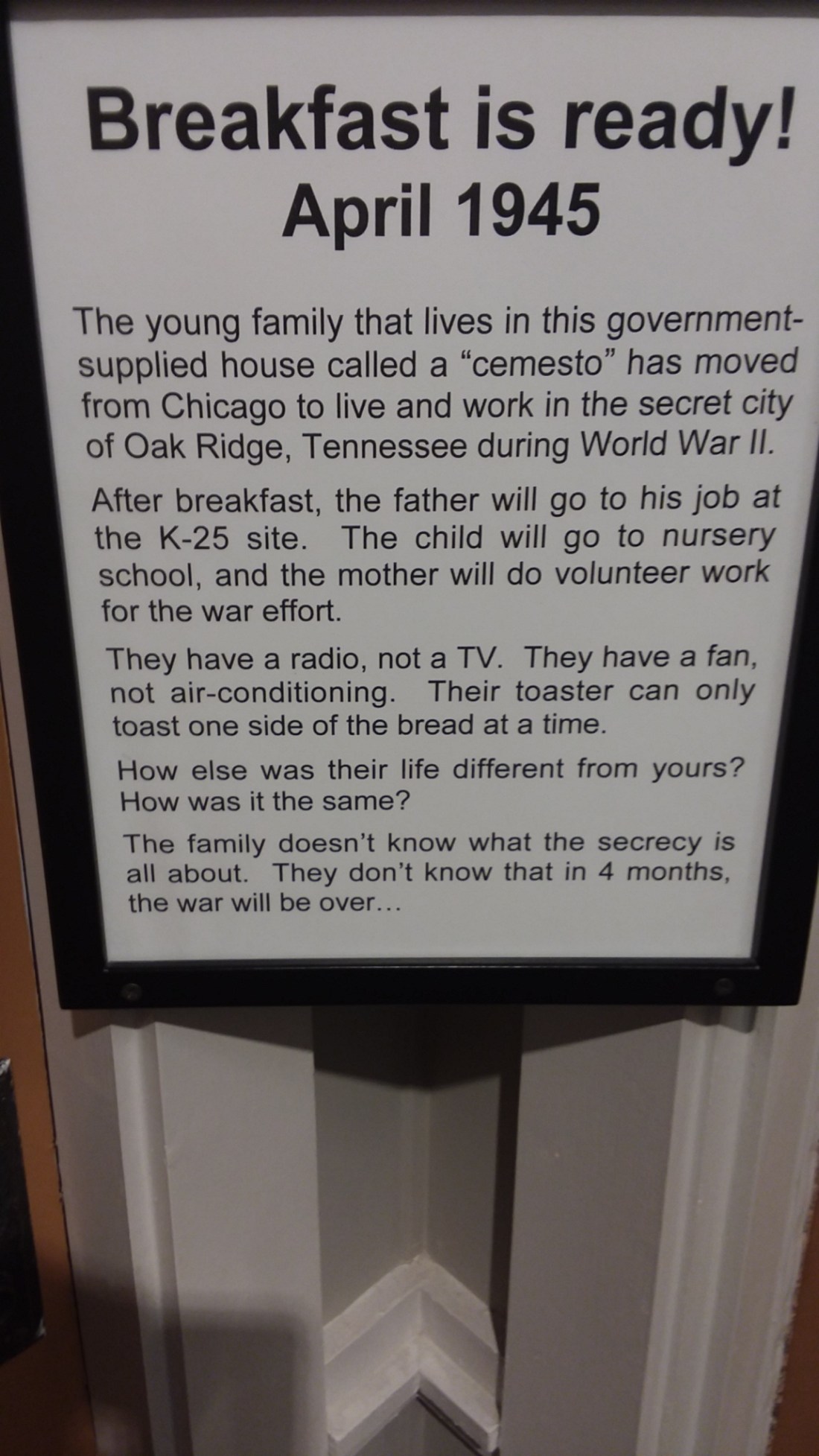
cemesta house breakfast is ready explained

cemesta house breakfast is ready picture

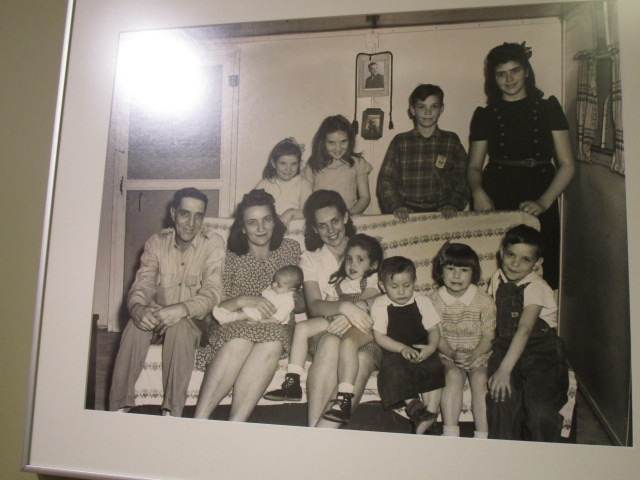
Housing was assigned based on military rank, level of employment, marital status and number of people per household. The largest family that lived at Oak Ridge was that of Mr. and Mrs. Melvin Otto Sportsman from Little Rock, Arkansas.  The family of 12 inhabited an expandable trailer at 615 Detroit Way, Gamble Valley Trailer Camp.

oak ridge largest family in the community picture

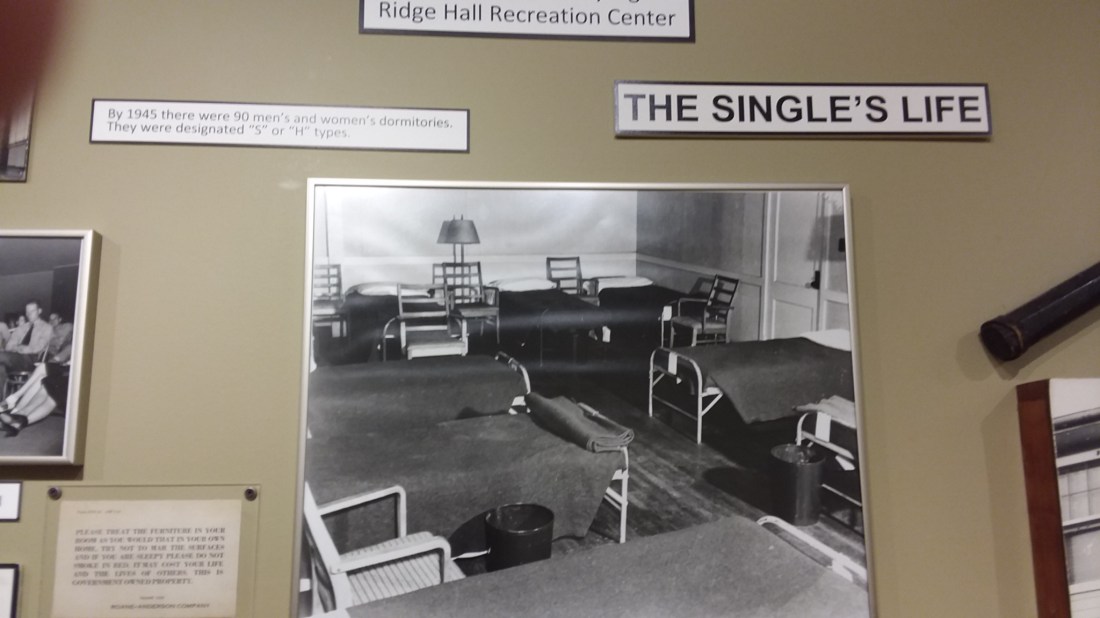
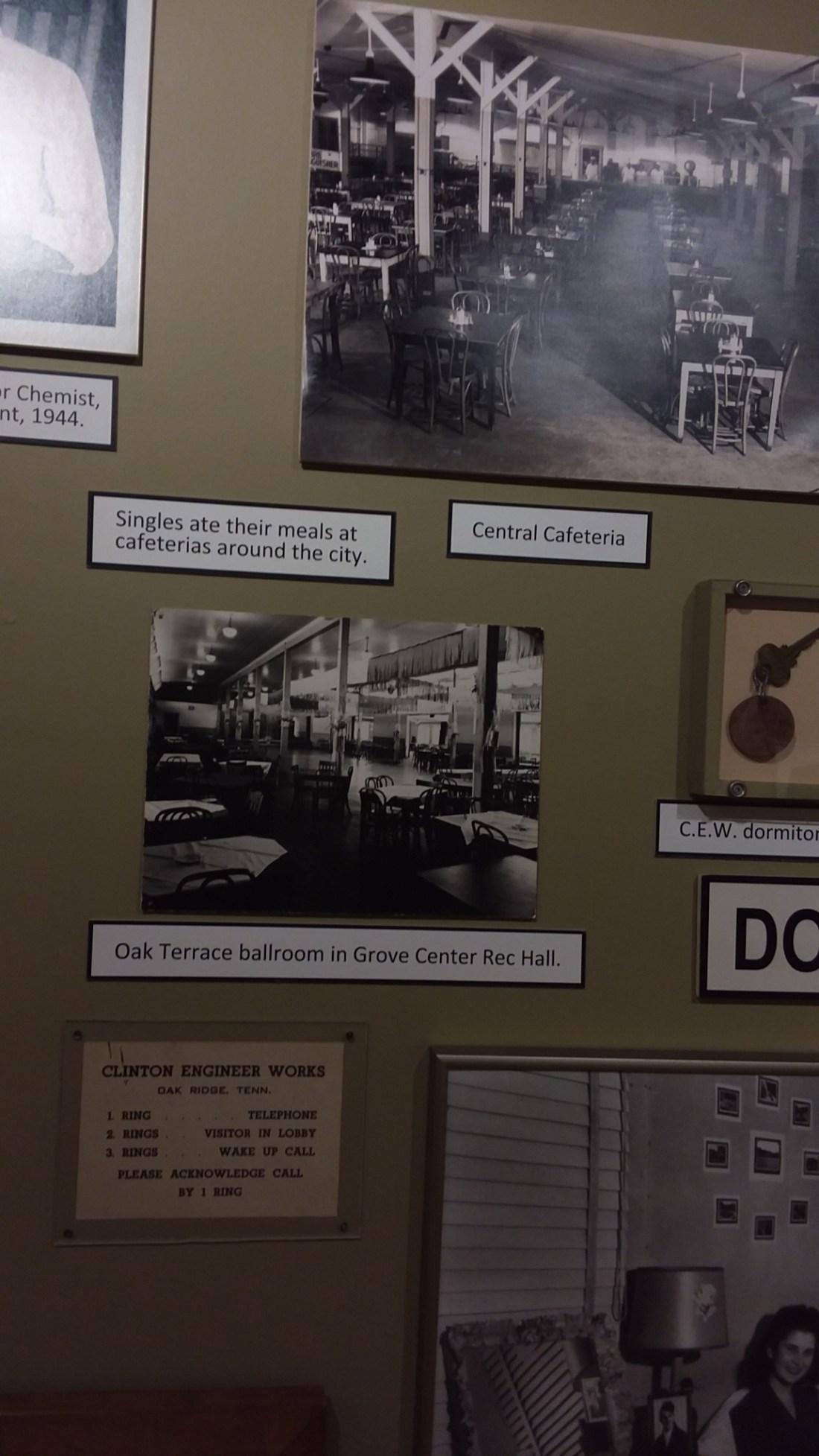
Singles also came to Oak Ridge.  Fresh out of colleges and universities they were recruited to travel to Oak Ridge and work at the plants (X-10, Y-12, K-25) or in other vital positions for the Manhattan Project.

singles life 1

singles life single girl in her room

singles life meal time

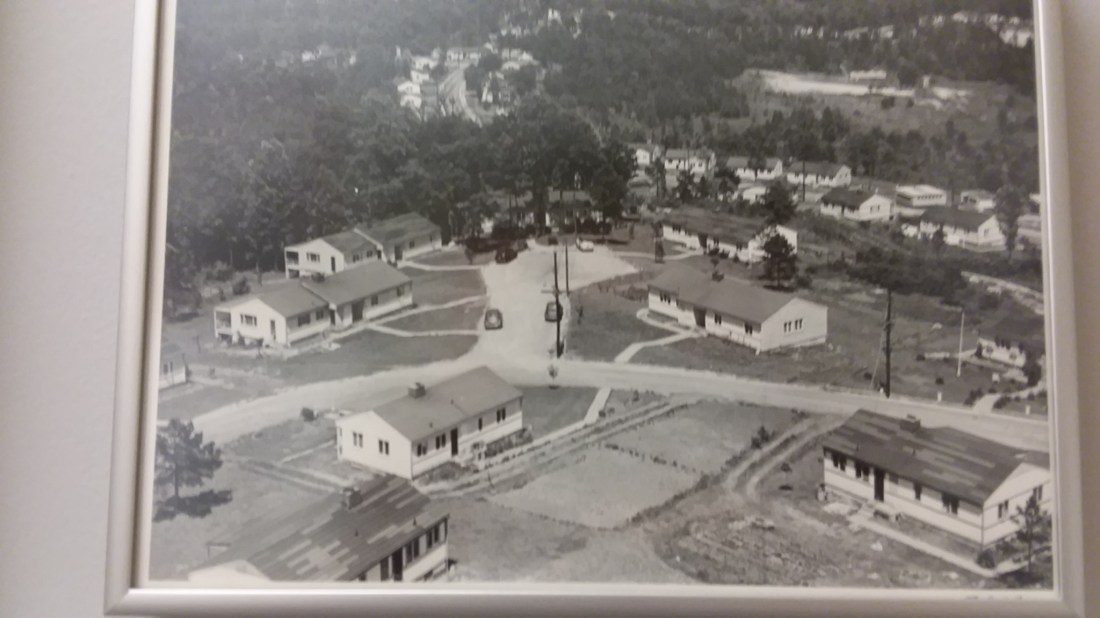
The architectural firm of Skidmore, Ownings and Merrill designed the city to attract and keep personnel in Oak Ridge.  They left trees and the natural contour of the land in their plan.

housing overall view air view of homes

They designed each neighborhood to have its own school and shopping centers.  There were bowling alleys, movie theaters, recreational centers and the town even had its own symphony orchestra.

oak ridge keeping them entertained and happy 2

Security as one would guess was extremely tight at Oak Ridge.  Once the perimeters of Oak Ridge were set a 90 mile long fence was built around it.  The fence was constantly patrolled by soldiers on foot or horseback.  Guard towers were also located at strategic locations.  The Oak Ridge guard force grew to number about 1,000 men.

guard tower

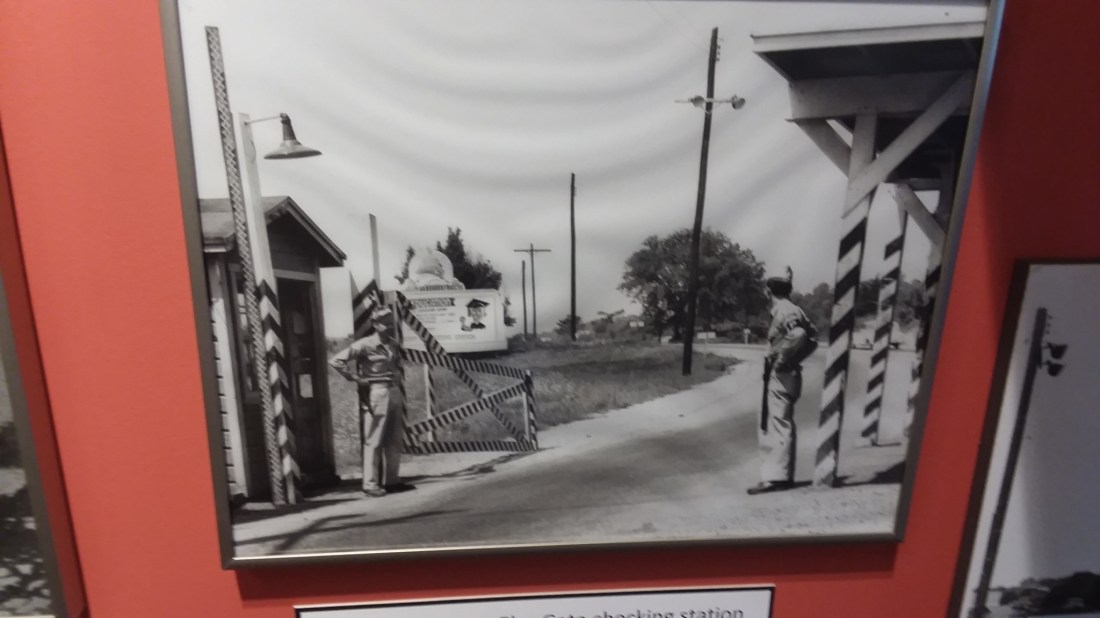
From 1943 to 1949 anyone coming into Oak Ridge had to pass through one of seven entry gates (the gates are still standing but no longer used) guarded by military police.  People and vehicles would be searched.

One such gate

IMG_3937

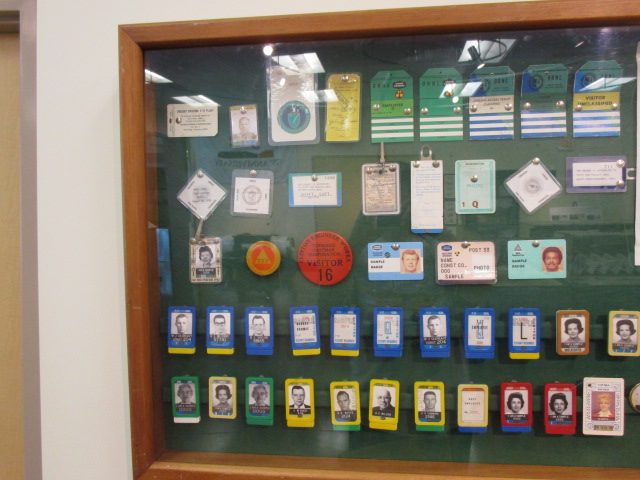
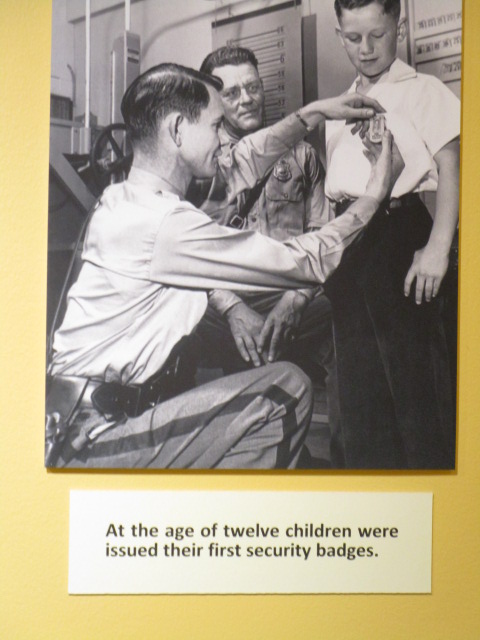
All residents of Oak Ridge over the age of 12 were required to wear ID badges at all times and they had to present them to guards upon entering the city.

security badges overview

Age 12

Woman with badges

There were several other ways in the which the secret was kept.  I met and talked with a daughter whose mother worked at Y-12 during the Manhattan Project.  She stated the following:

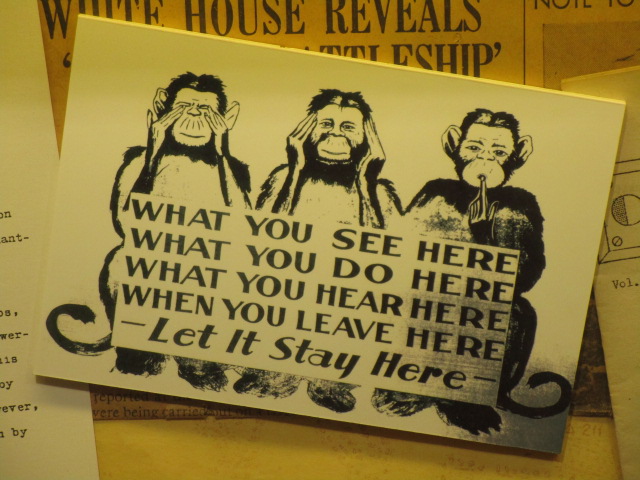
  • that throughout the community there were informants whose job was to listen and report on what others said and to who. If you said too much you were removed from Oak Ridge.

see hear tell

  • Jobs were compartmentalized. You had your job but you did not know what the person next to you might be doing or why
  • Residents only knew and were told that they were helping to end the war. Since most of them had loved ones fighting they were more than interested in bringing a swift end to the war.

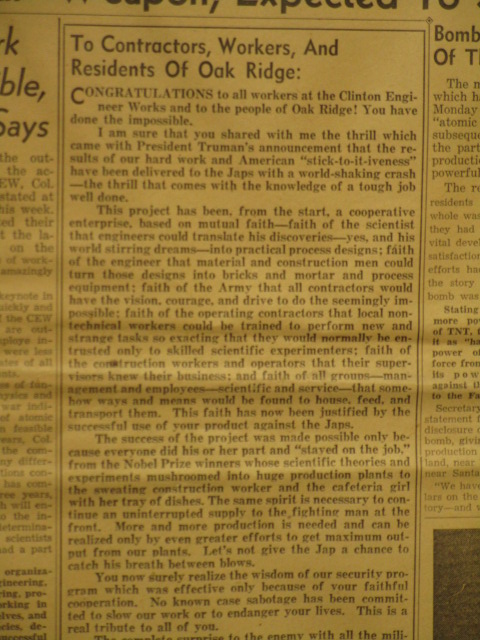
Finally, as we all know people found out about Oak Ridge.  They found out almost immediately after the first atom bomb was dropped. The secret was now out for the whole world to know.  Residents of Oak Ridge were elated.

bomb newspaper when it dropped

bomb newspaper congats to oak ridge workers

Today Oak Ridge is an incorporated community of about 30,000 residents.  In 1953 they voted down incorporation because they feared higher taxes and the loss of benefits such as free home repair and free heating oil. In 1955, however, President Eisenhower signed the Community Disposal Bill  that provided the city with a decade of financing.  One again the vote to

oak ridge city on its own display

Incorporate came up in 1959 and on May 5th the residents voted overwhelmingly for incorporation.  Many of the homes that they were renting they now bought.  A lot of these houses are still standing today but almost everyone has changed in some way – an addition, a garage, siding, etc.

oak ridge city on its own newspaper announcement

In the end even with maximum security, enforced secrecy, and wartime rationing, many who lived in Oak Ridge during WW II will tell you that it was the best time of their life.

Why?  Because each worker, each family member had a purpose:  to win the war.  In addition, because Oak Ridge had been put together so hastily there were few social traditions or confining customs to hinder communication and community participation.  Finally, it became a campus-like environment of enthusiasm and friendship.

Well, the secret is out, the secret city of Tennessee known as Oak Ridge.  Thanks for joining us our journey of discovery.  We learned so much and came away with a new appreciation for the sacrifices that so many made in order to bring the war to an end.  The story of Oak Ridge is truly a remarkable story that needs to be told to one and all.

Just to let everyone know there will be no blog for the next two days.  We have a funeral to attend in Georgia and will be away from Graybeard until late Monday night.

Time to sign off and wish everyone a great weekend.  Whatever you may be doing or wherever you may be going we hope you enjoy.  In closing let me leave you with this:

Image result for make happy those who are near

As always,  if you are coming to the end of your day with concerns and worries, let me suggest that you turn them over to God.  After all, He is going to be up all night so why not let him handle them for you.

Time now for our evening prayers and eventually some shut-eye.  Till tomorrow.

These are the voyages of  Graybeard and it’s occupants, four paws and two humans.  Our continuing mission: to explore as many new states as possible, to seek out new acquaintances and make new friends, to boldly go where we have not been before


September 7th, Friday – Our New Toy, Think Cold; The Secret City of Tennessee

So today was a most uncharacteristic day for us as we actually were out of the house by 7:45 am.  Oh yes, that was way too early for us but we were on a mission to a special museum and bus ride.  The museum is the American Museum of Science and Energy.

Image result for american museum of science and energy

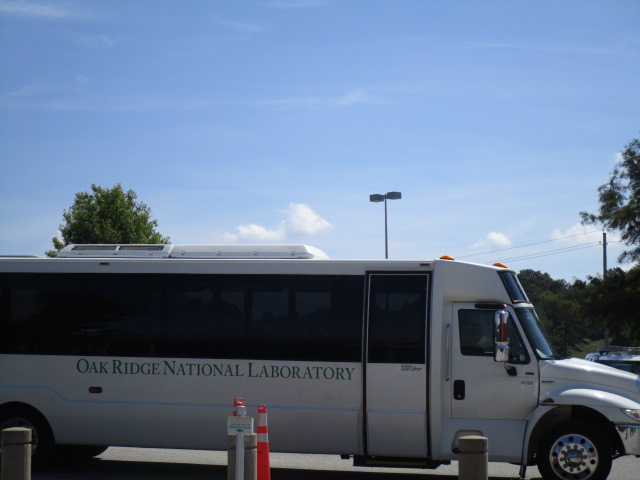
The bus tour was a three hour Department of Energy tour of Tennessee’s World War II secret facilities.  So off we went intending to get our bus tour tickets by 9 am.

bus tour our bus for the day

Guess what?  The Museum closed on July 29th since it is moving to a new facility and will not reopen until October 1st.  We just seem to have the best of luck when it comes to museums in general.  As for the bus tour there were directions on the door of the closed museum to the new location for its starting point.  Guess what?  The directions were wrong.  Are you sensing a pattern here?  After going in circles we finally stopped and asked a city worker for directions to the New Hope Center and were finally steered in the right direction.  Yes, we made it with time to spare and were able to get our tickets with no problem.  The nice part of all this?  Since the Museum is closed there was no charge for the but tour!  Sweet.

By the way, have you guessed yet what the secret city of Tennessee was?  I’ll give you a hint, it had to do with the Manhattan Project.  But we’ll wait till tomorrow to give you the

Image result for manhattan project

full details on this remarkable WW II city that for many years existed but didn’t exist.  We got back late and there is just too much to sort through, to put together a meaningful blog tonight.  By the way, consider this, even the governor of Tennessee (in the 1940s) had no idea this sizable city was where it was.  How about that?  OK, here’s a sneak peek at this city.

housing overall view air view of homes

Well, we now have a new toy.  You just had to know that sooner of later we would find something that we really needed.  Yea.  What led up to its acquisition?   Warm beer.  Yup,

Image result for warm beer

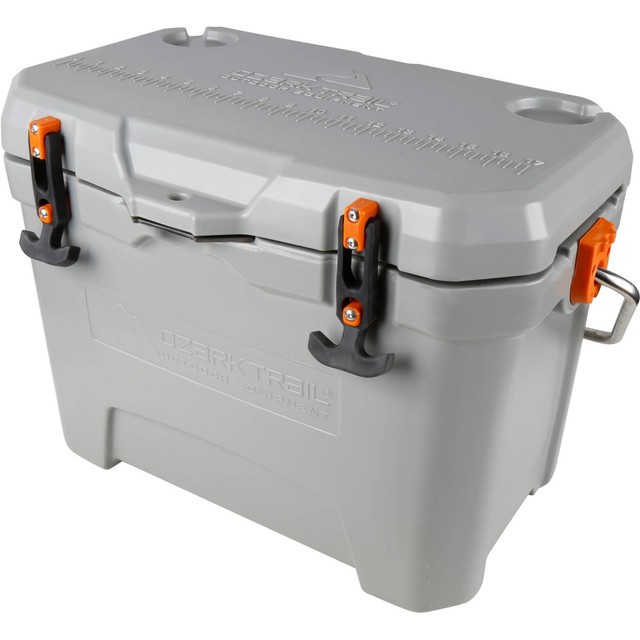
there was really no room in the refrigerator for the beer.  And beer left out gets warm.  How to keep it cold?  Get a cooler.  Not a big one, something reasonable like 26 quarts.

Image result for ozark trail cooler 26 quart

But a cooler needs ice.  OK.  Most RV parks have an ice machine.  But what a drag going to get ice every couple of days.  What was needed was a ready supply of ice.  We solved that problem by purchasing our very own handy dandy ice machine that was top rated.

We like it.  It makes ice on a steady basis.  Ice is good for the cooler.  A cold cooler is good for the beer.  Problem solved.  The only one who doesn’t like it is Marti.  The sound of the ice dropping into the ice bucket sends him looking for a place to hide.  We’re sure he will adjust in time to the new sound.  We do turn it off at night.

We’ve now come again to the end of our day.  It’s been a fun, fascinating day of learning and discovery.  I promise, a full report of all that we did today in tomorrow’s blog.  Thanks again for joining us today we’re glad you were able to travel with us on The Road of Retirement.   In closing, I discovered the following today and wanted to share it with you:

20180907_155435

As always,  if you are coming to the end of your day with concerns and worries, let me suggest that you turn them over to God.  After all, He is going to be up all night so why not let him handle them for you.

Time now for our evening prayers and eventually some shut-eye.  Till tomorrow.

These are the voyages of  Graybeard and it’s occupants, four paws and two humans.  Our continuing mission: to explore as many new states as possible, to seek out new acquaintances and make new friends, to boldly go where we have not been before