June 10th, Maine Granite Museum

So today was another day of travel and discovery.  We were out and about for a good 6 hours and covered another 100 plus miles.  We discovered the Tidal Falls Preserve, we met three of God’s beautiful people – Debbie here with Barbara – whose story we’ll share with everyone tomorrow.
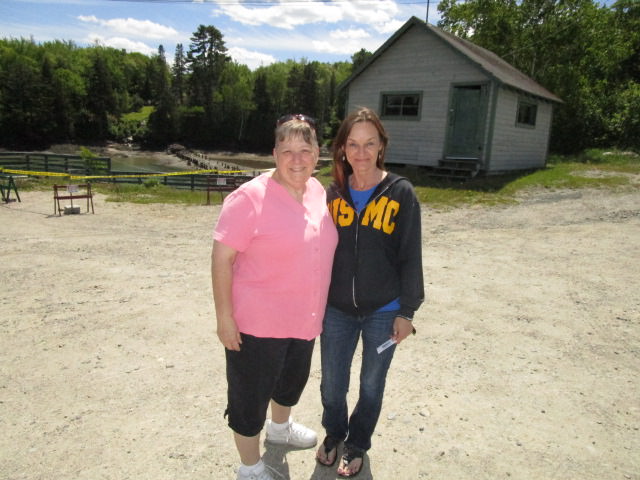
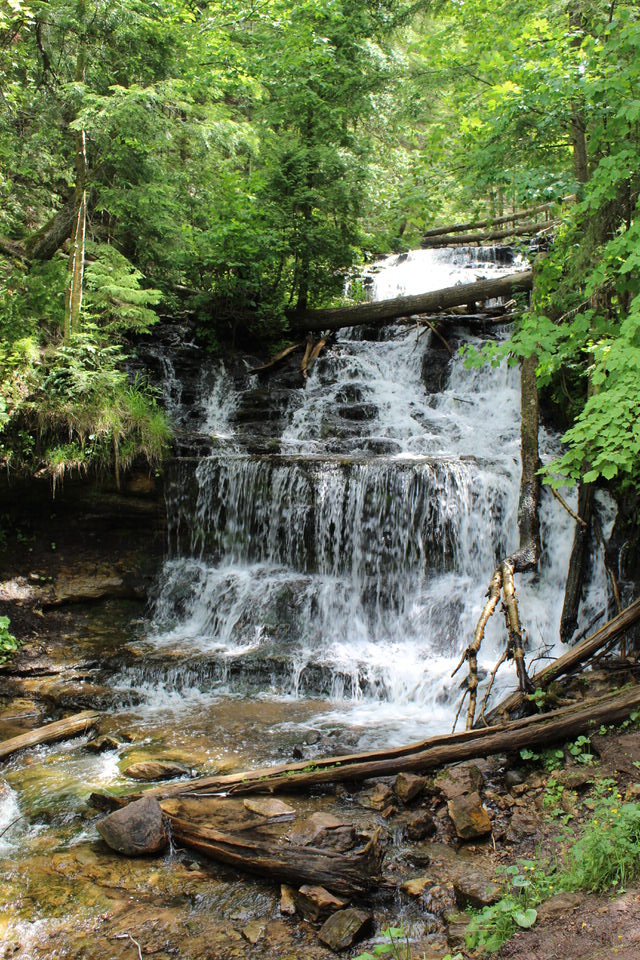
Tidal Falls Barb and Debbie

Also Ben and Sarah.  In fact, Ben and Sarah said they would sent me an article on
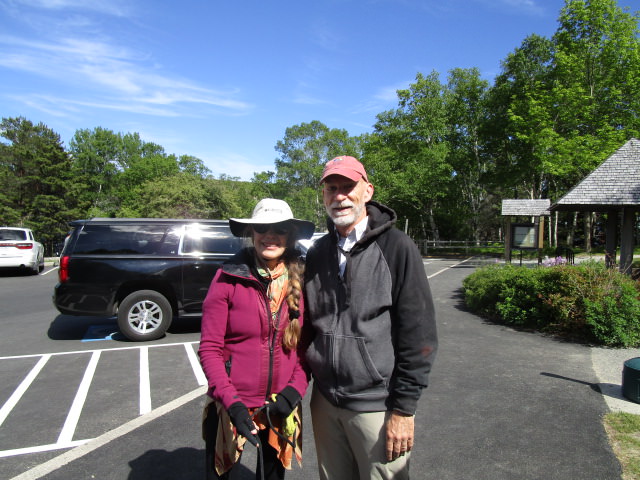
Sand Beach Ben and Sarah

themselves and their journey here to Maine on their sailboat.  I’m looking forward to sharing that with everyone hopefully tomorrow.

In addition, we collected some more stamps for Barbara’s National Passport Book, and found one more sculpture that was in Bar Harbor.  All in all it was another wonderful day of doing what we love to do best which is immersing ourselves in the culture and history of an area we are in.

That’s all to come yet, tomorrow night, I promise.  Oh, a couple of quick funnys.  Want to throw a server at a Maine roadside food stand for a loop?  Ask them for a chili dog .  Barbara did and they gave her that deer in the headlight look.  Then she really threw them a curve, Barb asked them to put sauerkraut on her hot dog.  The poor girl had no idea what she was talking about.  I guess we’re not in Jersey anymore.

However, for tonight we are going to go back a couple of days and cover a museum we discovered quite by accident.  Perhaps, you remember the other day we were at Franklin Memorial Park?
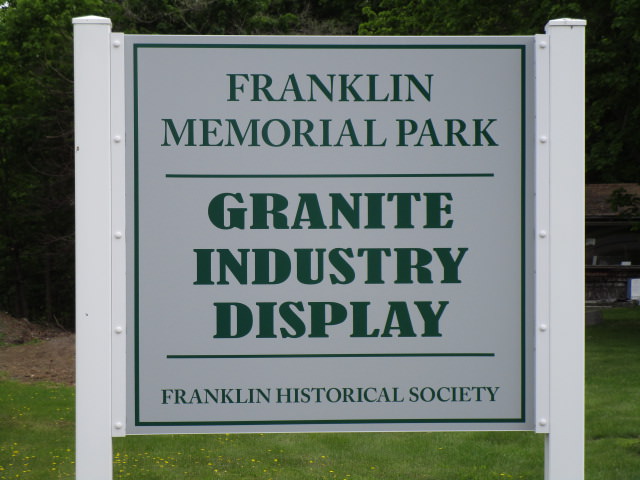
Franklin granite display sign

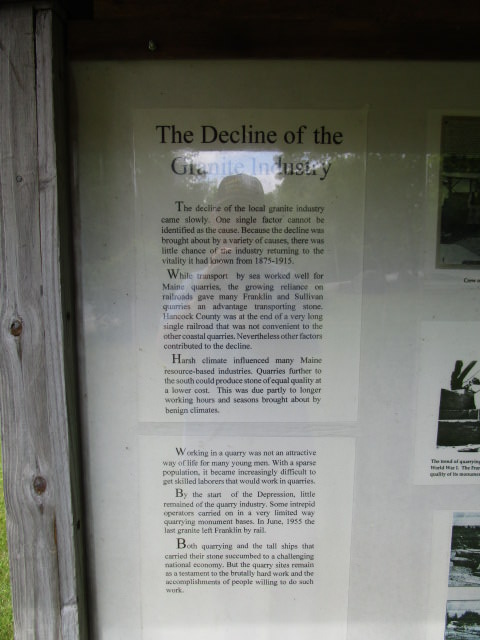
There was a display in the park that detailed the rise and fall of the granite industry in
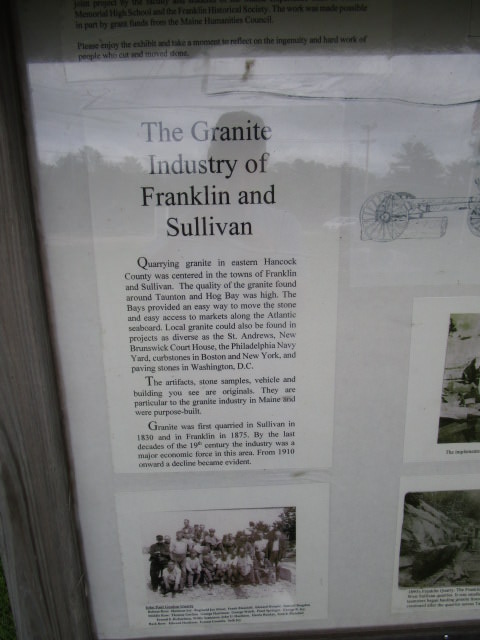
Franklin granite granite industry franklin and sullivan

Franklin granite decline of


Franklin and Sullivan County.  Well, I couldn’t let it rest at that I just had to know more about the industry as a whole. That in turn set me off on the road of discovery regarding the granite industry in Maine.  That road led us to the Maine Granite Museum
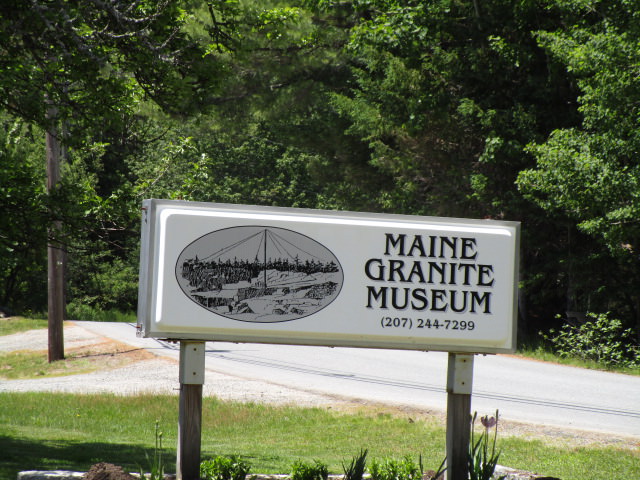
maine granite museum.

Once inside we found Steve Haynes who is the owner and curator of this museum and who possess a wealth of information regarding the granite industry in Maine.  He also stated that he himself went to work in a quarry at the very young age of  11.   He stated that the museum  houses hundreds of the tools used by the quarrymen, blacksmiths, stone cutters and stone carvers. To date on display are over 350 historic photos, company ledgers, books, Union badges and so much more related to the quarry industry in Maine.  He also shared with us that he has a barn full of blacksmith tools and equipment just waiting to be restored and displayed.  Below are a few pieces from that collection.
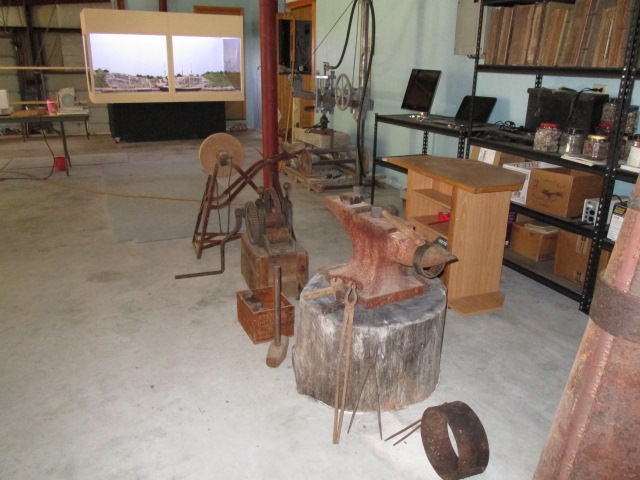
maine granite museum derrick blacksmith to be restored

We discovered that granite quarrying began in Maine about 1830 and grew steadily until early in the 1900’s.  “Men from Scotland, Finland, Sweden…all came to America
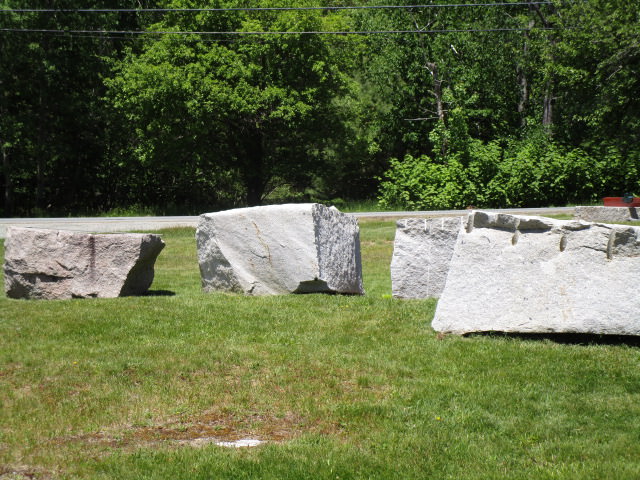
maine granite museum blocks of granite frt lawn

to perform the cutting of the granite,” Haynes said. “These men believed they were building the pyramids of America.”  The quarrymen used skill and specialized tools to split the granite without shattering it, whether for a one-foot paver or a 50-foot column.

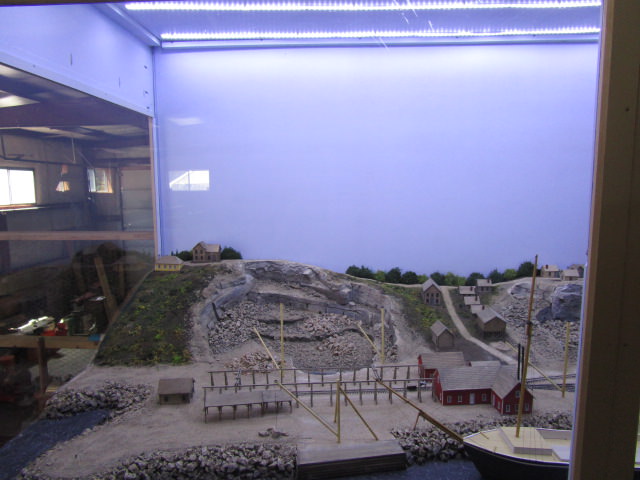
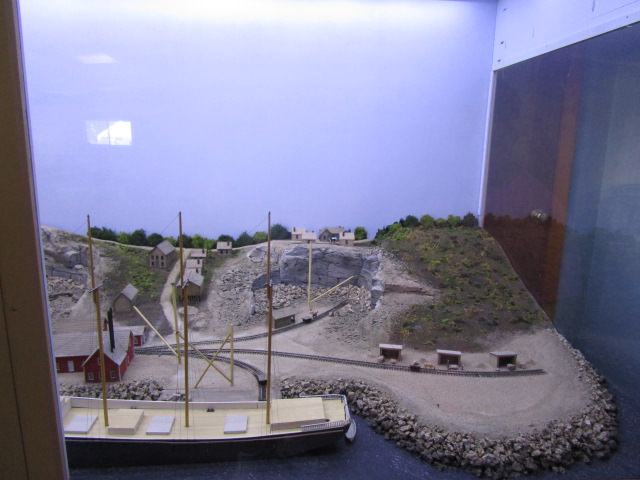
We learned, that at one time, there were a number of different quarry’s in the Mount Desert area.  Each quarry produced a different variety of granite, in color, grain and strength.  One such quarry was the Hall quarry.  Following is a model and a diorama of that quarry.
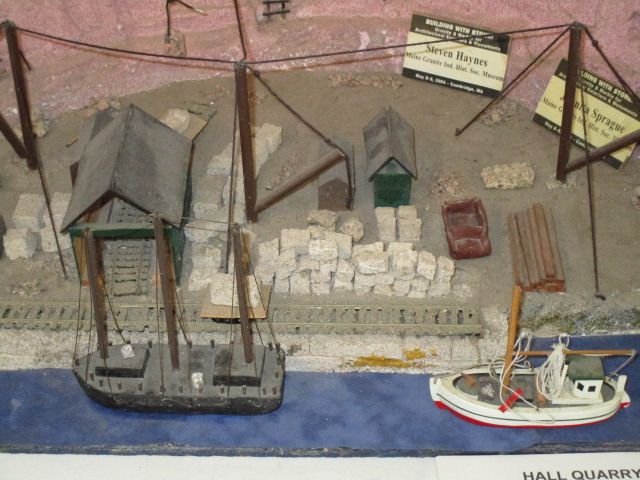
 

maine granite museum hall quarry model

maine granite museum hall quarry dio

maine granite museum hall quarry dio 2

Maine granite was used for lighthouses, cemetery stones, paving blocks, curbstones, bridges, and monuments. Many large public buildings such as libraries, post offices, customs houses, and museums built at that time in the eastern US, including New York City, Washington, DC, and Chicago are also made of Maine granite.  The many rooms, walls and arches of Fort Knox were constructed of Maine granite in 1832. Maine granite was known across the U.S. and Europe for its strength, size and beauty.  Below is a picture of quarried blocks destined for a building somewhere in the east.
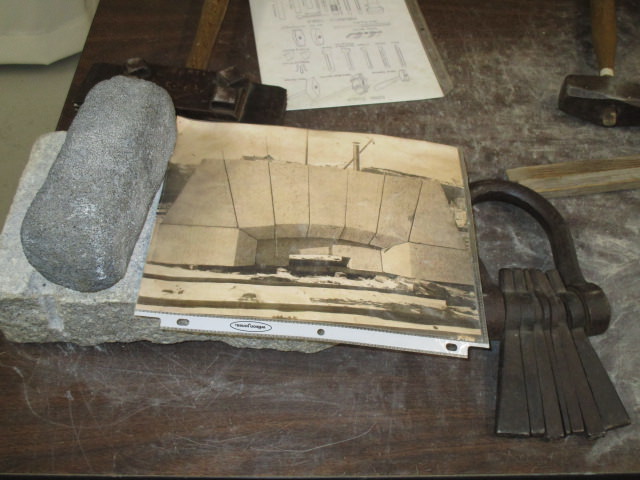
maine granite museum example of stones used for buildings

When you look at these blocks keep this in mind.  When a building was to be constructed specifications, blueprints, etc. were sent to the quarry indicating the size and shape of each individual block.  A team of masons would then work for about two weeks to shape each block into the required size and shape. Here are some pictures of the tools they usually used.
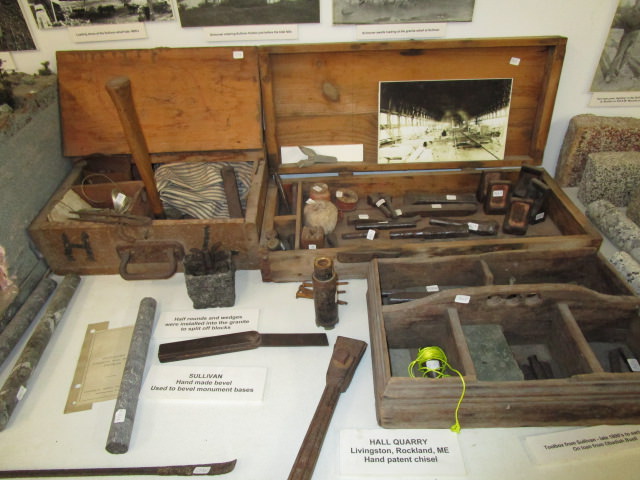
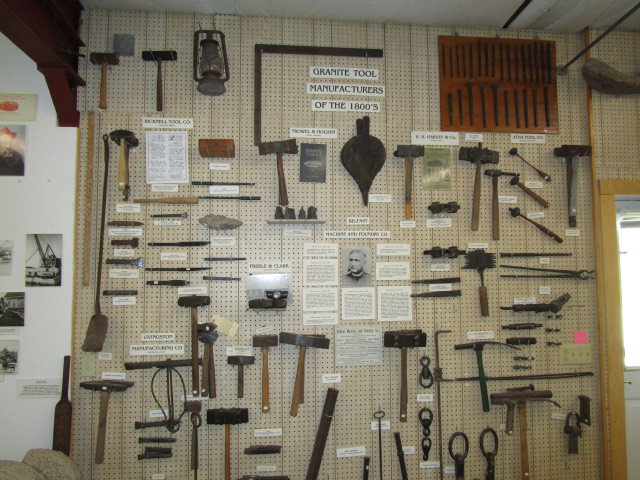
maine granite museum stone mason tools

maine granite museum stone mason tools 2

After they were finished with each block, it was then inspected and if it passed it was loaded onto a sloop for delivery to the construction site.   Being close to water gave Penobscot Bay’s granite industry an advantage. Shipping granite was cheaper and more efficient by schooner and sloop until the end of the nineteenth century, when improving rail service allowed other states to participate in the granite trade .
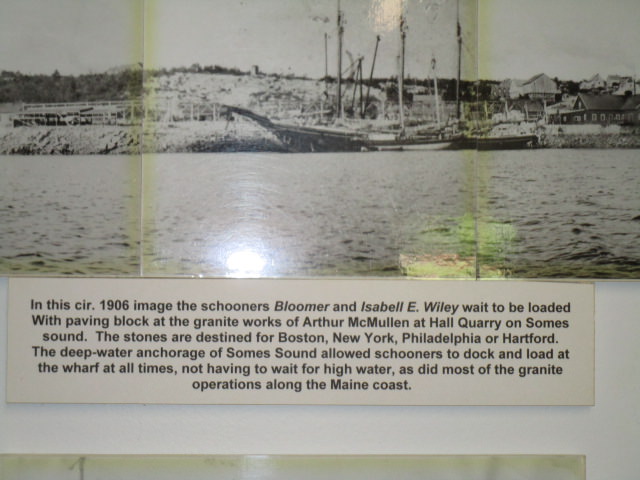
maine granite museum schooners waiting to be loaded

When the sloop reached its destination, the granite block was off loaded and inspected again.  If it failed to pass inspection at the dock, Steve told us, it was rejected and thrown into the ocean.  Steve then explained that many islands and coast lines in Maine changed shaped over time because over 65% of the granite blocks would ultimately be rejected and heaved into the ocean.

Backing up a bit, getting the granite block out of the quarry required some pieces of special equipment.  One was a derrick.  The derrick had a boom made of a stout pole

Quarry-Hoisting-1

with a secondary pole attached at the base that could be swung around and raised and lowered. It was the secondary pole that moved the stone.  To pick up large blocks of stone, quarriers used dog holes. Dog holes are small indentations on each end of the

Quarry Chain & Hooks Lifting System

block. A cable with hooks at the each end of a line was placed in the holes, the cable was drawn up tight and thus was able to lift the block.

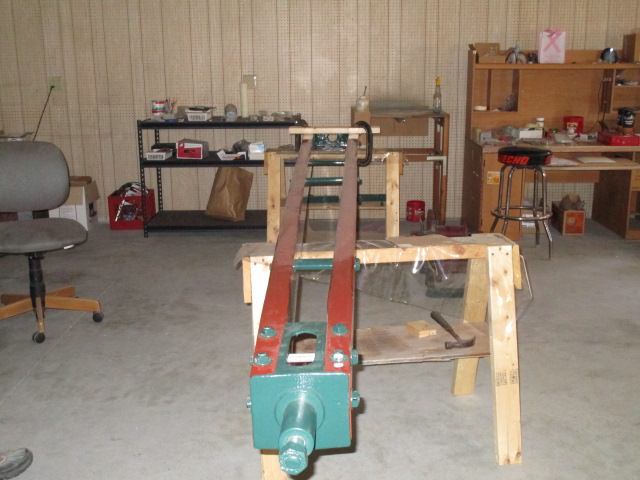
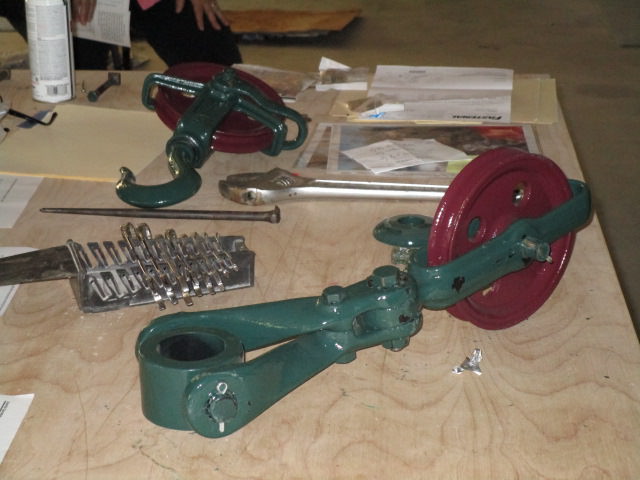
At the museum, Steve is in the process of putting the finishing touches on a derrick that he rescued and restored over the past two years.  Here are the pieces that have just been refinished.
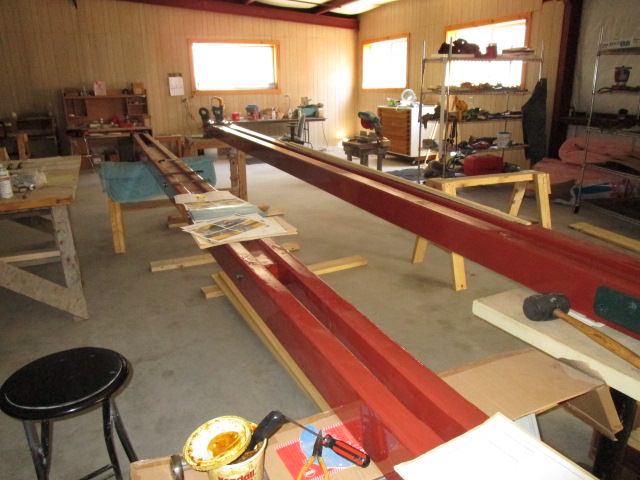
maine granite museum derrick restored 1


maine granite museum derrick restored 2

maine granite museum derrick restored various pieces for

Here is a picture of the winch that will be used with the restored derrick.
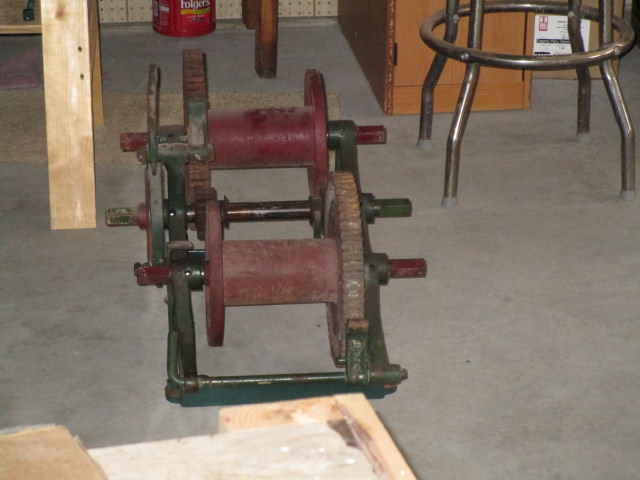
maine granite museum derrick restored winch

This is where on the front lawn that it will finally be assembled and installed.  Some pieces are already in place.  Yes, it will actually be put to use hoisting granite blocks.
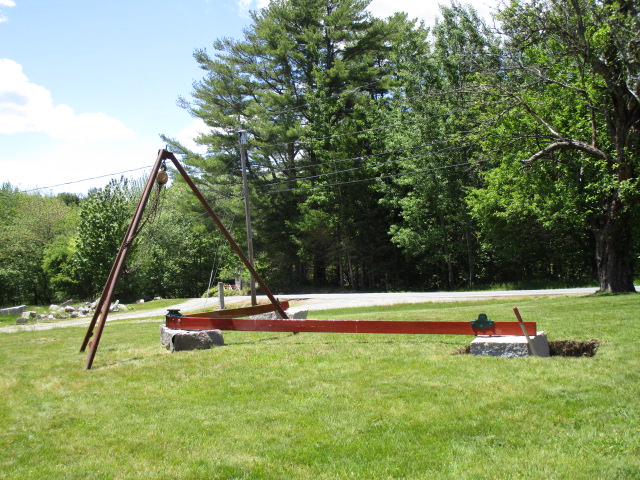
maine granite museum derrick restored on front lawn

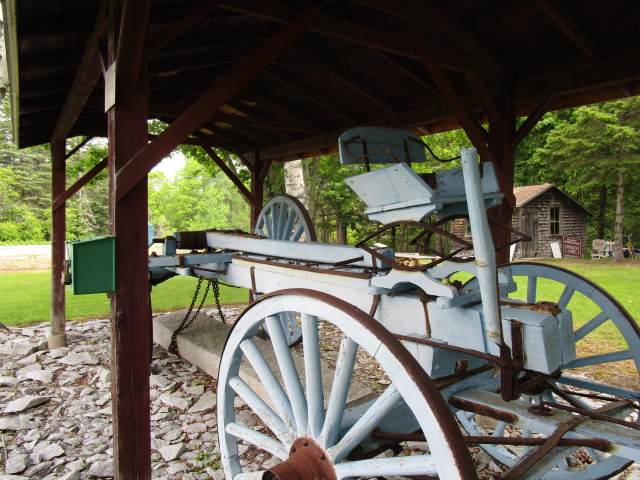
The other piece of equipment used to transport granite blocks was called a Galamander.
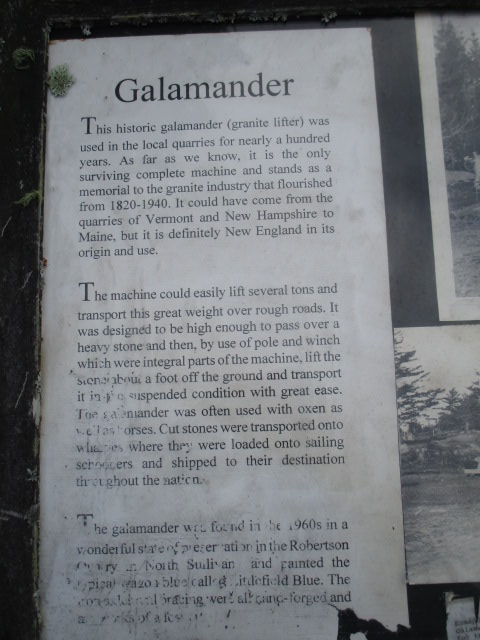
Franklin granite display galamander explained

The galamander is a wagon-like conveyance, about 18 feet long and 6 feet wide. It has four wooden spoked wheels, the rear pair 6 feet in diameter and the front ones 4 feet. The wheels have iron hubs and the wearing surface is also finished in iron. The “frame” of the wagon is a single large wooden beam, to which the rear axle assembly and a front
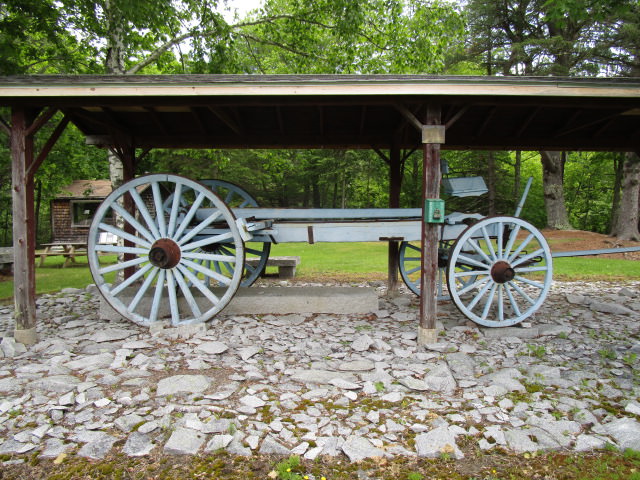
Franklin granite display galamander picture side

swivel mount for the front axle are attached. A simple seat with a metal spring is fastened above the front axle, and a derrick consisting of a single tapered beam is
Franklin granite display galamander picture front

attached to a swivel mount above the rear axle. The derrick was used (in conjunction with a block and tackle) to raise slabs of stone onto and off the galamander. The wagon is braked by friction pads on the rear wheels which are activated by a lever controlled by the driver. The galamander would have been drawn by a team of horses or oxen. This one is only one of two that are still known to exist.

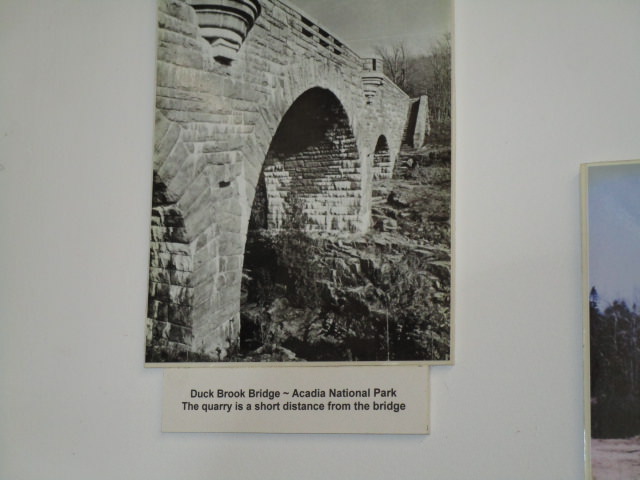
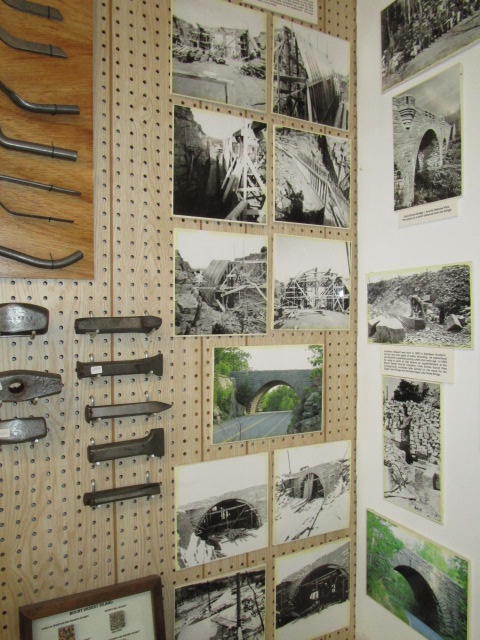
Steve informed us that the granite quarrying was all but finished by the early 1900’s but Rockefeller breathed new life into the industry for a few years when he started construction of the carriage roads and bridges in Acadia National Park.  Below are some pictures of the construction of the bridges.
maine granite museum acadia bridges

maine granite museum acadia bridges 4 complete

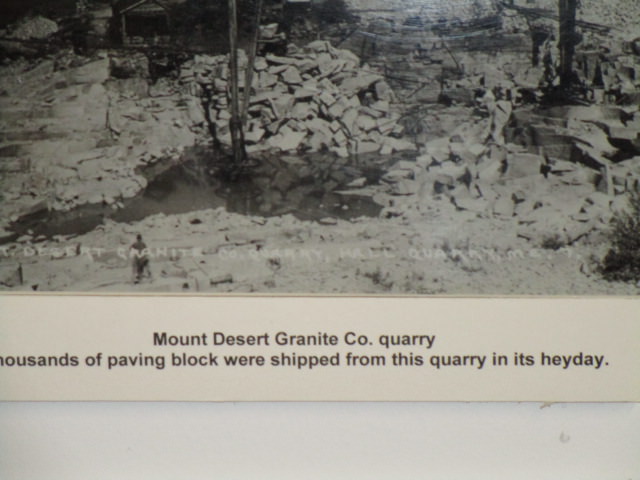
In addition, in 1920, a new market opened, supplying street “pavers,” blocks of granite exported to New York, New Orleans and Philadelphia to pave their streets. Each city required a slightly different size paving stone depending on the size of their horses, mules, oxen and carts.
maine granite museum mt desert quarry paving stones

So, for a time many former quarry workers were once again gainfully employed.  However, Maine’s granite industry declined rapidly in the first half of the twentieth century because of technological improvements in structural steel and concrete, and the opening of new resources in other parts of the country. Thriving quarry towns became instant ghost towns.  There are still active quarrys in the state of Maine today but no longer in the numbers that it used to be.

Well, that’s it for today.  The day itself was another great one for us in so many ways.  As I stated in the beginning, we met three of God’s beautiful people whose stories we hope to share with you tomorrow.  We got out and about and discovered some really fantastic things like the Reversing Tidal Falls which were just spectacular; the story and pictures of which we will bring to you tomorrow as well.

Before we leave you a thought for each of us to ponder:

Image result for Learn from yesterday, live for today, hope for tomorrow. The important thing is not to stop questioning.” —Albert Einstein

As always,  if you are coming to the end of your day with concerns and worries, let me suggest that you turn them over to God.  After all, He is going to be up all night so why not let him handle them for you.

Time now for our evening prayers and eventually some shut-eye.  Till tomorrow.

These are the voyages of  Graybeard and it’s occupants, four paws and two humans.  Our continuing mission: to explore as many new states as possible, to seek out new acquaintances and make new friends, to boldly go where we have not been before


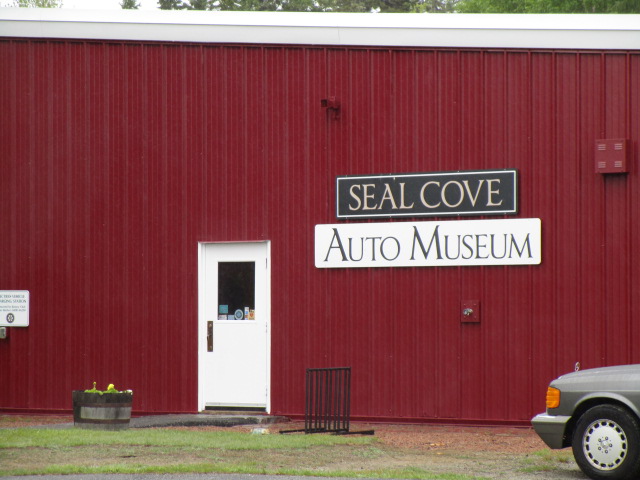
June 9th, Saturday – Back to Seal Cove Auto Museum, YU’s Take Out, J.M. Gerrish Ice Cream

For the last several days our theme song has been When I’m stuck with a day
that’s gray, And lonely, I just stick out my chin and grin, and say, Oh, The sun’ll come out Tomorrow. So ya gotta hang on ‘Til tomorrow come what may. Tomorrow, tomorrow
I love ya tomorrow.
  Tomorrow came today with a beautiful blue sky, a gentle wind, and a bright sunny sky.  Yippee!

No keeping us in today.  We had places to go, stamps to collect, new things to be discovered, and hopefully we’d meet some interesting people along the way.  Well, that’s exactly how the day turned out.  Since we were up early and really didn’t want to bother with breakfast, we made a quick pit stop at McDonalds.  Would have much preferred a local eatery but time wasn’t on our side.  So, we settled for second best.

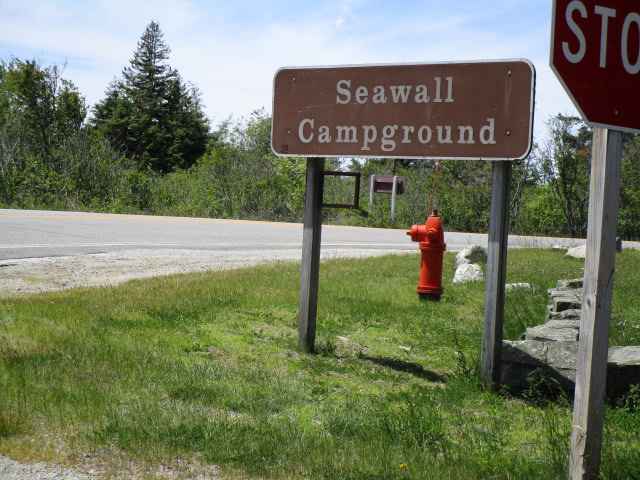
First things first, we were off, of in search of more stamps for Barbara’s National Passport Book.  We had two stops in particular that we needed to make, that being the Thompson Island Visitor Center and the Seawall Campground both part of Acadia.

Image result for thompson visitor center maine

Sealwall Campground

We got both stamps.  Seawall Campground is really not our kind of spot.  No hookups whatsoever.  But it is nevertheless a popular spot for many.  While there we met two very nice and very helpful park rangers.  We talked about the park for a few minutes, they helped us with some directions we needed and then we were back on the road.

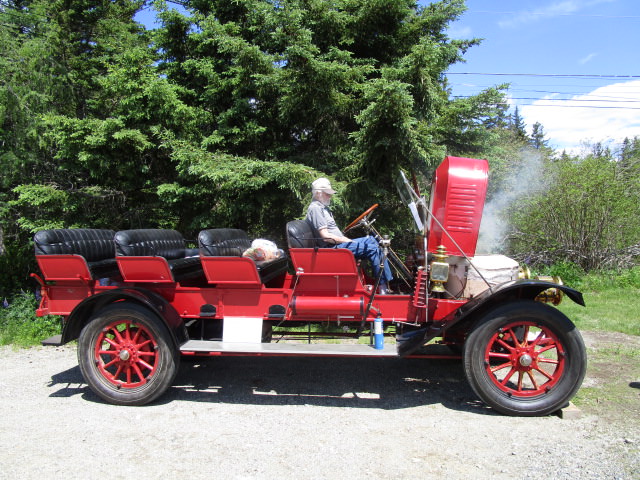
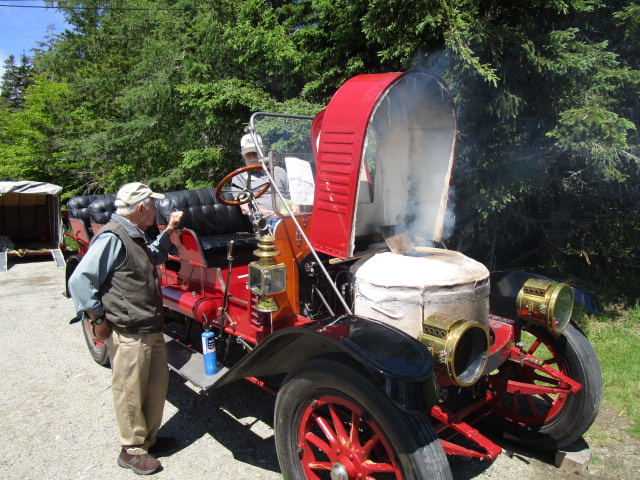
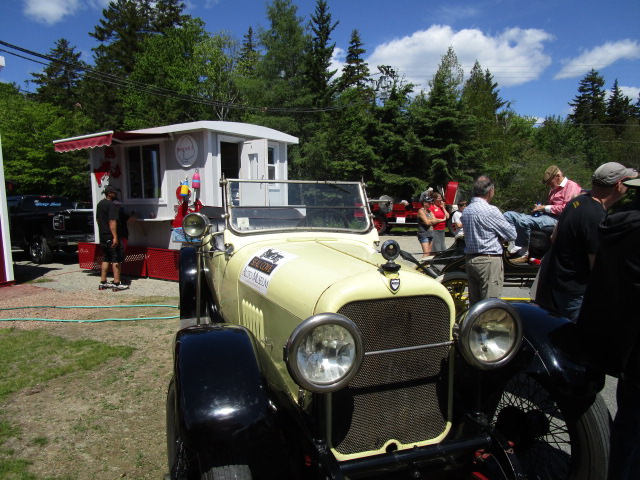
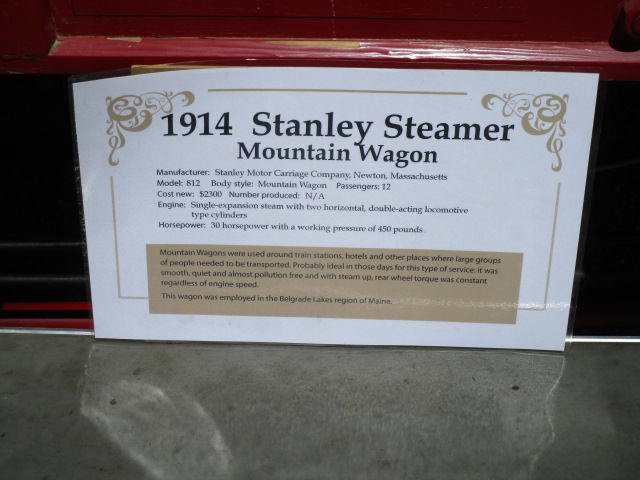
We revisited the Seal Cove Auto Museum since today was designated Coffee and Steamers (as in Stanley Steamers) Day.  They were offering rides on the 1914 Stanley Steamer Mountain Wagon, if they could get it lit, and if it had brakes.   Both were in question.

Saturday coffee and donuts wagon 1914 Stanley Steamer

Unfortunately, they were never able to get it fired up.  I was able to talk with the

Saturday coffee and donuts wagon trying to fire it up

Saturday coffee and donuts wagon trying to fire it up 2

volunteer mechanics and they believe the jets that provide fuel for the main boiler had become gummed up again.  Darn, I was really hoping to get a ride in it.

They also had what I call the community car outside (remember they were working on it a couple of days ago because it had no compression on cylinder #1) but it too was not

Saturday coffee and donuts community card only 3 cylinders

going anywhere.  They were never able to get the issue with cylinder #1 sorted out so it was only running on three cylinders and thus not fit to take out for a ride either.  Oh, well, maybe another time.

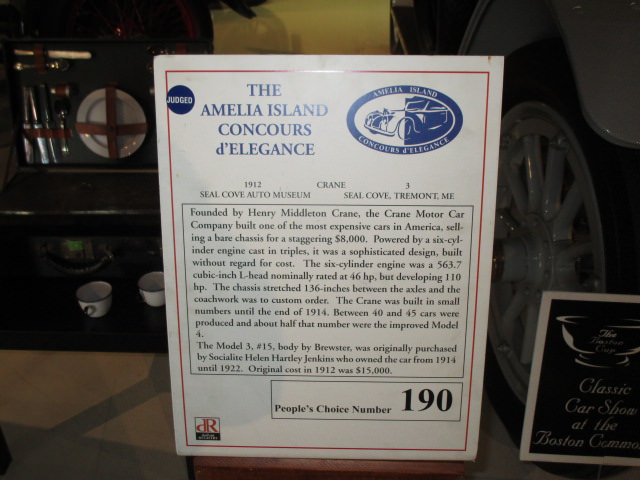
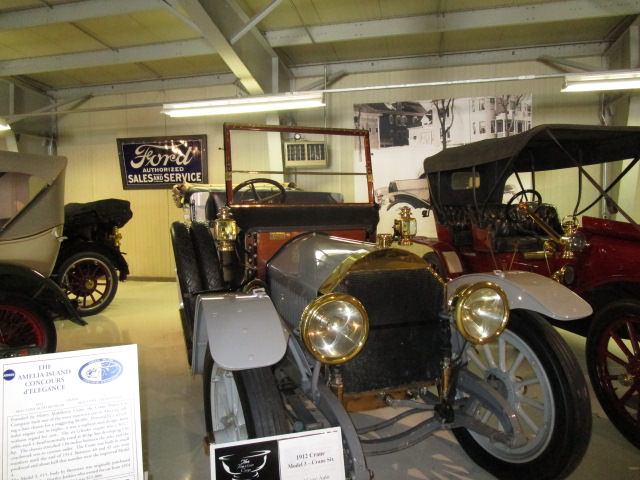
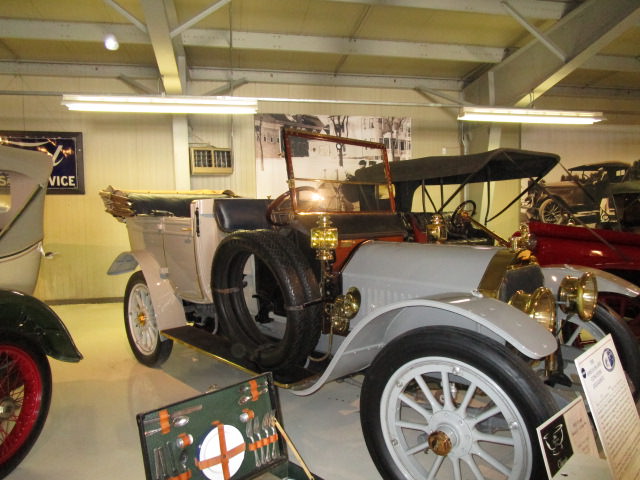
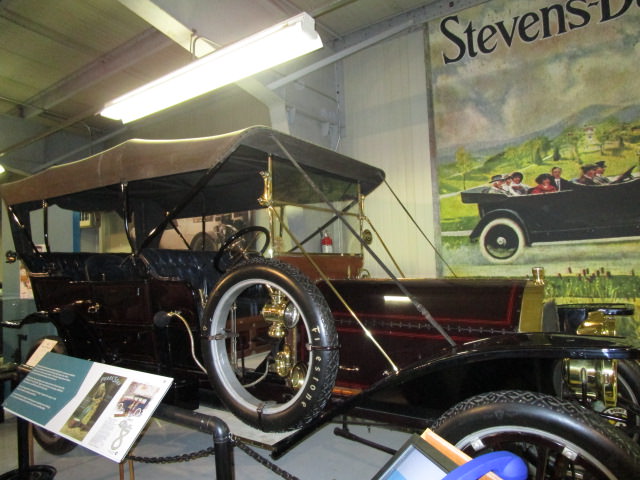
No rides, so what to do while there?  Of course, take more pictures of the cars I missed the first time.  So here we go.  The first is a 1912 Crane which was considered the most expensive car in America.  A basic chassis went for a staggering $8,000!  It was built in small numbers until 1914.

Saturday coffee and donuts 1912 crane

Saturday coffee and donuts 1912 crane picture

Saturday coffee and donuts 1912 crane picture 2

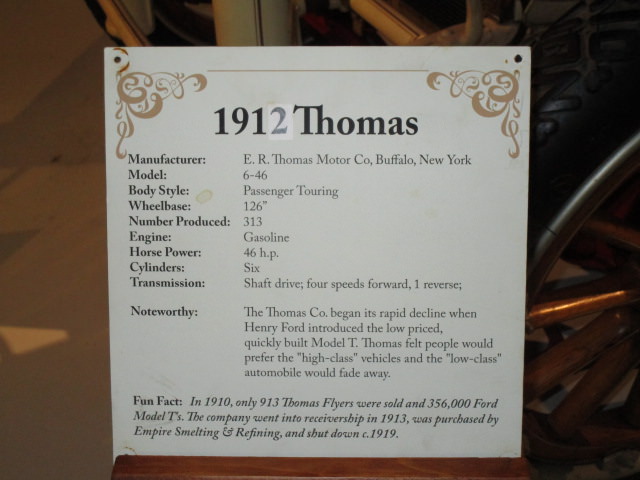
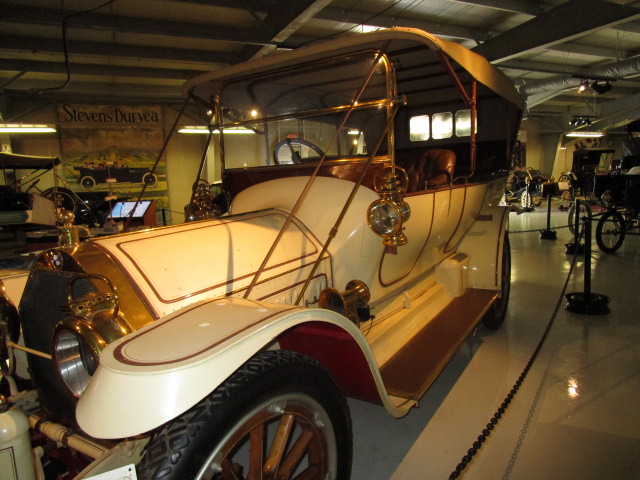
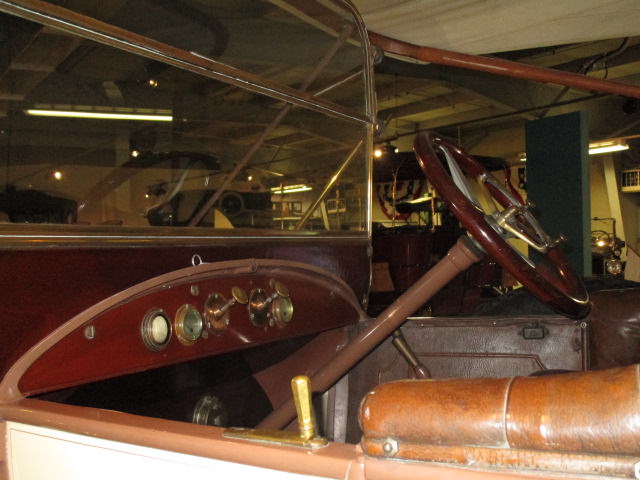
This is 1912 Thomas, which simply could not compete with the mass produced Ford Model T, went out of business very quickly.

Saturday coffee and donuts 1912 Thomas

Saturday coffee and donuts 1912 Thomas picture

Saturday coffee and donuts 1912 Thomas dash

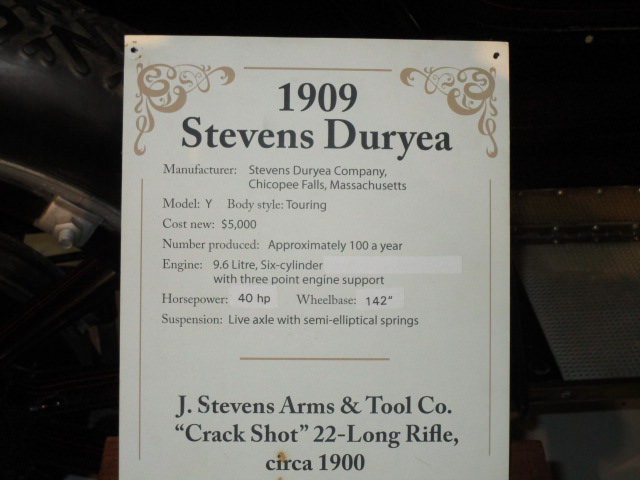
A 1909 Duryea

Saturday coffee and donuts 1909 stevens durvea

Saturday coffee and donuts 1909 stevens durvea 2

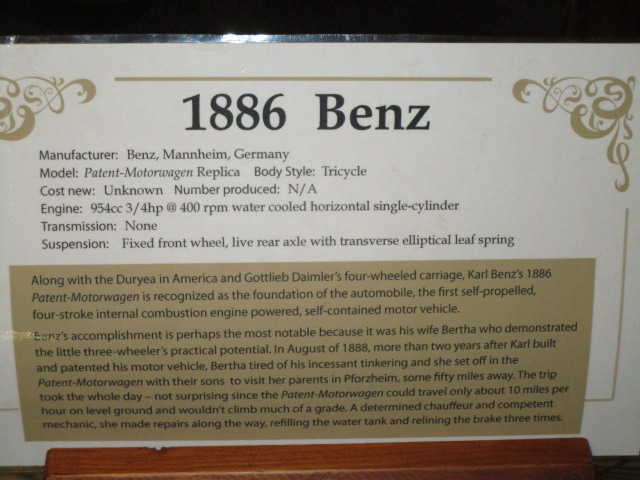
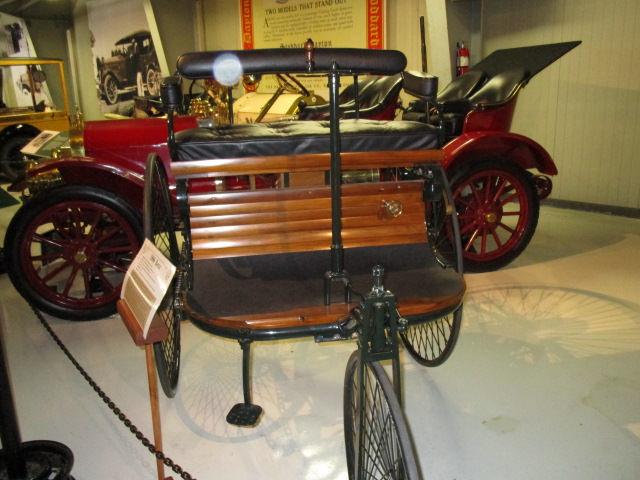
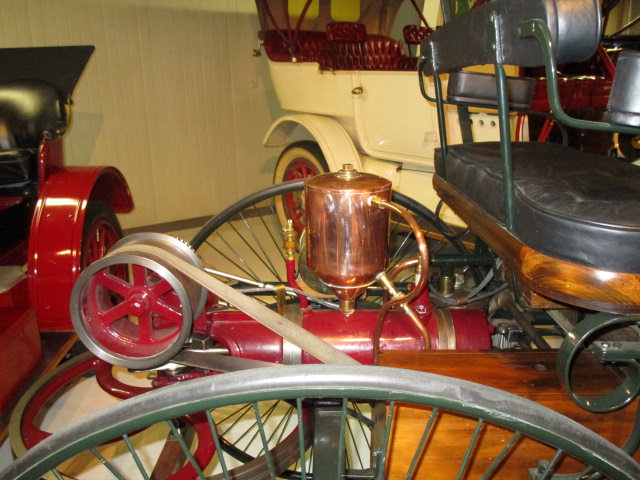
The 1886 Benz is recognized as the foundation of the automobile, the first self-propelled, four-stroke internal combustion engine powered, self-contained motor car.  It was the inventor’s wife, Bertha, who proved the worth of his invention.  She took their sons to visit her parents some fifty miles from their home.  The trip took her all day but her success brought her husband Karl’s car to the attention of the general public.

Saturday coffee and donuts 1886 benz

Saturday coffee and donuts 1886 benz picture


Saturday coffee and donuts 1886 benz engine

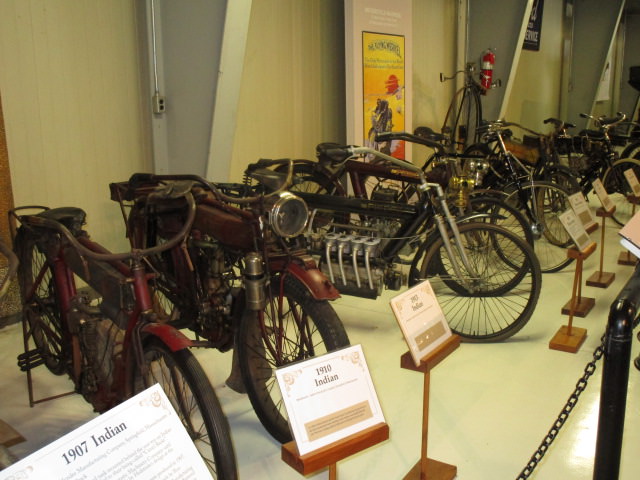
This time I was able to also get a picture of a display of early Indian Motorcycles.

Saturday coffee and donuts motorcycles 2 indian


Once finished at this museum, we were off in search of the Maine Granite Museum.  But there is much, too much to share regarding this museum so it will have to wait until tomorrow.

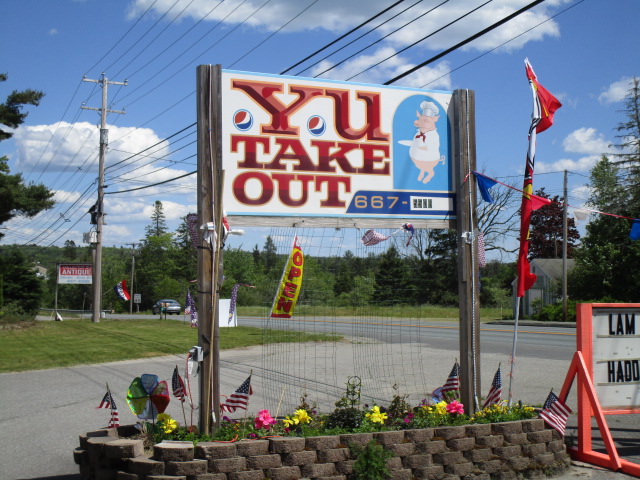
But we’re not finished yet.  On the way home, we decided to get a bite to eat.  We had heard about an eatery called Yu’s Take Out.

Yu take out

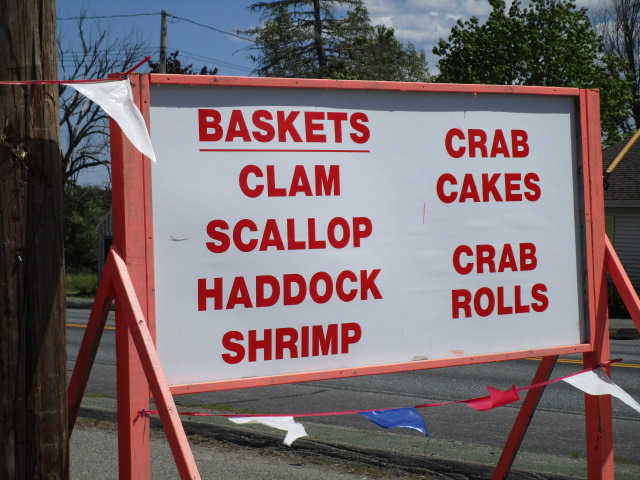
They had a big menu board out front.

Yu take out menu board

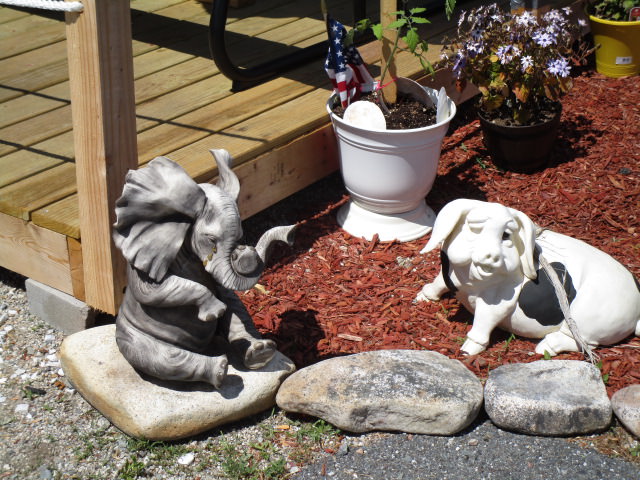
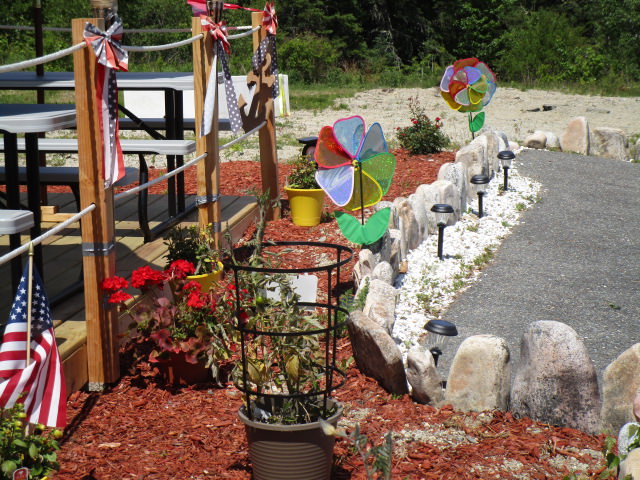
Some interesting lawn decorations.

Yu take out interesting lawn decorations

Yu take out interesting lawn decorations 3

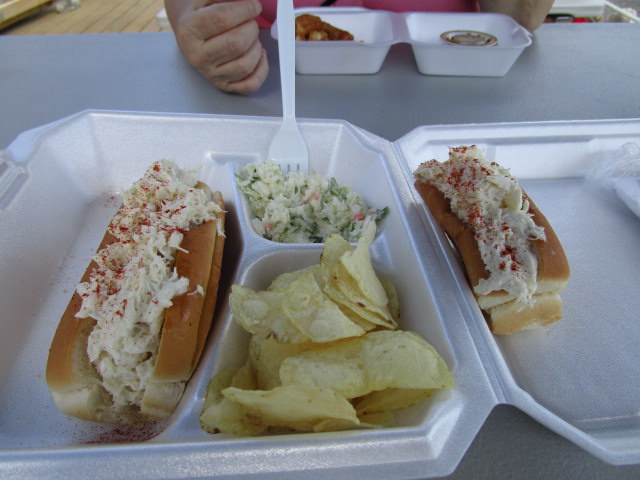
Regarding the food?  They had both Chinese takeout and their specialty which was lobster or crab meat rolls.  I decided it was time to try the latter.

Yu take out crab meat roll

Yes, the crab meat roll was delicious.  As good as lobster?  Maybe.  Each is different and each has a unique flavor.  I’d have one again in a heartbeat.

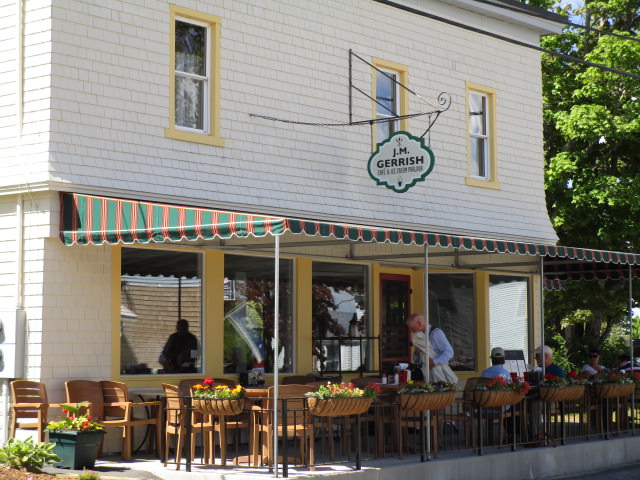
One more stop to make.  In Winter Harbor, there is an ice cream parlor we’ve had our eye on for some time called J.M. Gerrish.

gerrish ice cream palor

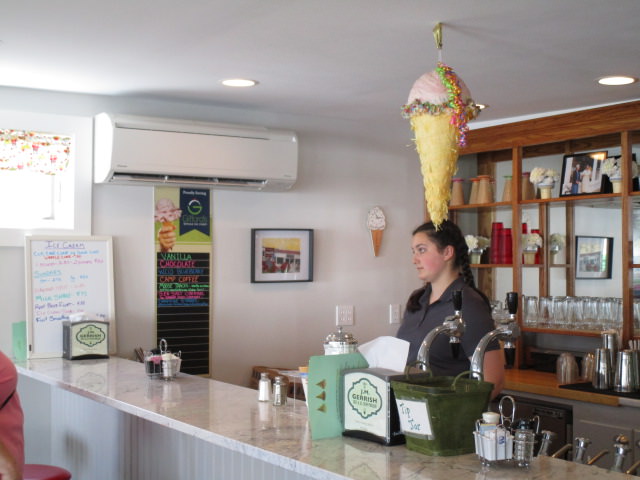
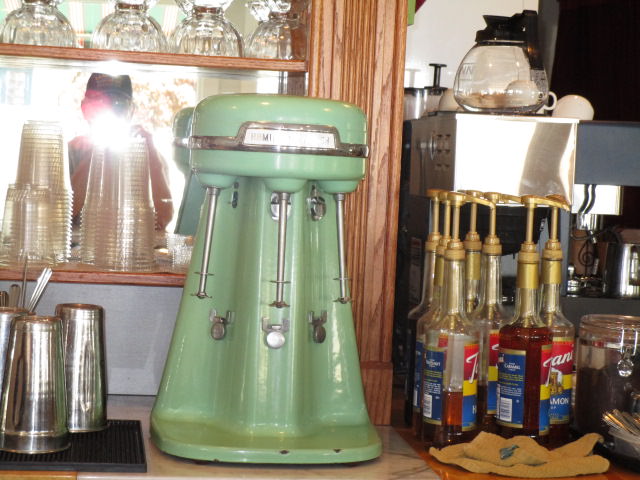
They had an old-fashioned ice cream counter and an old-fashioned shake machine

gerrish ice cream palor counter and server

gerrish ice cream palor old fashioned shake mixer

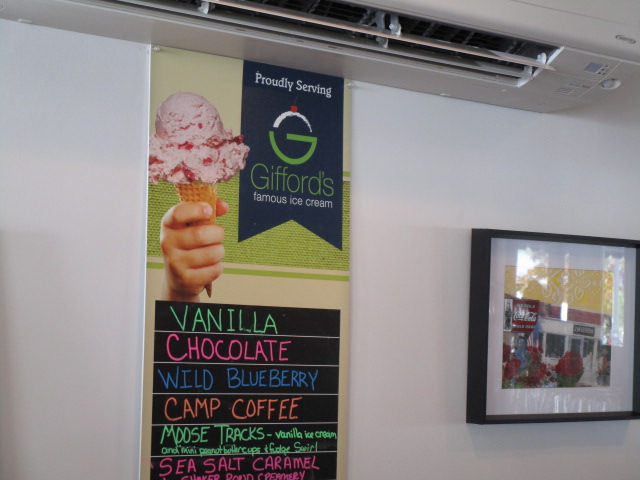
They also sold Gifford’s Ice Cream.  Never heard of it?  Neither had I but I discovered it is as famous as Ben and Jerry’s here in Maine.

gerrish ice cream palor giffords ice cream

The story of Gifford’s Famous Ice Cream goes back to the 1800s, when an industrious young man named Nathaniel Main from Pawcatuck, Connecticut, started a home delivery milk and ice cream business from the back of his horse-drawn wagon. Fifteen years later, Nathaniel’s oldest son, Chester, got involved in the family business. Eventually, Chester’s daughter, Audrey, married her college sweetheart Randall Gifford and together they forged a splendid path that led to Skowhegan, Maine, and to the birth of Gifford’s Famous Ice Cream.

The family began creating small batches of creamy ice cream using Audrey’s parents’ recipes for strawberry, peach, wild blueberry, and coffee. The first seasonal ice cream stand was opened in Skowhegan, followed by another in Farmington. Eventually, Randall and Audrey sold the milk portion of the dairy business to Oakhurst Dairy. Their sons Roger and John took over the ice cream portion of the business and transformed the milk plant into a world-class ice cream factory.

Today, Gifford’s sells 1.7 million gallons of ice cream each year and serves more than one million cones each summer from five family owned and operated stands. The company offers 100 unique ice cream flavors, frozen yogurt, sherbet, and sorbet. The ice cream can be found in grocery stores, independent ice cream shops, colleges, universities and restaurants all the way from Maine to the Mid Atlantic, to the Mid-West and as far West as Nevada.

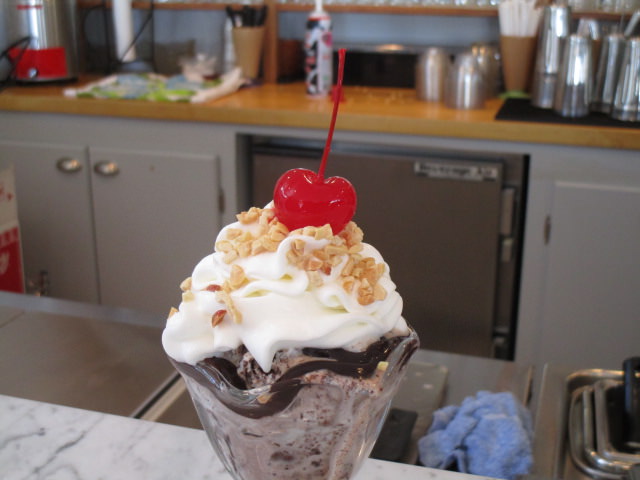
While eating our ice cream Sundays a steal at $6 for two we got to talking with the two

gerrish ice cream palor sunday two for 575

servers behind the counter.  Yes, they said, business is slow right now, but give it another two weeks and they will be serving about 300 customers a day!  June 15th when the kids get out of school is, they stated, when things really begin to get crazy.  That will continue right through Labor Day.

We’re now at the end of our day.  A rather short one by our standards, only about 7 hours and just over 100 miles.  It was a full day, a day full of adventure, of new discoveries, of new places, and new acquaintances.  Barbara asked me on the way home, So have you finally had you fill of fish and lobster for the time being?  I guess so.  At least for the next day or two, OK, maybe three or four!  Once again it was our kind of day, traveling along, singing our song, side by side.  We hope you also had a chance to do something you’ve been wanting to do for some time.  If not, why not?  Get out and enjoy the life that God has given you, make the most of each day, make the time to live your dream.  Now in closing a thought for each of us:

Image result for inspiring quotes don't let fear rule you

As always,  if you are coming to the end of your day with concerns and worries, let me suggest that you turn them over to God.  After all, He is going to be up all night so why not let him handle them for you.

Time now for our evening prayers and eventually some shut-eye.  Till tomorrow.

These are the voyages of  Graybeard and it’s occupants, four paws and two humans.  Our continuing mission: to explore as many new states as possible, to seek out new acquaintances and make new friends, to boldly go where we have not been before
 

June 8th, Friday – A Quiet Day

So they promised us a warm, sunny day.  Why is it that we awoke to the sound of rain on the roof?  Once again I believe someone was looking at the wrong charts or whatever.  But guess what?  By 10 am things began to clear up and the day turned out to be beautiful, warm and sunny like they said it was supposed to be.

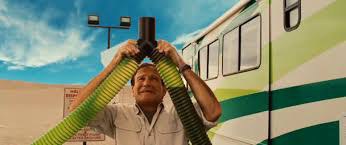
The only real chore we did today was driving over to the dump station to clear the tanks.  That in itself was no big deal.  We cycled the jacks up, slid the slides in, rolled the awning away, left everything on the counter and slowly motored over.  Suffice to say we had much better luck than our friend Robin Williams had.  Within 30 minutes we were back and all settled in again.  It

Related image

probably took more time to describe it then it actually took to accomplish it.

As to what else we did.  Barbara spent a good part of the day making phone calls trying to obtain information regarding forms she had to fill out.  Her persistence paid off and in the end she had all the information she needed.  Me, I really did a whole lot of nothing.  And you know what?  I don’t feel bad about it.  I know when I’ve pushed my knees and my back too far and yesterday was one of those days.  So today, I just sat back and gave myself permission to  do not much of anything.

Tomorrow we’ll be out and about again.  We have to go get a few more stamps for Barbara’s National Passport Book.

Image result for national passport book

We’re going back to the Seal Cove Auto Museum for what is called Cars & Coffee which is an opportunity for drivers to show off their own special cars, and for all auto

entrance sign

enthusiasts to congregate to kick tires, peer under hoods, and enjoy coffee with their fellow car-lovers. The June Cars & Coffee will feature steam cars! The Cars & Coffee in the morning will be followed by steam demonstrations in the afternoon, and rides in the museum’s cars, weather permitting.

We also are planning to visit the Maine Granite Industry Historical Society Museum. Not only does the museum provide great exhibits to view, but there is also the opportunity for

Related image

visitors to learn how granite was quarried, cut, and processed long before we had the large equipment that is available to us today.

Enough for now.  The day is long gone and night is once more all around us.  It’s been a great day of doing almost nothing that we absolutely enjoyed.  That’s the beauty of being on the road of retirement – you can pick and choose whatever you want to do in any given day and not feel guilty about it.  We hope your day was a rewarding one as well, no matter what you had to do.  In closing, I leave you with this thought:

Image result for inspiring quotes retirement

As always,  if you are coming to the end of your day with concerns and worries, let me suggest that you turn them over to God.  After all, He is going to be up all night so why not let him handle them for you.

Time now for our evening prayers and eventually some shut-eye.  Till tomorrow.

These are the voyages of  Graybeard and it’s occupants, four paws and two humans.  Our continuing mission: to explore as many new states as possible, to seek out new acquaintances and make new friends, to boldly go where we have not been before
 

June 7th, Wednesday – Maine Sculpture Trail, Caterpillar Hill, America’s Cup, Greatest American Naval Defeat before Pearl Harbor

They promised us a warm, clear day.  Well, someone got it wrong.  It was still only in the 50’s and it remained cloudy all day.  At least we didn’t have any rain although it threatened all day.  However, that didn’t stop us.  It was time to go find more sculptures and whatever else we might happen upon along the way.

So off we went.  We were in quest of several more sculptures that make up the Maine Sculpture Trail.  You would not know it by looking at the towering sculptures created through the organization’s efforts, that the whole idea was started by Jesse Salisbury who grew up in the very rural town of Steuben, Maine. Supported by friends, family and partnering communities, Jesse Salisbury’s vision resulted in the Schoodic International Sculpture Symposium.

From 2007 to 2014, Maine’s Schoodic International Sculpture Symposium drew artists from all over the globe who participated in five summer sessions.  Using locally quarried granite and basalt, the sculptors who hailed from 16 nations created various sculptures.  The resulting Maine Sculpture Trail  is a  34 piece outdoor exhibit spanning over 200 miles along the coastal region of Downeast Maine.  It winds through Hancock and Washington counties and includes pieces in Bangor, Orono and Old Town. The Maine trail also is linked to a similar project — Sculpture Saint John — across the border in Canada’s New Brunswick Province.

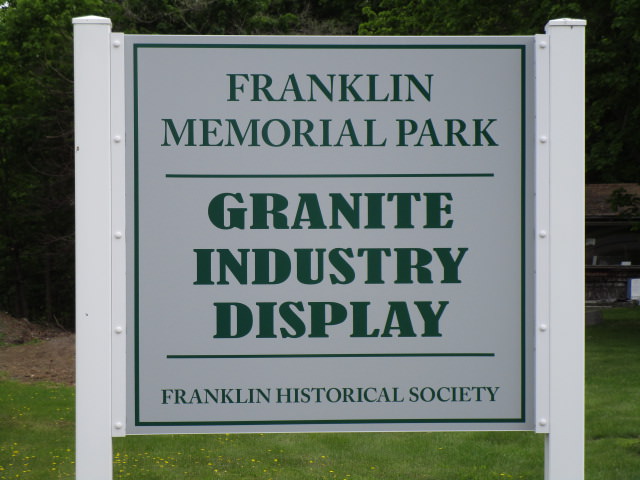
We have already shared some of the sculptures with you and we want now to share some more that we found today.  The first one we went to today is placed in the Franklin Memorial Park that also featured a Granite Industry Display (more about this in the future).

Franklin granite display sign

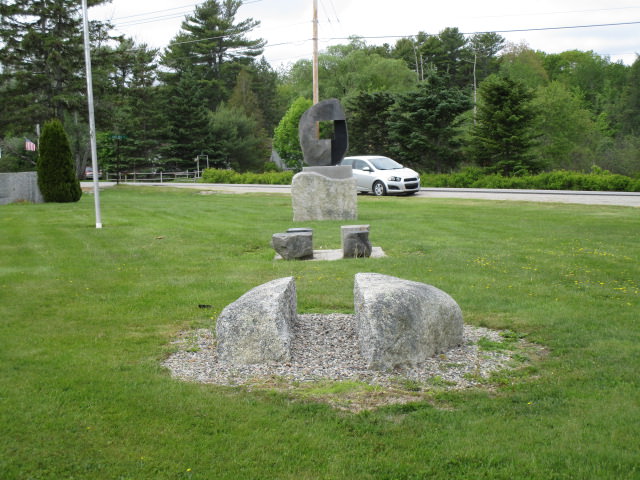
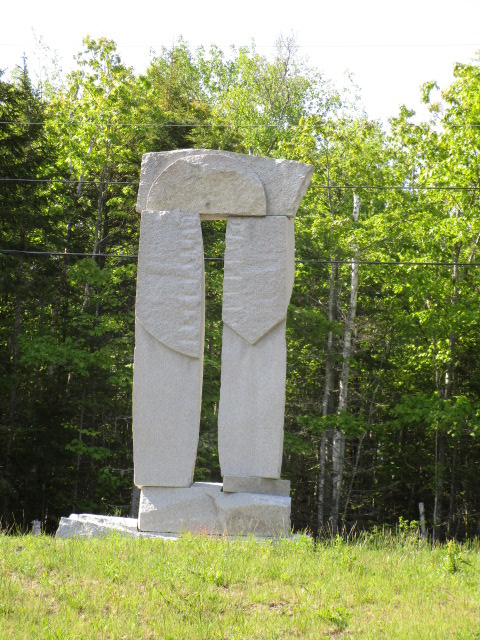
The sculpture residing here was entitled Recurrent Journey.  The artist who created this

Franklin Recurrent Journey better

was Mark Herrington who is from Maine.  He explained his sculpture this way:  There are many things we do that seem to be built within patterns we establish.  We walk down many paths again and again.  This sculpture reflects that journey.

Moving on, we next went to Sorrento where we located this sculpture entitled Gate of the Sun.  This sculpture was created by Jog Plickat from Germany.  He explained his sculpture

Sorrento Gate of the Sun 6-7 (2)

this way:  The sculpture is directed to the north so that the sun will pass behind the sculpture during the day.  From ancient times you find ritual gates in all cultures of the world.  

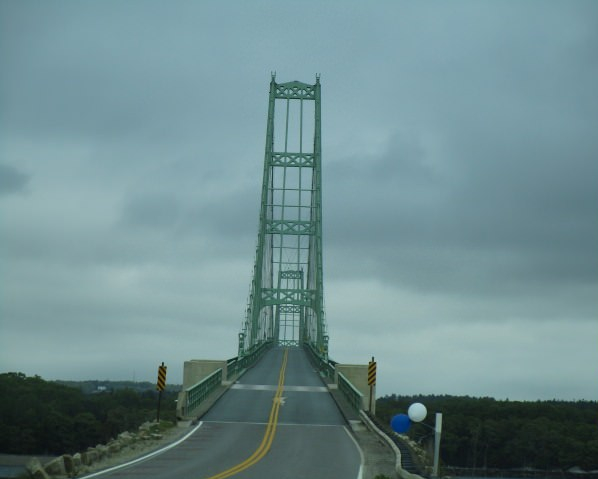
Back on the road again, we made our way to Little Deer Isle which required a trip over

deer-isle-bridge-best.jpg

this bridge and then yet another causeway to Deer Isle.  Eventually we arrived at the park on Deer Isle were the sculpture was located.  The sculpture located here was entitled Deer Isle Project and was created by Attila Rath Geber from Hungary.  

deer isle deer isle project 6-7 best

He explained his sculpture this way:  I wanted to reflect the natural elements.  I kept the natural aspects of the stone in a form such as could be found in nature, and in this context lies the subtle influence indicative of the creator’s presence.

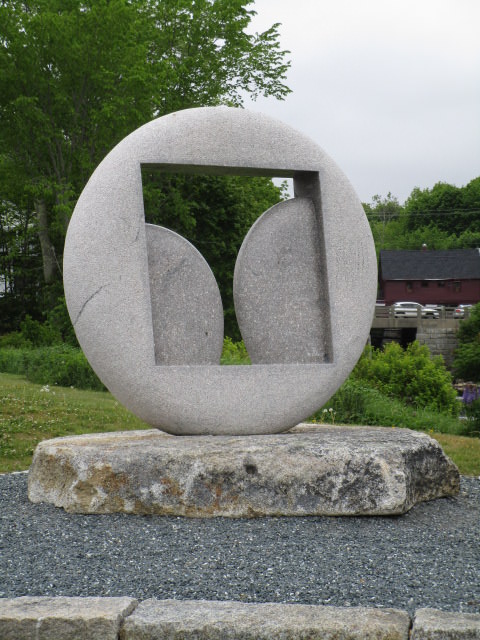
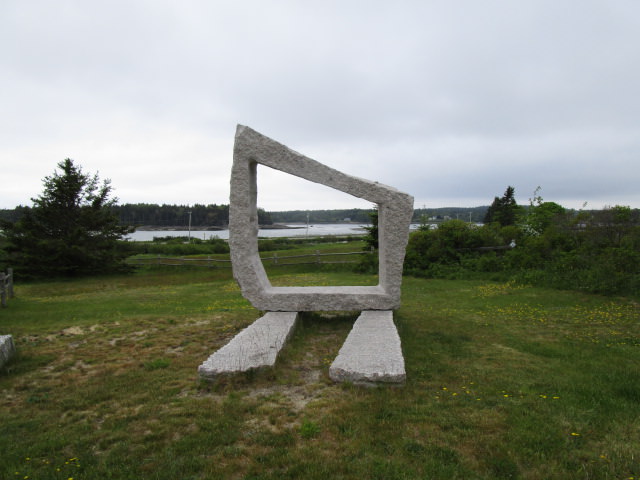
We still were not finished for the day.  Working our way back from Deer Isle, we next went to Blue Hill where we located this sculpture entitled The Window of the Sea Wind.

blue hill the window of the sea wind 6-7 best

This sculpture was created by Hitoshi Tanaka from Japan.  The artist explained the sculpture in this way:  The light and wind will pass through this window.  So the hearts of the people will also journey through this window.  This sculpture made of stone is Blue Hill’s Welcoming Window.  Both Barbara and I agreed this was one of our favorites.

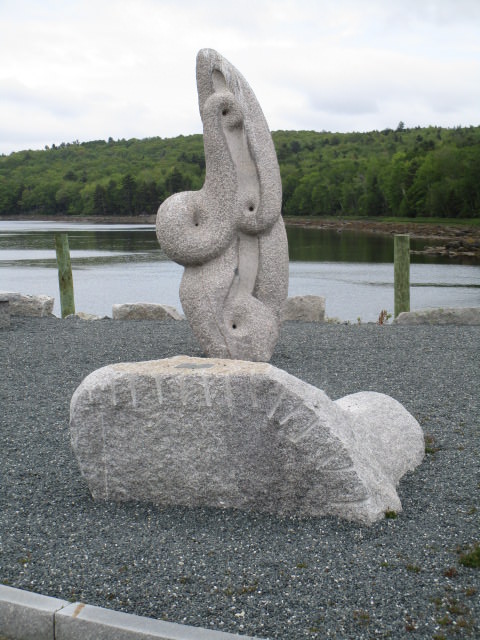
Continuing on we worked our way to the town of Surry.  Here we discovered the sculpture entitled Wave Sounds.  This sculpture was created by Bertha Shotiss from Switzerland who explained her work this way:  My sculpture is dedicated to the ocean, the power and movement of water and the sound of the waves clashing on the stones of the coast.

Surry Wave Sounds 6-7 close up

Before getting back on the road, we decided it was time for a lunch break.  Just adjacent
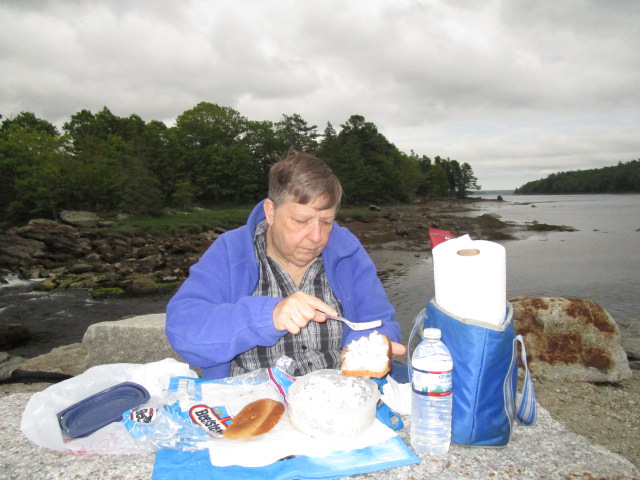
surry barb making lunch rock table

to the sculpture was a nice rock table with small benches on either side.  A nice place for a picnic lunch, so here is Barbara getting things ready for a delicious lunch for two.

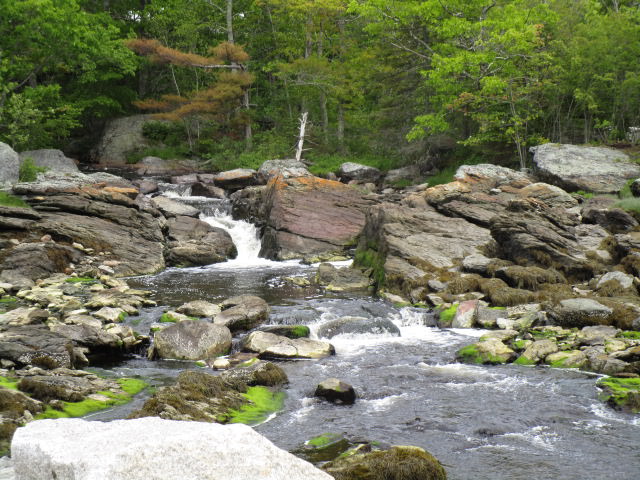
Add to this a small but beautiful waterfall just off to the side of the table and it was the perfect place for a picnic for two.  What a beautiful world God has created for us to enjoy.

surry water fall good

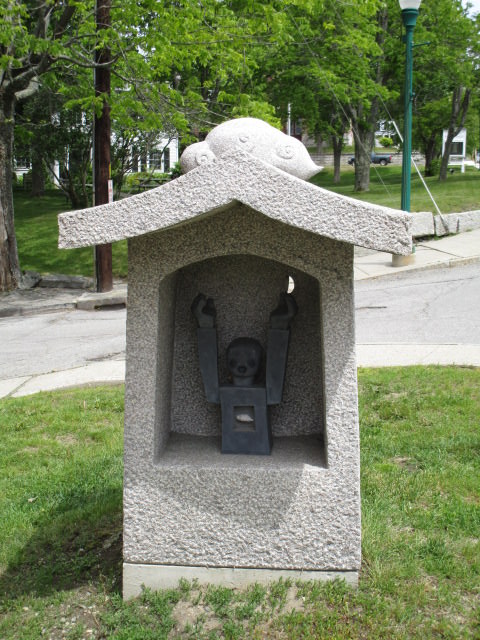
Almost finished for the day, just one more stop to make in the town of Ellsworth.  There we found this sculpture, perhaps the smallest to date, and one that I truly just don’t get at all.  But then again I was never, ever into art, abstract or otherwise.  Take a look.
Ellsworth I want to ride a cloiud 6-7 best

This sculpture is entitled I Want To Ride A Cloud and was created by Narihiro Uemura from Japan.  The artist explained the sculpture in this way:  if you look at my sculpture from the perspective of the planet, it is merely a chip of stone, but I hope it will become an image that lives on in the minds of the people.

That’s it for sculptures today.  During our travels we also discovered a really neat little turnout on Route 15.  We later discovered that it was called Caterpillar Hill.  It offered a sweeping vista across blueberry fields to Penobscot Bay and Camden in the west, south to Isle au Haut, and east to Jericho Bay.  You can, also if you look close, see the bridge to Deer Isle somewhat in the middle of the picture.

Caterpillar Hill, Sedgwick, Maine

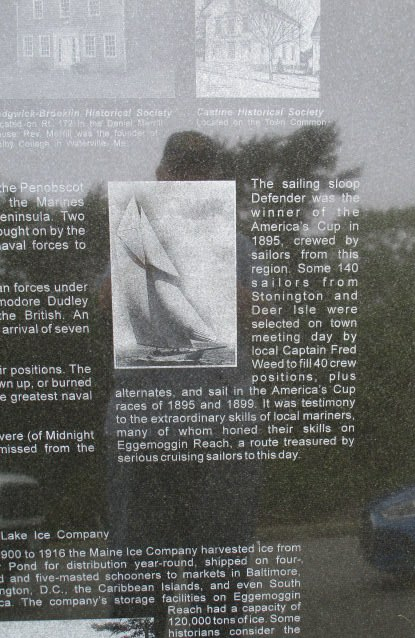
There were also several plaques displayed here with facts of interest.  For example,

cat-hill-defender-americas-cup.jpg

this plaque tells the story of the sailing sloop Defender that was the winner of the America’s Cup in 1895 and was crewed by sailors from this region.  Some 140 sailors from Stonington and Deer Isle applied and 40 were chosen to fill crew positions.

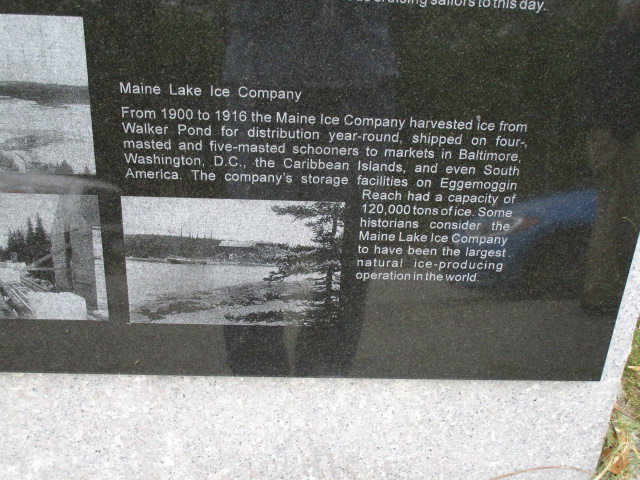
This plaque tells the story of the Maine Lake Ice Company which some historians consider the largest natural ice-producing operation in the world off of Walker Pond.  At its peak of operations, the Maine Lake Ice Company boasted a complex structure of conveyor tracks with cogwheels powered by steam-driven engines and four giant ice-storage sheds, two on the ridge near the Herrick Road and two down the hill by the granite wharf jutting out into the Punch Cat hill maine lake ice company

Bowl on Eggemoggin Reach.  Over 120,000 tons of ice were shipped yearly on large four- or five-masted schooners to Baltimore, Washington DC, the Caribbean, and South America.  It’s been written that one shipment of ice, insulated with sawdust, made
it to Calcutta, India.   The very first load of ice was shipped in the schooner Albert T. Stearns, with Captain Chase, to Baltimore. All year-long, shipments left once or
twice a week, frequently on the five-masted Mary F. Barrett, Gardiner Deering, and Fannie Palmer.   With the invention of refrigeration and the spread of electricity, the ice
business as a large operation on Walker’s Pond came to an end in 1916.

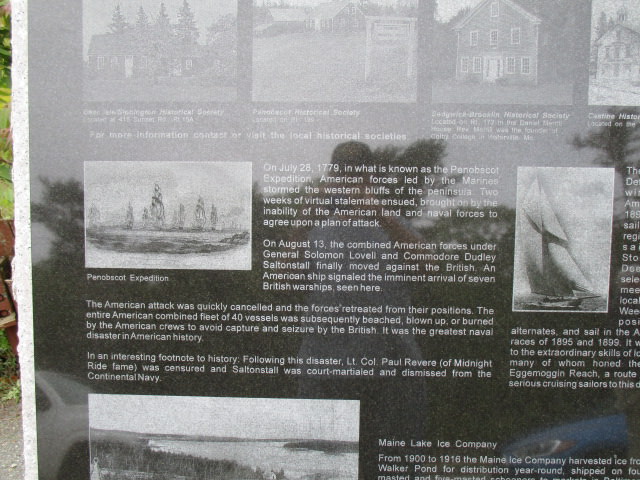
Then, there was this plaque which really attracted my attention.  It tells of the single greatest defeat of the early American Navy.  The Penobscot Expedition during the American Revolution was the worst naval disaster in American history until  Pearl Harbor. That a huge force of men, ships and guns failed to take a small British fort in Maine has been largely forgotten. The Penobscot Expedition included 40 vessels, nearly

Cat hill greatest american navel defeat

2,000 seamen and marines, 100 artillerymen, 870 militia and 350 guns.  The shortcoming of the whole expedition was simply that it was planned by civilians with little military input and carried out by badly trained part-time soldiers.  The officers in charge bickered among themselves and could not agree on a coordinated plan of attack.  While they argued and quarreled among themselves the British reinforced their position and brought in reinforcements.  The Americans attack was soon cancelled and the Americans burned and sank their ships and disappeared into the woods, heading for home. In the end, all the American ships were destroyed except one, which was captured by the British. The Americans lost 470 men; the British only 13.

Now it was time to finally head for home.  We again covered a lot of territory, discovered some more sculptures and learned some fascinating facts about Maine around the area of Caterpillar Hill.  Once again, the day was made even better by the fact that we did it together, traveling along, singing our song, side by side.  We wouldn’t have it any other way.

Returning home we discovered that for some reason the refrigerator had shut down.  We couldn’t discover either why when it failed on electric it didn’t switch automatically to propane.  Thankfully, we didn’t lose any food.  We just have a mystery to solve.  I’m wondering if our friendly ghost is back.  Makes perfect sense to me.  Time will tell.

In closing, just a simple thought for the night:  when I was young a nap was viewed as a form of punishment – now I view it as a mini-vacation!

As always,  if you are coming to the end of your day with concerns and worries, let me suggest that you turn them over to God.  After all, He is going to be up all night so why not let him handle them for you.

Time now for our evening prayers and eventually some shut-eye.  Till tomorrow.

These are the voyages of  Graybeard and it’s occupants, four paws and two humans.  Our continuing mission: to explore as many new states as possible, to seek out new acquaintances and make new friends, to boldly go where we have not been before