OUR ALASKAN CRUISE: JUNE 2024

Part Six B: Juneau, Dog Sled Summer Camp

Ever sent your kids to summer camp? Have you ever gone to summer camp? I know I did when growing up as a kid. Well, guess what? They also send sled dogs to summer camp in Alaska.

When we signed up for this excursion we really had no idea what was in store for us. From the very beginning things got really interesting. We were escorted to a series of vans, approximately six or seven to a van. A van? Not an excursion bus?
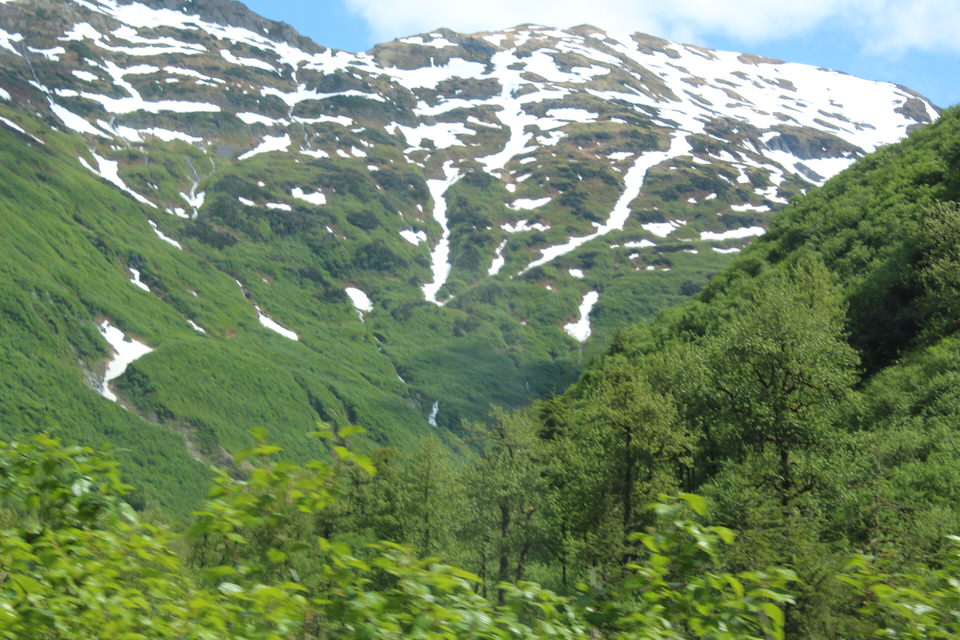
We soon discovered the reason why. We were going back country, a single lane, rutted dirt road that wound it’s way up the side of a mountain. All told it was about a twenty minute journey. Oh, what country we were in. The mountains surrounding the camp just took your breath away.
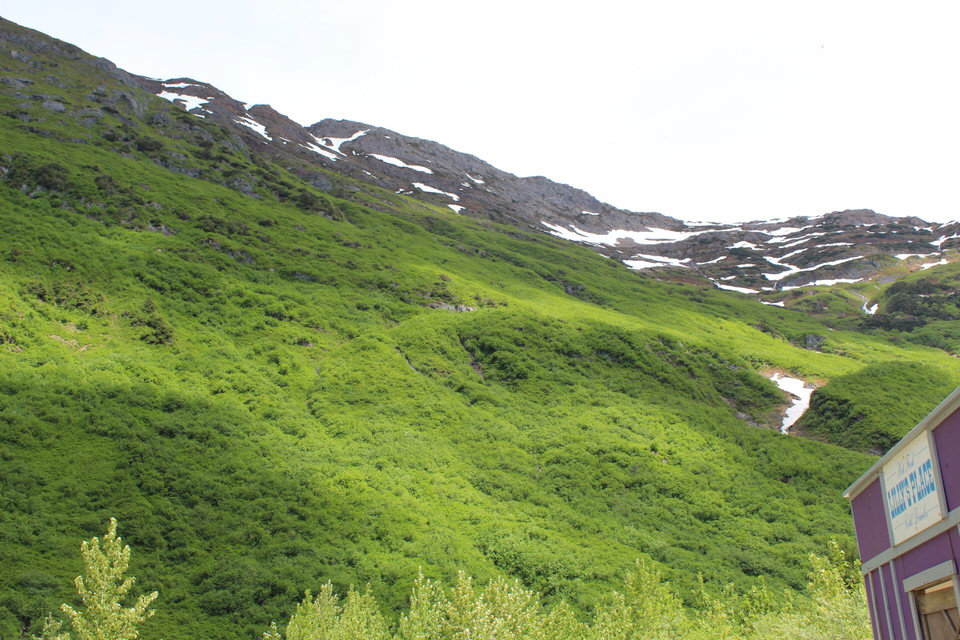
This is where the summer camp is located, at the foot of the above mountains.

Notice the different color dog houses? Each corresponds to a particular team of dogs and their musher. Teams of dogs and their musher come from various parts of Alaska as well as other states to spend the summer at this location in Alaska. Here they spend the summer months training for either long distance or sprint races. They are well cared for, eat a balanced diet and once in while are asked to pull a

wheeled card with a bunch off silly tourists on it a short but fun filled ride.

Ok, let’s back up a bit.

No one exactly knows when dog sledding actually began. Some researchers say it began about 9,500 years ago in Siberia. While we may never know where and when the use of dogs to pull sleds began, it is easy to see why it began. Humans can only go so far on their own two feet. They can only carry so much weight.

But even a small team of dogs can carry hundreds of pounds and cover dozens of miles in a day. Though used in the far northern region’s for hundreds of years, no one south of there knew much of them for the longest time. That, however, changed in 1896 with the discovery of gold near the Klondike River in Canada’s Yukon Region. Over 100,000 dreamers converged on the area, and sled dogs played an important role in carrying these dreamers to the gold fields.

However, it was what was called the 1925 Serum Run that brought sled dogs and their mushers to the forefront of the American public’s attention. Diphtheria had broken out in Nome, Alaska and the serum necessary to cure it was desperately needed. But the plane that would normally have been used to transport the serum was grounded for the season. So a group of 20 mushers and their teams of dogs were assembled and asked to transport the serum the 674 miles along the rugged Iditarod Trail through some of the harshest weather imaginable. With temperatures plunging to -60°F, gale-force winds, and heavy snows, the mushers and their dogs faced challenging conditions. They nevertheless made the run in a record-breaking 127½ hours without breaking a single vial of the precious serum. More than other event this run established sled dogs as a part of American culture. Furthermore, The Iditarod Race still run today, commemorates this historic rescue. And today, even though there are many other new fangled ways of transport available, mushers and dog sleds still remain a vital part of the Alaskan landscape.
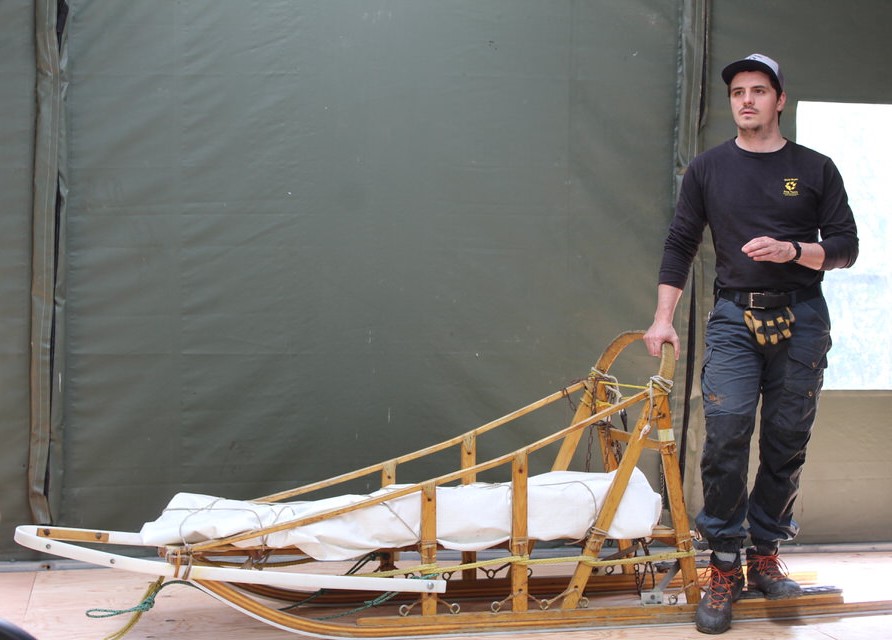
This was our musher and guide for the day. Forgive me, but I can’t remember his name. As for the name musher – we were told that it comes from the French word marcher which means to walk.

The modern day sled is typically made of white ash because it is light, strong and durable. The two types of sleds commonly used are either the basket or the toboggan. The former is for relatively light lights while the later can handle a substantially larger load. As for the most important piece of the whole sled? It is the braking system. The so-called regular brake is a spring loaded piece of wood with a hook on the bottom. The musher can step on this when necessary to slow the sled down. Then there is the so-called parking brake. This is a large hook which, when the musher gets off the sled, he sets deep in the snow. Forget to do so, well as our musher told us the dogs are just going to keep right on running! And you after them trying to catch up to them and regain control. He said he spoke from experience!
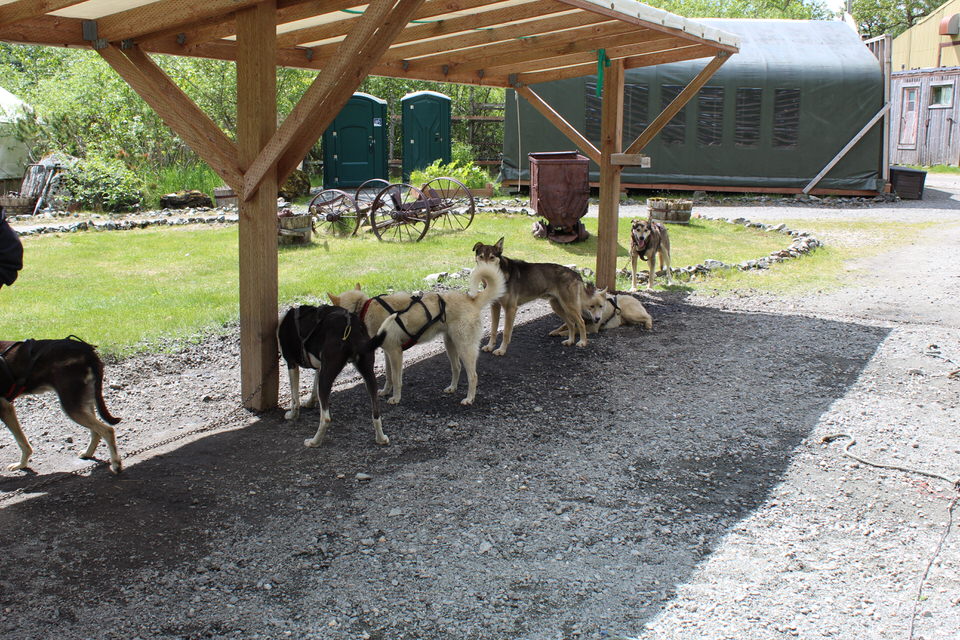
The musher is the one who leads the team of dogs by riding on the back runners of the sled. He controls the dogs through a set of lines hooked to harnesses on the dogs. Each individual dog is then hooked to a gang line which is hooked to the sled. This is the team we had waiting to be hooked to the gang line. The musher basically uses a standard set of commands. Hike means to start and run. Easy means to slow down. Whoa to bring the sled to a stop. Hee means to turn right. Haw means to turn left.

Finally, it was time to go for a ride!
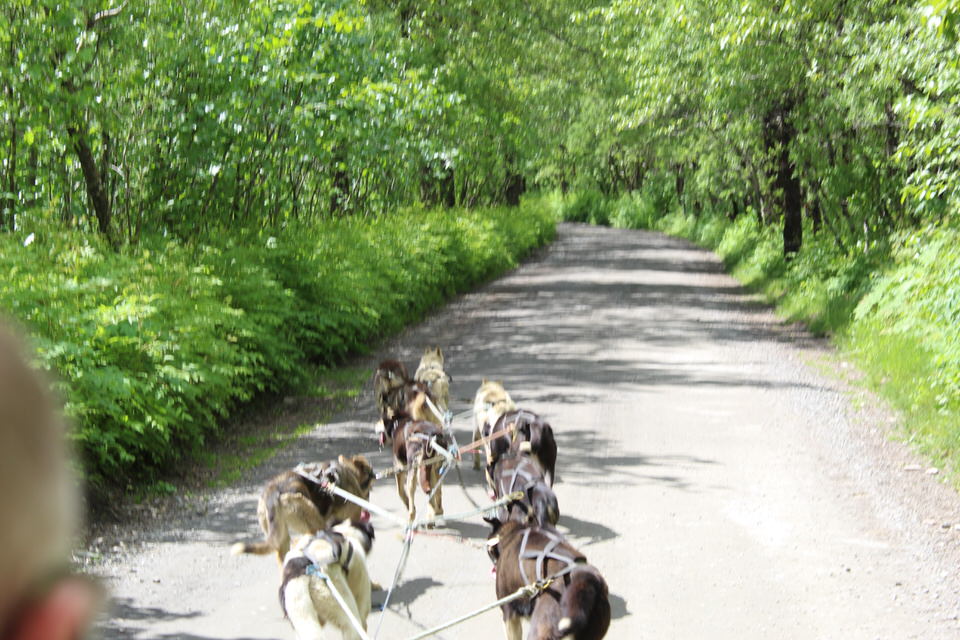
The dogs were hooked to the gang line and we were off on an approximately 2 mile run.
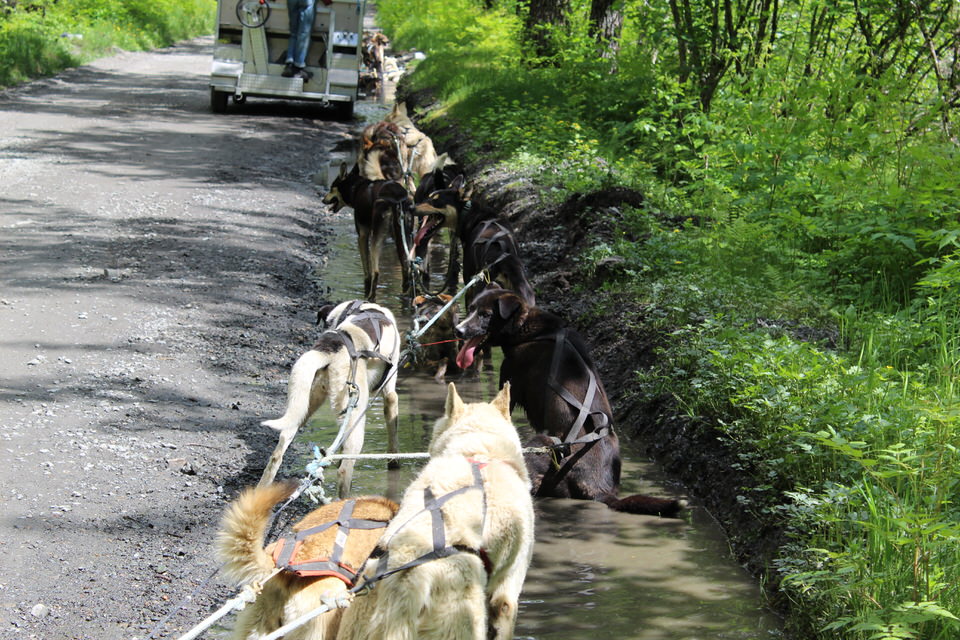
Remember I said how well the dogs were cared for? This is proof of it. On the return part of the run a large trough of water is provided off to the side of the road. The dogs are led into it and encouraged to lie down in it, roll in it, take a deep drink. Whatever they feel like doing.

Back from our ride it was time to help the some new born dogs with their socialization process.

Which means in so many words,

that we get to hold the puppies! However, you are discouraged from trying to take them home! Even so, we were told one cruise ship couple actually tired to. They got as far as their ship before they were discovered. At which point the puppy was taken from them, they were arrested and kicked off their cruise ship. I mean What were they thinking!

Now, after our trip to the Dog Sled Summer Camp and before we returned to our ship we also
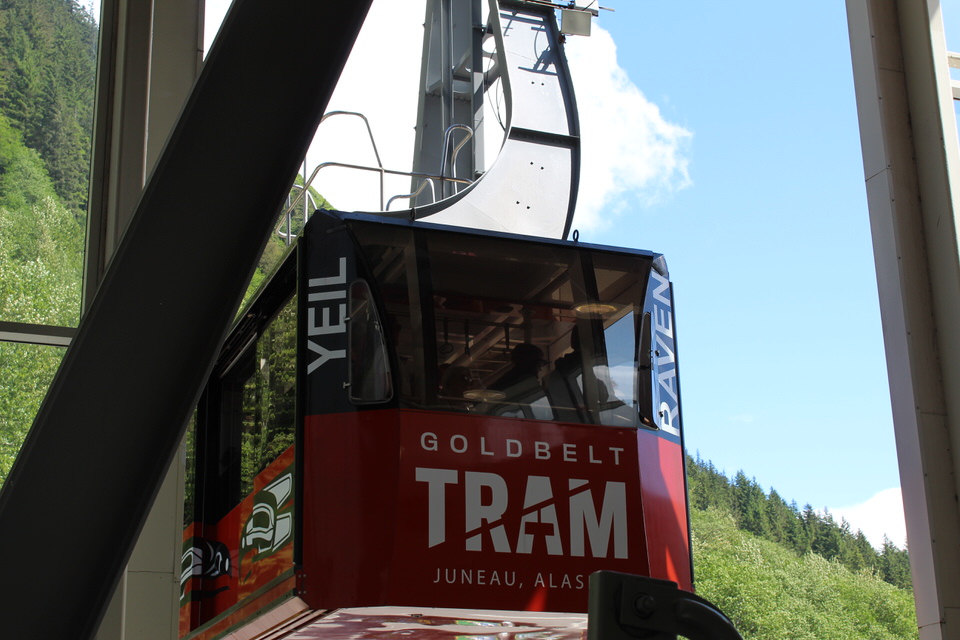
took the time to ride the Goldbelt Tram.
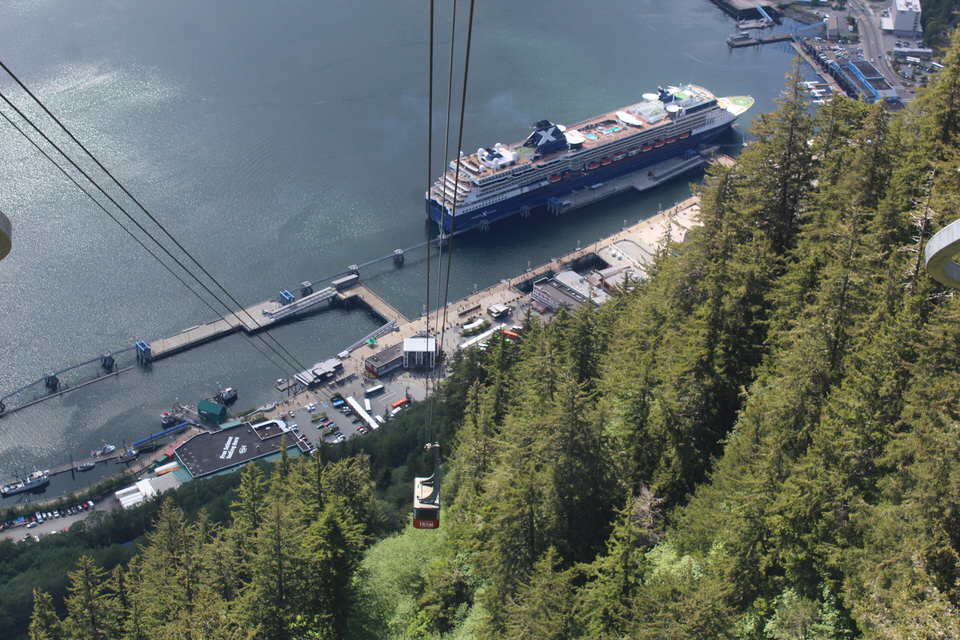
It is a six minute ride of 1,800 feet up to the Mountain House. The literature claims that it is the most vertical tram in all of Alaska. I believe it!

As for the view from the top, judge for yourself

There was also a restaurant, a gift shop and a number of hiking trails at the top. We were just content to make the trip up, spend some time walking around and then come back down. It had been a long but gratifying day, and we were anxious to just return to Summit and kick back and relax.

So ends our day in Juneau, Alaska. We had a wonderful day made even better by the fabulous weather we had. Thankfully, only one day of rain so far on our cruise. Now it was time to set sail for yet another port.
OUR ALASKAN CRUISE: JUNE 2024

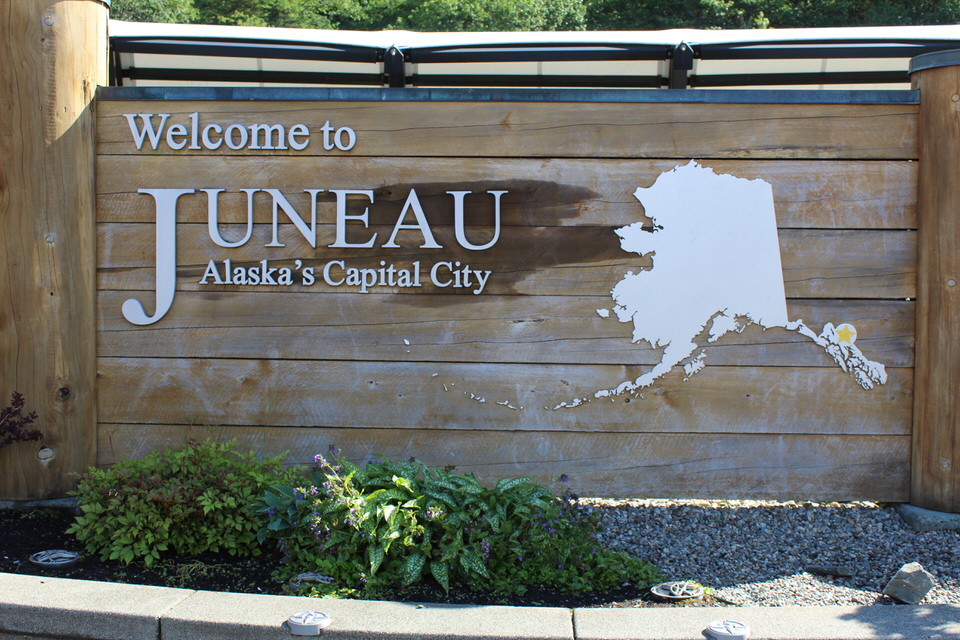
Part Six A: Juneau, Alaska’s Capital City

We awoke to another absolutely beautiful day. And by the way, when I say awoke, I mean at around 4 am. That’s the time for sunrise in these parts at this time of year. It took a bit of getting used to. Especially when you consider that sunset is not until sometime around 10 pm or later. It really throws your internal clock off a wee bit.

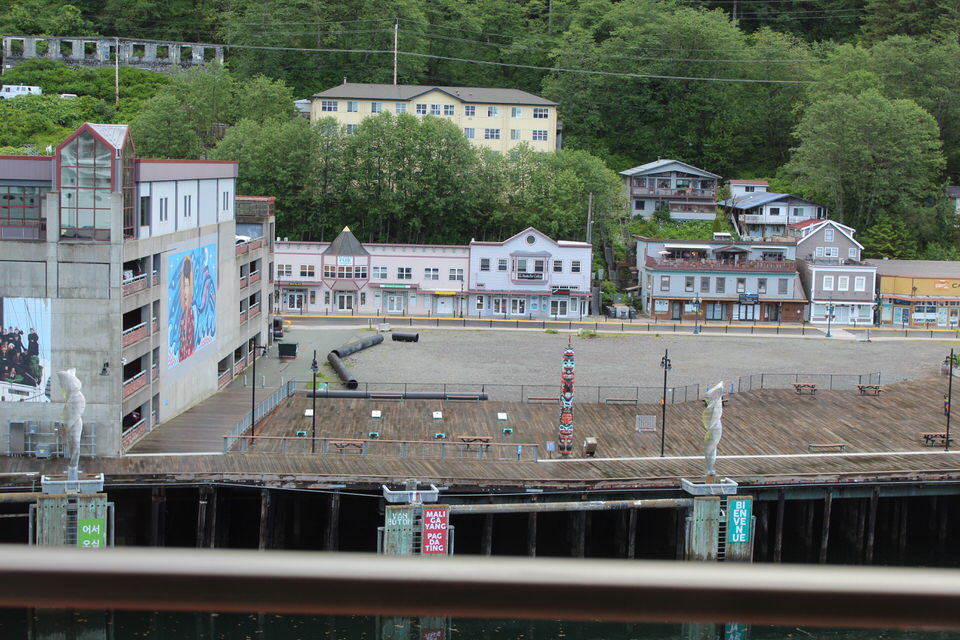
While standing on our balcony I immediately noticed a few interesting murals, statues and totem poles that I made a mental note to explore. I also looked up a few fascinating facts about this port of call, such as:

with a total area of 3,255 square miles, the municipality of Juneau is bigger than the state of Rhode Island

there are no roads connecting it to the rest of the state or North America

In 1906 government power was transferred from Sitka to Juneau at which time it became the capital of the state

Juneau is named for Joe Juneau who was one of the first prospectors to discover gold at the mouth of Gold Creek

OK, enough silly facts it is time to go exploring. Off the ship and unto the dock we went.

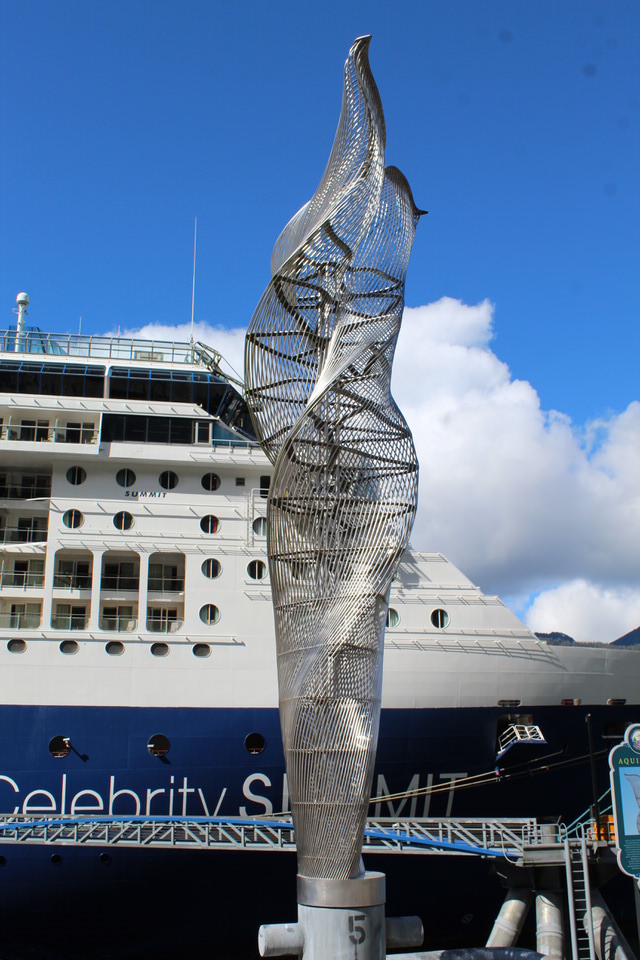
This statue was one of the first attractions that caught my eye. There are a ten of them along the waterfront where the cruise ships dock. As to what they stand for, let me share with you the explanation given on a plaque next to one of them. And I quote: Aquileans is a series of sculptures for the Juneau Waterfront whose origins are found in the archetypes of the Alaskan landscape. Its main images reside within two ecological characters whose spirits have long guided the people of this land. Aquila the Latin for eagle, and Cetacean for an order of marine animals including the whale, join form to create Aquileans. The name Aquileans is meant to embody the sea and the sky. During the day they reflect and refract the sunlight, and at night they are illuminated with a series of ever changing LED lights that are so like the Aurora borealis in this area. Unfortunately, we did not get to see them illuminated because our ship left before dark.

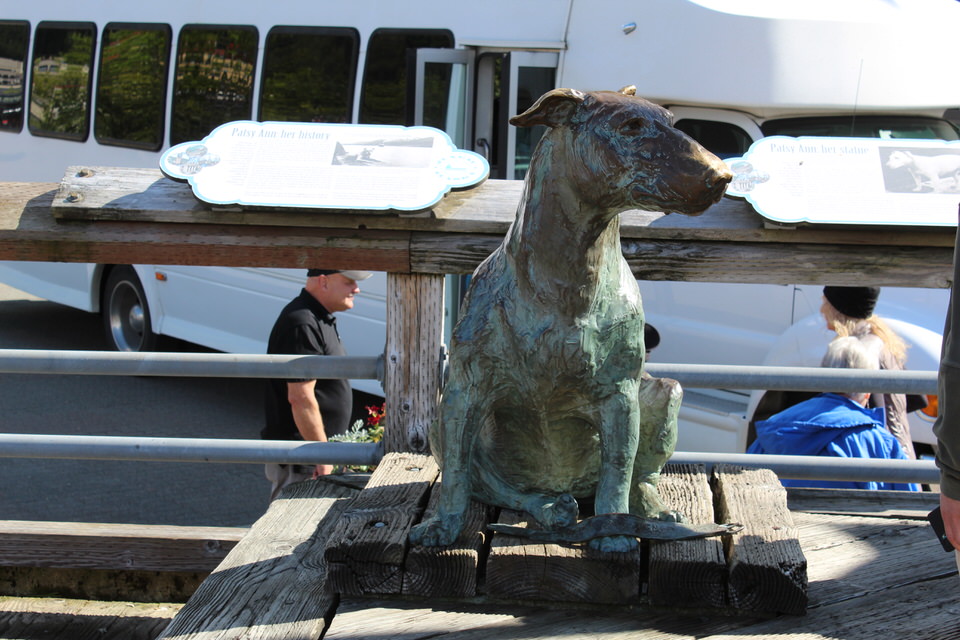
Meet Patsy Ann the Official greeter of everyone who entered the city via the docks. Fifty years after she greeted her last ship this bronze statue was erected in her honor so that she could once again greet everyone on the docks.

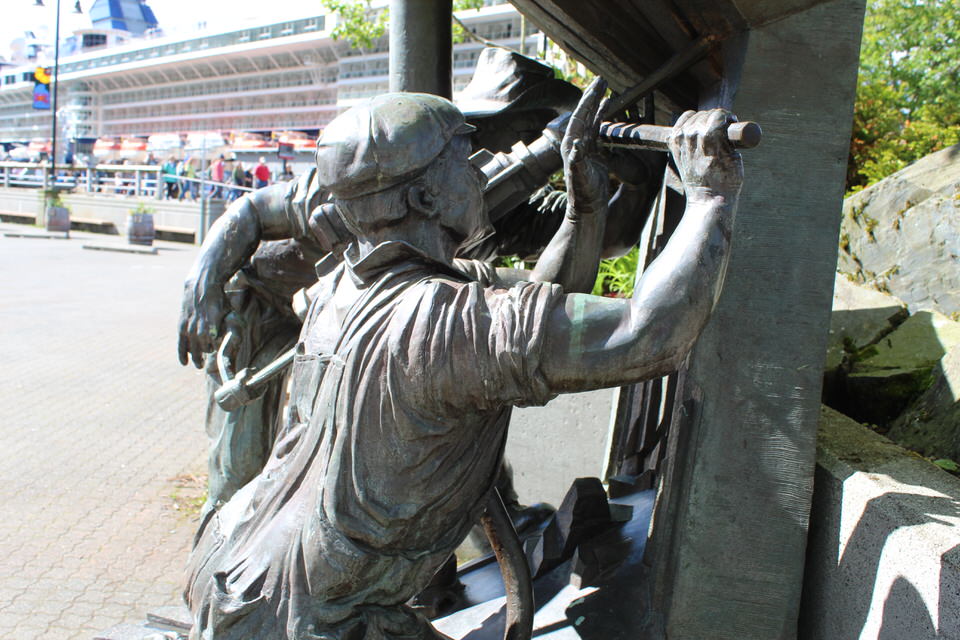
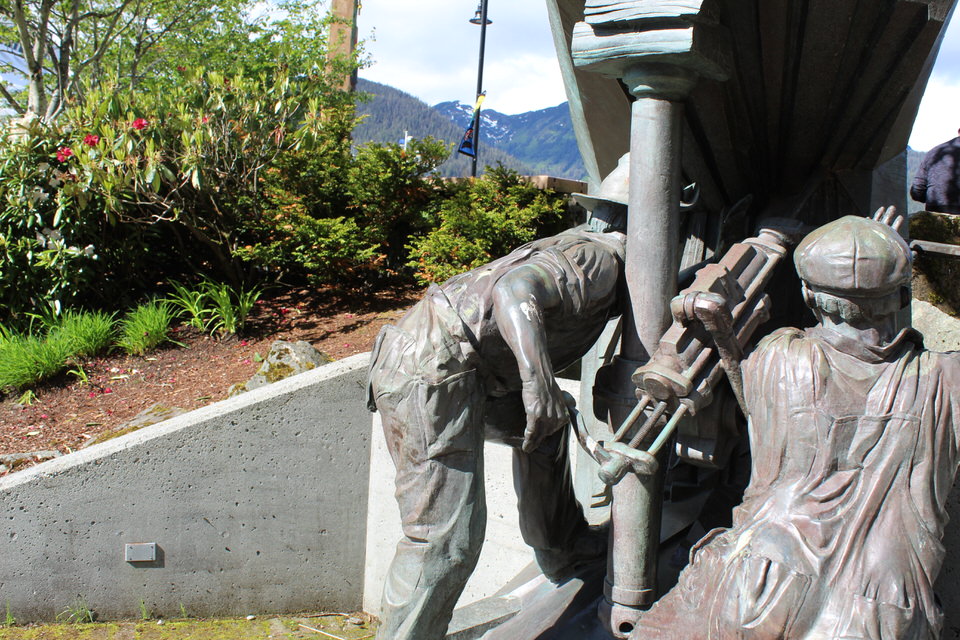
This statue, tucked in an alcove, was easy to miss. It was entitled Hard Rock Miners. It is dedicated to the men who whose work provided the lifeblood of Juneau during its first 60 years. It also highlights the use of compressed air drills which began to be used in the late 1800’s. The use of such drills in place of hand drills enabled miners to handle great quantities of ore at an acceptable low cost. The Juneau mine, opened in 1897 officially closed in 1944. The total output of the mine was over seven million ounces of gold.

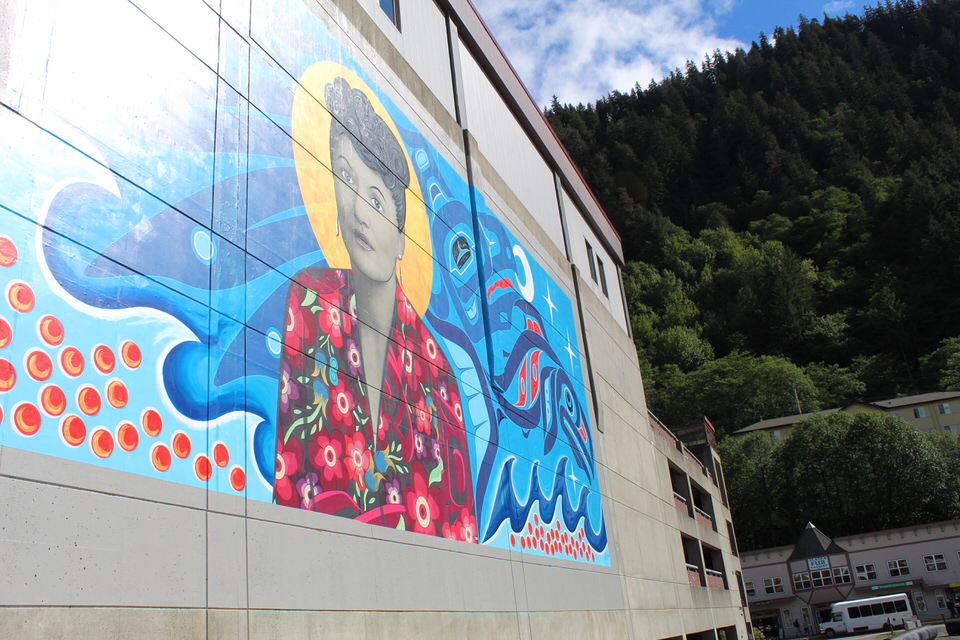
This is a mural of Elizabeth Kaaxgal.aat Peratrovich. Know as the Fighter in Velvet Gloves for her powerful but graceful and dignified speaking style. . . she was a champion of civil rights in Alaska. Her efforts resulted in the passage of America’s first comprehensive civil rights legislation since the civil war. The Anti-Discrimination Act was singed into law by Governor Ernest Gruening on February 16, 1945, nearly 20 years before the passage of the U.S Civil Rights Act of 1964.

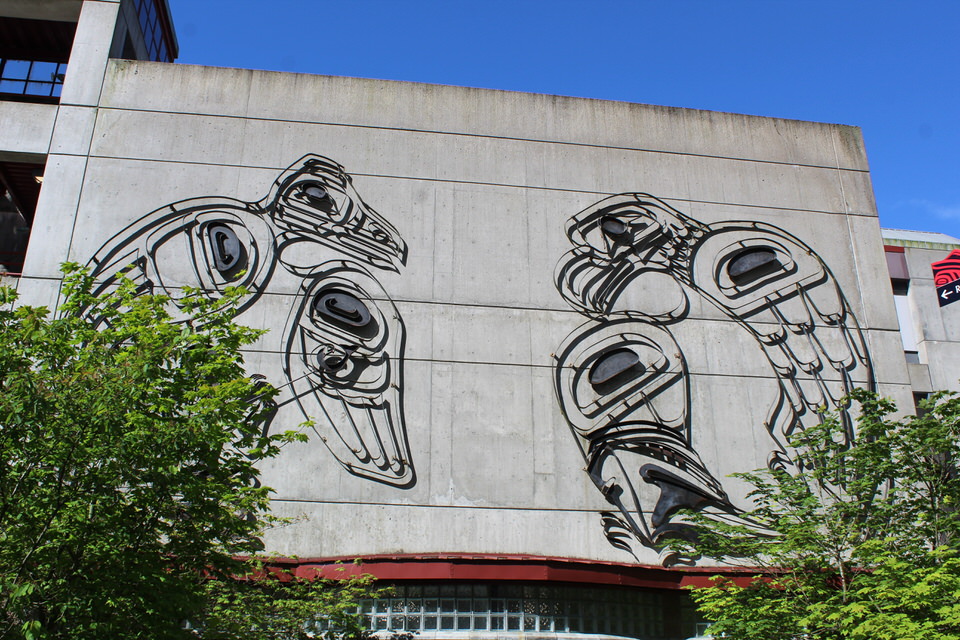
I discovered this sculpture on the front of the city parking garage/public library. It is entitled: Raven-Eagle Sculpture. The Raven on the left, and the Eagle on the right are the two major social groups of the Tlingit Tribe. A Tlingit is either Raven or Eagle by birth and according to custom must marry the opposite.

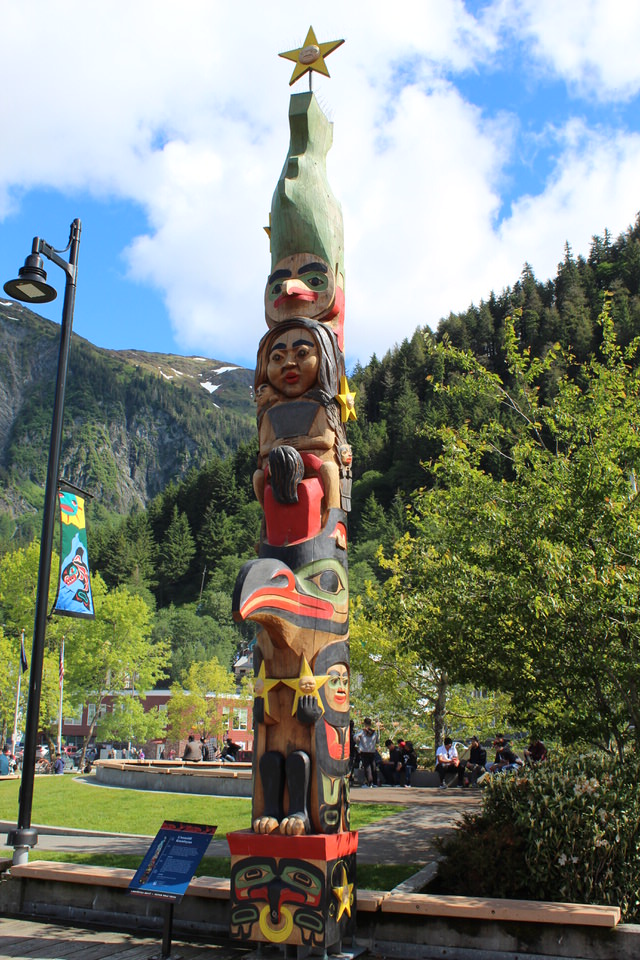
Then there were the numerous totem poles. This one immediately caught my eye, perhaps because of its colors. It is entitled: L’eeneidi Kooteeyaa. The L’eeneidt is a clan of the Raven society. The meaning of the totem pole, starting at the top is as follows: the top design features a star, which derives from one of their clan houses known as Little Dipper House. Below that are Dog Salmon and Lucky Lady. Underneath that is a carving of a clan member (in red with black hair). The lower design features Raven with a Box of Daylight. According to custom Raven opened the box of Daylight, and released the Sun, bringing daylight to the world.

So, that was the dock at Juneau. Did we go on any excursions? We sure did and I’ll bring them to you in the next post.

OUR ALASKAN CRUISE: JUNE 2024

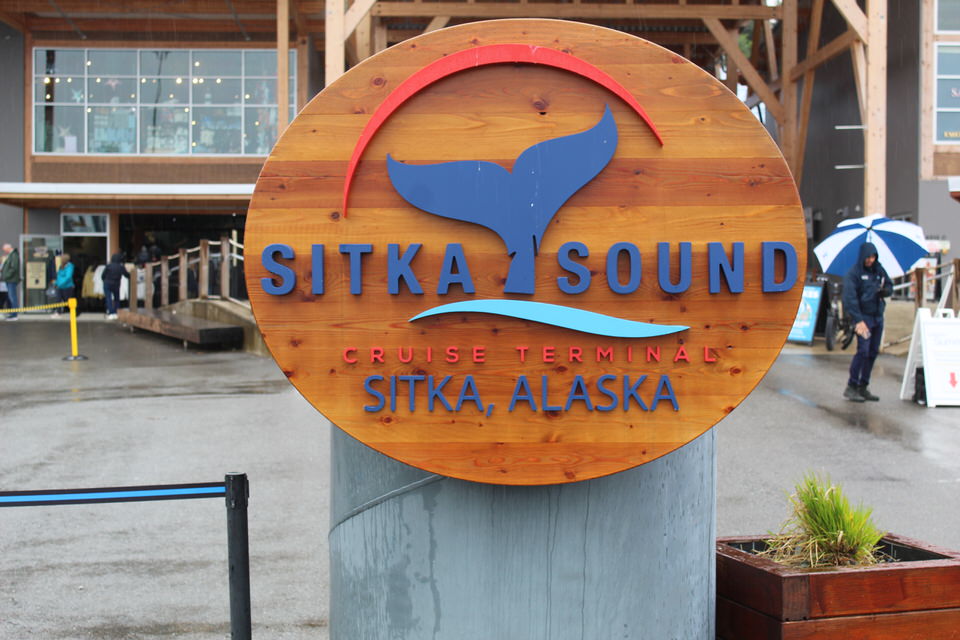
Part Five: Sitka Alaska

Leaving Ketchikan we sailed north to Sitka, Alaska. Until now the weather had been picture perfect. However, in Sitka we found the rain that everyone talked about in these parts. We weren’t too worried, though, since our excursion here would be basically indoors.

After breakfast we made our way to mid-deck, deck one, departed the ship and made our way along the pier to

the excursion terminal where in due time we boarded the bus that was to take us to the location of our excursion for the day. This worked out real well in that you waited in an enclosed terminal until your bus had arrived. Then. it was just a short walk, most of it under an over-hang to the bus door. Thus, despite the rain by and large you remained nice and dry.

While there I learned a bit about the city of Sitka itself. The town was once part of Russia and was also Alaska’s first capital city. It is located on Baranof Island and is only accessible by air or by sea. It is a true island community that lives between the mountains and the sea. Point of fact, I asked our guide What happens if you, for instance, want to buy a new car? He replied You purchase it, for instance, in Anchorage and then you either have to ship it here by barge or bring in via the ferry. Gives a whole new meaning to going car shopping!

On now to our excursion for the day.

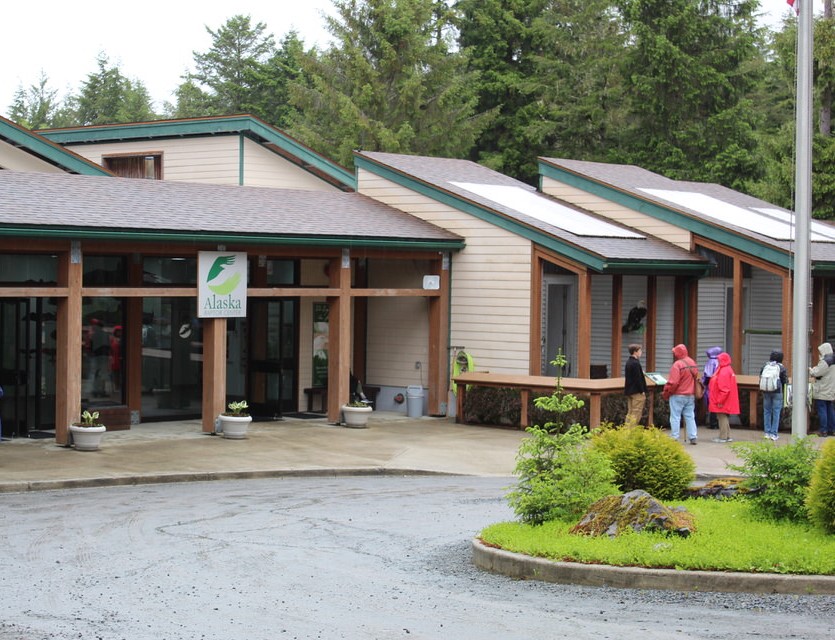
While here we learned that the Center began in 1900 when two residents of the town of Sitka offered aid to a wounded Bald Eagle. Once others learned of their care and concern, more birds were brought to them. They continued to work at their home until finally moving to a small shed on the campus of Sheldon Jackson College (closed today). In 1991 the Center moved to its current location on 17 acres bordered by the Indian River. It remains the only full avian hospital in the state of Alaska.

Today, the Center continues to provide medical treatment to about 200 injured birds each year. Their primary focus is working with raptors, but they will aid any wild bird in need. Their main goal is to heal, rehabilitate, and release their patients back to their native habitat. Unfortunately, some are so badly wounded that they can never be released. These birds become permeant residents at the center.

There are two main sections at the Raptor Center, the one being The Learning Center where we discovered the following:

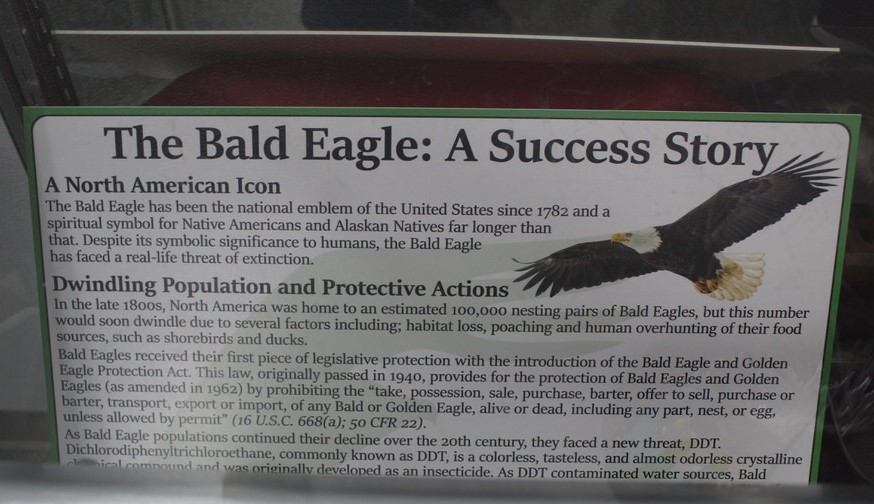
Regarding the history of the Bald Eagle. . .

In the late 1800’s North American was home to some 100,000 nesting pairs of Bald Eagles, but this number would begin to rapidly decline due to several factors: habitat loss, poaching and human overhunting of their food soucres

In 1940 The Bald Eagle and Golden Eagle Protection Act was passed. However, their numbers still continued to decline significantly. During the 20th century they faced a new threat from DDT. DDT interfered with the ability of the birds to produce strong eggshells. This in turn resulted in thin shelled eggs which failed to hatch.

In 1973, The Endangered Species Act was passed and a ban was placed on DDT. At this time it was estimated that there were only about 500 nesting pairs of Bald Eagles remaining in North America.

Today, though, due to the actions mentioned above, it is estimated that there are once again about 100,000 nesting pairs of Bald Eagles in North America. They were finally removed from the Endangered Species list in 2007.

Since they stated that their primary focus was on raptors, I was curious as to exactly what a raptor is and while there I discovered the following:

By the way, have you ever wondered how big the wing span of an eagle is?

This big!

From the Learning Center we moved next to

The flight center is a long rectangular room where Eagles can fly from perch to perch. It is place where injured birds, after being treated, can regain their flight skills and so prepare for release back into the wild.

Leaving behind the comfort of the indoors, we moved outside

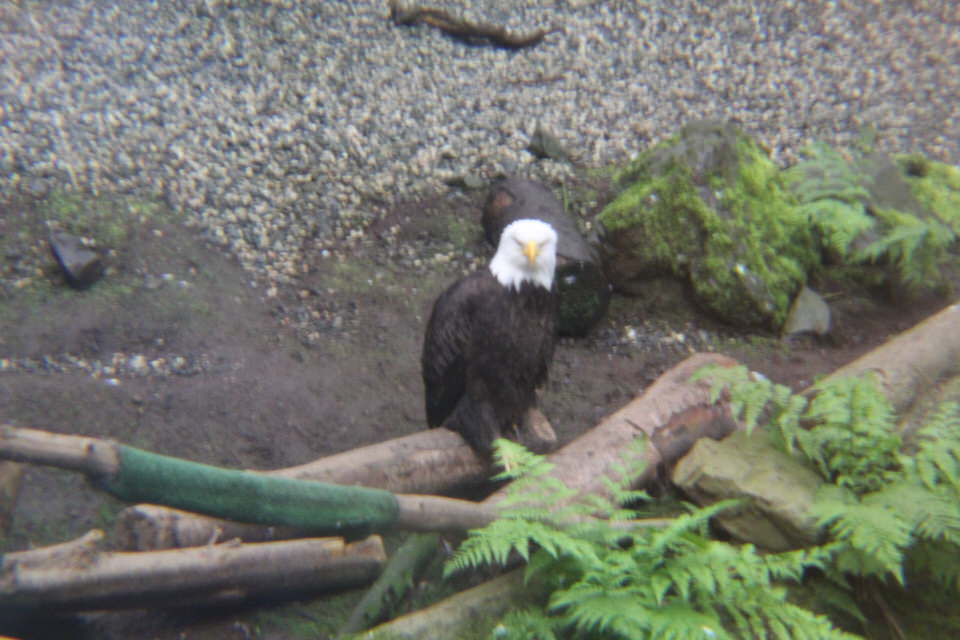
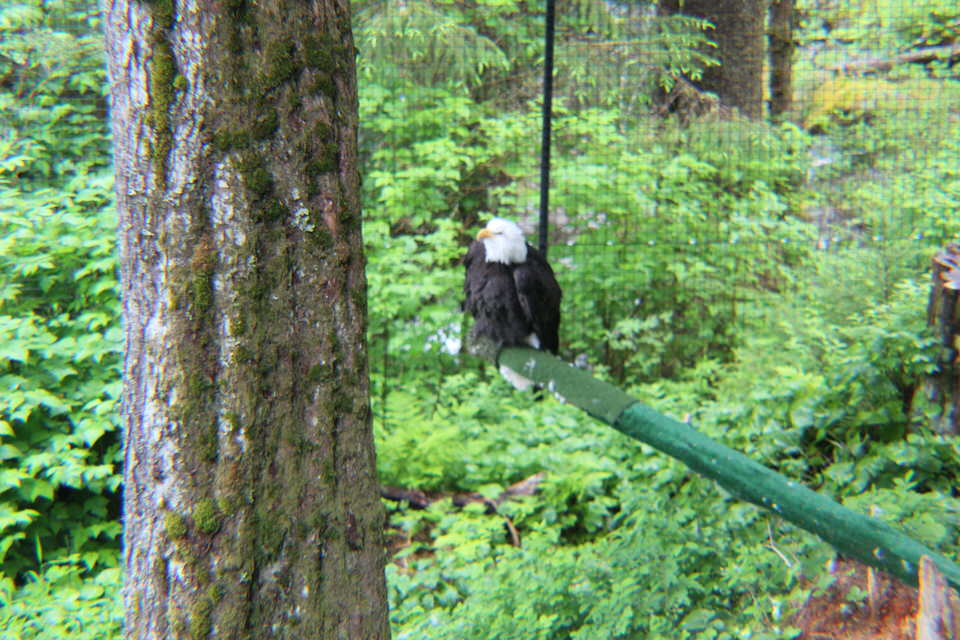
To the habitat areas. These are areas designed for resident birds that can no longer fly. Here they can freely move about and engage in natural behaviors such as; bathing, preening, and exploring, resulting in better physical and mental health.

All to soon it was time to leave, so it was back on the bus and back to

Celebrity Summit. Time now to warm up and prepare for dinner. Soon enough we would be sailing again to our next port of call.

OUR ALASKAN CRUISE: JUNE 2024

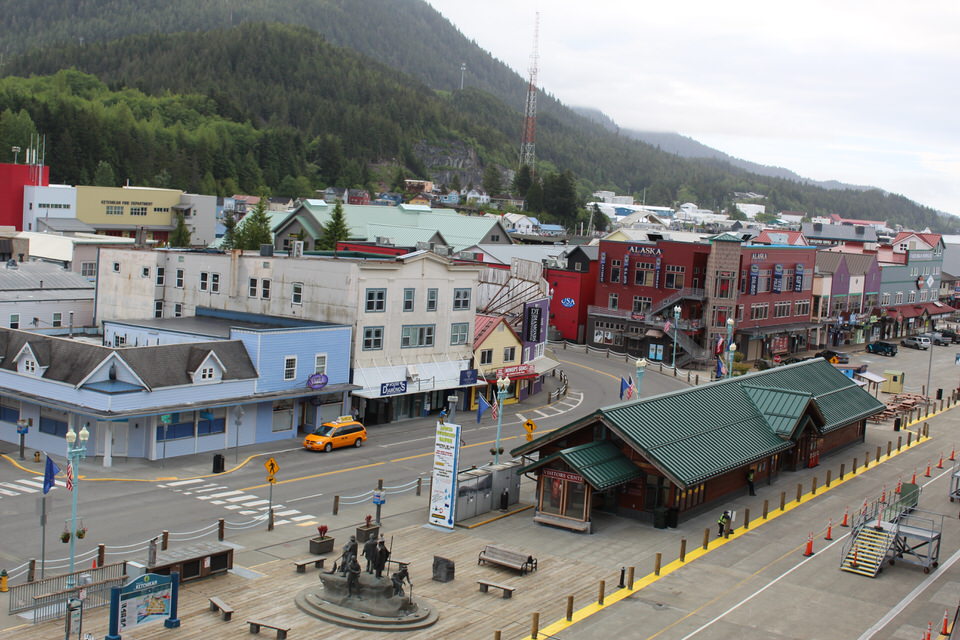
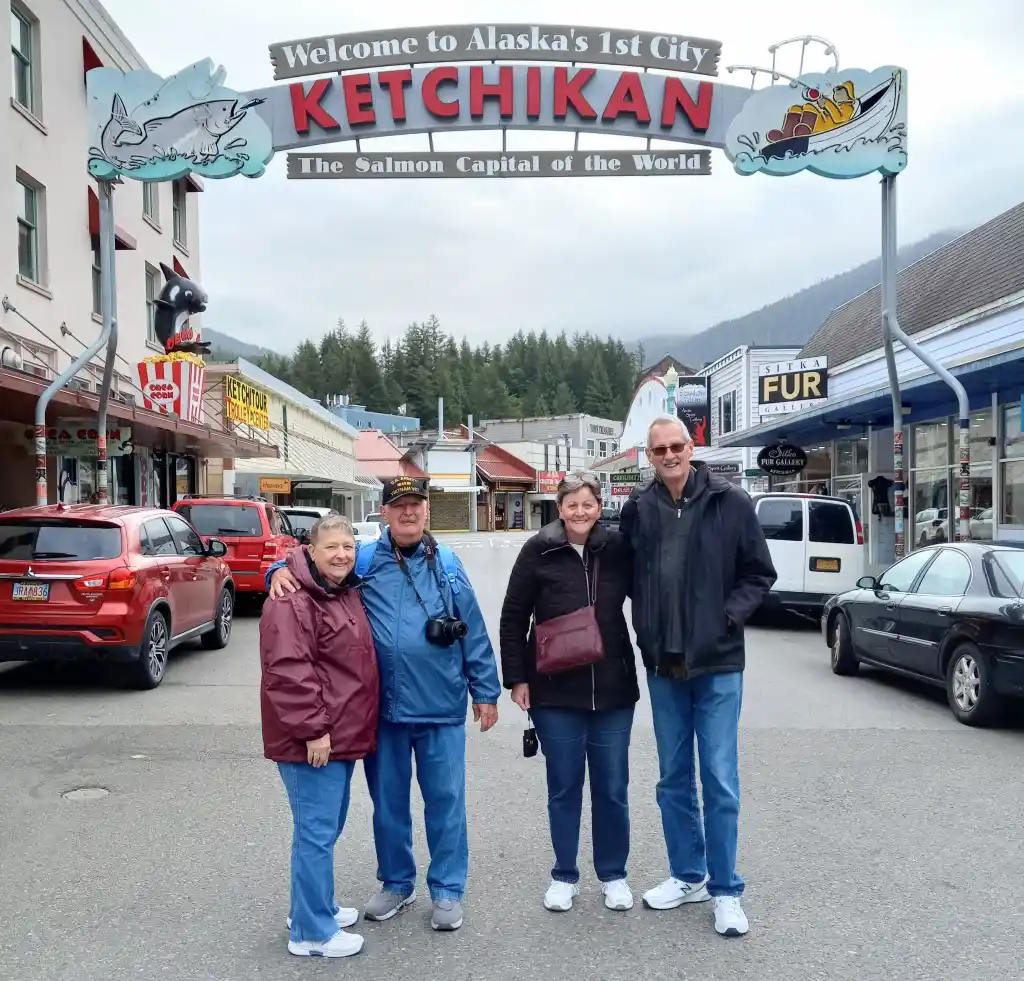
Part Four: Ketchikan, Alaska‘s First City

Leaving Vancouver behind our first day was spent at sea. It was a delightful time for me with so many new experiences. Hey, we were going some place new and I didn’t have to drive! I don’t believe they would let me anyhow.

There was the ship itself to explore which delighted me to no end. Remember this was my first cruise and I didn’t know what to expect. Beside the food, there were all kinds of shops, different lounges to relax in, decks to explore and just the wonderful view from our balcony. Slowly, ever so slowly I could feel the stress of the last several days just melting away.

In addition we had met up with our good friends, Dan and Betty, who had the adjoining cabin to ours. We always enjoy their company and were delighted that we would be spending this cruise together.

As we made our way toward our first stop, Ketchikan, there were several fascinating and informative presentations made by local Alaskan experts on the town and Alaska itself. Ketchikan appeared to be a town with a lot to discover. If, we had the time.

Our ship docked in Ketchikan at 7 am and we were told that everyone had to be back on board by 2:30 pm. And if you failed to be back on time, it was your responsibility to catch up with the ship. Since we had an excursion planned for the afternoon that left the morning to do any sightseeing on our own.

After breakfast – Dan and Betty, Barb and myself – left the ship and went into Ketchikan do some sightseeing. Unfortunately, we had neglected to pack certain significant items before we left home so we had to leave Dan and Betty and go do some shopping. Thankfully Betty does a fantastic blog so I was able to see through her eyes what I missed. Thanks much Betty.

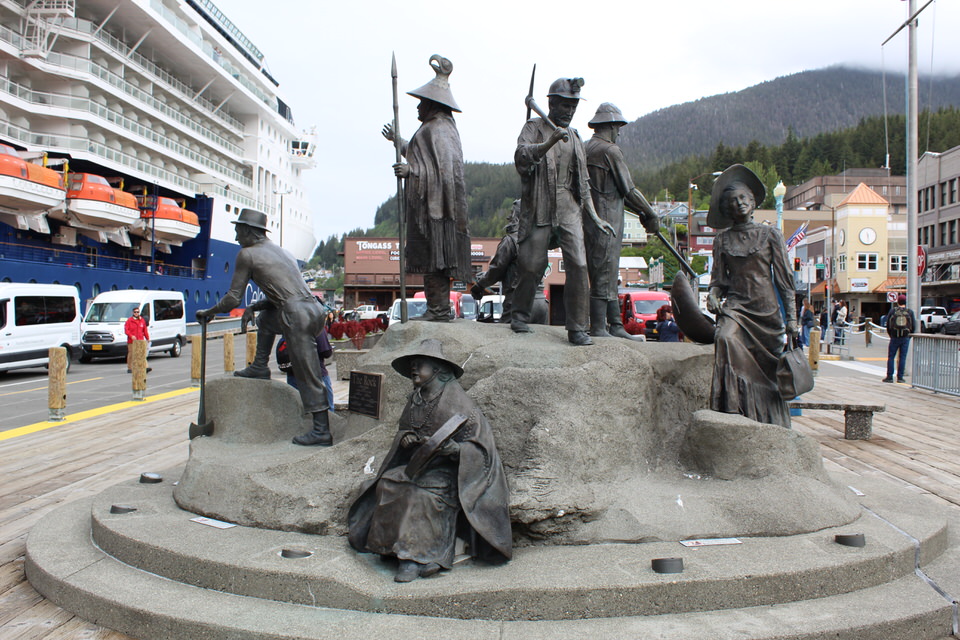
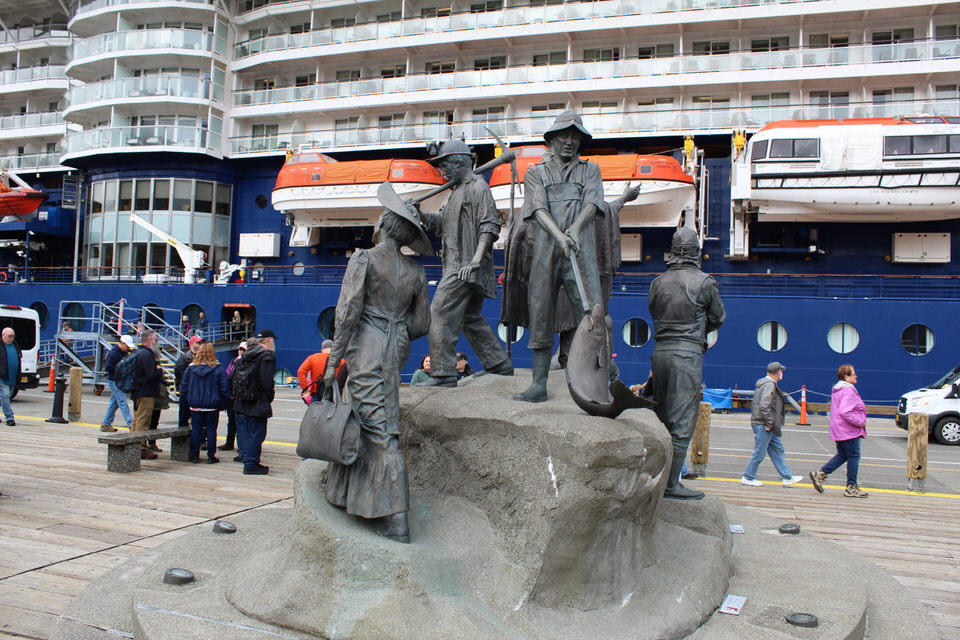
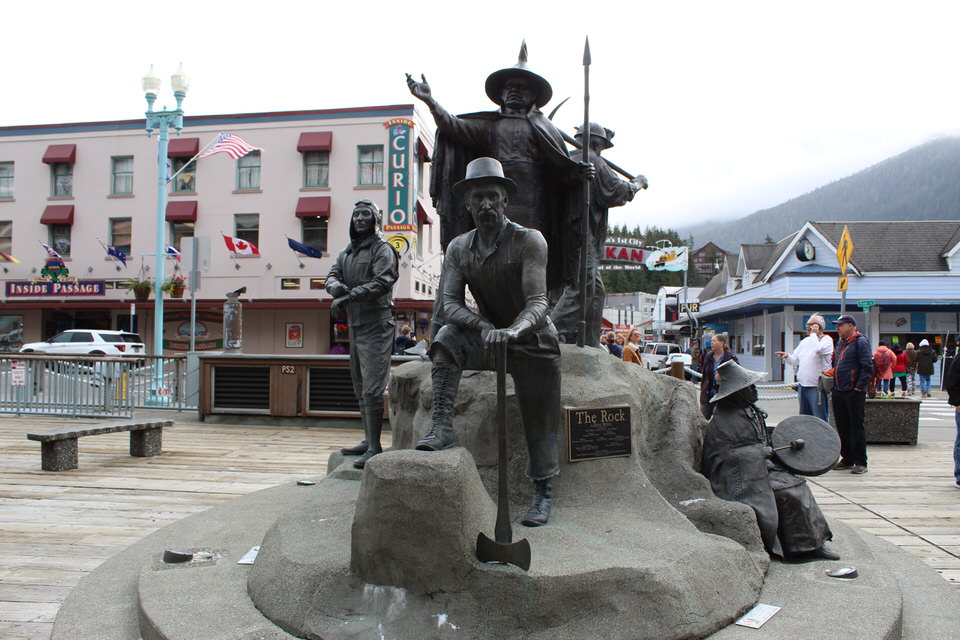
This unique statue, though, I did not miss. If was visible from our balcony on the ship and was one of the first unique items you came upon as you left the ship. It is entitled The Rock. The plaque attached to it explains the various characters:

A Tlingit woman sits and plays her drum and sings of:

The miners who came and mined for gold

The pioneer woman who came looking for new opportunity

the fishermen who dared the sea for salmon

the loggers who harvested the trees

the pilots who took people out beyond the reach of any ship or road

Chief Johnson, on top of the rock who in the early days of Ketchikan greeted the ships that came from San Francisco and offered them trinkets for sale. Thus began a cultural exchange that continues to this day.

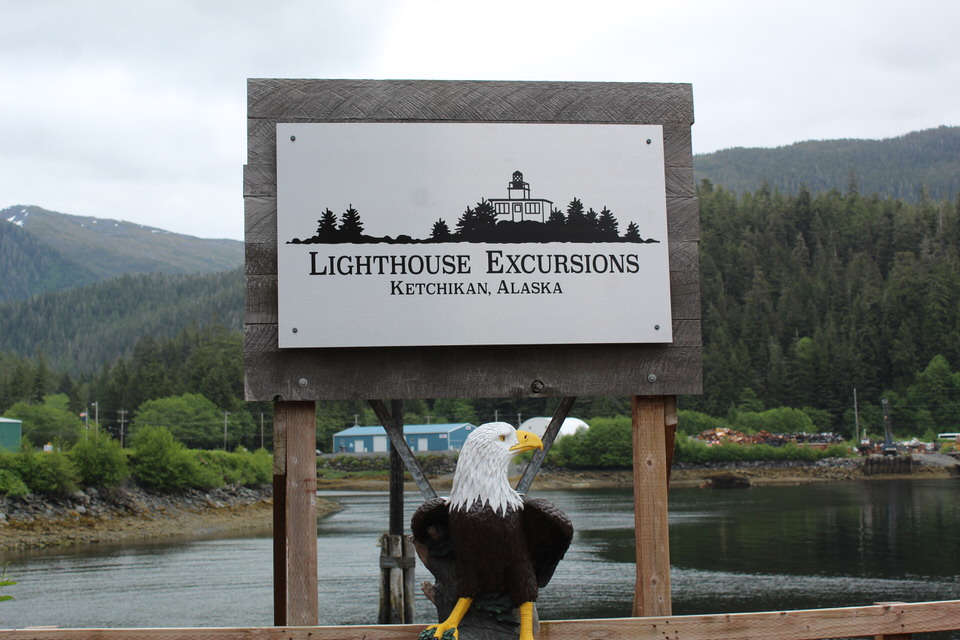
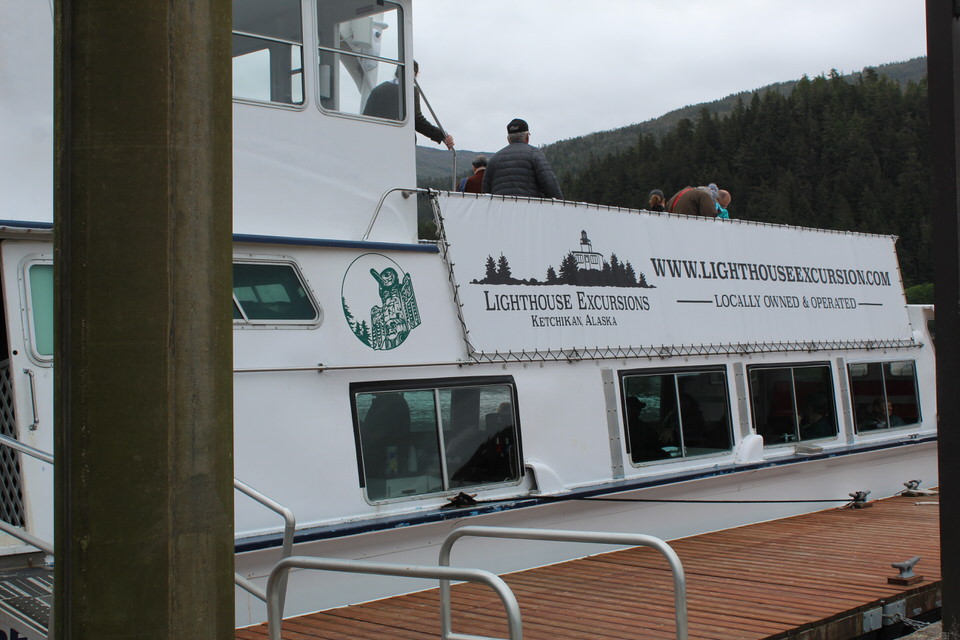
Time now for our afternoon excursion Lighthouse, Totems and Eagles

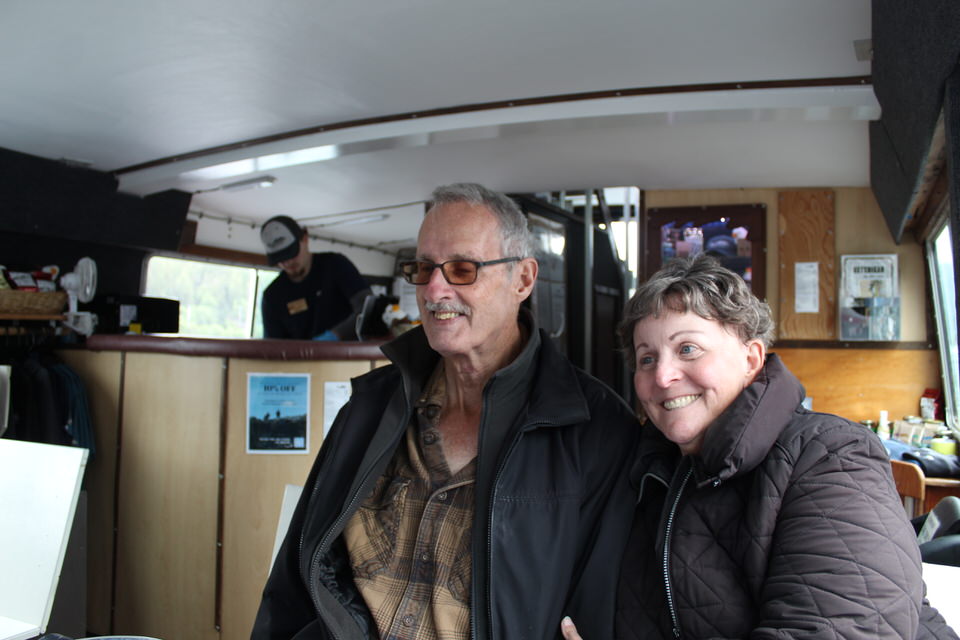
We were with our good friends, Dan and Betty on this excursion

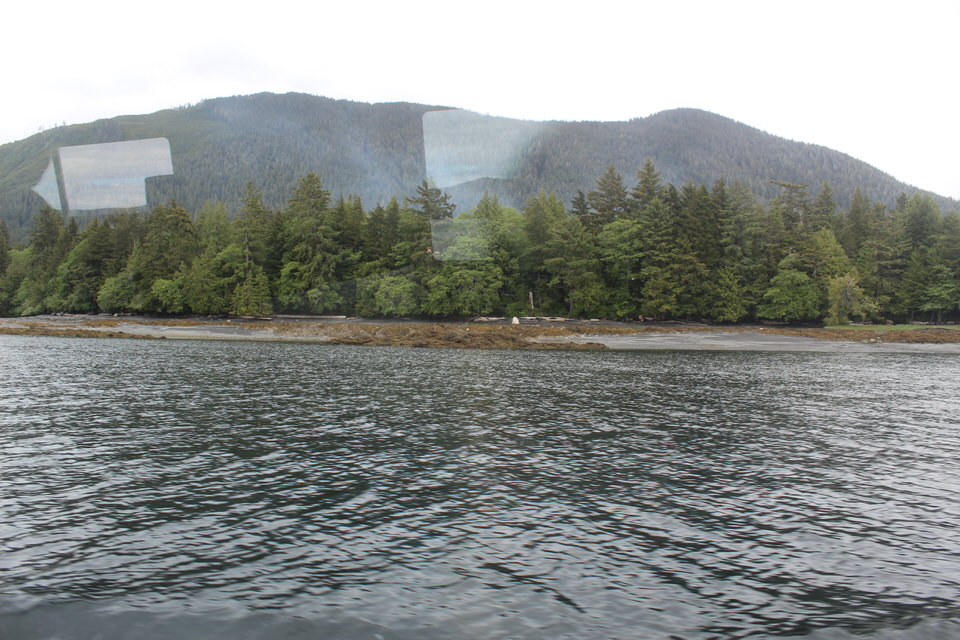
This was coastal cruise along the Tongrass National Forest, the world’s largest temperate rainforest

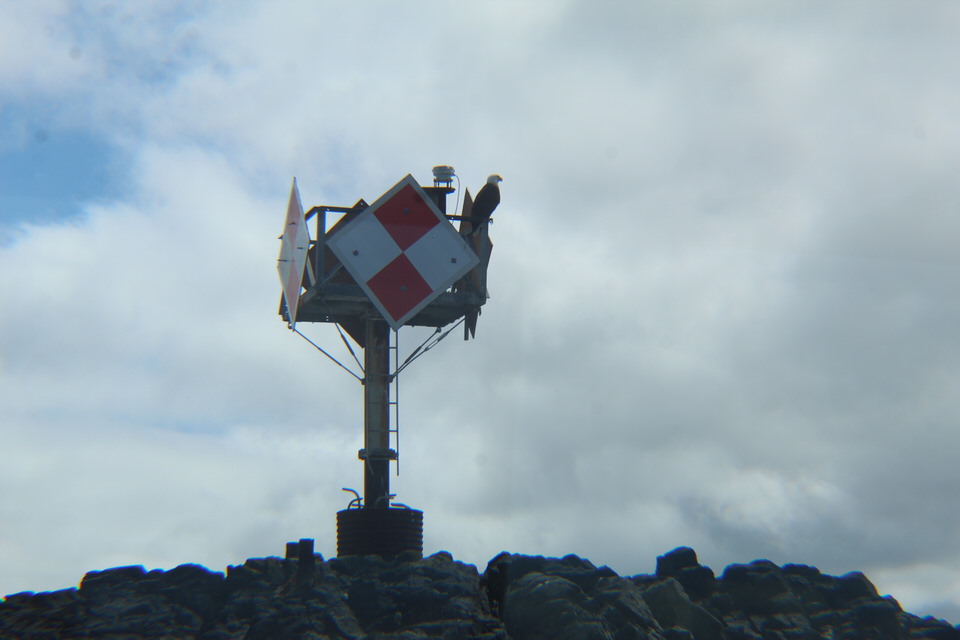
we saw a number of bald eagles

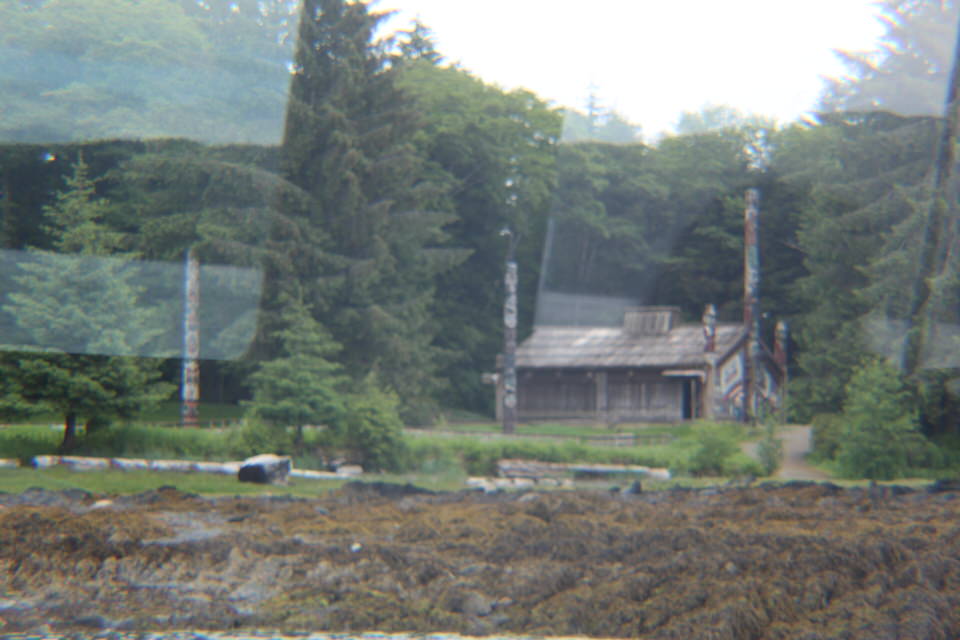
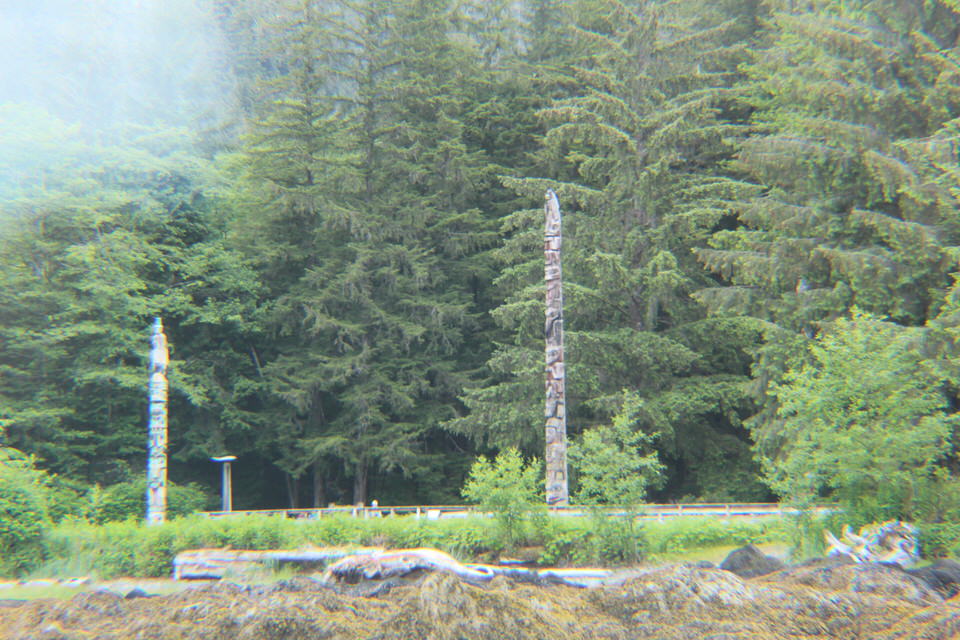
we passed by Totem Bight State Park where you will find an Alaska Native Clan house and a total of 14 totem poles

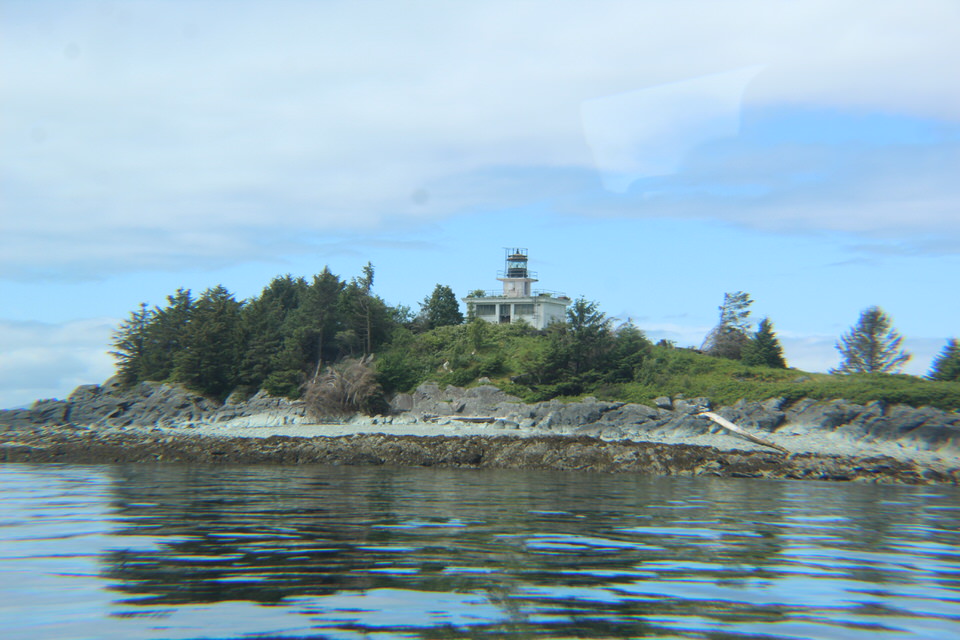
we went to Guard Island on which is built the very first lighthouse ever constructed in Alaska.

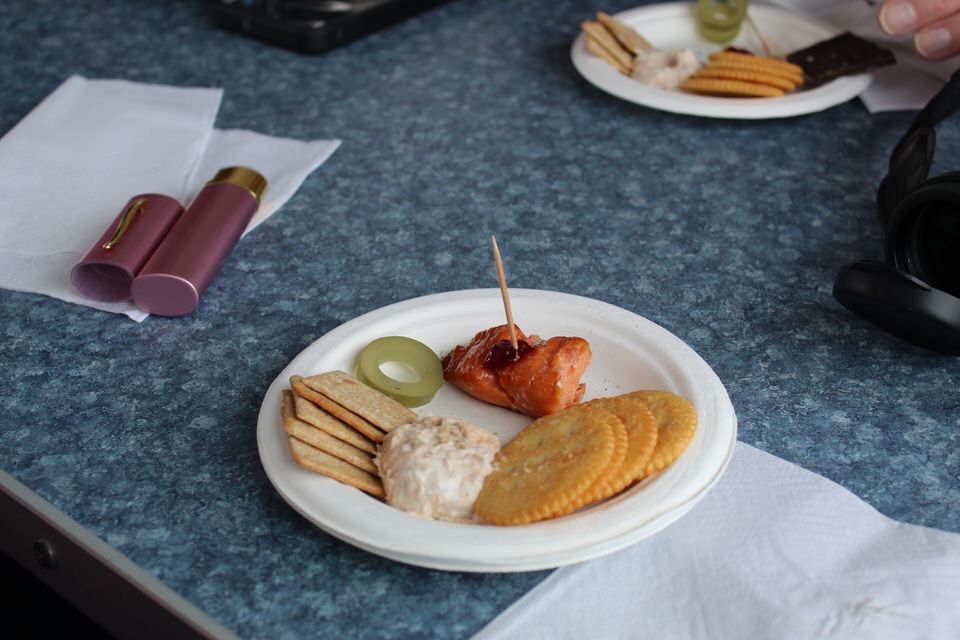
During the cruise we sipped on hot chocolate and enjoyed a number of Alaskan treats, including a salmon dip and smoked salmon. I enjoyed every bite of every item.

All too soon our day was quickly coming to a conclusion. It was time to return to our ship and depart for our next port. I would absolutely love to go back to Ketchikan. However, if by cruise ship I would not book any excursions. There is simply too many fascinating places to visit and I would want to visit as many as I could.
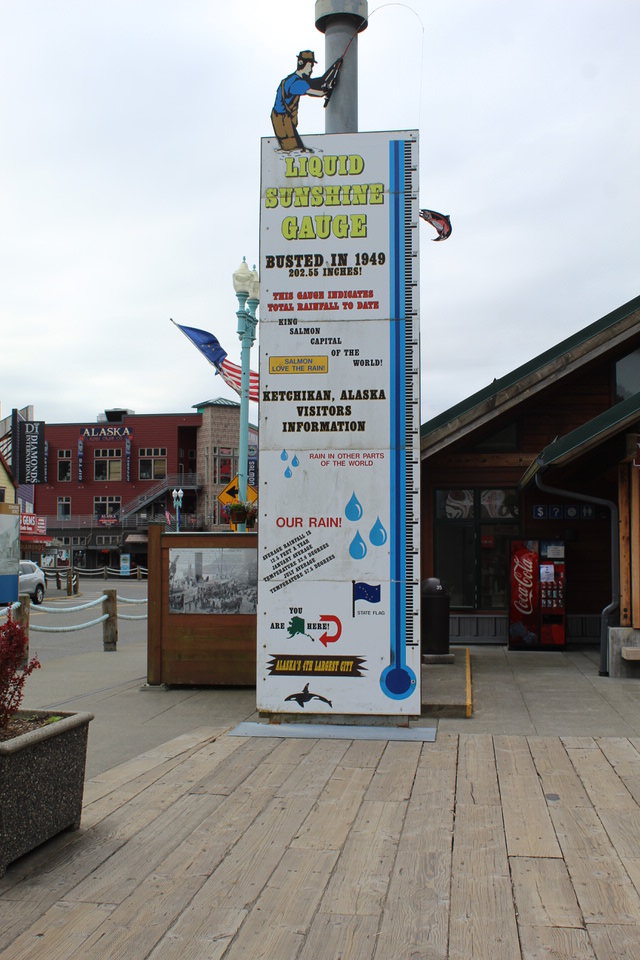
One last thing. They say it rains a lot in these parts. I guess this gauge is meant to prove it. Thankfully, though, we’ve not had a drop of rain so far. How lucky can one get.
Time to set sail. See you at our next port of call.