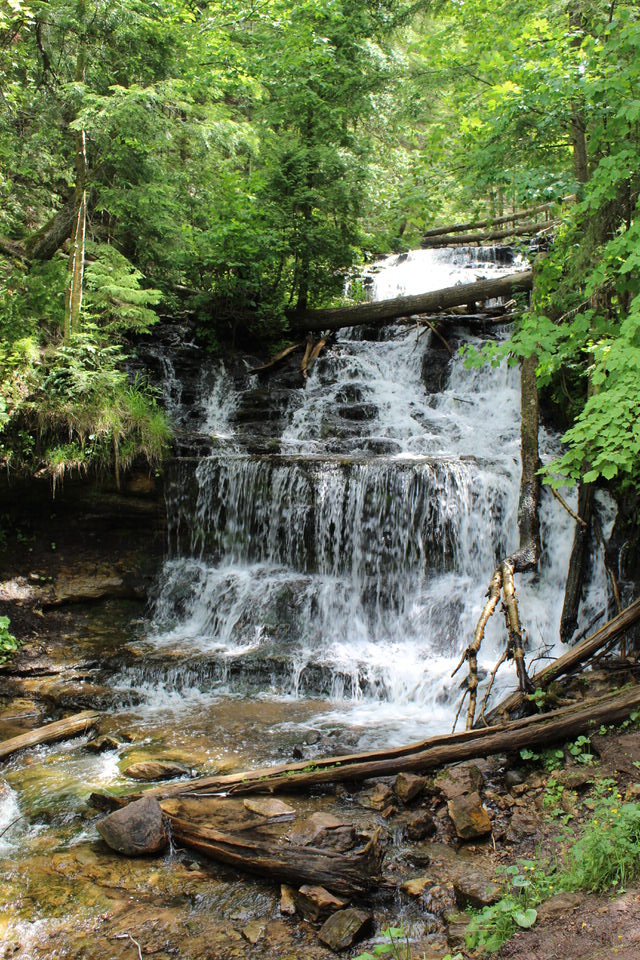
So Cedar Island is now nothing more than a distant memory. We enjoyed our time here and would return in the future, if it fit into our plans. We left this morning under clear skies and brilliant sunshine. Leaving I left the car off Graybeard and had Barbara lead the way out. This decision was the right one as the trip out was as easy as could be. We finally hooked up in Havelock at the Cherry Point Marine Base and traveled as one unit for the next hour to my Mom’s house. So much for our trip out. Let’s get going on the Outer Banks again.
Yesterday we ended with the first ferry ride from Cedar Island to Ocracoke. It took just over 2 hours for the trip. No time though to take in the sights in Ocracoke, we had another ferry to make. The ferries typically load between 5-10 minutes before departure and if you’re not there then you lose. Best not to risk the inconvenience of waiting for the next ride by simply being there close to departure time. So, we made our way through town – narrow two lane road – and continued north on the one and only north to south road which is Route 12.
Thirty minutes or so later we were at the second ferry terminal. Our second cruise ship would be the Frisco which is of the Hatteras Class. The North Carolina Ferry System
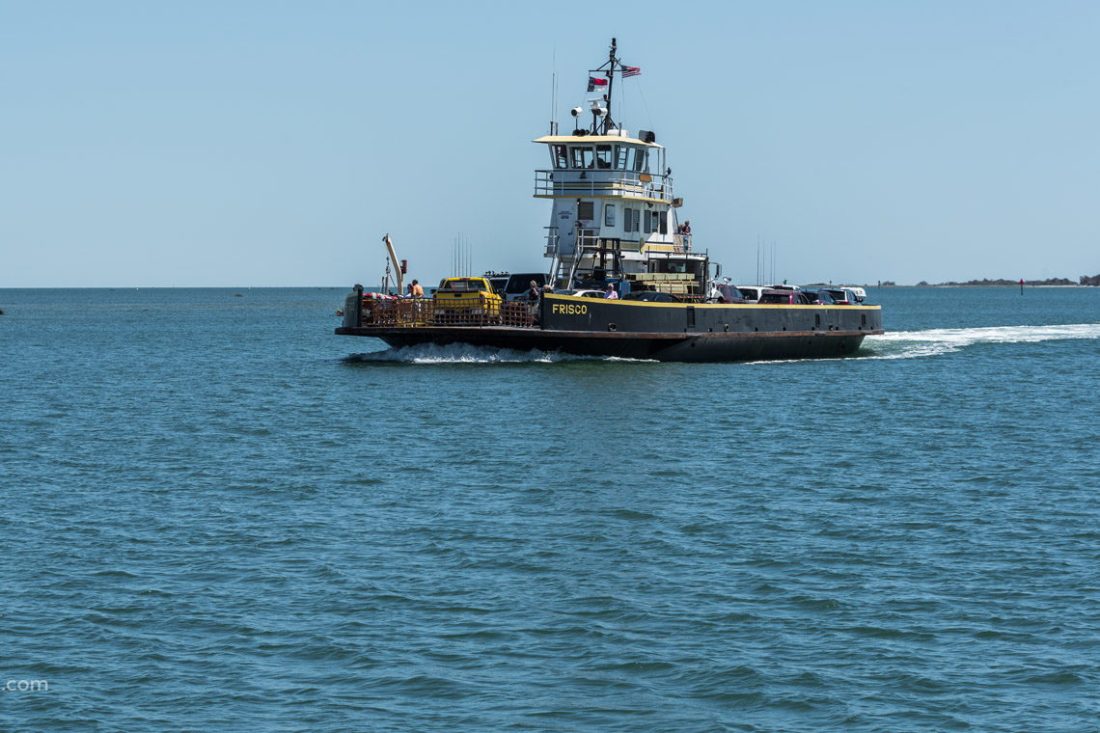
operates seven Hatteras Class ferries. These Vessels draft only 4 feet, and are designed for the shallow waters and shifting shoals of Eastern North Carolina. The Hatteras / Ocracoke ferry is one of the most popular of the seven coastal ferry routes. Open for everyone, with daily runs that occur 365 days a year, the island-hopping ferry provides an integral link for Ocracoke Island to the rest of the Outer Banks and provides visitors of all seasons with an exciting way to enjoy a coastal day trip. We arrived with time to spare, got on line and in no time were on board. This ferry cost was free.
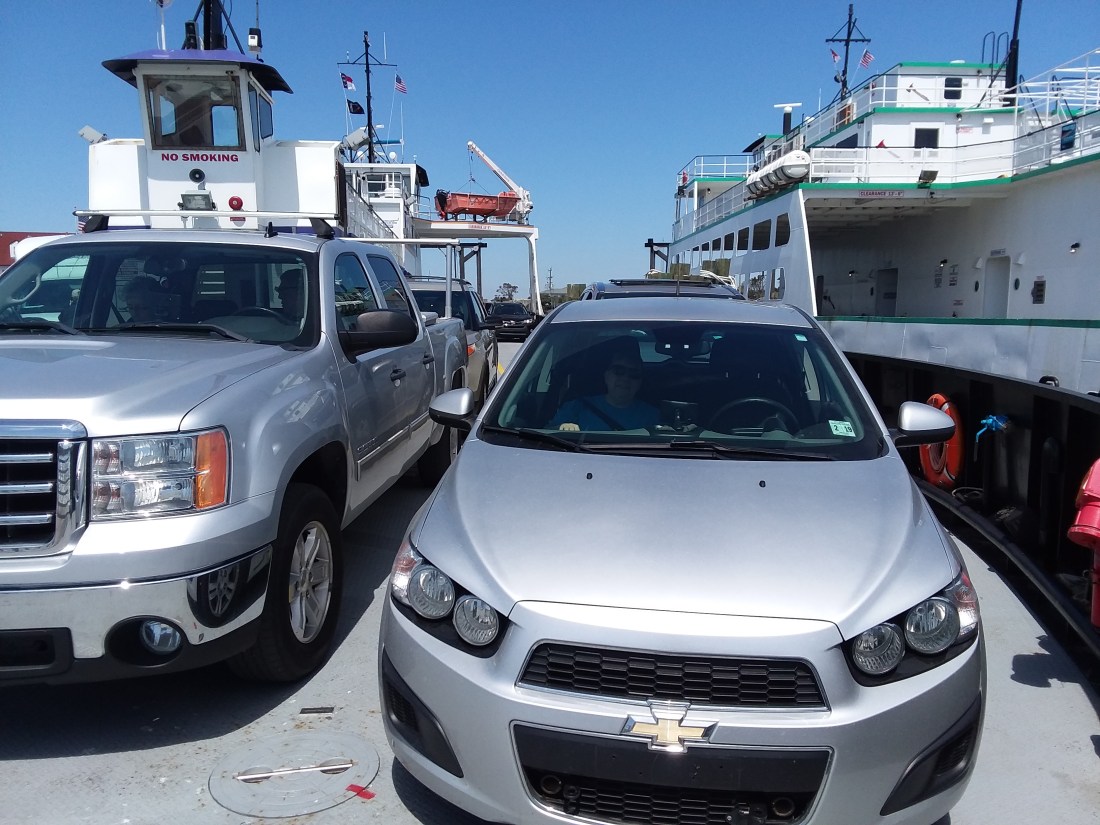
A bit over an hour later we were ready to leave our second cruise ship and visit our first museum which was the Graveyard of the Atlantic Museum.
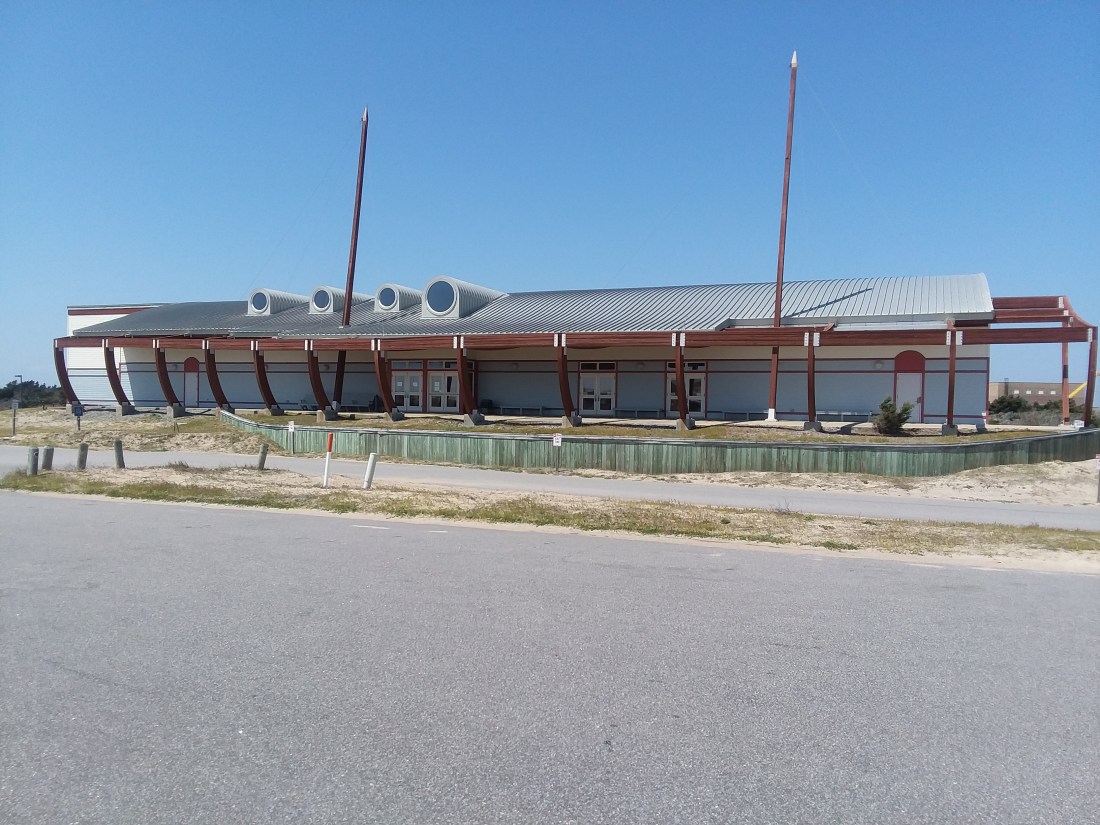
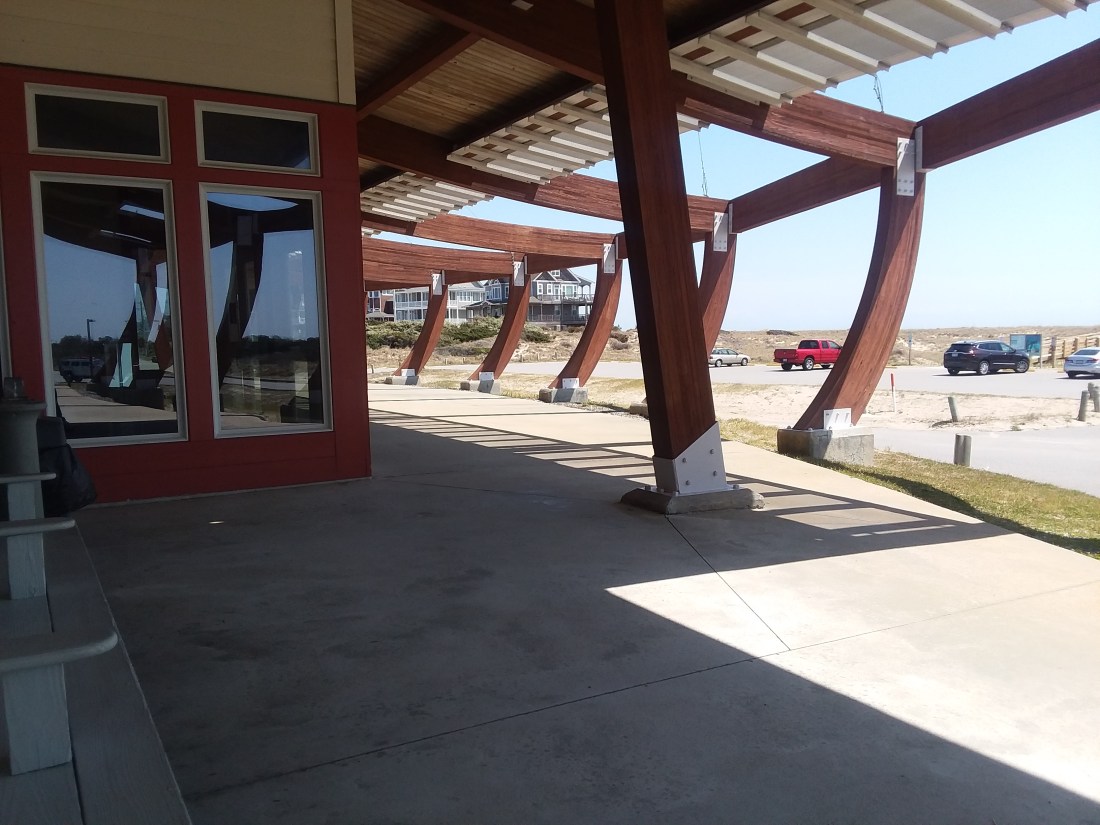
With more than 2,000 shipwrecks sunk off the Coast of North Carolina, in what’s called the Graveyard of the Atlantic, it was only natural to build a museum to honor and preserve the maritime culture of the Outer Banks.
The Graveyard of the Atlantic Museum is that structure. A state-of-the-art structure, the year-round museum houses and displays artifacts, and presents a variety of exhibits and interprets the rich maritime culture that includes war, piracy, ghost ships and more. The 18,768 sq. ft. building is constructed to withstand sustained winds of over 135 mph and gusts of over 250 mph and is elevated 12 ft. above sea level surpassing the thousand-year flood plain. The Museum’s design features ship’s curves and timber elements evocative of seafaring vessels.
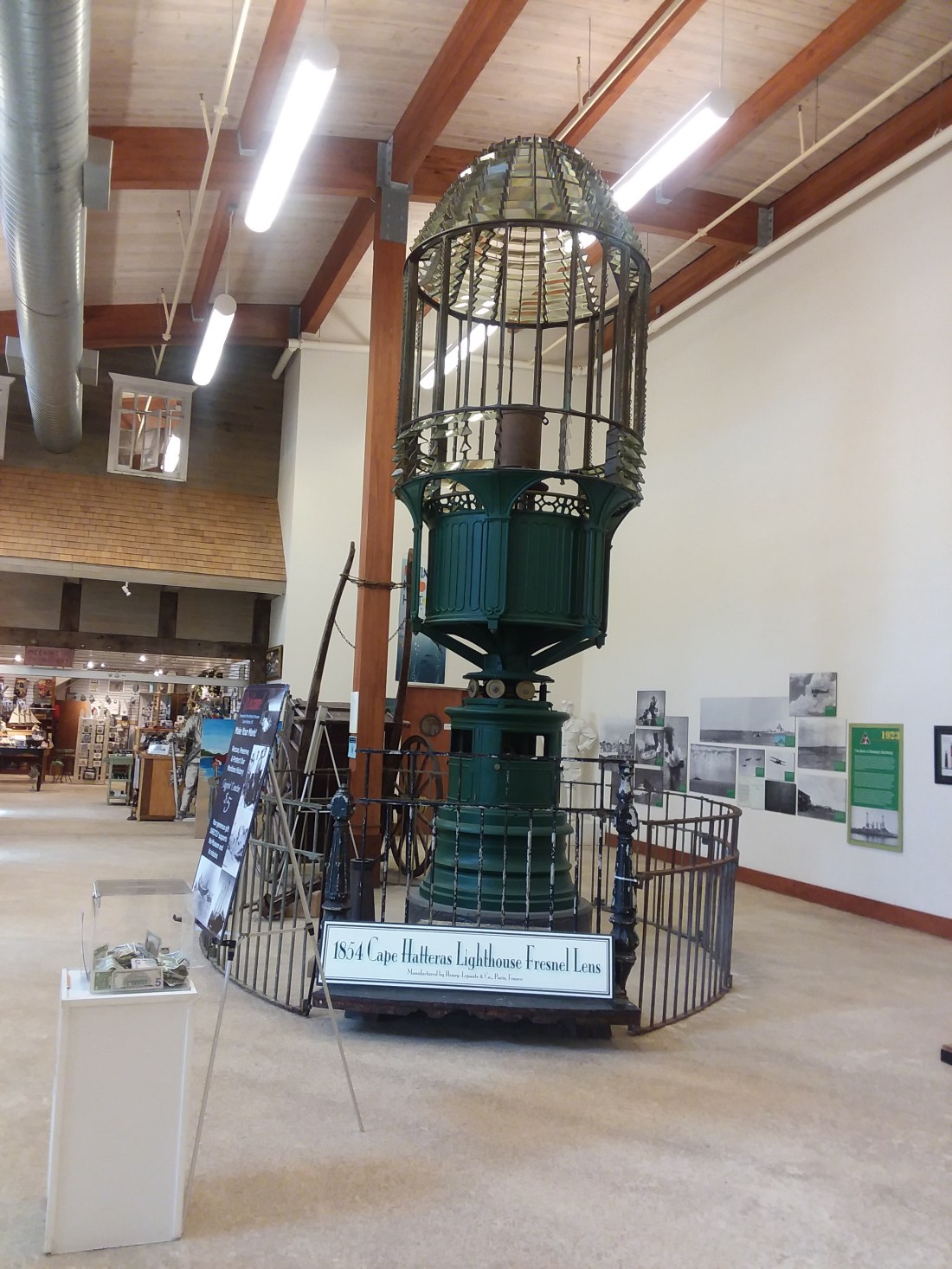
The lobby features the stunning and original, 1854, First Order Lens from the Cape Hatteras Lighthouse (more on the Lighthouse later).
Some of the more notable wrecks (time & space don’t permit mention of all that is here) detailed here at the museum are, first of all, the wreck of the USS Monitor. Built during the American Civil War, she was the first ironclad warship commissioned by the Union
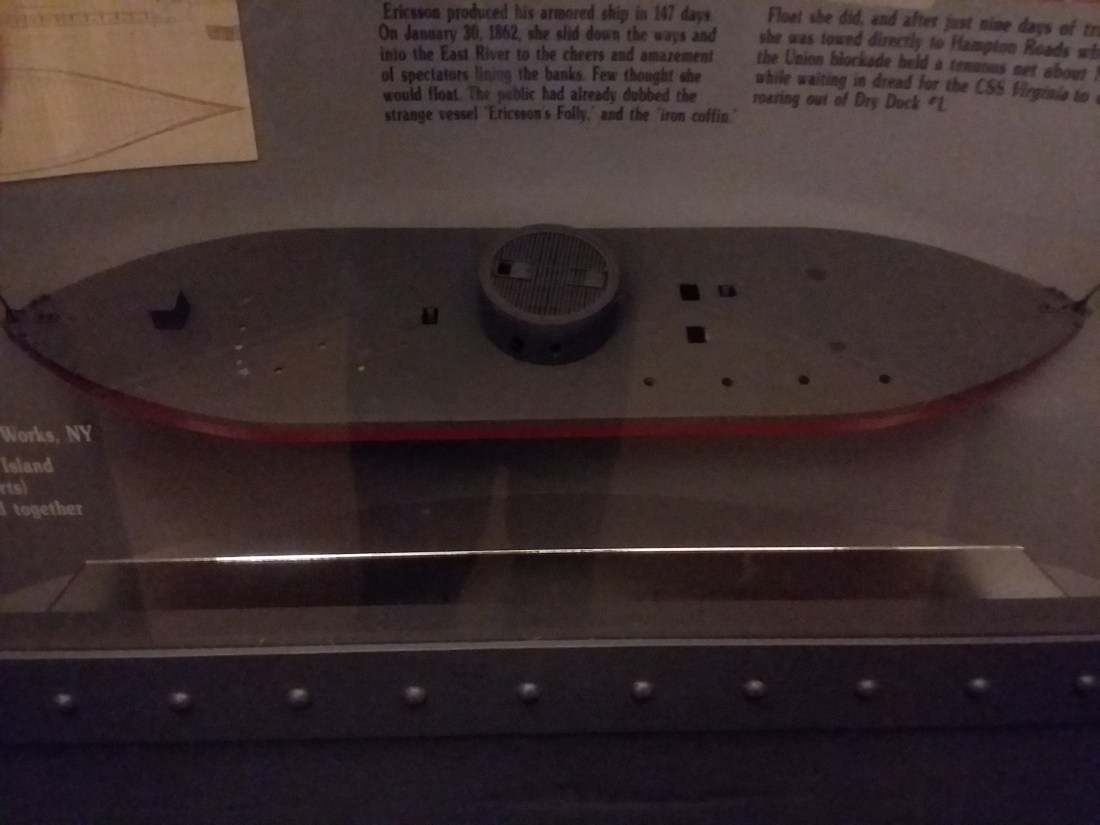
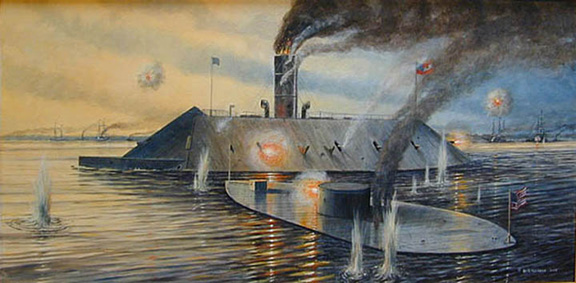
Navy. The unique design of the ship, distinguished by its revolving turret was quickly duplicated and established the monitor type of warship. Monitor is most famous for her central role in the Battle of Hampton Roads on 9 March 1862, where, under the command of Lieutenant John Worden, she fought the ironclad CSS Virginia (built on the hull of the former steam frigate USS Merrimack) to a standstill.
After this, the Monitor was eventually ordered to join the blockaders of North Carolina in December. On her way there being towed by the Rhode Island the Monitor pitched and swayed in the rough seas 16 miles off Cape Hatteras. As time went on, the caulking around the gun turret loosened and water began to leak into the hull. More leaks developed as the journey continued. High seas tossed the craft, causing the ship’s flat armor bottom to slap the water. Each roll opened more seams, and by nightfall on December 30, the Monitor was in dire straits.
The Monitor’s commander, J.P. Bankhead, signaled the Rhode Island that he wished to abandon ship. The wooden side-wheeler pulled as close as safety allowed to the stricken ironclad, and two lifeboats were lowered to retrieve the crew. Many of the sailors were rescued, but some men were terrified to venture onto the deck in such rough seas. The ironclad’s pumps stopped working and the ship sank before 16 crew members could be rescued.
Monitor’s wreck was discovered in 1973 and has been partially salvaged. Her guns, gun turret, engine and other relics are on display the Mariners Museum in Newport News, Virginia.
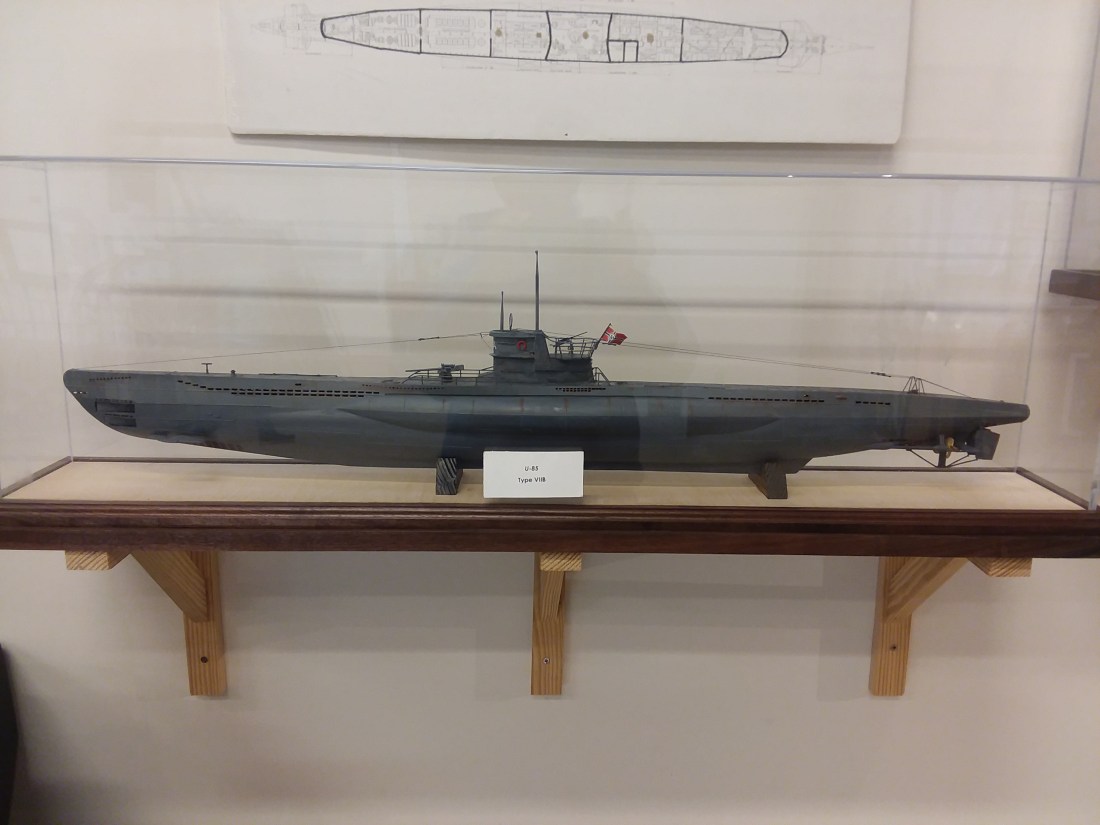
Other artifacts at the museum also include those of the German U-boat 85 and artifacts from it. This picture is of a model of the U-boat built for the museum. The following
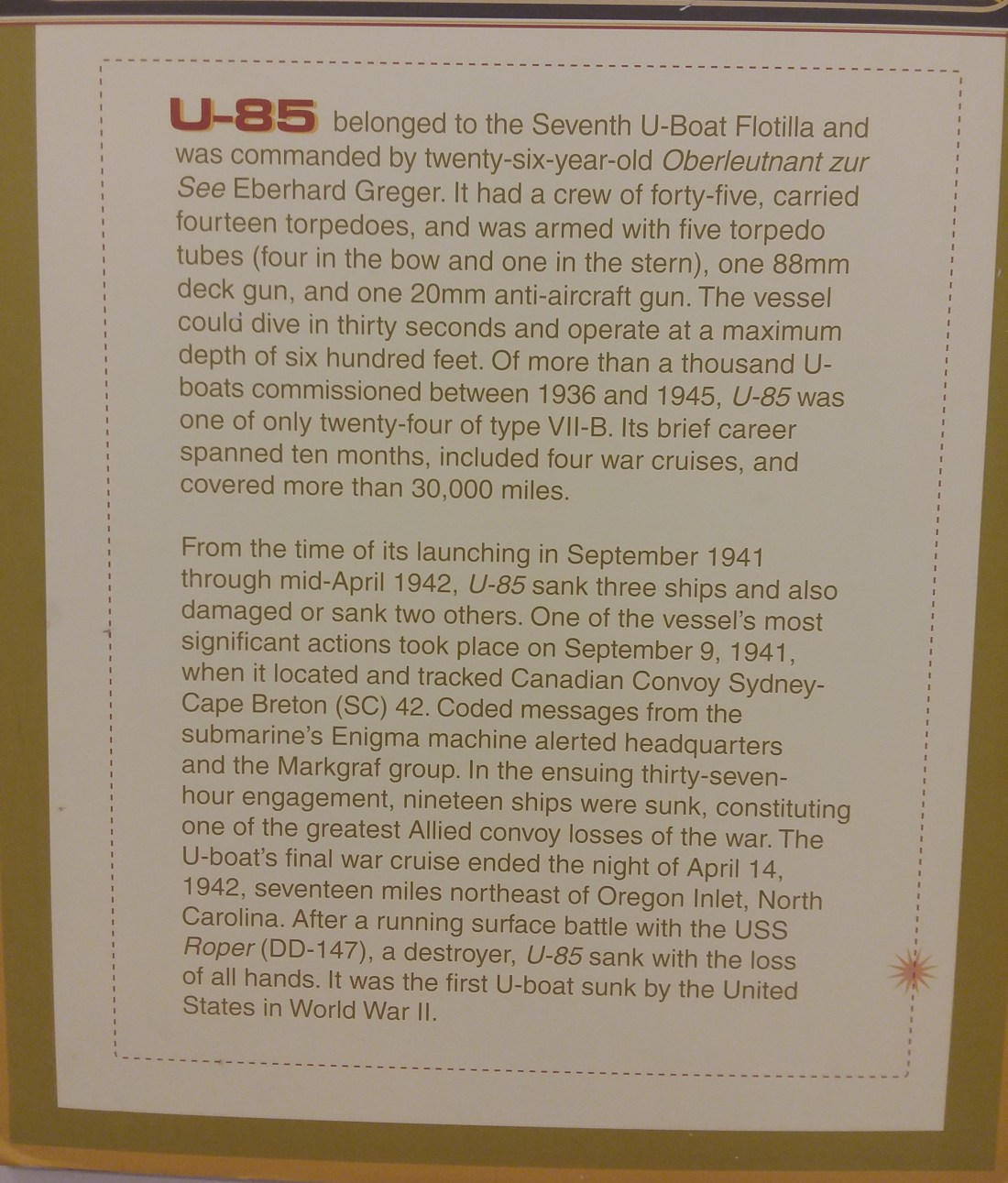
picture gives some of the history of the U Boat, its operations and what eventually happened of the Coast of Hatteras.
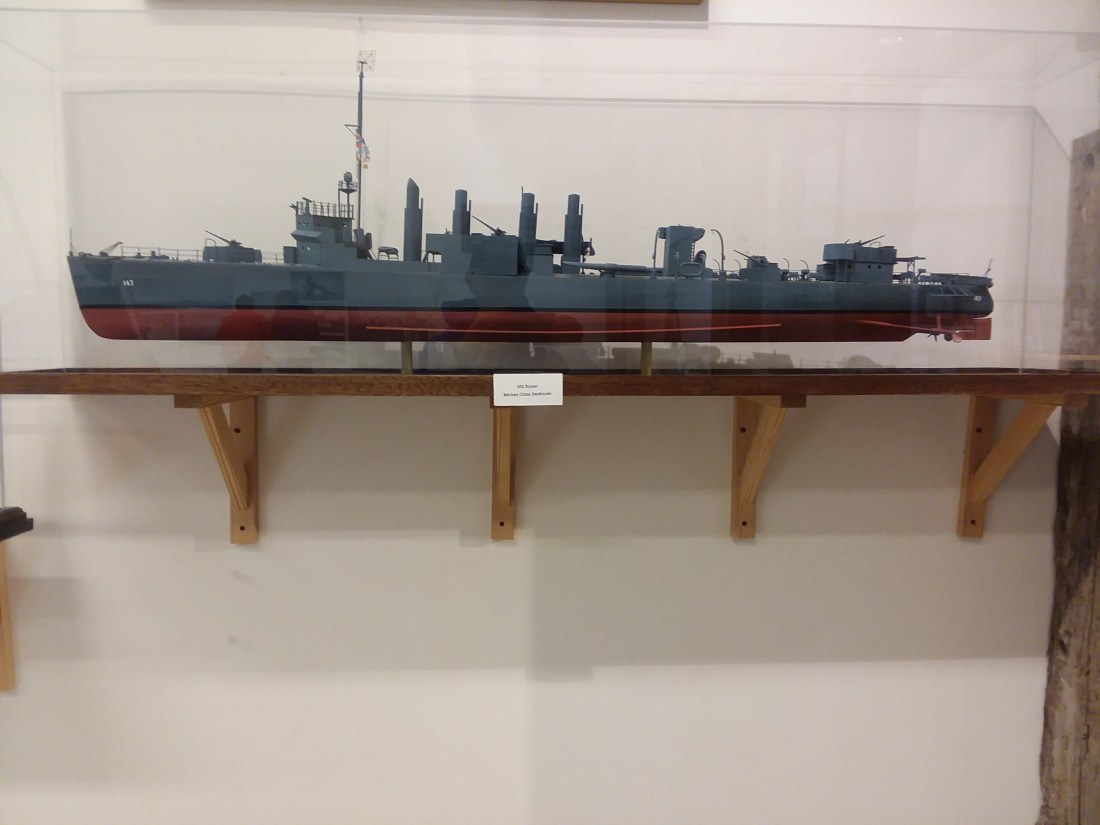
This is a picture of a model of the destroyer USS Roper which sank the U85.
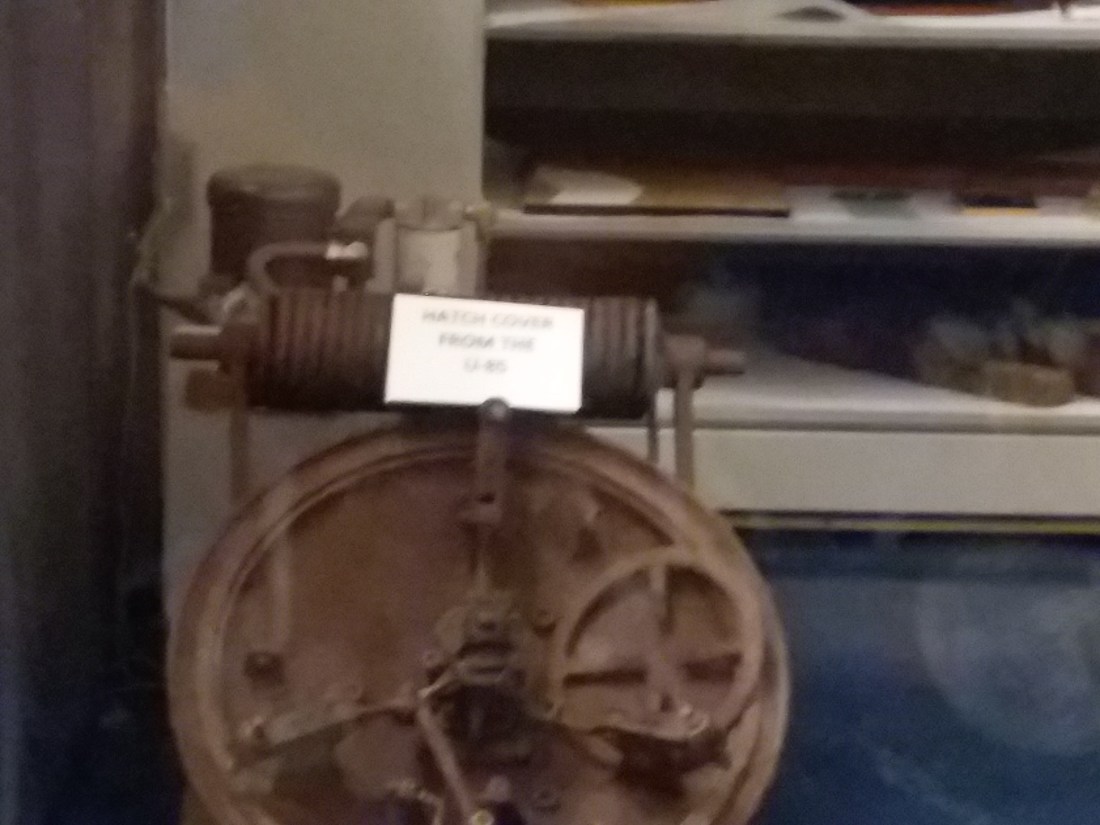
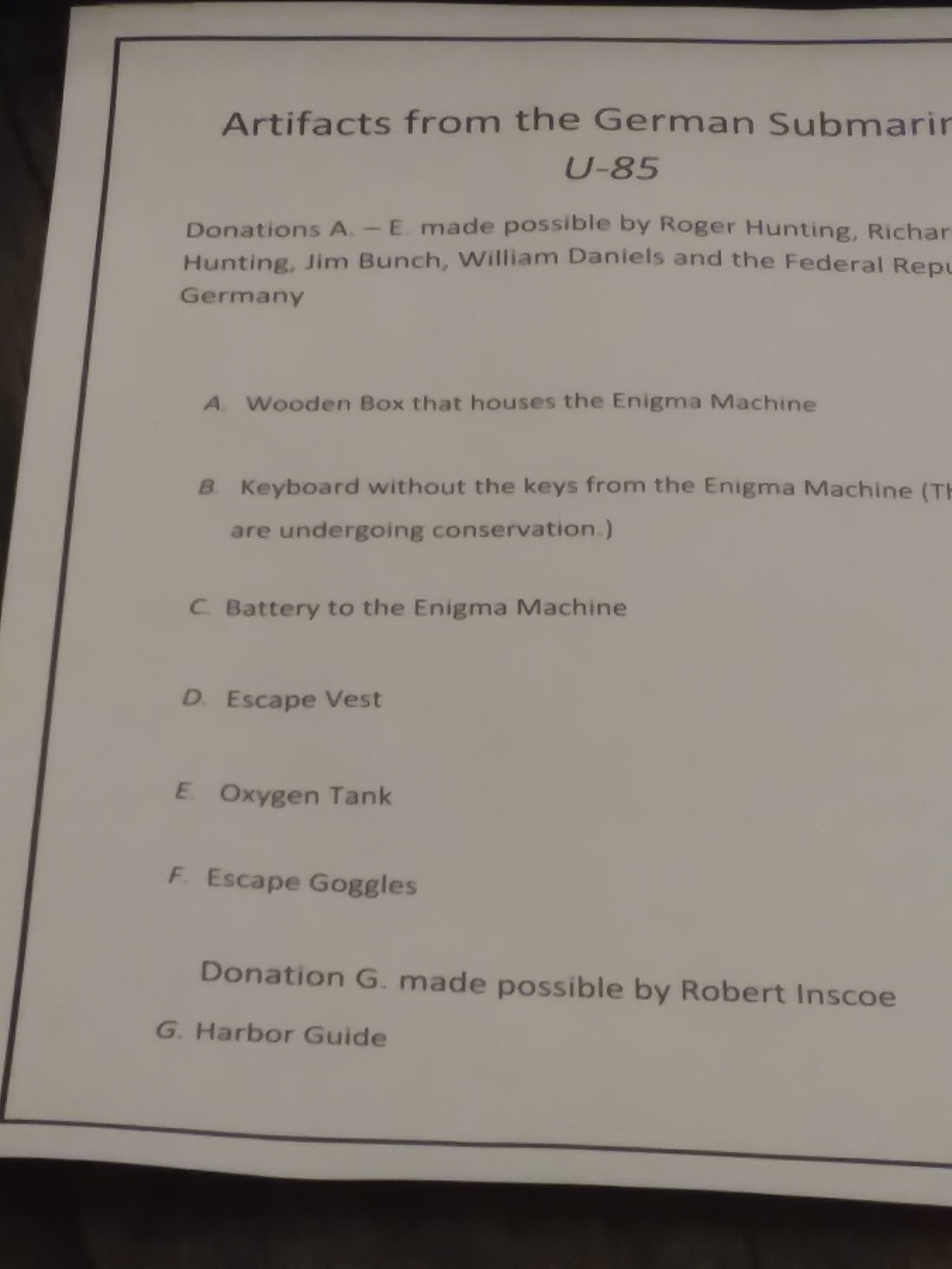
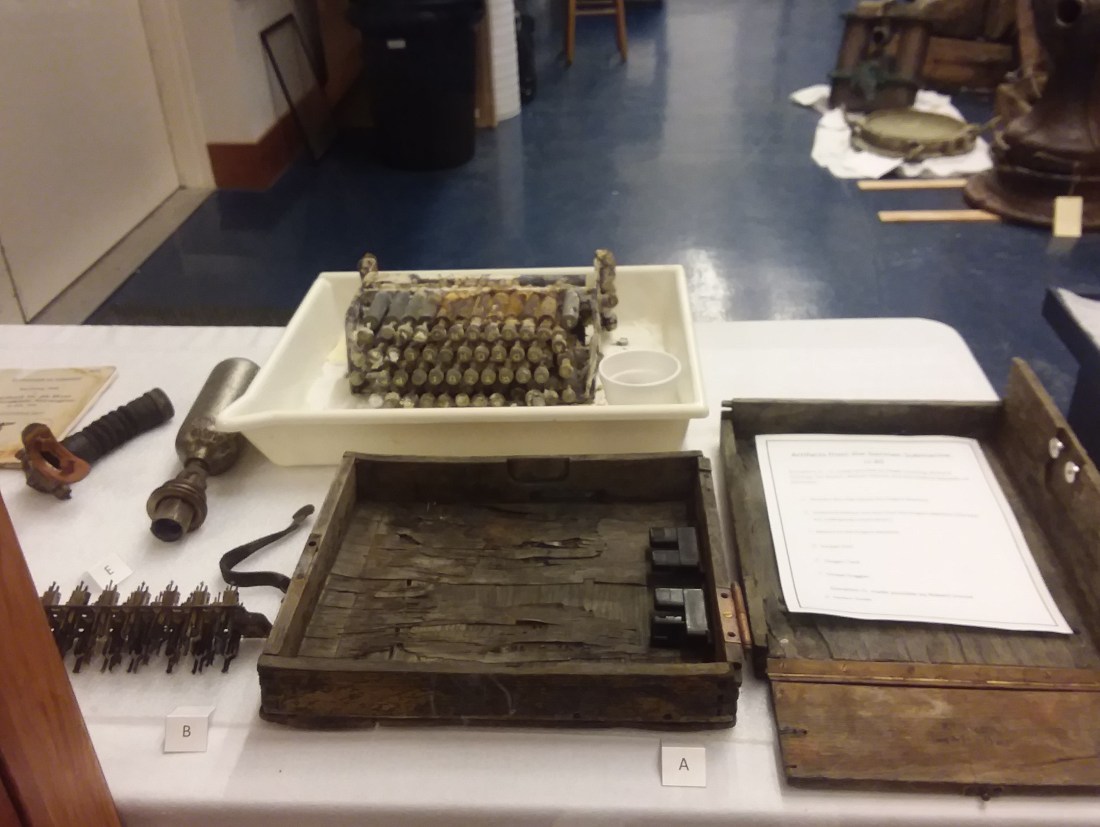
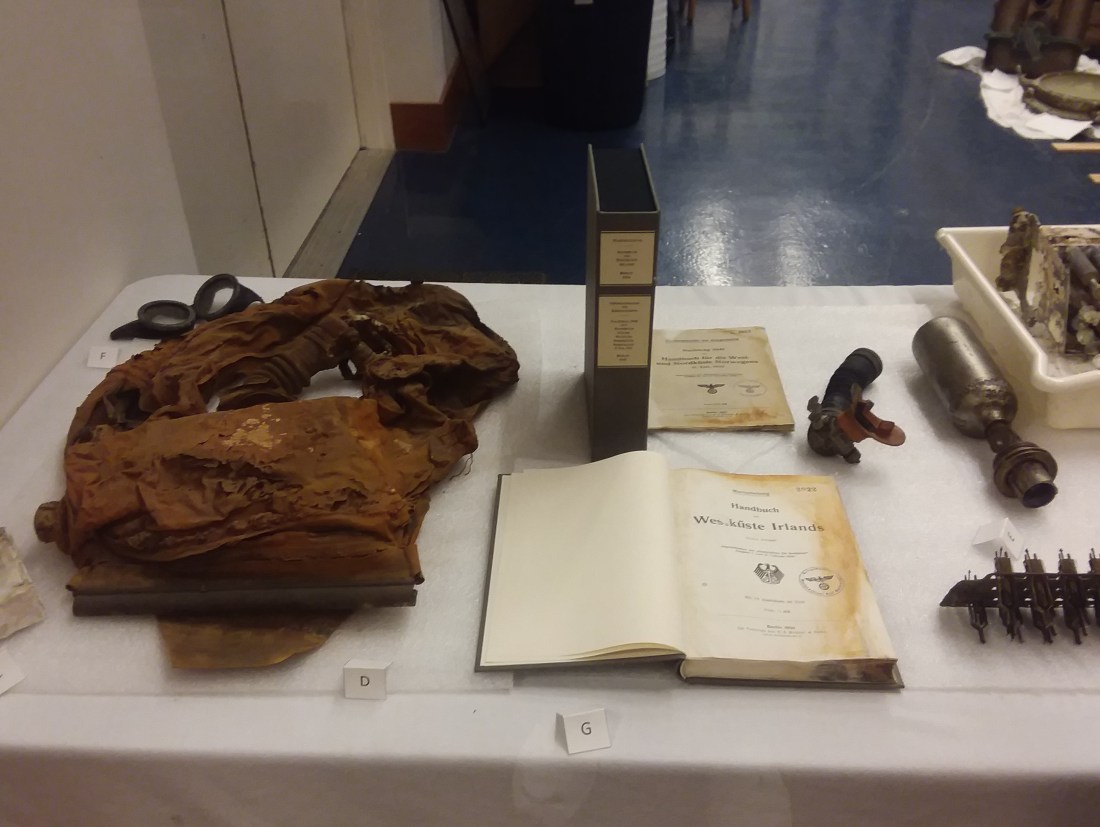
These are pictures of some of the artifacts from the U85 and on loan to the museum. This is a picture of the actual hatch cover and the following pictures are of other artifacts.
Yet, another notable wreck off the Hatteras coast was that of the USS Huron. The Huron and her sister ships were the last American made naval vessels to be built of iron rather than steel. The ship was also equipped with sails to supplement her steam engine.
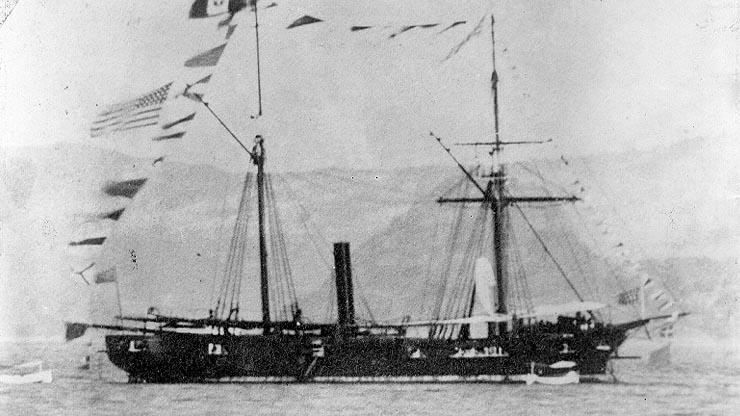
Following repairs at New York, the Huron left Hampton Roads, VA Friday, November 23, 1877 on a voyage to Havana, Cuba to survey the surrounding coast. On her first night out to sea, the ship encountered a heavy storm blowing from the southeast. The storm combined with a small error in the ship’s compass caused the Huron to run aground off Nags Head at 1:30 a.m., November 24.
Even though the Huron was only 200 yards from the beach, the heavy surf, strong currents and cold temperature prevented most of the crew members from attempting the swim to shore. Most of the crew tried to remain on the ship in the hope that help would arrive. However, no one came to the aid of the sailors; lifesaving stations had been closed until December. The elements eventually took their toll on the storm battered men. Many lost their strength and were washed overboard by waves. One huge wave swept at least 12 sailors away at one time. In all, 98 men lost their lives during the night.
The federal government was severely criticized for its failure to provide adequate funding for the United States Lifesaving Service. This disaster along with another ship
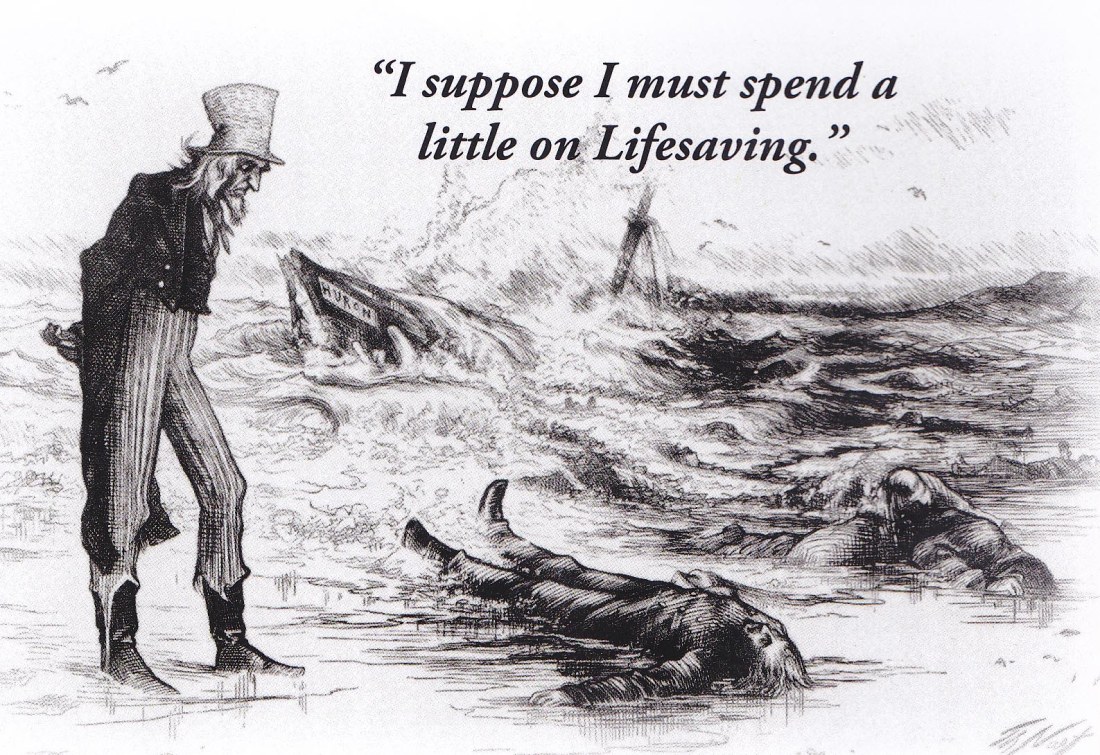
wreck shortly after prompted Congress to appropriate funding to build additional lifesaving stations along the North Carolina coast and increase their months of operation.
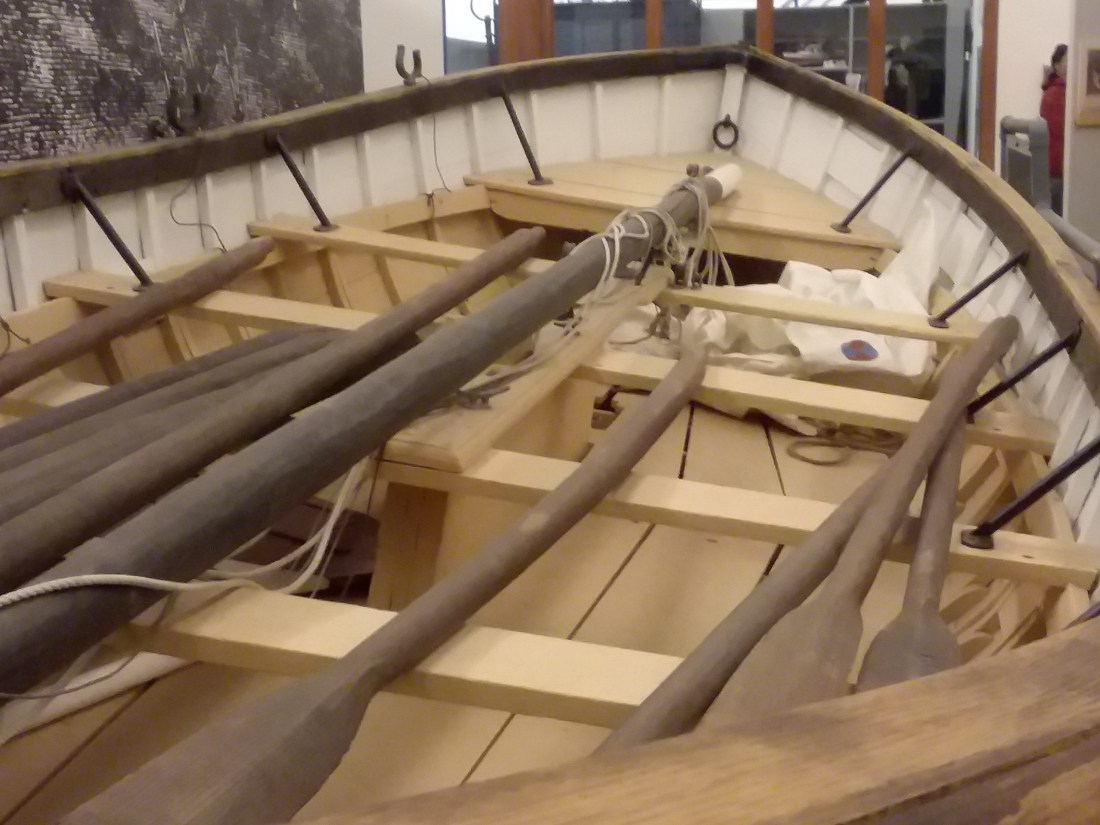
There is also an exhibit about the Lifesaving Service and it’s network of stations as well
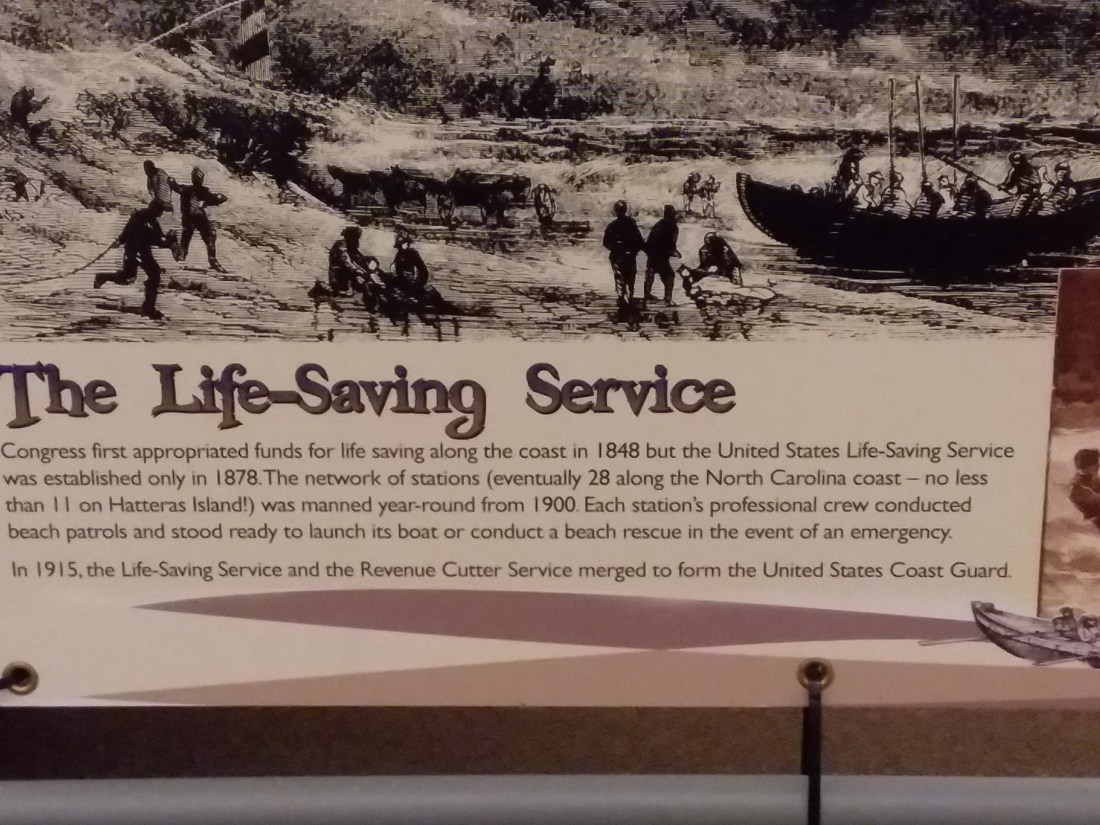
as a typical lifesaving boat of that day and age.
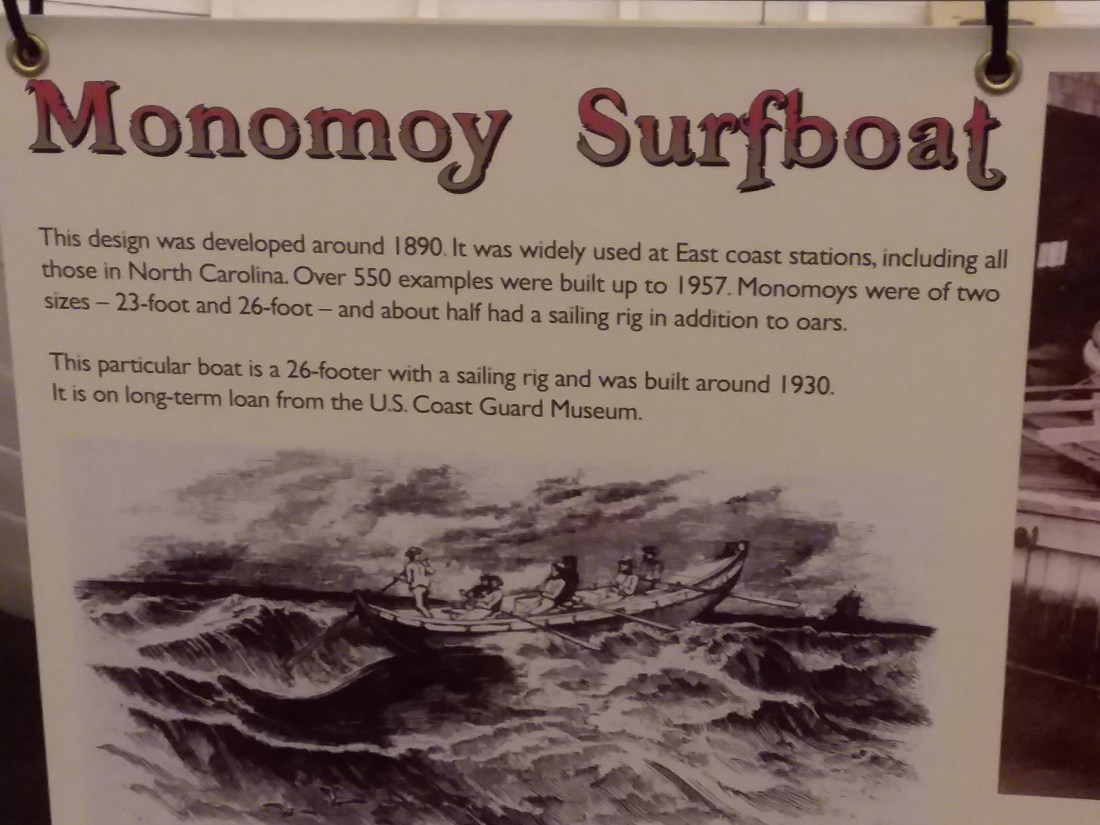
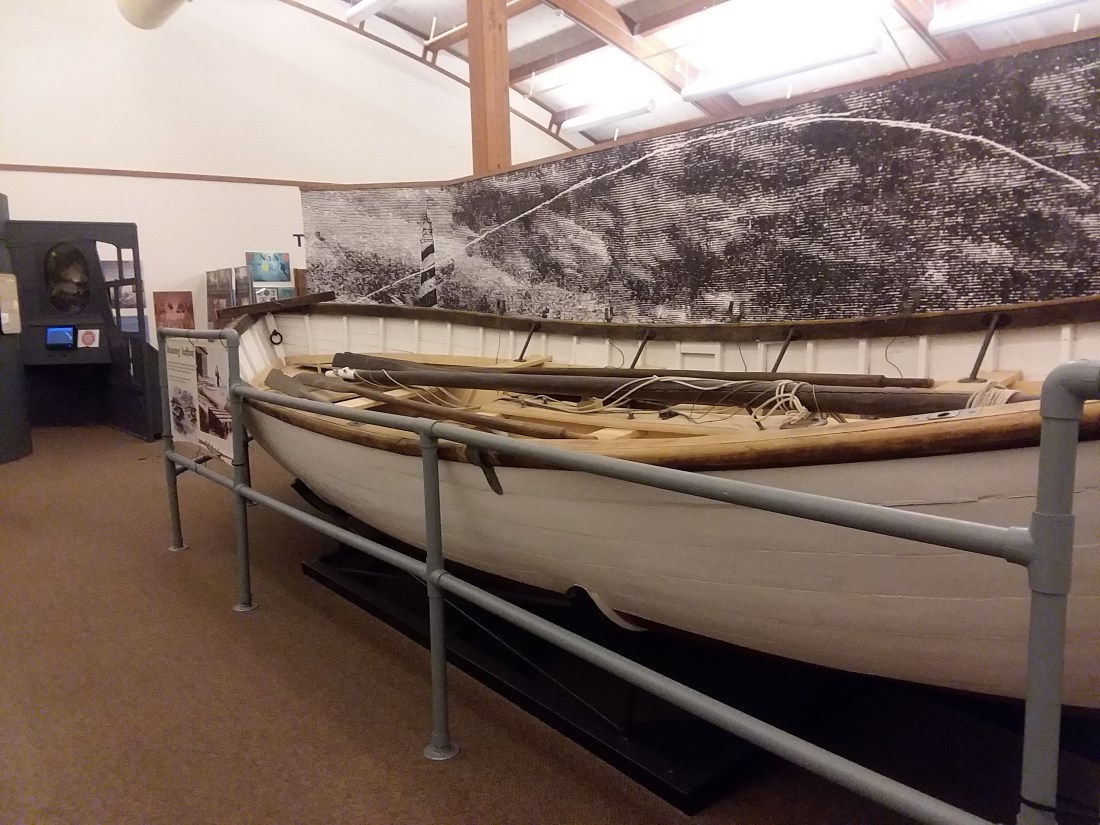
Time now to wrap this blog up for the day. We’ll pick up again tomorrow with more of what we did while on the Outer Banks. We’ll add some more about the museum and, of course, other places we discovered and what we learned.
Needing a place to call home after our first day on the Outer Banks Barbara had booked
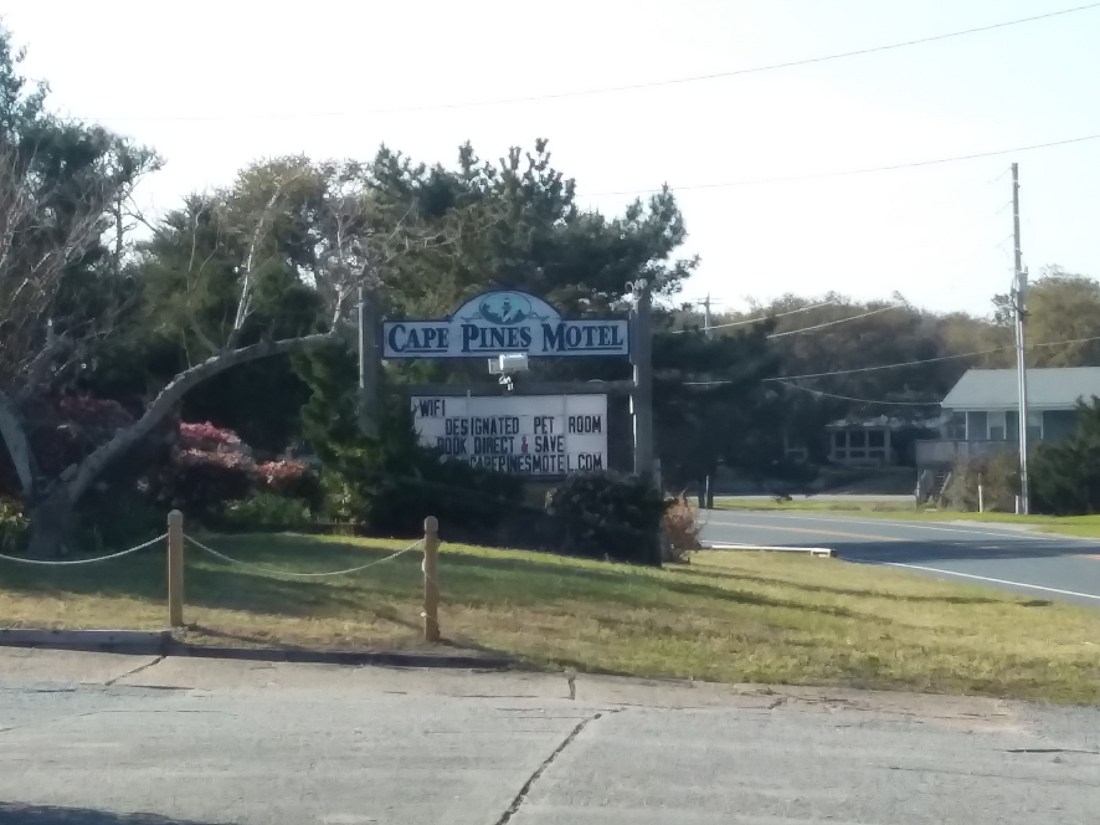
a room at the Cape Pines Motel for the night. I will say it was somewhat strange sleeping here. It wasn’t Graybeard and so it wasn’t home. But it was a place to stay. Hey, Marti thought it was great!
Well, our day is coming to a close. We are now at my Mom’s house and her hospitality is second to none. Dinner was spaghetti and meatballs with Lemon Meringue pie for dessert – I felt like a king! All in all we had a great day and we hope you had a great one as well. We continue to marvel at how God has blessed us with good health, time together, and so many wonderful experiences day by day. Let’s never forget when you come right down to it, it’s not how many minutes or even years you’re given to live, but what you do with that time to enrich the lives of yourself and those around you. So tomorrow and every day make it a point to do something that will both enrich you and those around you.
As always, if you are coming to the end of your day with concerns and worries let me suggest that you turn them over to God. After all, He is going to be up all night so why not let him handle them for you.
Time now for our evening prayers and some shut-eye. Till tomorrow. Thanks again for sharing our day with us.
These are the voyages of Graybeard and it’s occupants, four paws and two humans. Our continuing mission: to explore as many new states as possible, to seek out new acquaintances and make new friends, to boldly go where we have not been before


A very informative blog. You may be learning alot, but so are we. Thanks!
LikeLike