Back to the American Revolution. So today dawned early, like the sun comes up here at 5 am! And, of course, our bedroom window faces due east. Even with the night shade down it was bright. At least for an hour or two. Then it came, the wind and the rain. It got so bad at one point I had to go out and bring the awning in. Eventually the wind died down but the rain continued. Until around 7 pm and then the sun came out again. What a weird weather day for sure.
That was really the highlight of the day. We both agreed we just needed a day to decompress and take it easy and so we did. Breakfast was super, steak and cheese omelette with a glass of juice and a couple of cups of coffee. Once we finished breakfast we just sat around and cruised the internet.
Since we are behind, so to speak, on our visits while in Massachusetts, let’s do some catching up. This time we’re going to another National Historical Park. Remember we started with Lexington and Concord but that was just the beginning. The battle had begun but it was far from over. In June of 1775, there was another major battle and that became known as the battle of Bunker Hill.
On June 16, 1775, having learned that the British were planning to send troops from Boston to occupy the hills surrounding the city, some 1,000 colonial militiamen under Colonel William Prescott (1726-95) built earthen fortifications on top of Breed’s Hill,
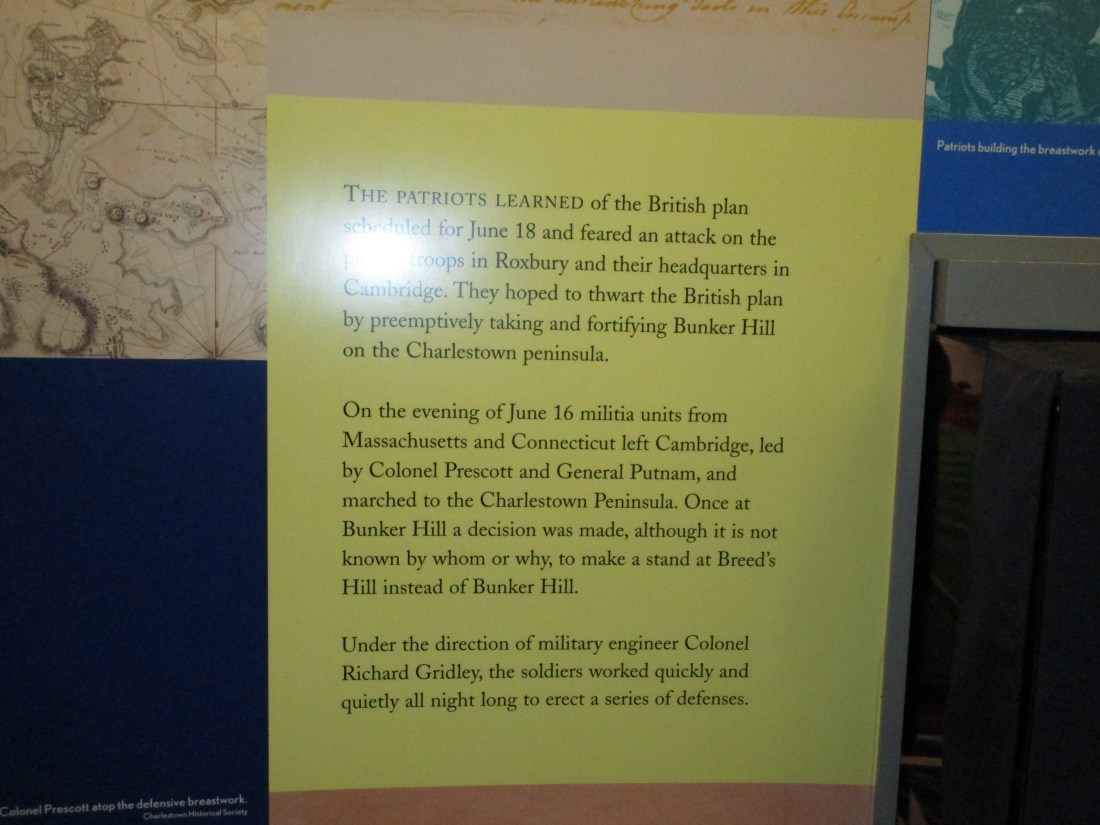
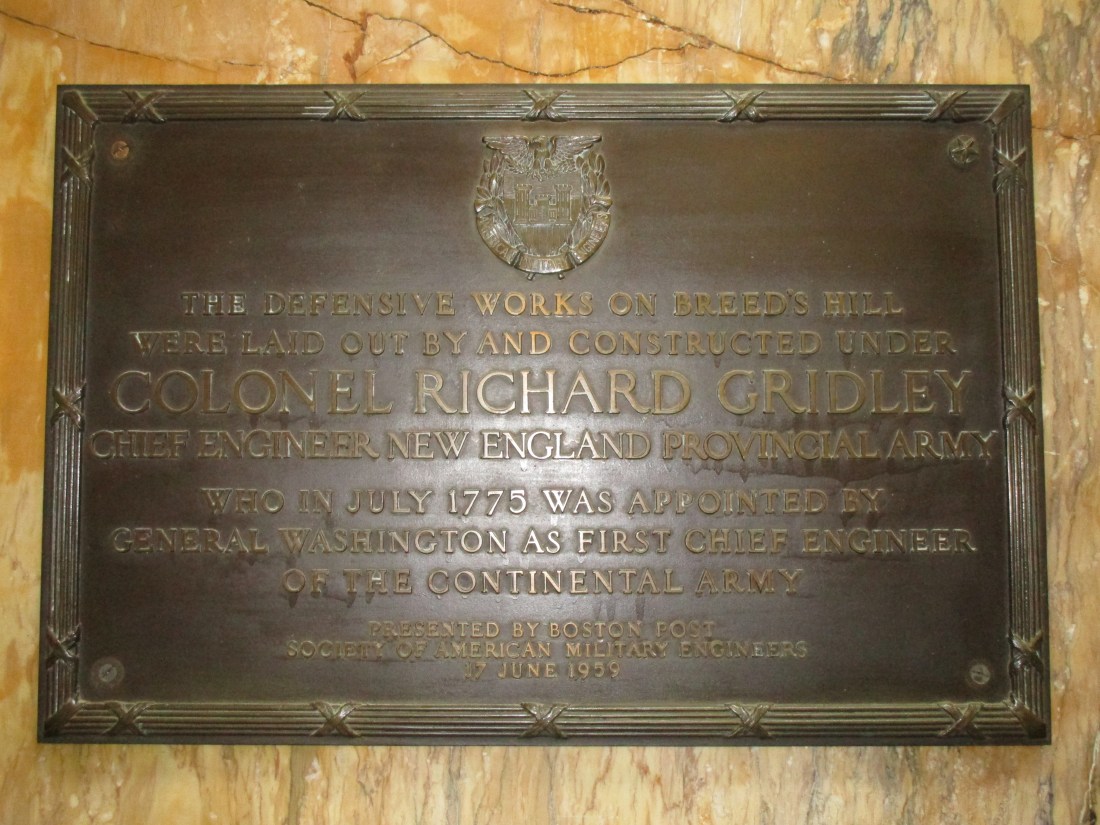
overlooking Boston and located on the Charlestown Peninsula. The men originally had been ordered to construct their fortifications atop Bunker Hill but instead chose the smaller Breed’s Hill, closer to Boston.
On June 17, some 2,200 British forces under the command of Major General William Howe (1729-1814) and Brigadier General Robert Pigot (1720-96) landed on the Charlestown Peninsula then marched to Breed’s Hill. This is a picture of the battle that raged there that day.
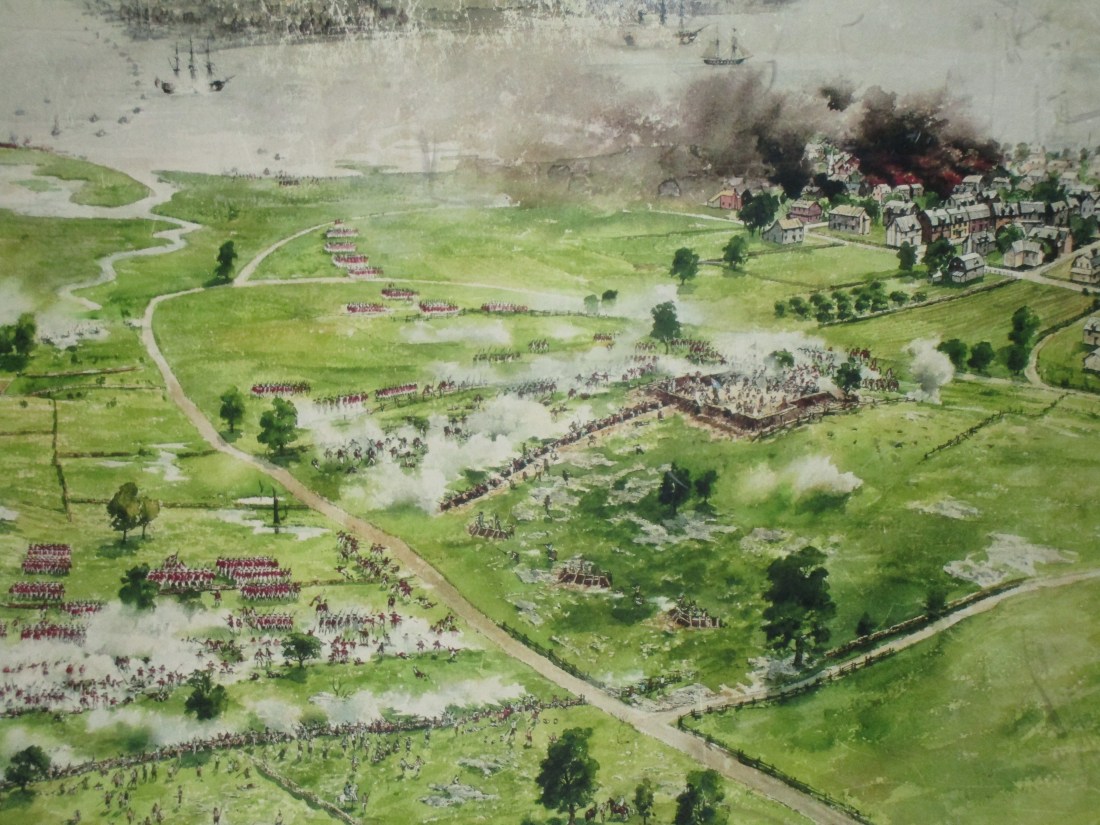
Here is what is called a cyclorama of the battle. It is an 18 by 240 foot painting, created by a team of artists and is considered to be the best representation of the battle. The scene represents the moment in the third assault when British troops enter the redoubt.
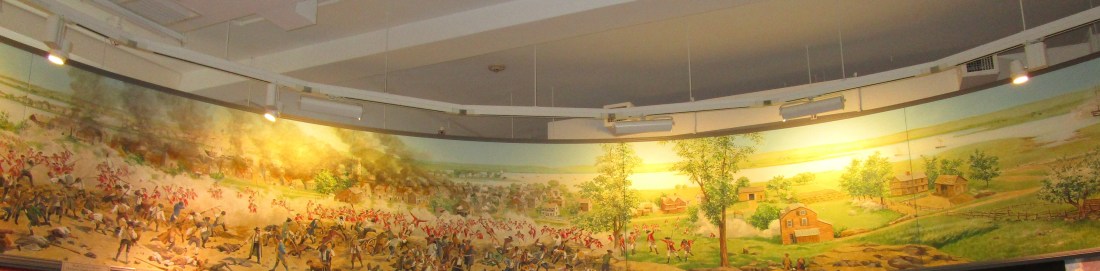
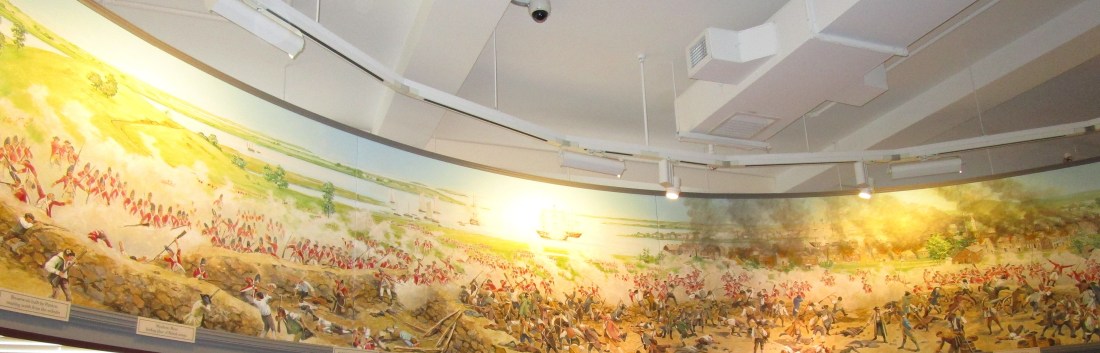
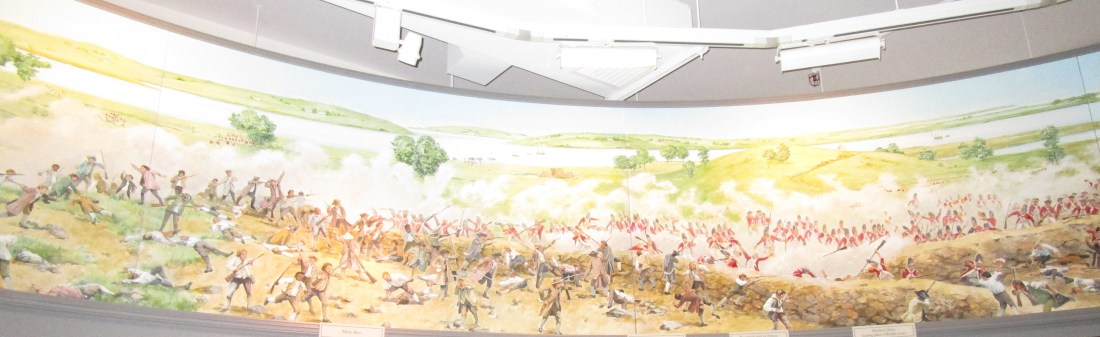
This is a picture of the one of the British assaults on the earthen fortifications on top of Breed’s Hill.
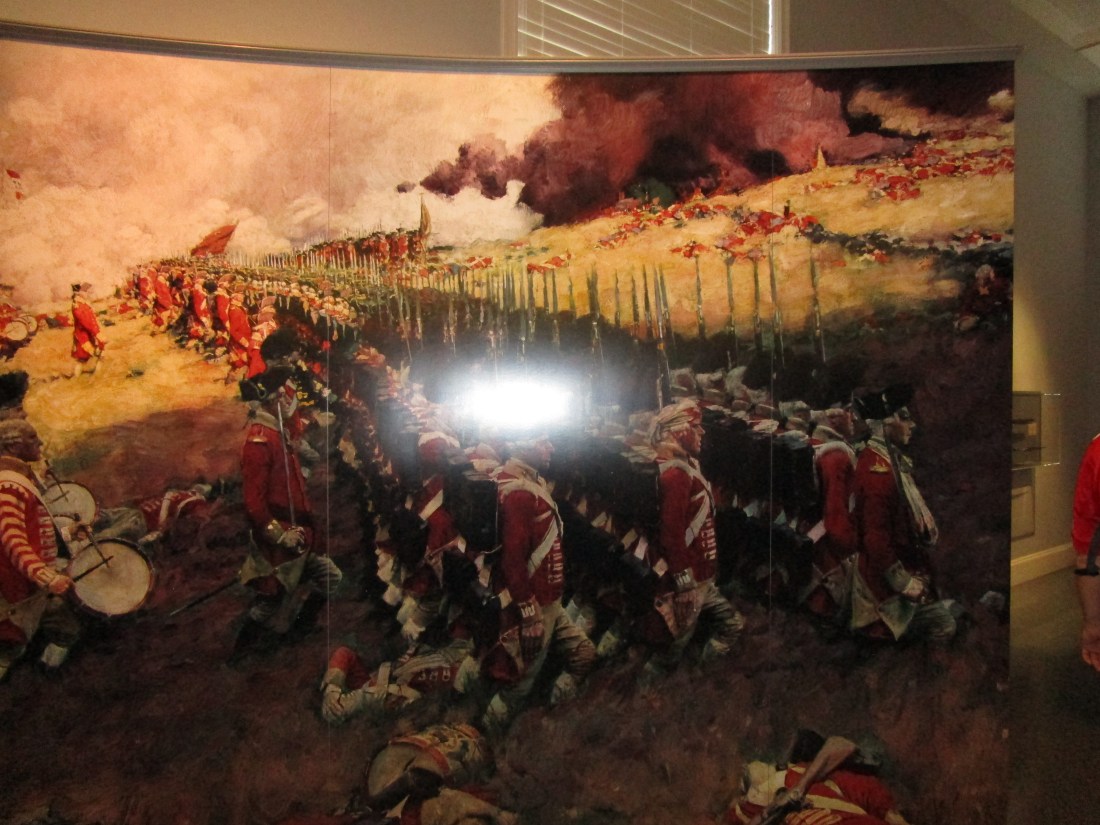
As the British advanced in columns against the Americans, Prescott, in an effort to conserve the Americans’ limited supply of ammunition, reportedly told his men, “Don’t fire until you see the whites of their eyes!”
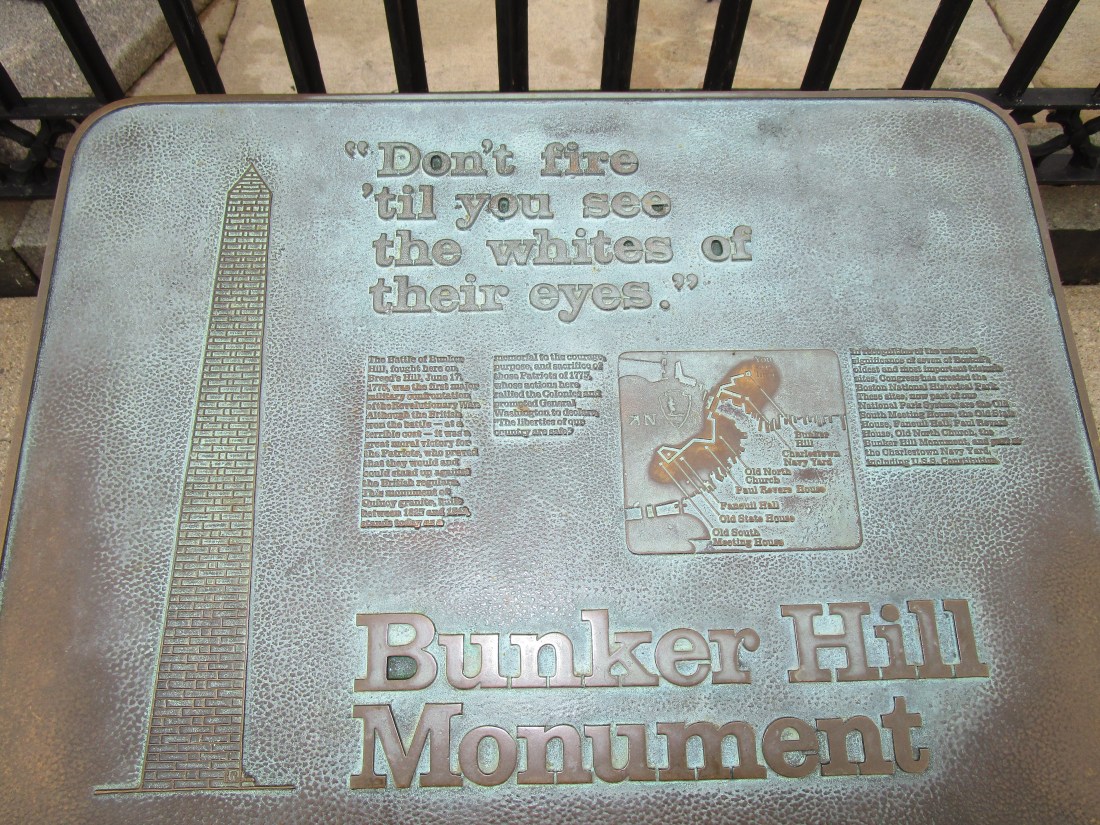
When the Redcoats were within several dozen yards, the Americans let loose with a lethal barrage of musket fire, throwing the British into retreat.
After re-forming their lines, the British attacked again, with much the same result. Prescott’s men were now low on ammunition, though, and when the Redcoats went up the hill for a third time, they reached the redoubts and engaged the Americans in hand-to-hand combat.
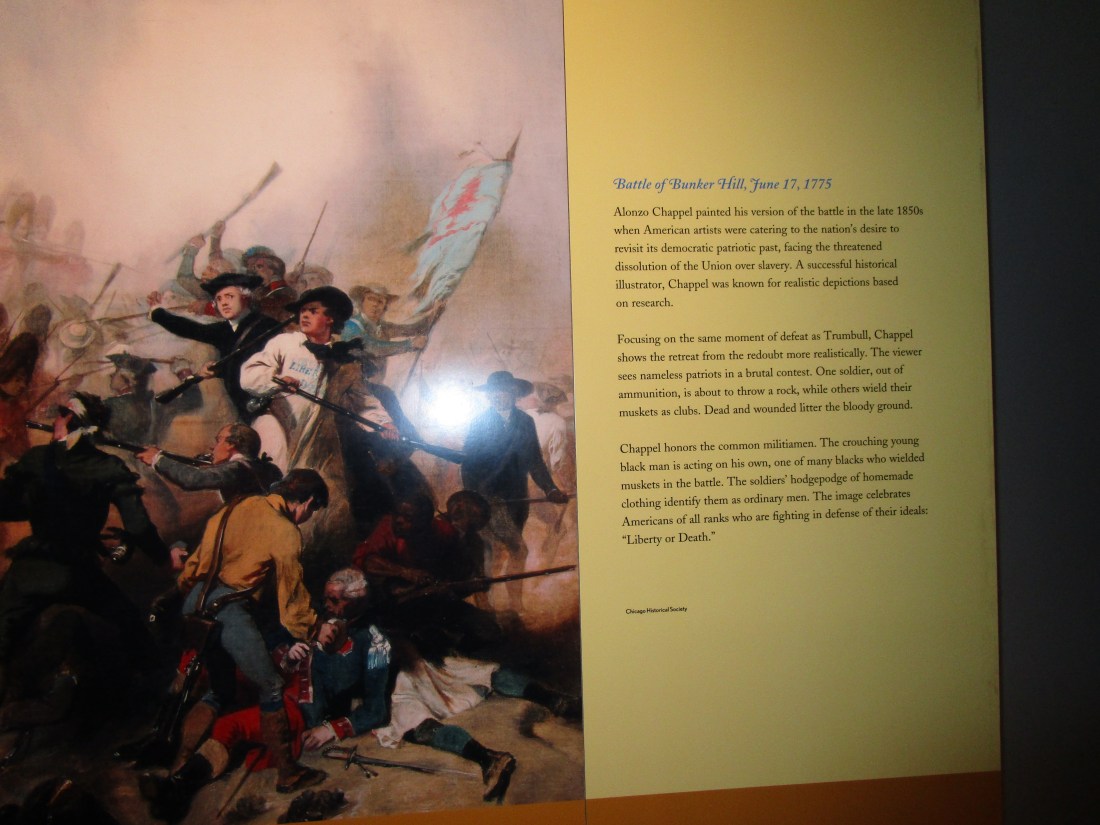
The battle lasted for no more than two hours. Yet, the results were horrifying. Over 1,000 British soldiers, officers, and Marines were killed or wounded. Many of the wounded would die over the next days, weeks, and months from their wounds. Of the roughly 1,400 to 1,800 provincial soldiers directly engaged at Charlestown, some 300-500 were killed, wounded, or captured. Among the dead at Bunker Hill was the Patriot leader Joseph Warren. Warren, a physician turned political activist, had become the preeminent
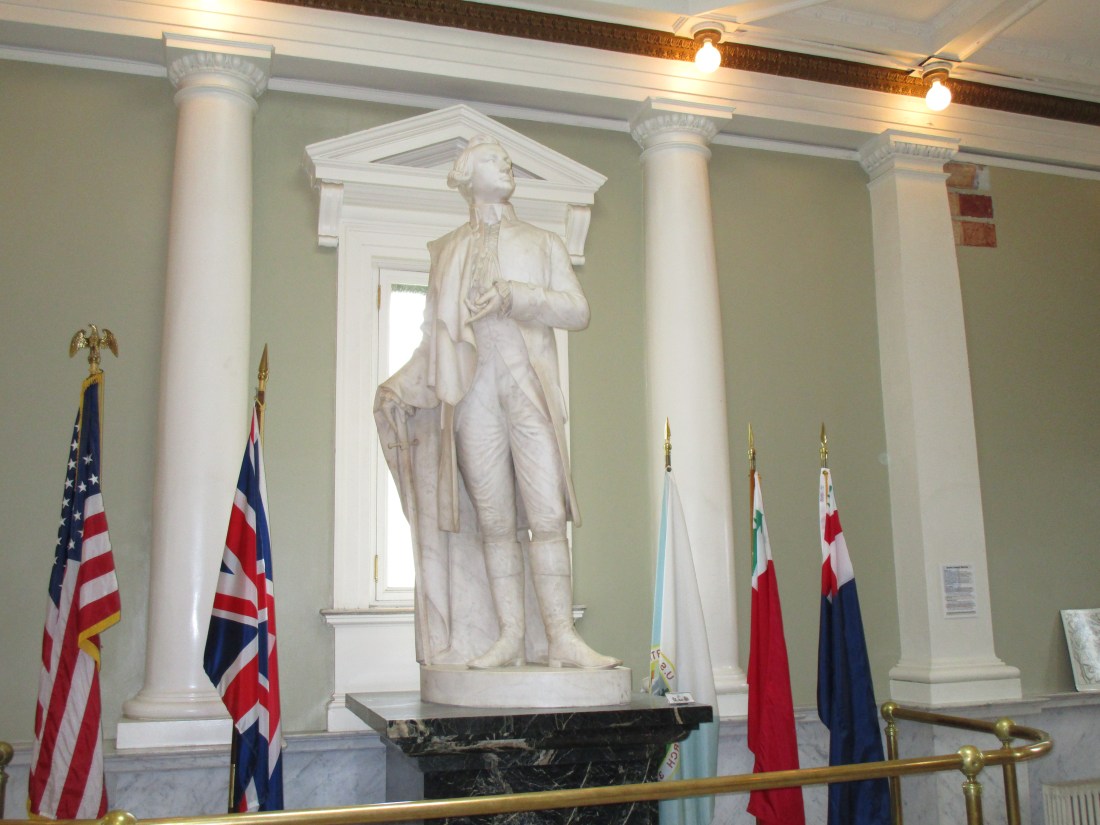
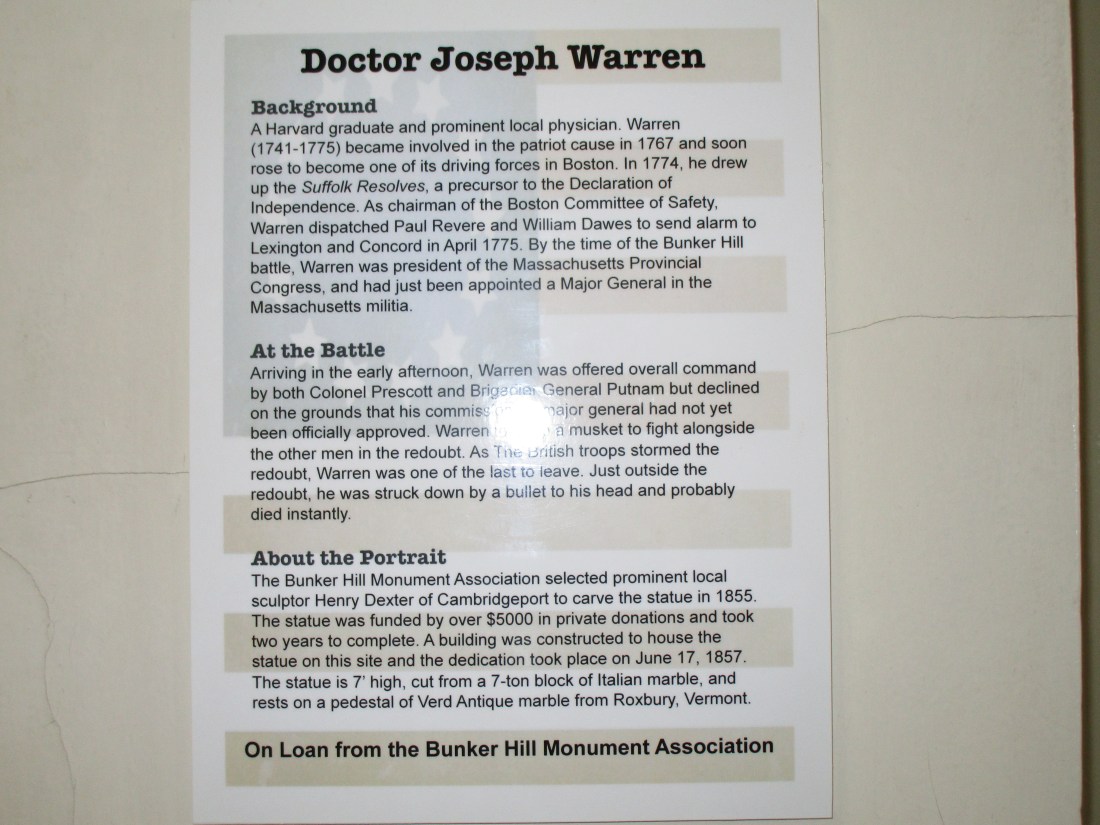
leadership figure in the revolutionary Massachusetts government. A commission as a Major General had just been approved for Warren, however he fought and died as a foot soldier inside the redoubt during the battle.
The British had won the so-called Battle of Bunker Hill, and Breed’s Hill and the Charlestown Peninsula fell firmly under British control. Despite losing their strategic positions, the battle was a significant morale-builder for the inexperienced Americans, convincing them that patriotic dedication could overcome superior British military might. Additionally, the high price of victory at the Battle of Bunker Hill made the British realize that the war with the colonies would be long, tough and costly.
The first monument on the site was an 18-foot wooden pillar with a gilt urn erected in 1794 by King Solomon’s Lodge of Masons to honor fallen Patriot and Freemason, Dr. Joseph Warren. In 1823, a group of prominent citizens formed the Bunker Hill Monument Association to construct a more permanent and significant monument to
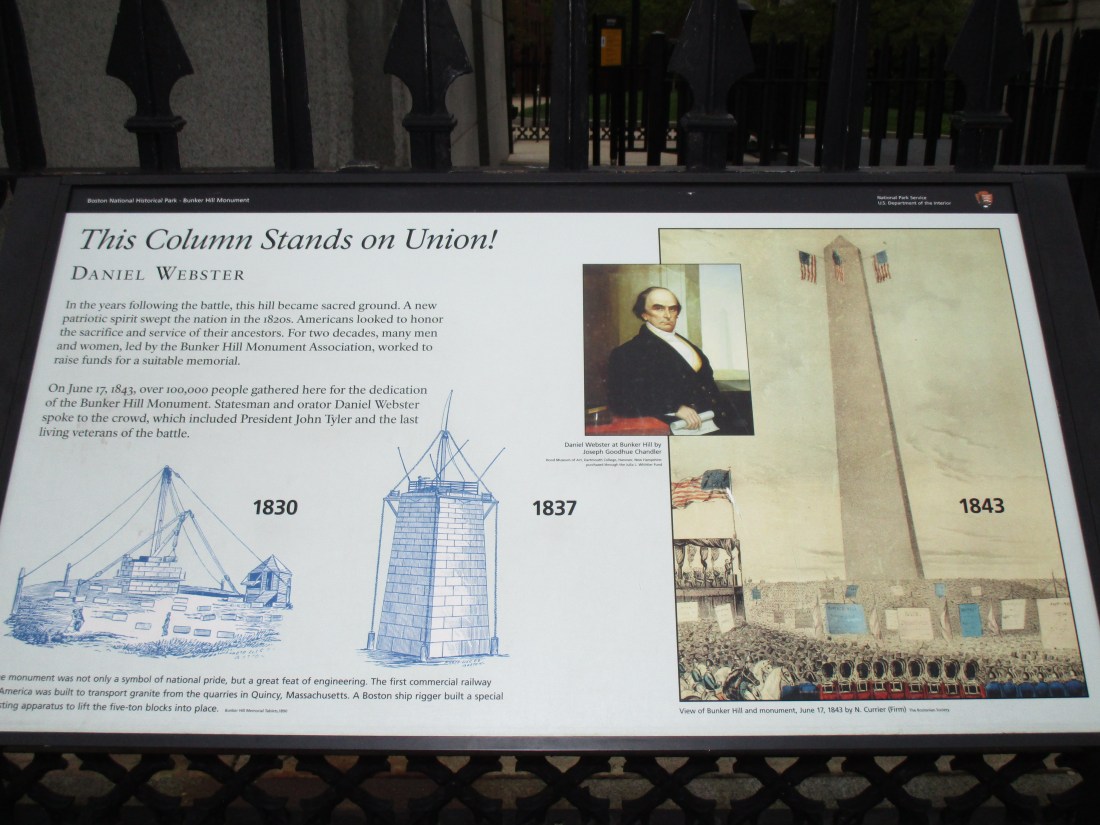
commemorate the famous battle. The project was a major undertaking. So much so, that the Monument Association ran out of funds and was forced to halt construction twice. Much of the land surrounding the square where the Monument stands today had to be sold off as housing lots to help fund the monument. Fairs, performing arts events, and fundraising drives were also organized to help complete the monument. Many of these events were organized by women in the Boston area.
The monument was finally completed in 1842. It was dedicated on June 17, 1843 in a major national ceremony.
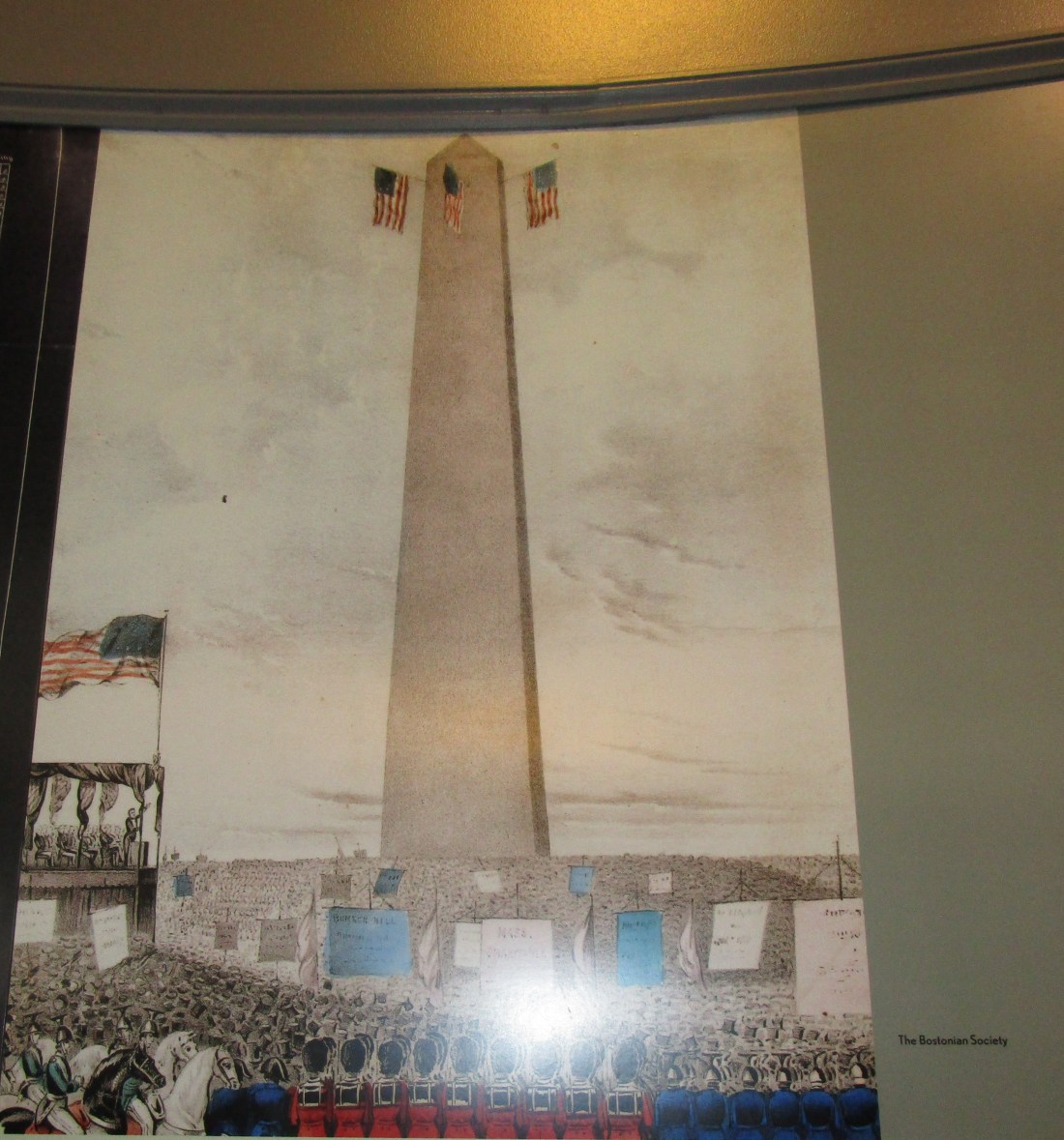
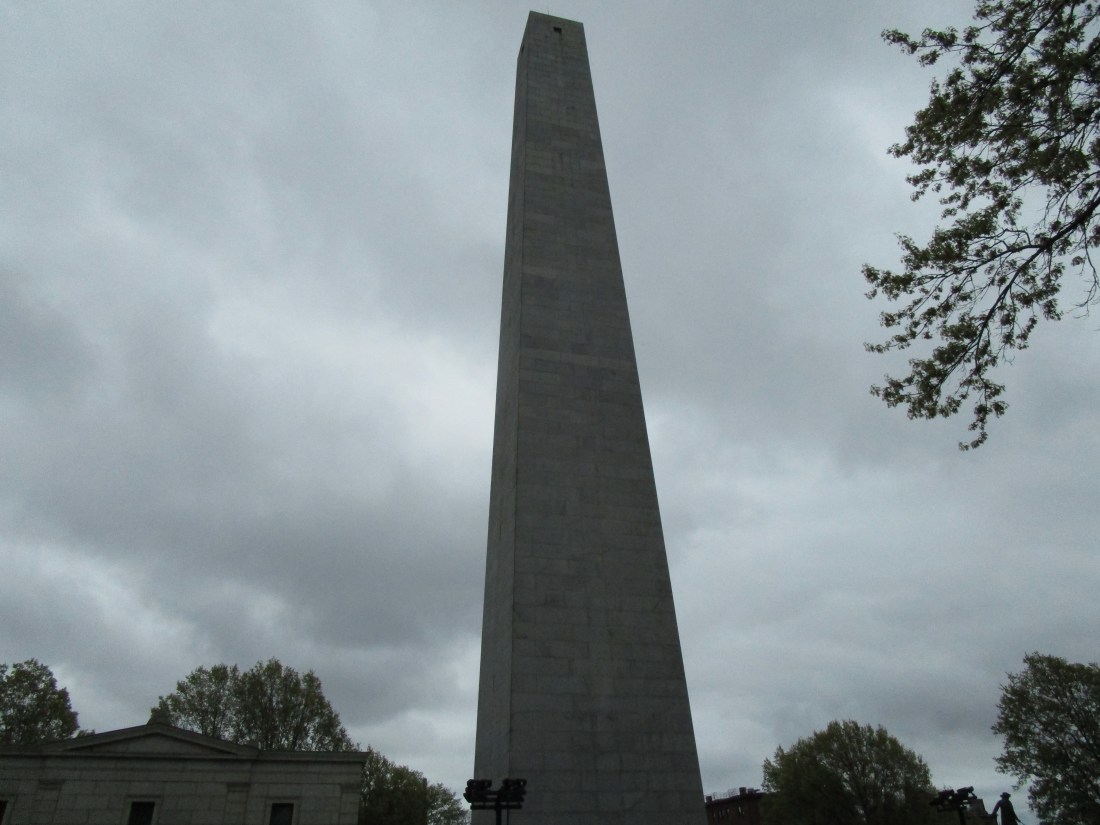
Here is the Bunker Hill Monument today as it stands on Breeds Hill.
Here are some facts about the monument.
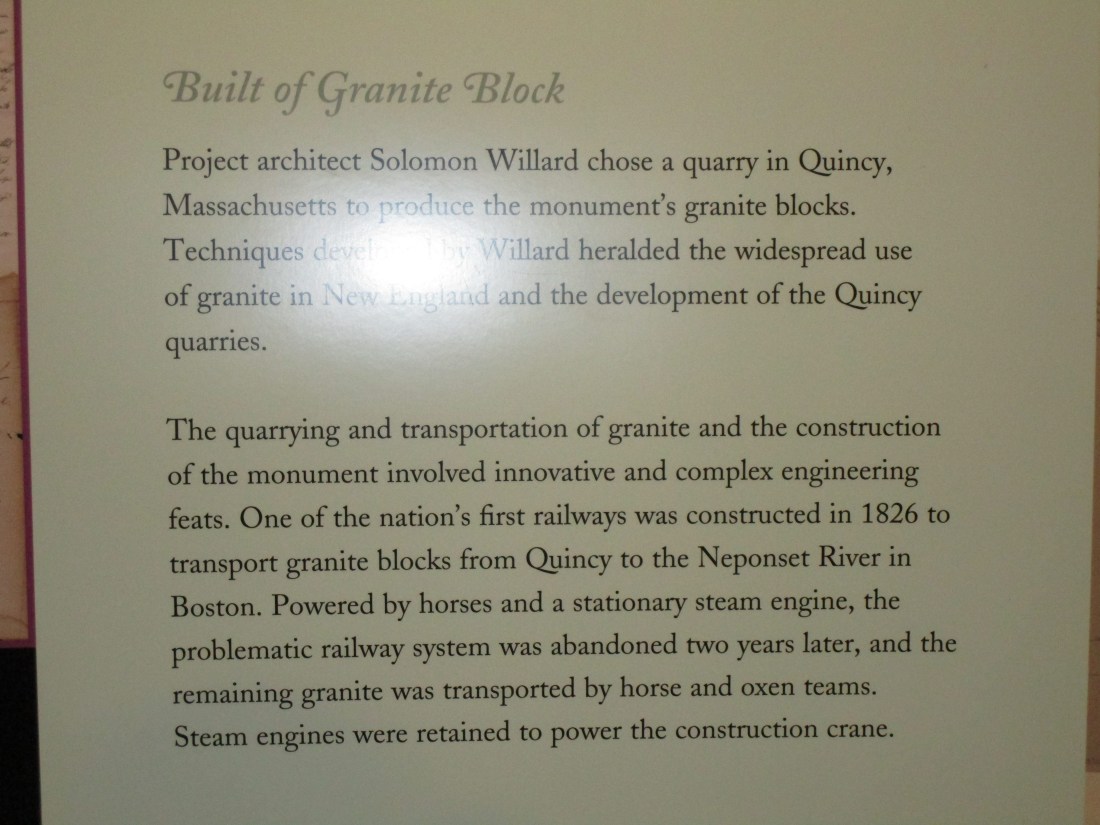
Some other facts regarding the monument are:
- years of construction 1825 to 1842
- monument height 221 feet
- monument base 30 feet per side
- number of steps to the observation deck at the top 294
- total cost $134,000 in 19th century dollars; $3,000,000 in today’s dollars
- typical granite block: eight feet nine inches long, four feet two inches thick, 98 cubic feet, with a weight of about eight tons
We come now to the end of our trip to the Bunker Hill Monument. If you ever have a chance to visit it, you will not regret it. As I left the monument once again, I was impressed by the courage and patriotism of those that stood and fought for their native rights that day. I cannot and will never forget that the freedoms I enjoy today are the direct result of all that served that day and continue to serve in our Armed Forces today.
Well, day is again gone and night has descended upon us. We had another great day, an easy day, but in many ways a productive day of doing nothing. We all need days like this from time to time. We hope your day was a great one as well in as many ways possible. For all of us now a closing thought to ponder:

So that’s it for now. As always, if you are coming to the end of your day with concerns and worries let me suggest that you turn them over to God. After all, He is going to be up all night so why not let him handle them for you.
Time now for our evening prayers and some shut-eye. Till tomorrow. Thanks again for sharing our day with us.
These are the voyages of Graybeard and it’s occupants, four paws and two humans. Our continuing mission: to explore as many new states as possible, to seek out new acquaintances and make new friends, to boldly go where we have not been before

 "On The Road of Retirement"
I can try to imagine what it was like when those men confronted each other, but I can’t. Again try to imagine the women that sent these men away without any contact or knowledge of what was happening. It was a different difficult time for all involved, therefore it is important that we learn and teach how our freedoms evolved. Thanks for my lesson today.
LikeLike