This is really getting old. We awoke to another cold, dreary, rainy day. Oh where, oh where is springtime. Hopefully, just around the corner. So the question now was, do we stay home or take a chance that the weather will improve and head out? In the end we chose to stay put and give our aching knees time to recover from yesterday. Tomorrow, though, we know we will be out and about.
So let’s go back now to the Seal Cove Auto Museum located in Seal Cove, Maine. This is an absolutely fascinating place that our friends Hoag and Max mentioned to us. I am so glad they did. This is not to be missed, especially if you are into all things automotive. What a wonderful treat indeed.
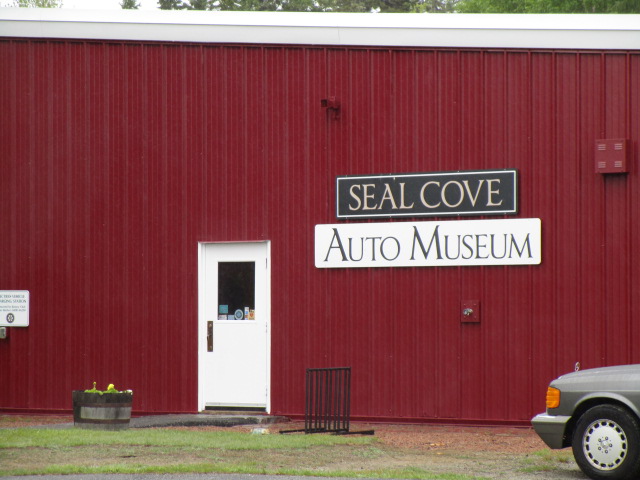
The Seal Cove Auto Museum is a not-for-profit 501(c)(3) organization, housing a collection of vehicles, automotive items, and other objects that tell the story of innovation and ingenuity in New England and America through the early development of the auto. The Museum was originally founded by Richard C. Paine, Jr. as a place to keep and display his personal automotive collection.
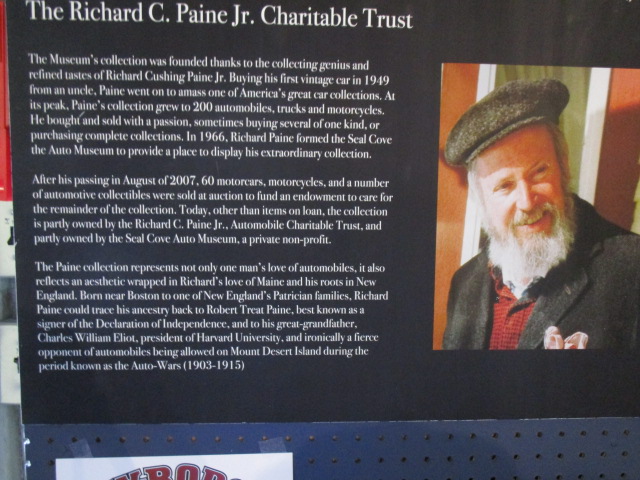
In the mid-50s, Richard operated the Seal Cove Garage selling everything from Mercedes-Benz to Saabs and even Borgwards and Porsche diesel tractors.
His favorite car back then was the Mercedes 300 SL ‘Gull Wing’ Coupe, as testified by a sales slip with a penciled in note reading, “RCP’s private car.” It cost him $8,175 new then but after his death it was valued at $1,500,000.
During his lifetime Richard formed the nonprofit Seal Cove Auto Museum to provide a place to keep and display his extraordinary collection. Although he donated a few cars to the Museum outright, the bulk of the collection on display remained in a personal Trust until the time of his death. Richard alone ran the museum at that time and the following is part of a story of an individual who visited it during the 80’s.
We were driving to the Bass Harbor lighthouse and spotted the “auto museum” sign from the road, not really expecting much. When we entered and I saw rows of truly the best of the best cars ever made, I was just “sucked in,” walking right by the cash register. By the way, I’m a car guy. There were a couple of times I came back to the front to ask more car questions. My enthusiasm was infectious. Later Richard joined us and answered more questions and told us some stories. We went from car to car, Richard telling me how he had gotten this one or maybe going over the ropes to point out something unique about that one. What a great man.
After his death a new board was chosen for the Museum with a mission to preserve Richard’s core collection, and to keep the Paine Legacy alive. Talking with the museum’s chief mechanic Peter yesterday, I was told that when they first entered the warehouse that housed the original collection it was so full of cars that you could barely walk among them.
The new board worked with the Trust, which owns most of the cars, to find a way to continue to make the core of the Paine collection accessible to the public. Ultimately, some duplicate cars, motorcycles, and automobile memorabilia were sold by Bonhams at an auction on September 25-26, 2008 that attracted the attention of collectors from around the world. When all was said and done the total raised was nearly $8,500,000.
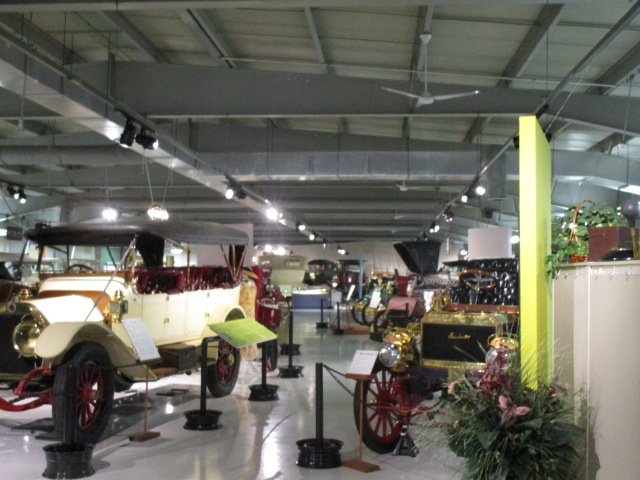
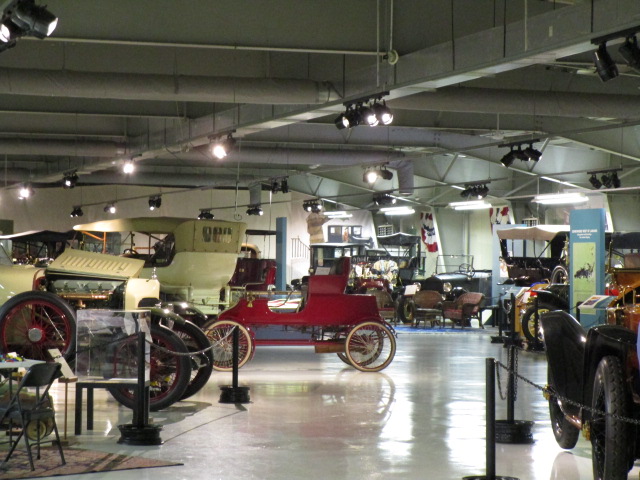
Today The Seal Cove Auto Museum which is tucked away in a metal building on a back road of Mount Desert Island, Maine, displays automobiles representing the technology, design aesthetic, and lifestyle of the years between 1895-1917. This is usually referred to as the Brass Era. Again the museum’s chief mechanic Peter shared with me that every Saturday a woman comes in – as she has for the past twenty or more years – to polish all the brass on the cars. Trust me, she has her hands full.
So let’s go inside. These are two pictures of the overall view of the museum as you first enter.
This is a picture of a 1913 Peugot type 150 on display that is considered priceless.
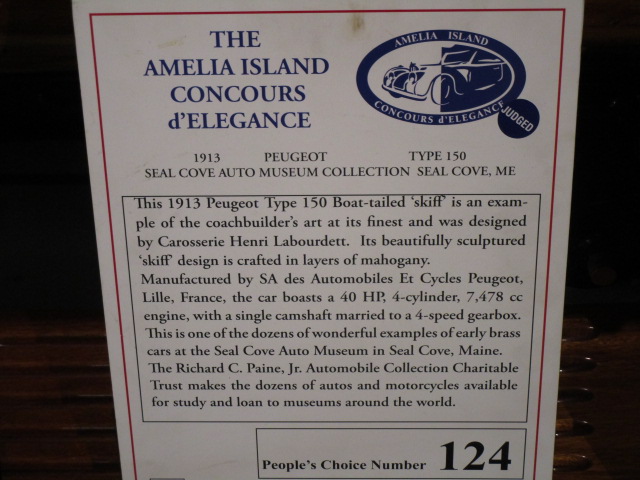
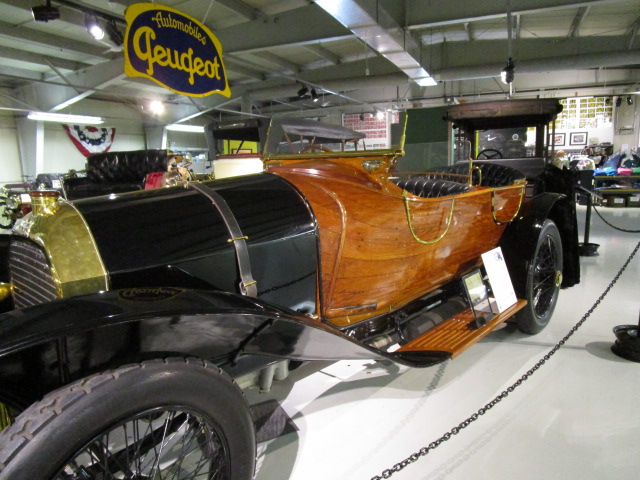
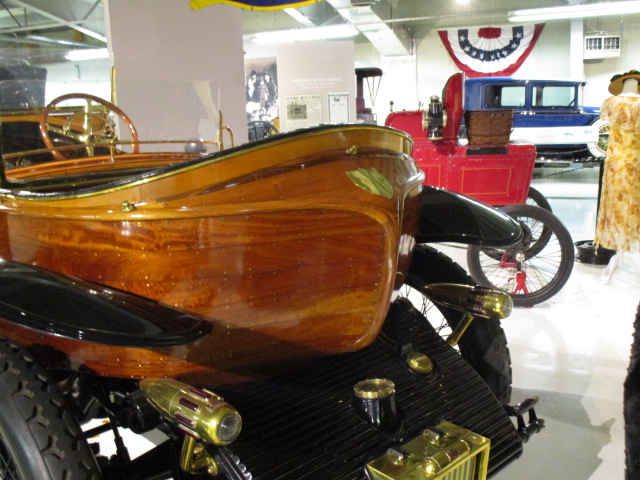
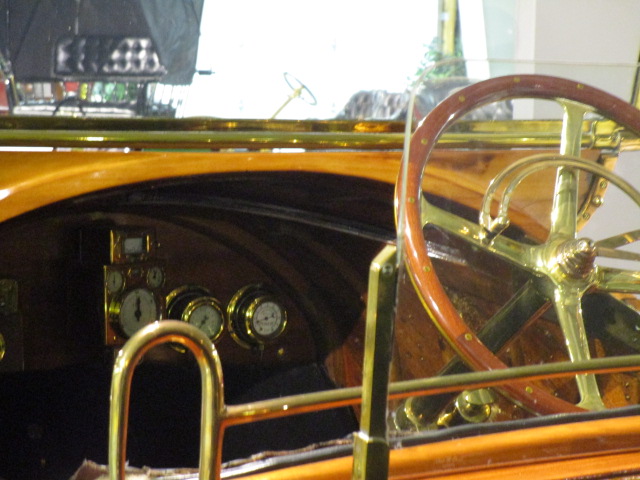
This is what is called a skiff body and is created in triple layers of mahogany planking, riveted on a frame of ash. Between the second and third plies there is a layer of canvas, which assured great rigidity. ‘The resulting design was little short of revolutionary at the time. Today critics consider it to be one of the most beautiful automobiles ever, a masterpiece of the art of bodybuilding.
To appreciate the impact of the skiff, one must see it in the context of its contemporaries. Most designs of that era were characterized by a ‘box’ which covered the engine, terminating with a break at the windshield, and behind this, a bulky upholstered body for the passengers. At the very rear the fuel tank was slung between the frame rails. In contrast the skiff combined graceful transitions and elegant curving lines. The engine hood flared up to a low, slanting windshield and the gas tank was hidden behind the front seat to expose the rounded, voluptuous tail.
In any case, the skiff idea took hold and soon skiff bodies were being built on many different chassis. For more information and better pictures of this incredible car go to the following link https://www.sealcoveautomuseum.org/collection-test/1913-peugeot/
Next is a car that Jay Leno has been trying to buy in order to add to his considerable collection of steam cars. The answer though is always not for sale. The car is 1910 White Steamer.
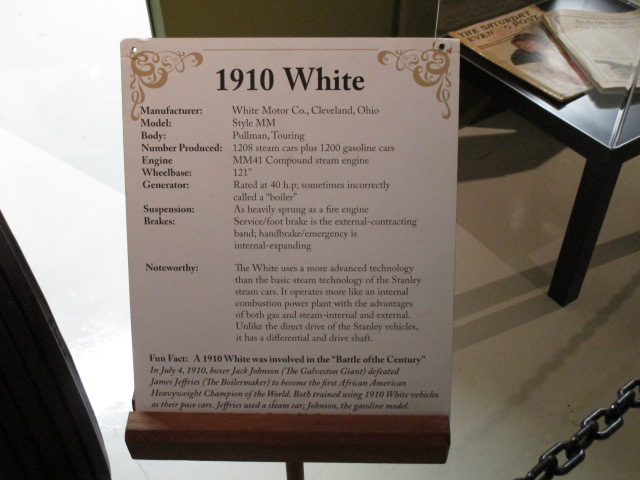
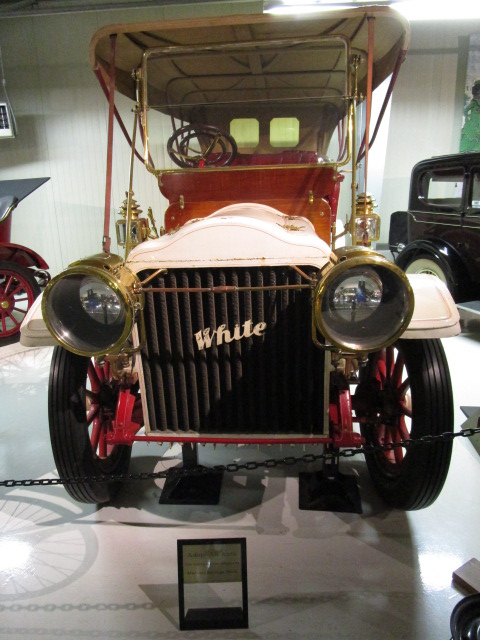
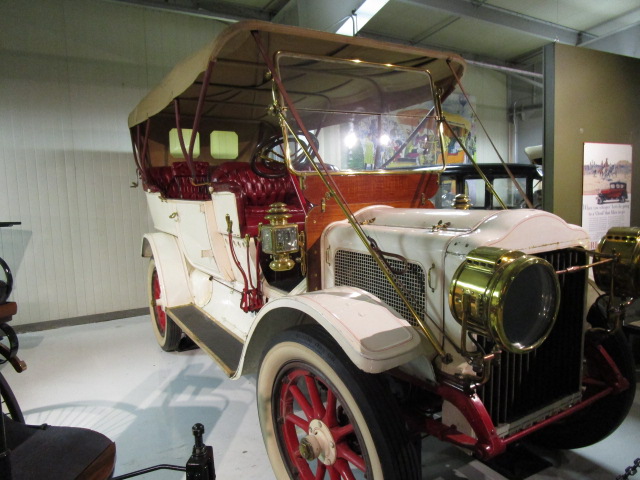
In 1858, at the age of 22, Thomas White began manufacturing New England-type sewing machines which he sold for $10 apiece. The first machines were manufactured at the small Wilkinson Machine Shop in Templeton, Massachusetts.
In the late 1890s, the company diversified its operation and began manufacturing items such as roller skates, bicycles, kerosene lamps, lathes, and screw machines. In 1901, the company produced its first automobile. Thomas White, still president of the company, gave control of vehicle production to his three sons, Windsor, Rollin, and Walter. All were all auto enthusiasts, and helped get the company into the automobile industry.
In November, 1906, the auto making part of the business split off into a separate company, named the White Company. After 1911, the company stopped making Steamers and focused on producing gasoline driven engines. Over the course of their steam-making career, the company produced 9,122 White Steamers.
President Taft threw his considerable weight behind the infant U.S. auto industry when he rode in the 40-horsepower White Model M for his inauguration in 1909. Taft’s White was used for more formal functions around Washington. It was the first presidential limousine, replacing the horse-drawn carriages that had served every president from George Washington to Teddy Roosevelt, Taft’s predecessor.
“William Howard Taft brought this car into the White House, and because of that act, the automobile industry, American political culture, road building and the whole economy… changed to be the way it is today,” said Michael L. Bromley, author of “Taft and the First Motoring Presidency.”
For more information on White Steamers this link will take you to an excellent piece presented by Jay Leno: https://www.youtube.com/watch?v=wKX1KgIkBwg
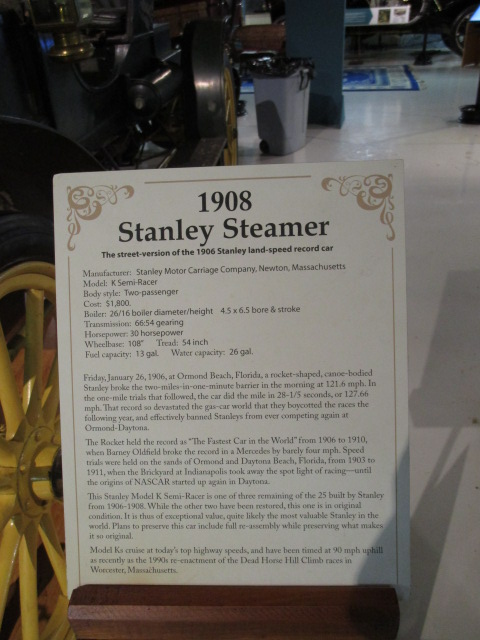
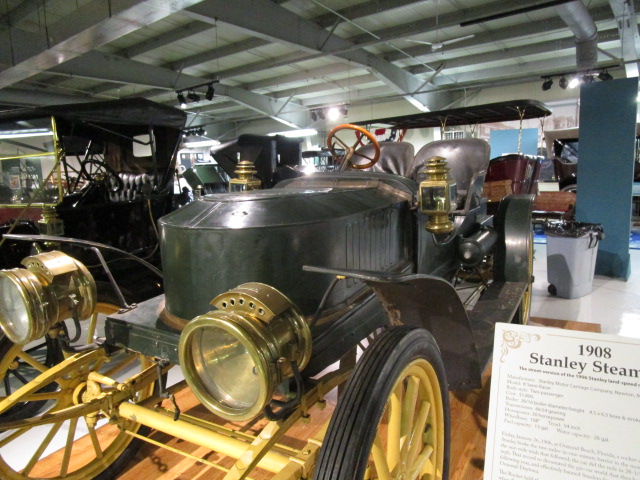
Next is a 1908 Stanley Steamer called the Rocket which was considered the fastest car in the world between 1906 to 1910.
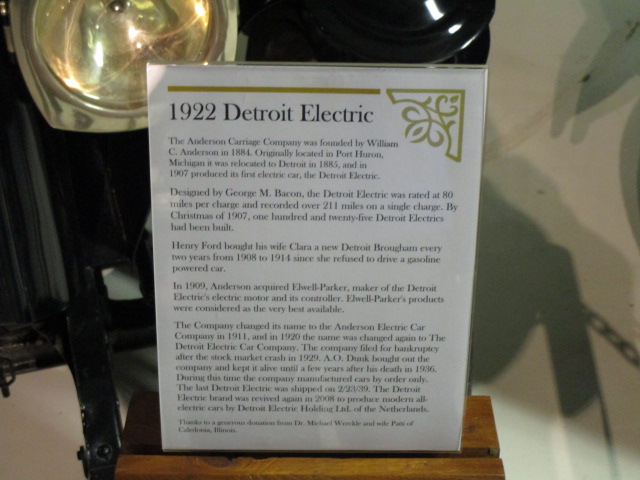
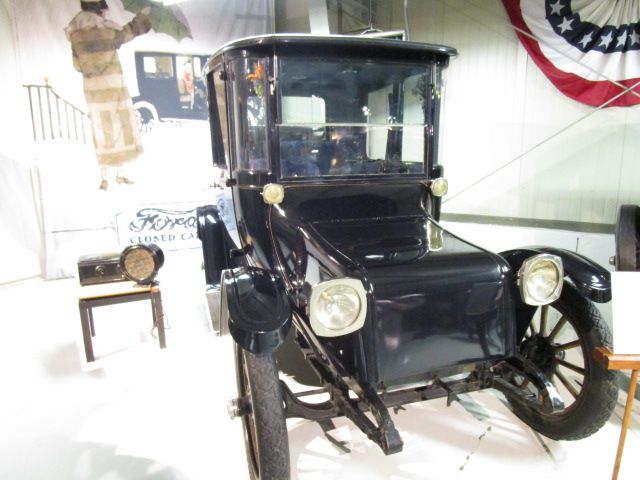
This is an example of an early electric car, a 1922 Detroit Electric. It was rated at 80 miles per charge but recorded over 211 miles on a single charge. Henry Ford purchased one for his wife since she refused to drive a gasoline powered car.
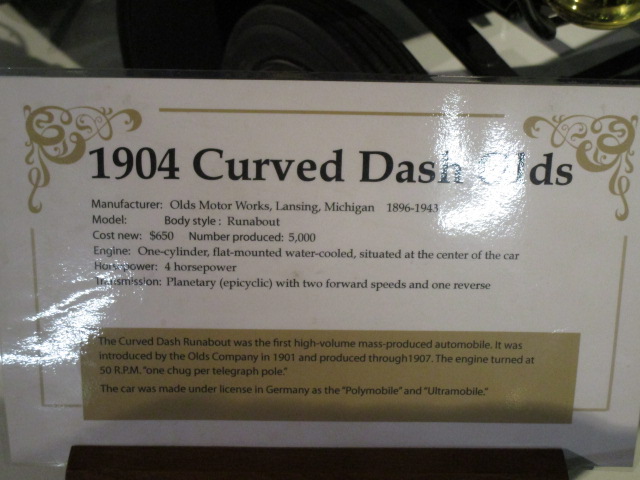
Next up is 1904 Curved Dash Olds. This was the first high-volume produced automobile. It was introduced by the Olds company in 1901 and produced through 1907.
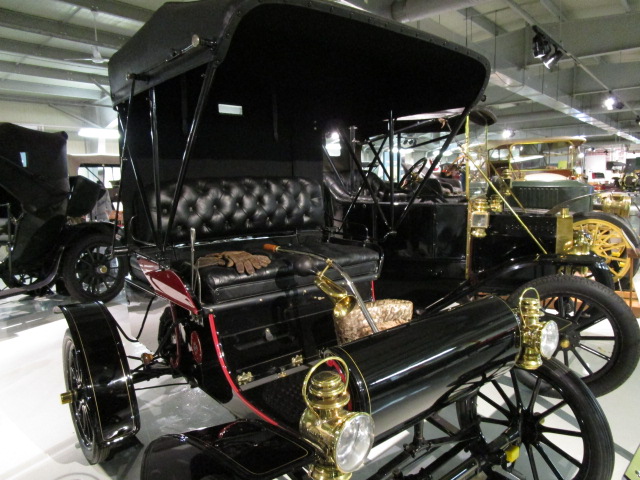
Next is a 1904 Stanley Steamer which used a tiller (like the Olds above) instead of a steering wheel since most people of that time had no idea what a steering wheel was..
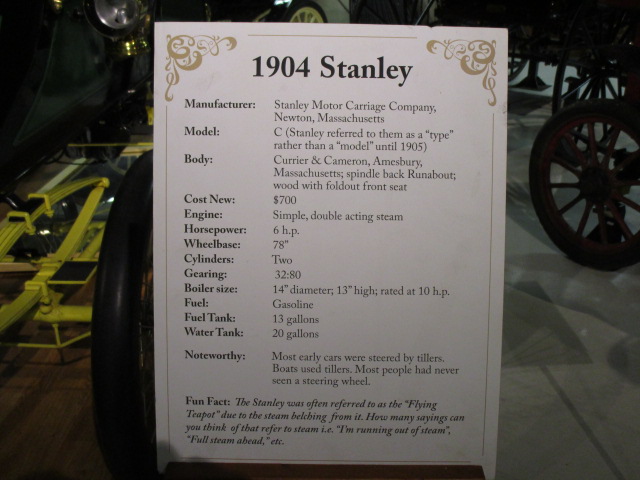
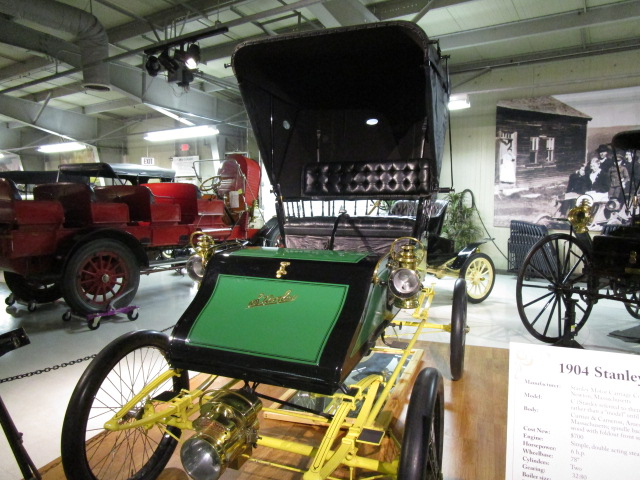
Continuing, here are some more pictures of the cars now on display. Unfortunately, space does not permit showing all of them.
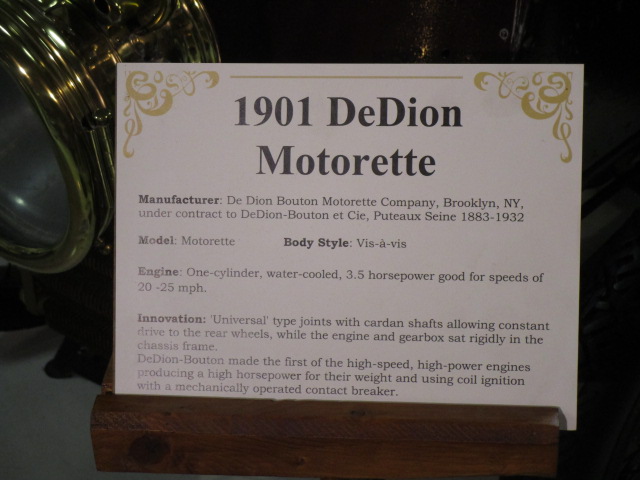
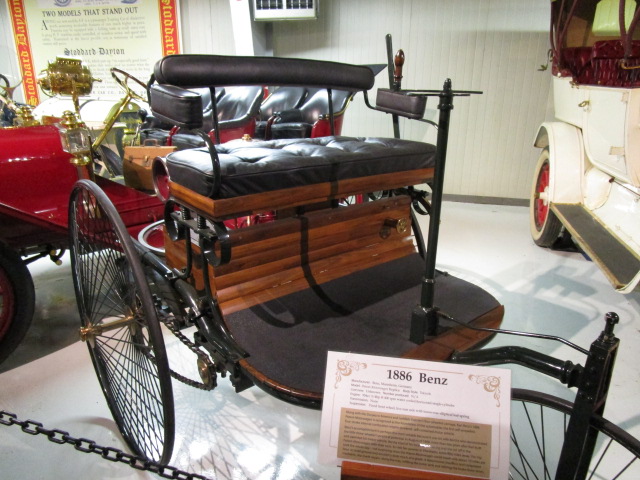
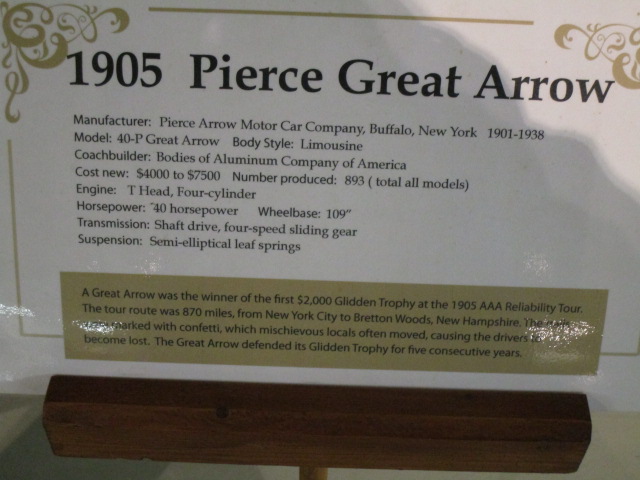
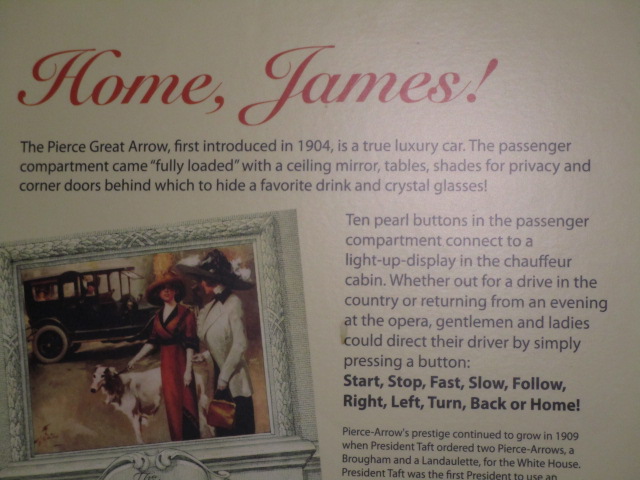
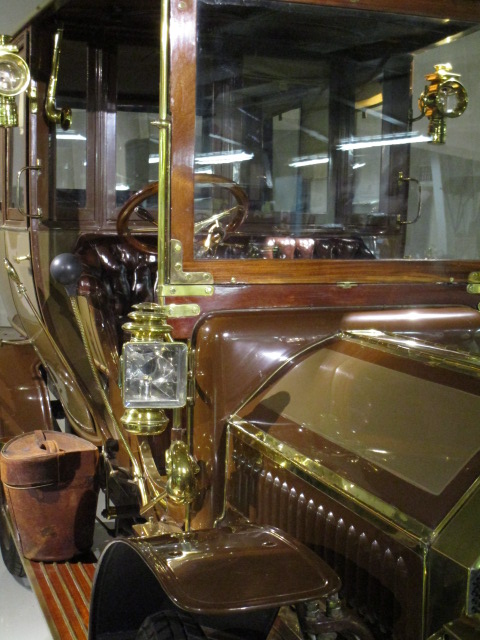
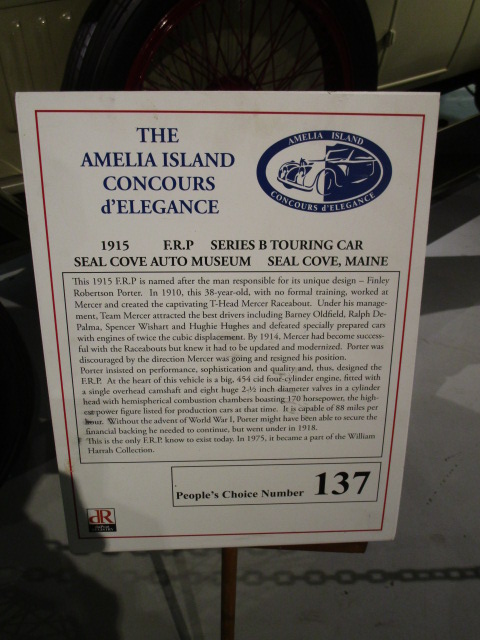
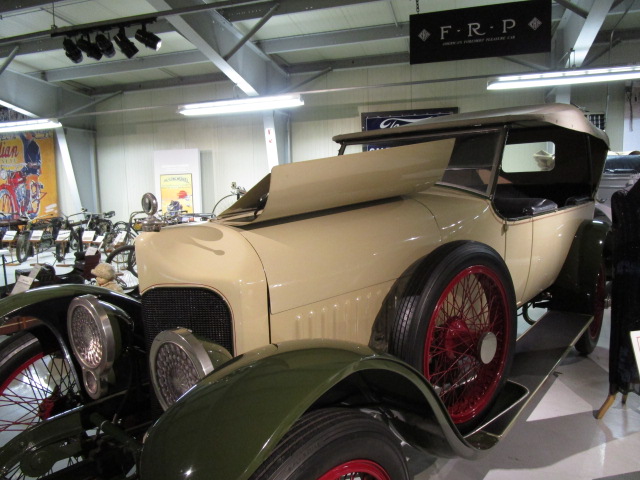
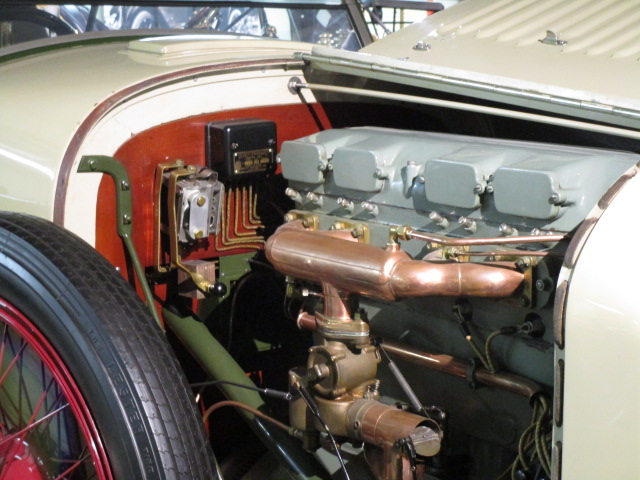
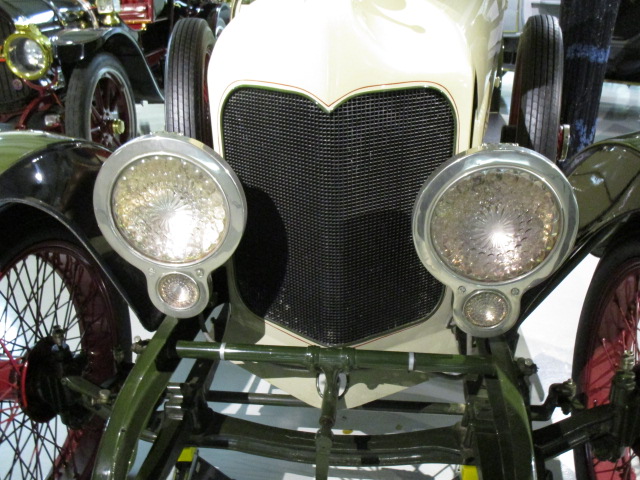
1915 E.R.P. Series B Touring Car.
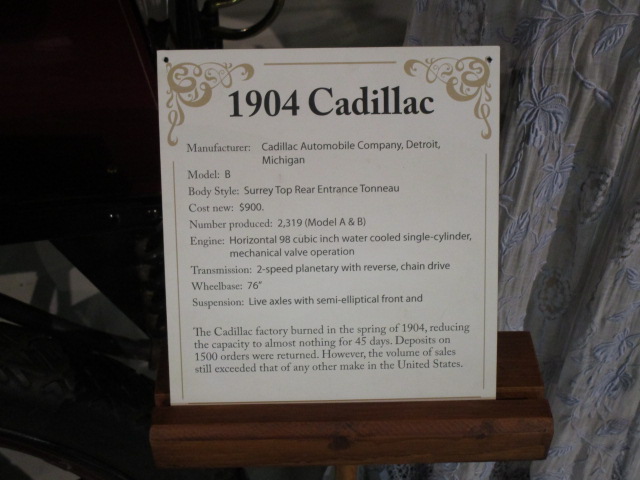
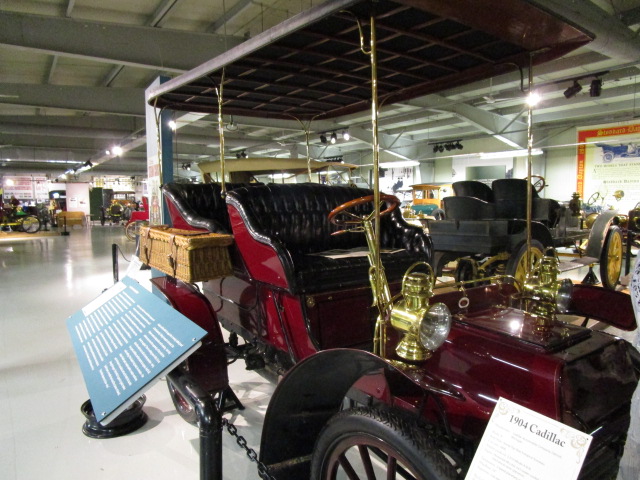
1904 Cadillac
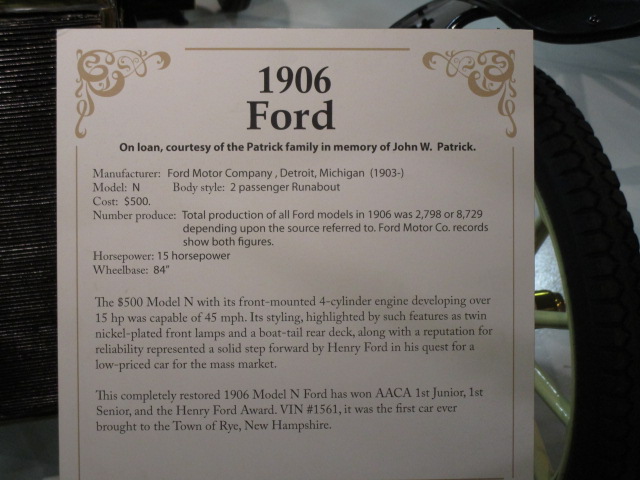
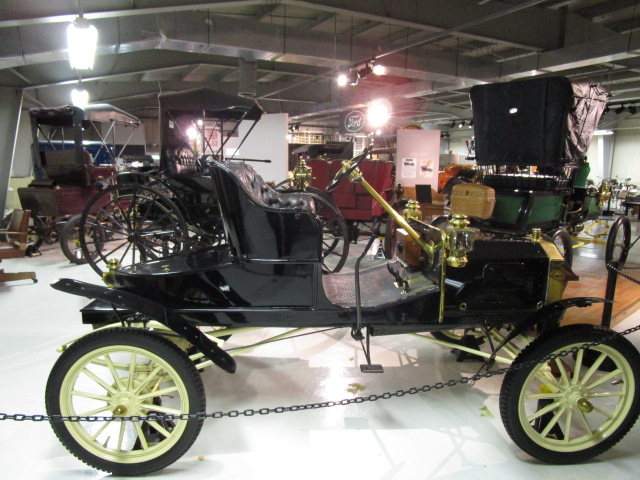
1906 Ford
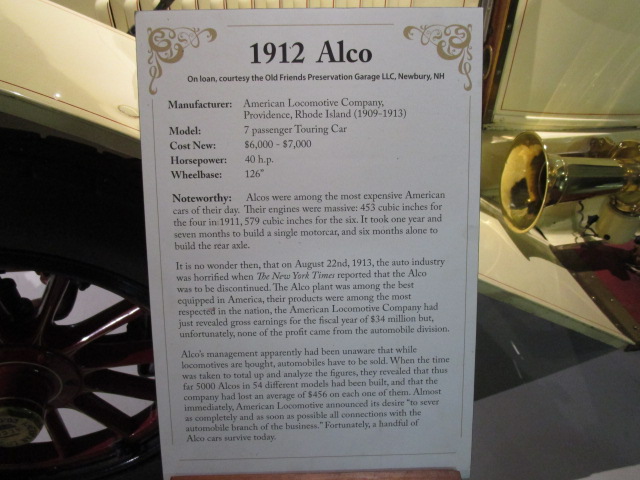
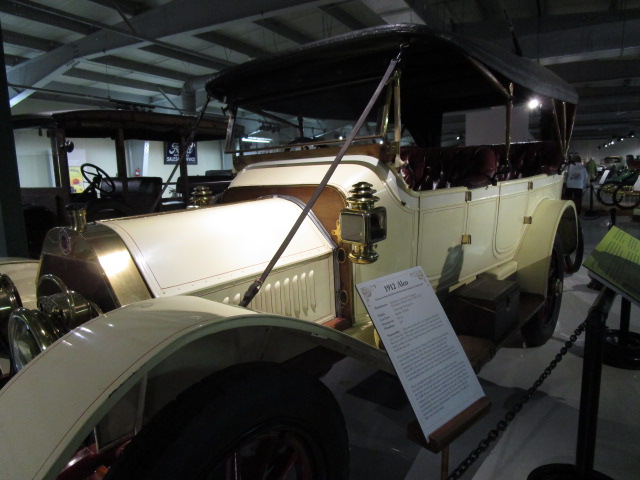
1912 Alco
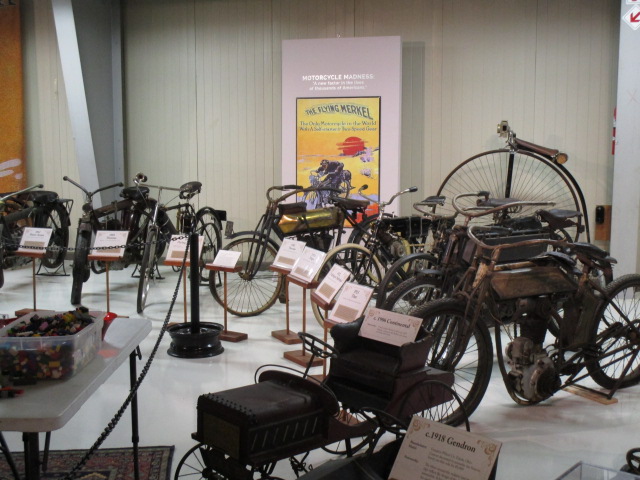
Yes, there were motorcycles.
Now we come to Wayne Carini of Chasing Classic Car fame. Or is it? Take a look.
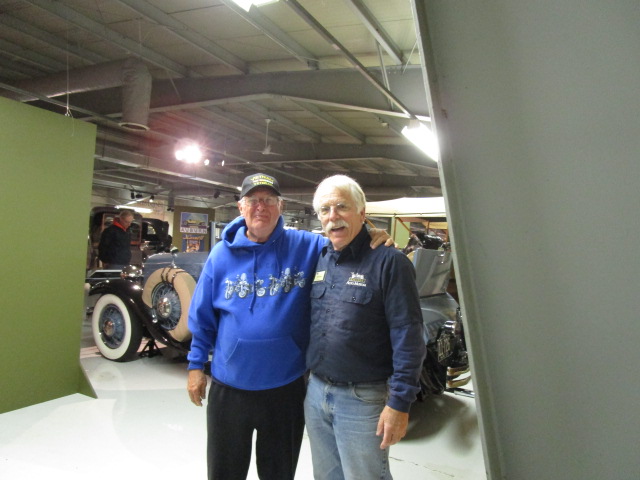
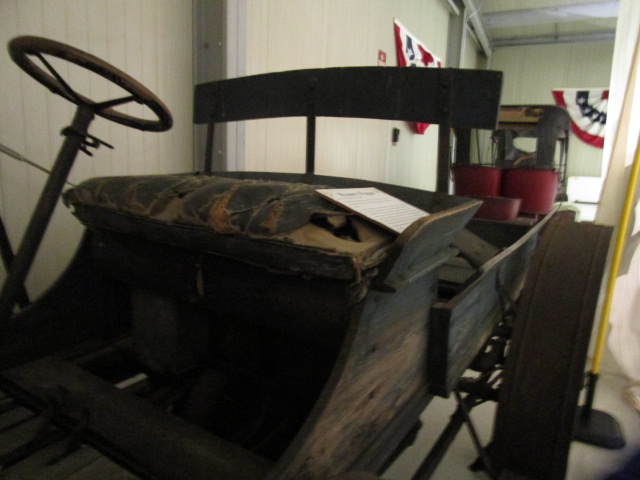
Actually this is The Museum’s Head Mechanic, Peter Brown, who has been mistakenly identified many times as the famous Wayne Carini. Peter was gracious enough to take Barbara and myself behind the curtain to view some of the cars that have not yet been restored and may never be. Here they are, this first one is yet to be identified as to make and model.
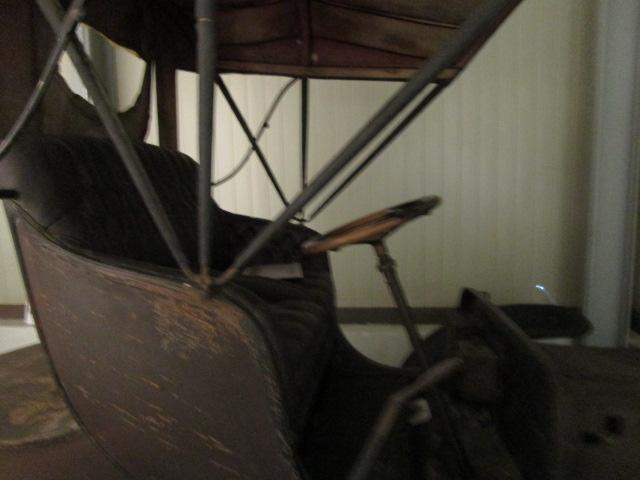
This one is called the mystery truck since no one has an idea what it is or who produced it or even if it was originally a pickup truck or later converted to one. It has an air-cooled two-cylinder engine with the fuel tank under the seat. It has a storage box mounted to the frame in the rear. There are no plaques or other identifying marks that would help to identify the maker or the model or the year. Peter stated so far no one has been able to figure out who made it or when or why.
Peter, we discovered, will be participating in this years Great Race. Ten days, 17 cities, and over 2,000 miles. The 2018 Hemmings Motor News Great Race is an intense competition for vintage cars, and it is coming to the Seal Cove Auto Museum this June. In its 35th year, this long-distance, time-speed-endurance rally tests the abilities of 120 racers and their pre-1972 cars.
This race is not a test of top speed. Instead, it tests teams’ abilities to follow a precise course, using only a set of instructions (no maps allowed) indicating every turn, speed change, and stop, with the goal of arriving at each designated checkpoint at exactly the right time. Any technologies such as GPS or electronic odometers are prohibited; only analog odometers and stop-watches may be used.
Peter will drive a 1930 Ford Model A boat-tailed speedster owned by Ford Reiche.

Reiche will act as navigator, a challenging role, as he will have to determine the exact speeds to travel every minute of the route, described in a list of detailed instructions given to the team on the morning of each day of the race.
Then it was time to visit the garage. Yes, they let you right in where they work and restore the vehicles on display. Here we see a group of volunteer mechanics trying to get what they call the community car (because it is frequently taken out on runs in the community) running again. Seems there was no compression on cylinder number one.
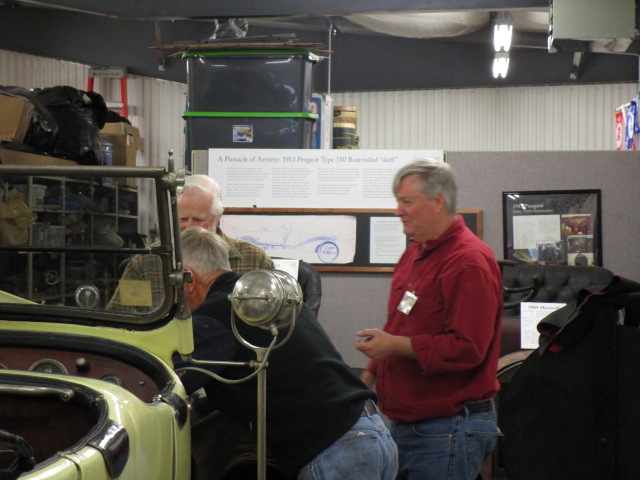
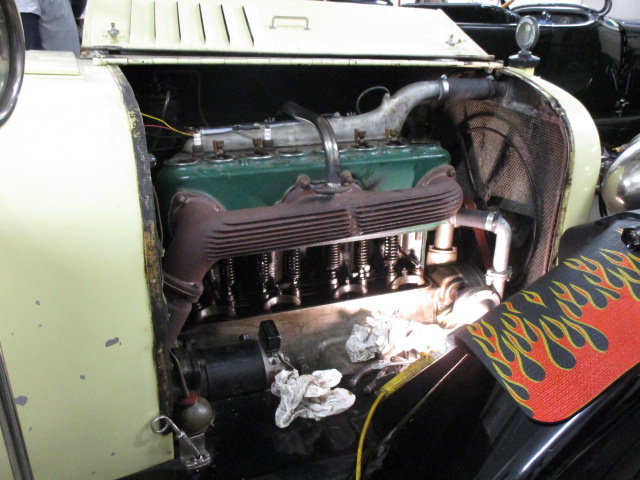
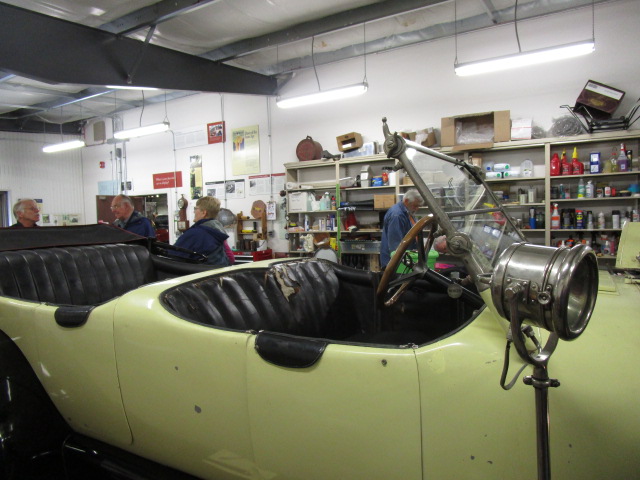
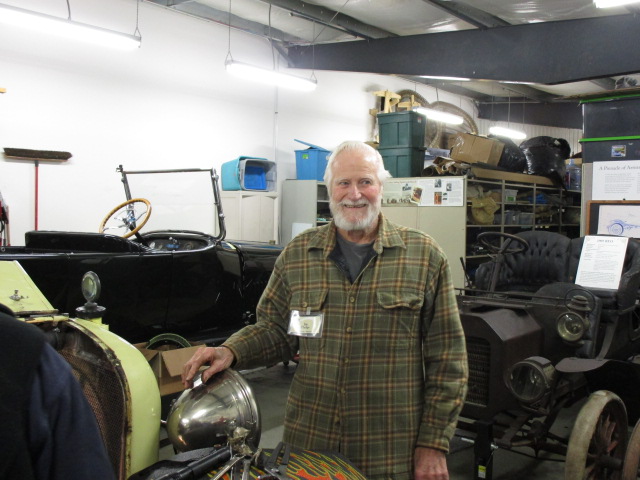
I had a wonderful time just talking and sharing with all of the volunteers. One was from New Jersey, name of Jim, but they call him papa smurf. He grew up in the same northern area of New Jersey where I was born and raised. Small world. All of these guys come north, when the museum is open, to volunteer their time and mechanical skills. A great bunch of guys that I had the pleasure of hanging out with for about an hour.
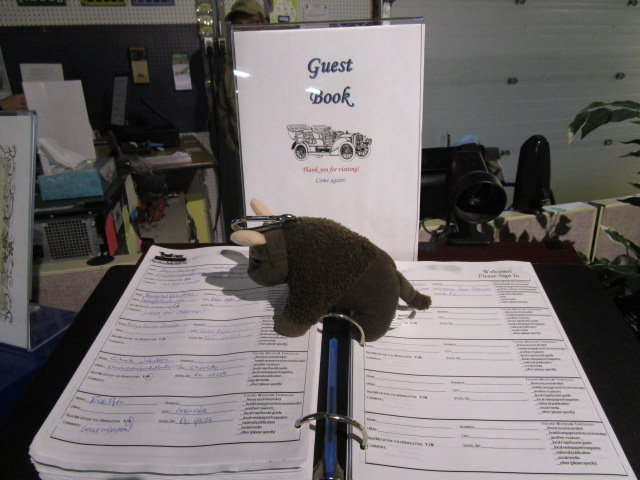
Finally, it was time to go but before we did we were asked to sign the guest book. But guess who beat us to it? Yep, our good friend and sight-seeing companion, Benny the Bison. Let me again say, if you are ever up in this neck of the woods, this is one place you just have to get to. What a wonderful, fascinating collection of priceless automobiles, as well as, a volunteer staff that goes the extra mile to make your visit special in every way. Don’t miss it.
So our day was spent inside catching up on the blog and taking naps. Did the sun ever come out? You bet! Just in time for it to go down for the night. Go figure. But no complaints from us, we had another great day spent together doing whatever we felt like doing. How neat is that. Try telling your boss you want a day like that.
Time now to wrap things up and prepare for tomorrow. Tomorrow we’re going to chase down some more sculptures, visit the chiropractor again, and who knows what else. Before leaving, a thought for each of us:

As always, if you are coming to the end of your day with concerns and worries, let me suggest that you turn them over to God. After all, He is going to be up all night so why not let him handle them for you.
Time now for our evening prayers and eventually some shut-eye. Till tomorrow.
These are the voyages of Graybeard and it’s occupants, four paws and two humans. Our continuing mission: to explore as many new states as possible, to seek out new acquaintances and make new friends, to boldly go where we have not been before

 "On The Road of Retirement"
GREAT BLOG!! We enjoyed that place and never get tired of seeing these antique cars. I think my favorite was the 1930 Ford Model A being used in the race. Glad you got to see the museum. Hang in there, it will warm up eventually. Thanks for sharing.
LikeLike