Today promised to be a full day of discovery. For a fact, it was all that we thought it would be and more.
When we awoke this morning the storms of yesterday were long gone. The temperature was still in the high 40’s but no wind and no rain. The sun was shining brightly and the sky was clear blue.
We had so much we wanted to do, many historical places to learn about, an international bridge to cross and an international park to visit, lighthouses to discover and learn about, we were looking forward to a Tea with Eleanor, and along the way we discovered two more of God’s beautiful people. The bottom line is that, today simply cannot be put into one blog. So, we’ll begin tonight and hopefully finish up tomorrow.
Since Campobello Island was on Atlantic time and thus an hour ahead of us time wise, we needed to get an early start. By 8:15 am we were on the road. Oh yes, much earlier than our normal day!
First things first, we need to get there and to do that we needed to cross the Franklin Delano Roosevelt Bridge.
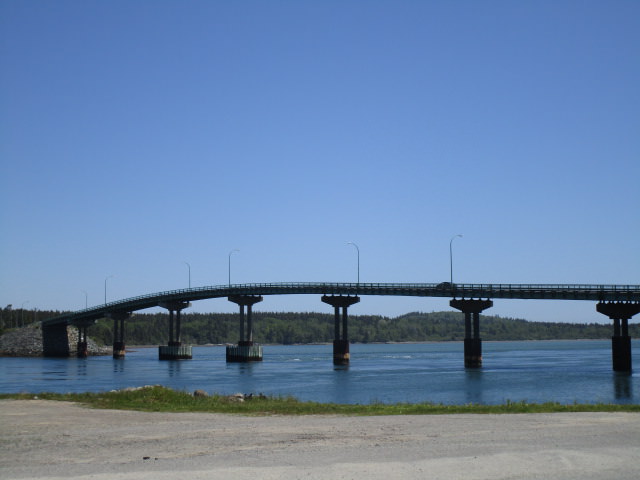
Prior to the construction and completion of the bridge there was no easy way to get to Campobello, a 15 square mile Canadian island in the Bay of Fundy and site of Franklin D. Roosevelt’s long time summer home. Ferry steamers navigated the narrow but treacherous Lubec Channel beginning in 1882, later supplemented by auto scows that could only carry 6 cars at a time, both suddenly obsolete the day the new bridge opened on August 13, 1962.
Construction of the bridge started in late 1960. International agreement provided that half of labor and half the materials would originate from each of the two nations – the United States and Canada. But for the roadway, most bridgework was finished by the March 29, 1962. Pouring of the concrete deck was scheduled later in the spring. July 10, 1962, a small trailer hauled into place would serve as a temporary U.S. Customs office. On August 13th, the bridge opened to traffic with its official dedication occurring on August 15, 1962. But work remained. A bright new brick building was erected to permanently house U.S. Customs and the U.S. Postal Service under a single roof. Canada, too, would build its customs office, just beyond the northern terminus of the Roosevelt Memorial Bridge.
Across the bridge and time now to use the passport cards we worked so hard and so long to get. We pulled up to Canadian customs, presented our cards, and we were in Canada!
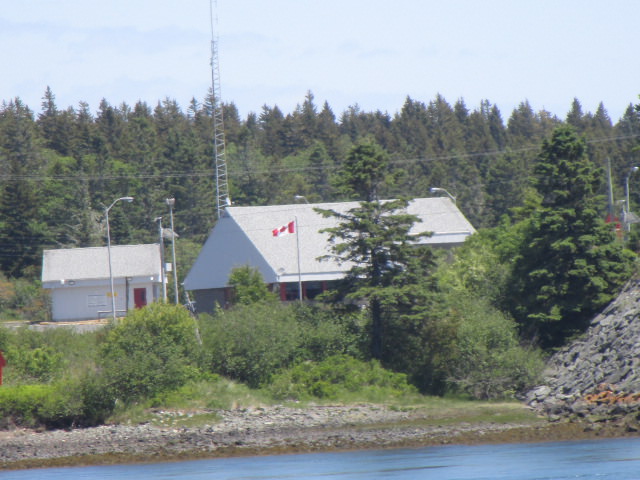
Specifically, we were on Campobello Island. A funny name you say, well, here is how that came about. Tomorrow we’ll get into the actual history of the island. We’ll also share
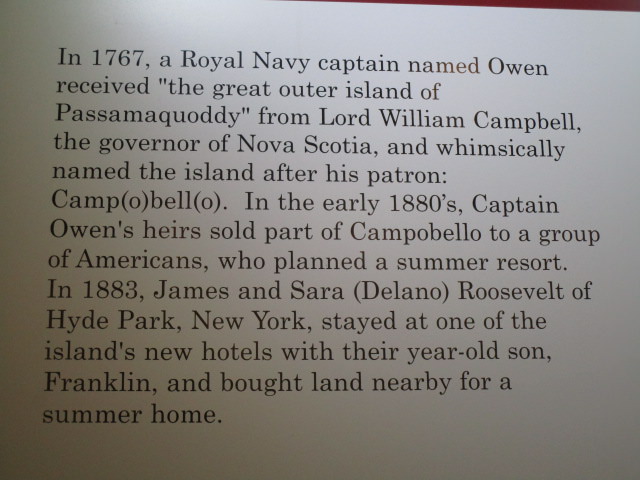
with you our visit to Roosevelt Campobello International Park, our tour of the Roosevelt Cottage, and our Tea with Eleanor. Tonight, though, we want to share with you another two lighthouses that we discovered while on the island.
The first was the Head Harbor Light Station sits on an island in the Bay of Fundy. The lighthouse was built in 1829 as a means of helping ships in the area navigate the famous Bay of Fundy fog, high tides, and the treacherous rocks surrounding Campobello Island.
The original octagonal, wooden tower is still in use, and although the light still shines into the bay, it is no longer staffed.
Known as the “Head Harbour Light” to local residents, the tower is designated as a Classified Heritage Site. The tower has a white-shingled exterior, painted with a red cross. It is believed this distinctive day mark has been on the tower since at least 1850. It is the older sister light of West Quoddy Light in Lubec, Maine.
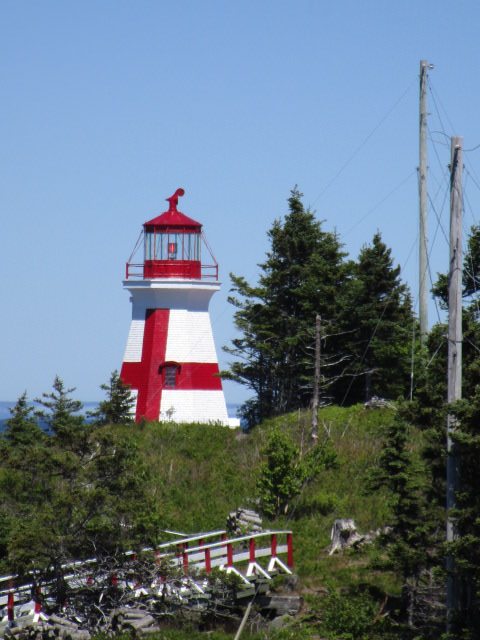
The interesting thing about this lighthouse is that you can only visit it at low tide. And to get to it you need to climb down one set of stairs, a steel ladder actually, walk across
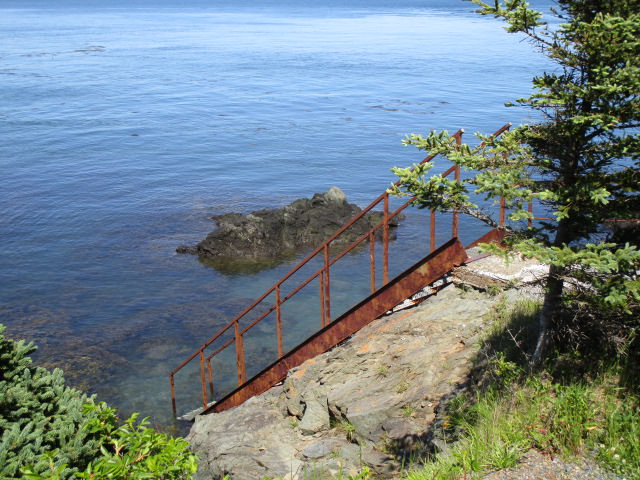
a sand bar and then proceed to climb yet another set of stairs, again a steel ladder on the
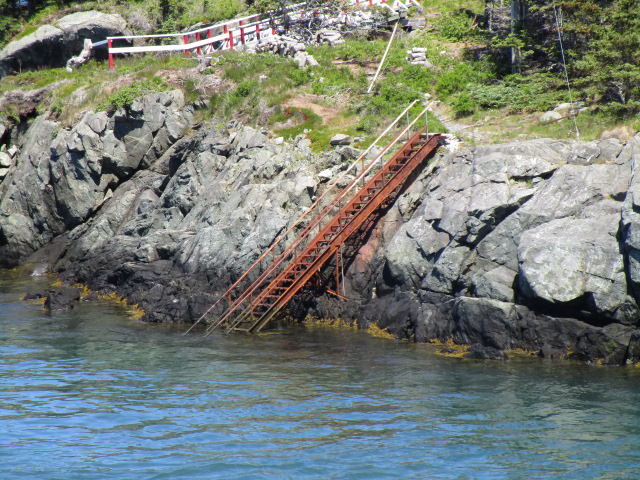
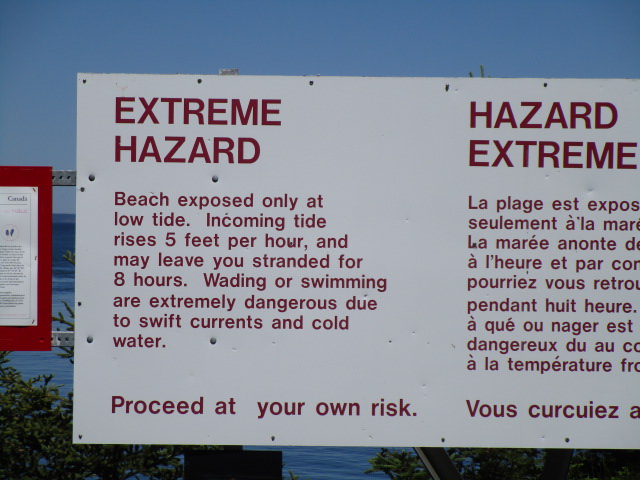
other side. As you can see, unfortunately, we did not make it at low tide. Oh, regarding the tides the following warning is posted for one and all. 5 feet an hour, oh boy. Time it wrong and as the sign says you can be out there for a rather long time.
The second lighthouse we discovered was one we first saw from the town of Lubec. It was the Mulholland Point Lighthouse. Built in 1885 it guided many ships through the shorter but more treacherous passageway between Lubec and Campobello Island.
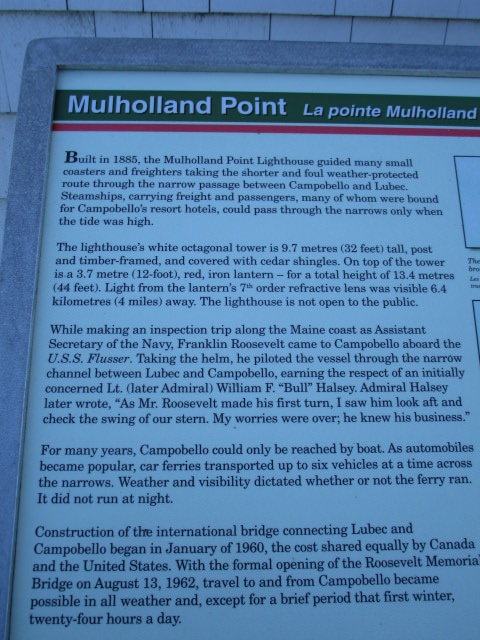
Once the Franklin Delano Roosevelt Bridge was completed the lighthouse was no longer needed since aids to navigation were installed on the underside of the bridge itself.
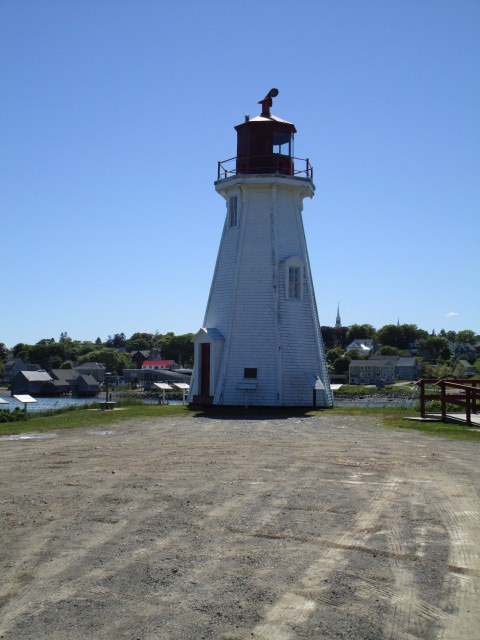
An interesting aside to this lighthouse, the last light keeper for the lighthouse lived on Campobello Island, he tended the light morning and night, but also rowed each day across the Lubec straight with its swirling currents to a full time job in Lubec. This he did for many, many years in all kinds of weather. How did he do it? His son stated that his dad had a special knack for knowing how to work the currents. Now that’s got to be the understatement of the year!
Coming back home we, of course, had to clear US Customs. Time for the Passport Cards.
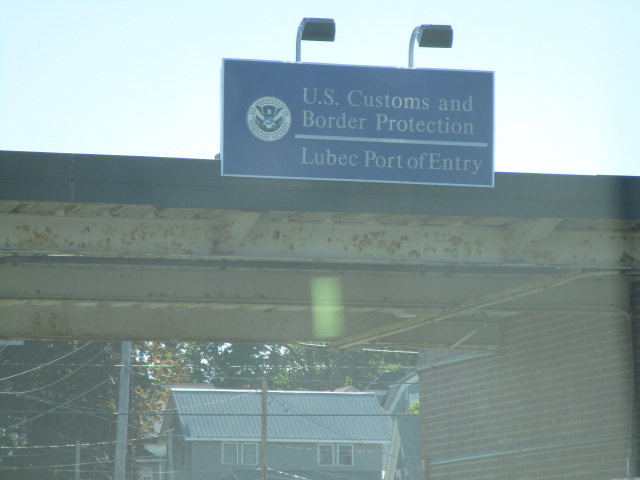
Once through Customs, it was a short ride to home to a very grateful Marti who had spent a long day in his cage.
We have much more to share with you, which we’ll do beginning tomorrow. It was a fascinating day of discovery at Roosevelt Campobello International Park, a wonderful time of Tea with Eleanor, and so much was learned about Campobello Island itself. Even better, we did it together, hand in hand, traveling along singing our song. Let me end tonight with just one of many quotes from Eleanor Roosevelt:

As always, if you are coming to the end of your day with concerns and worries, let me suggest that you turn them over to God. After all, He is going to be up all night so why not let him handle them for you.
Time now for our evening prayers and eventually some shut-eye. Till tomorrow.
These are the voyages of Graybeard and it’s occupants, four paws and two humans. Our continuing mission: to explore as many new states as possible, to seek out new acquaintances and make new friends, to boldly go where we have not been before


