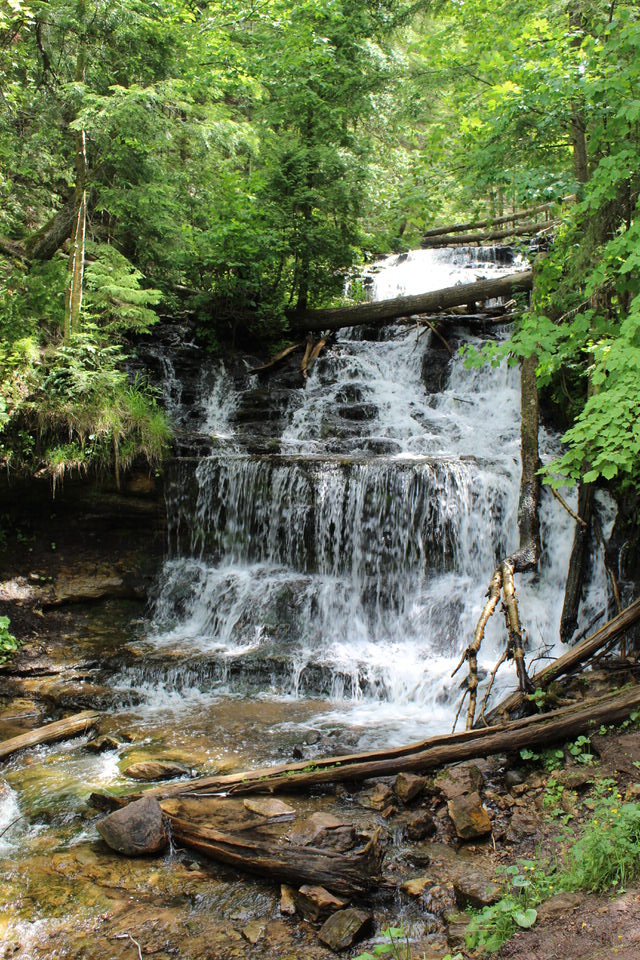
If I haven’t said it lately, America I love you. I love the personal freedoms we all have because beginning with Lexington and Concord and years after thousands of brave men and women laid their lives on the line, and even sacrificed them to protect those freedoms for all of us. As we’ve traveled around, we’ve come to know and love so many different parts of this great land already, majestic mountains, rugged coastlines, and towns of all shapes and sizes. America the beautiful, that you are and we are proud to call ourselves Americans.
Today was, of course, as for so many others another hot one. A few things got done today. I got another outside locker cleaned and straightened out. Re-caulked the bottom of the shower in several spots where mold was just beginning to show. Read a book. We watched the film Steel Magnolias. My question was what does it mean to be a steel magnolia? The answer: A woman who exemplifies both traditional femininity as well as an uncommon fortitude. It was a really great film. Then, too, we had to have our afternoon wine!
Today, we’re going to finish up our travels from Monday by sharing with you our visit to Cabot Creamery. It was only about 15 minutes from our home and we were there. The first sign we saw was the one directing us to the Visitor Center.

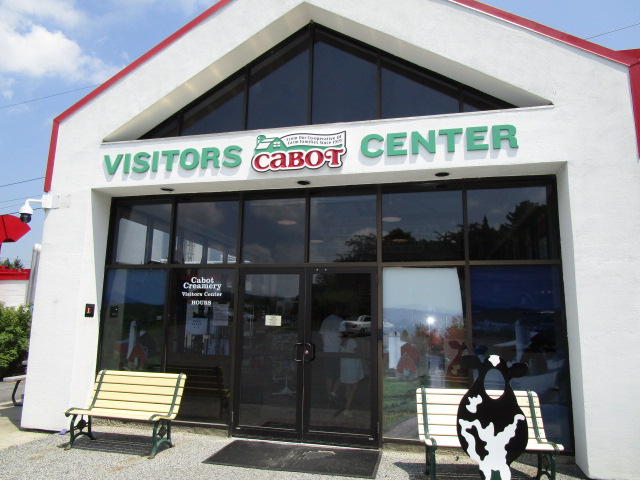
And then there in front of us was the Visitor Center itself.
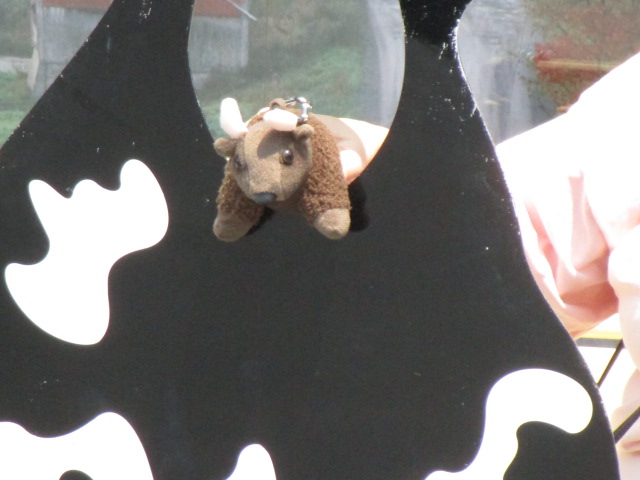
Of course, where we went Benny had to go, seen here trying to be a cow. Well, Amanda?
We, of course, where interested in a tour. However, we were told they no longer have tours of the plant facility. But this time we found out why. We were informed that last year legislation was passed that prohibits access to all areas where food is being processed to anyone but employees. This legislation is a direct result of 911. It explains why there is no longer a plant tour of Ben and Jerry’s as well as Lake Champlain Chocolate. And, of course, all other food plants and facilities.
A tour being out of the question, we had to settle for a video of the history of Cabot Creamery and pictures of the plant itself. So, come along with us and we’ll share what we learned.
The first thing we learned is that the Cabot Creamery Cooperative is an American dairy agricultural marketing cooperative, which is owned by local dairy farmers in New England and New York.

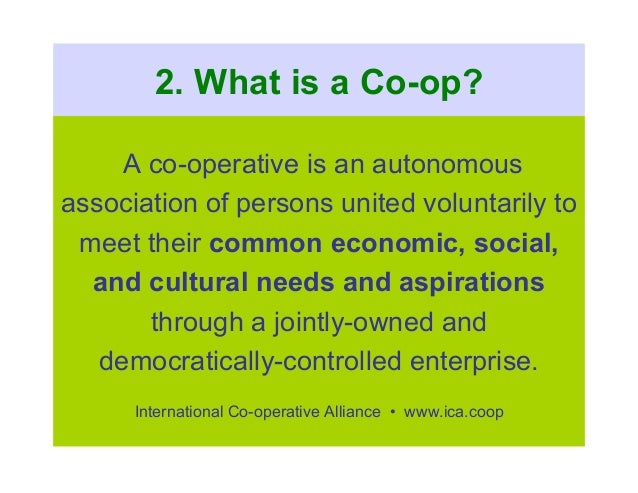
So what does it mean to be a co-op and what makes it different? If Cabot was a traditional corporation, it would be owned by individuals and outside investors who buy shares of the corporation. But it’s not.
As a cooperative, Cabot is owned and operated by its members-the family dairy farmers who are the source of Cabot’s dairy products. Members democratically decide the direction and operations of the business with one vote each.
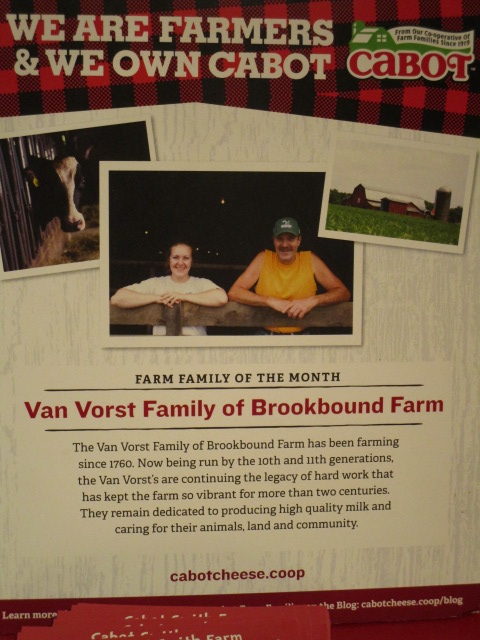
Here is a picture of one of those farms, this month’s farm of the month.
As a co-operative, Cabot honors the principles of cooperation that guide the operations of co-ops around the world. That means that they value community, member equity, democratic governance and local ownership. The motto of Cabot is in essence one for all and all for one.
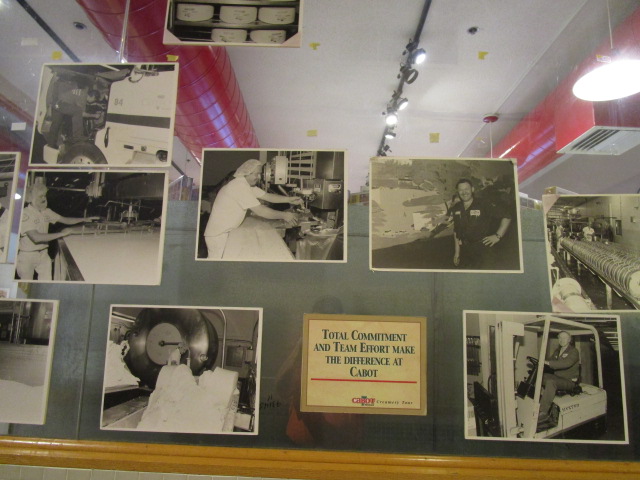
Among the member farms that make up Cabot, concern for community is also an important principle, so much so that you will find member-owners as volunteers in every aspect of their communities, from service as volunteer firefighters to membership on school boards and planning commissions.
The next thing we learned is a bit of history as to how the Cabot cooperative came to be.
The Cabot Creamery Cooperative story reaches back to 1919, when a group of dairy farmers in the area of Cabot joined forces to turn their excess milk into butter. Ninety-four farmers made up the original cooperative. The cost to join was $5 per cow, plus a cord of wood to fuel the boiler. They purchased the Cabot village creamery (pictured below), built in 1893, and began producing butter under the Rosedale brand name. They brought their product to the Boston market by horse and buggy and by barge to New York City.

By 1960, Cabot’s membership reached 600 farm families despite plummeting farm numbers nationally. In the mid-1980s, the total number of farms in Vermont sank below 2,000. Cabot dropped the Rosedale name and started marketing high-quality cheeses and butter under a new brand — Cabot.
In the early 1990s, Cabot teetered on the edge of bankruptcy due to the loss of farms to share the cost of running the business; and falling milk prices. The Cabot farmers had no choice but to look for options. In the end the Cabot membership voted to merge with the farm families of Agri-Mark, a southern New England co-op dating back to 1913.

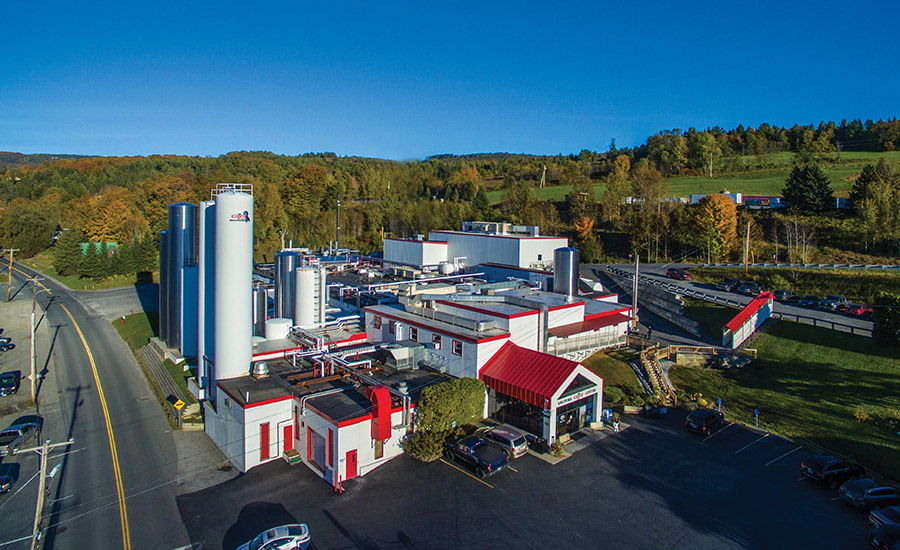
Together, the Cabot ownership shifted from 300 Vermont and New Hampshire farms to five times that number of farm families located throughout New England. Farmer investments in plants and machinery upgrades followed. In 2003, another merger joined New England farms with those in upstate New York resulting in a quadrupling of Cabot’s production capacity. This is a picture of their modern facility in Vermont that we visited.
With high quality milk throughout New England and upstate New York going to all the major milk customers and supplying the farmers’ plants located in New York, Massachusetts and Vermont, the farmers’ brands of cheese, butter and cultured products could move into new markets across the United States — consistently and with award-winning taste.
Today, the Cabot Creamery is a brand owned by 1,200 farm families who each share 100 percent of the profits based on the amount of milk they ship annually. The democracy of a cooperative is alive and well — and still assures one vote for every farm, who in turn elect about more than 90 voting representatives based on geography and farm count, who in turn elect a board of directors, made up of one farmer for each of the 14 membership regions. True democracy, a shared pride and reliance on ownership is the same now as it was in 1919.
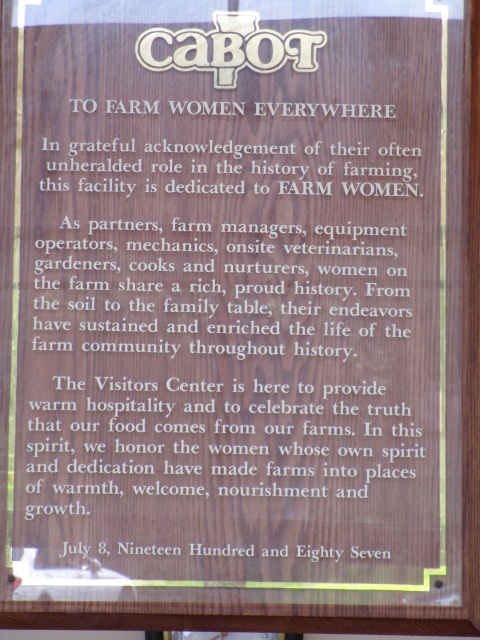
This, too, I thought was a good example of the spirit of equality that exists within the Cabot Co-Operative. This facility is dedicated to FARM WOMEN. . .
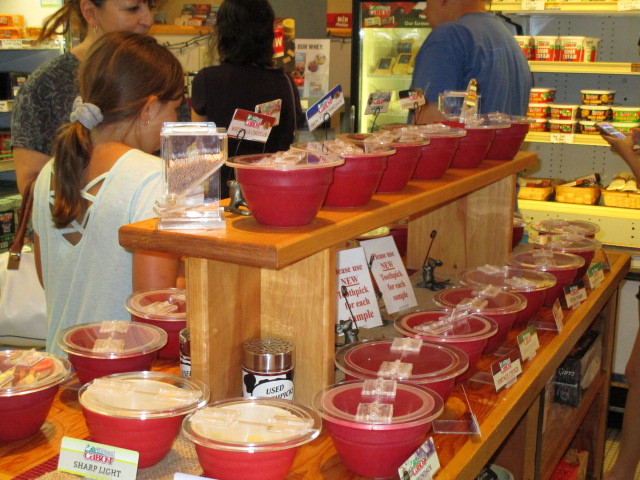
Of course, no visit to a Cabot plant would be complete without a little taste tasting.
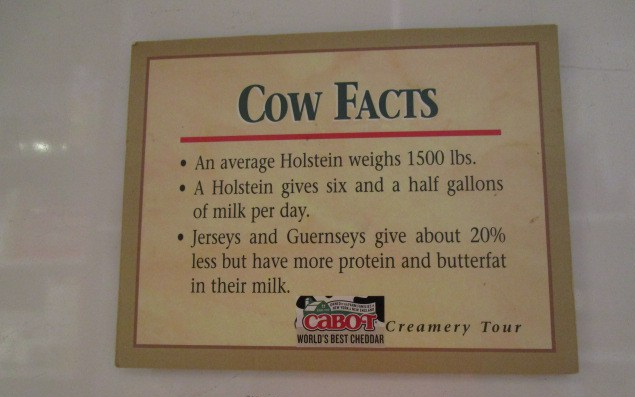
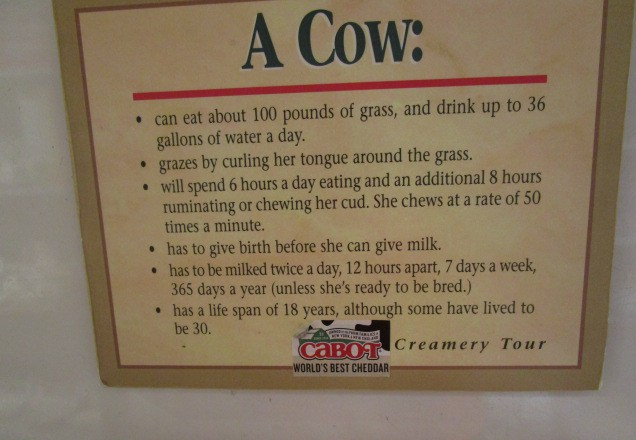
One more thing before we go. How about some fun Cow Facts.
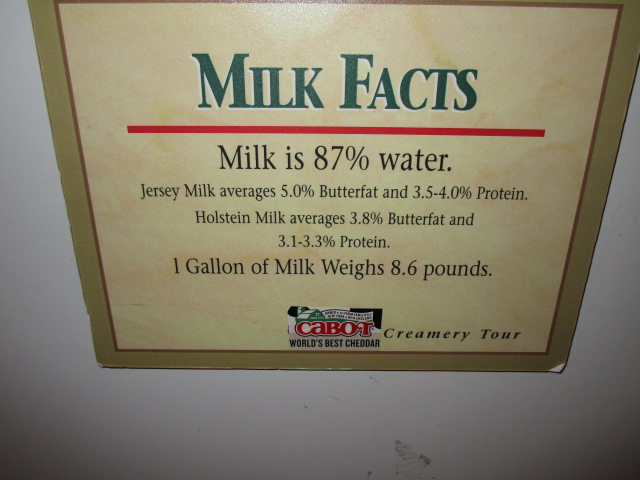
This now brings us to the close of our Vermont sight-seeing. It’s been a great time up here in lots of ways. Barbara and I both agreed, if there was one place, to date, that we would be comfortable spending our summers, it would be here in Vermont at the Meadowcrest Campground. We, of course, have a lot of ground to cover yet so that may change. Stick with us and we’ll let you know.
We want to thank you for coming along again with us. We hope you enjoyed visiting the Cabot Creamery with us. We also hope you had a great holiday, a chance to spend some all important time with family and friends. We’ll be off to the holistic chiropractor tomorrow morning, a quick trip to Walmart, and then home to begin to get things in order for our travel day on Friday. We’re moving over to New York, where we’ll be visiting with my sister and her husband and my mom who has flown up from North Carolina. We’re really looking forward to our visit with them during the next week.
The day has come to a close and it’s time to get a quick walk in before we call it a day. But before going something I was reminded of today as I kept putting things down only to forget where I put them :

As always, if you are coming to the end of your day with concerns and worries, let me suggest that you turn them over to God. After all, He is going to be up all night so why not let him handle them for you.
Time now for our evening prayers and eventually some shut-eye. Till tomorrow.
These are the voyages of Graybeard and it’s occupants, four paws and two humans. Our continuing mission: to explore as many new states as possible, to seek out new acquaintances and make new friends, to boldly go where we have not been before

 "On The Road of Retirement"
I have never bought Cabot cheese, but I think I’ll try it simply because it is a co-op. Our farmers in this area have had a rough spring because of the loss of milk contracts. We must support them. Oh yes, I’ve laughed alot because of laying things down and not being able to find them. I think my projects take twice as long as they should because of that. Aw, well, so goes. Enjoyed the blog.
LikeLike