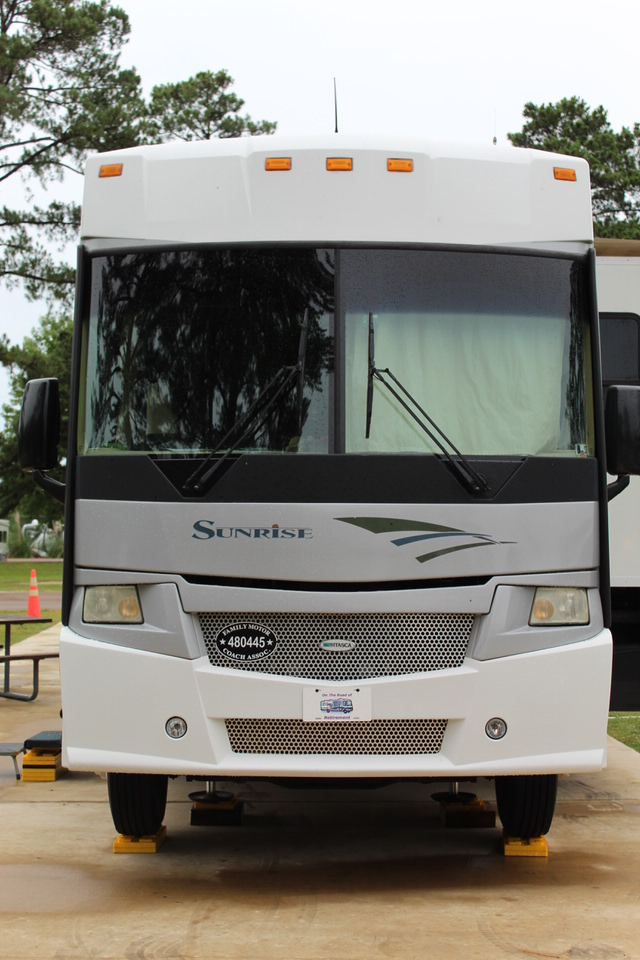
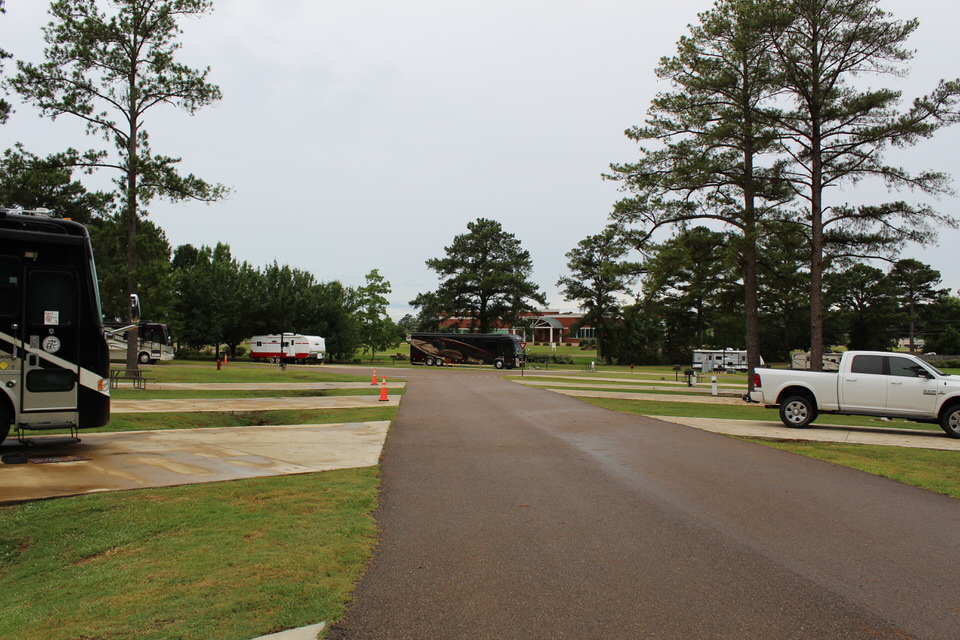
TOUR AMERICA 2019: MISSISSIPPI, THE MAGNOLIA STATE

Home Is Where We Park It: Davis Lake Recreation Area, Davis Lake, Campground 

June 8, 2019

Temperature: 85 Degrees

Cloudy, Occasional Showers, Winds Calm

Travel Day

Sitting here writing this I’m looking through the Solarium window at the lake stretching out in front of me.  It is so beautiful and so tranquil.  But I’m getting ahead of myself.

Today was a day to continue moving north.  North toward apparently a lot of rain.  But we hope not.  Time will tell.  Most of our packing, as usual,  had been done the night before.  Usually by morning all that is left to do is to disconnect from the mother ship, bring in the slides, bring up the jacks and roll.  It was no different this morning.  We wanted to be on the road no later than 10 am and we beat our goal by 10 minutes.

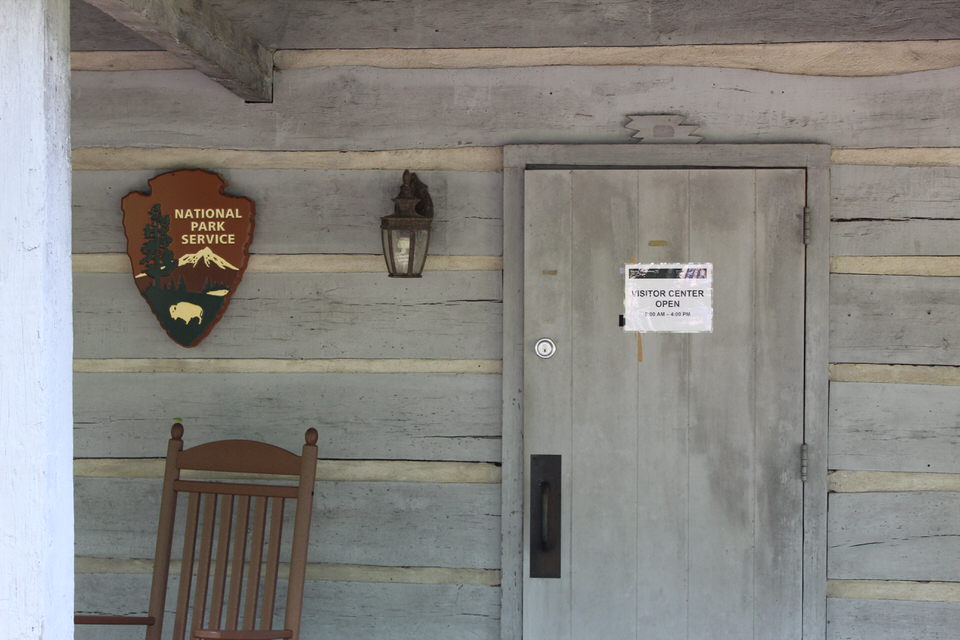
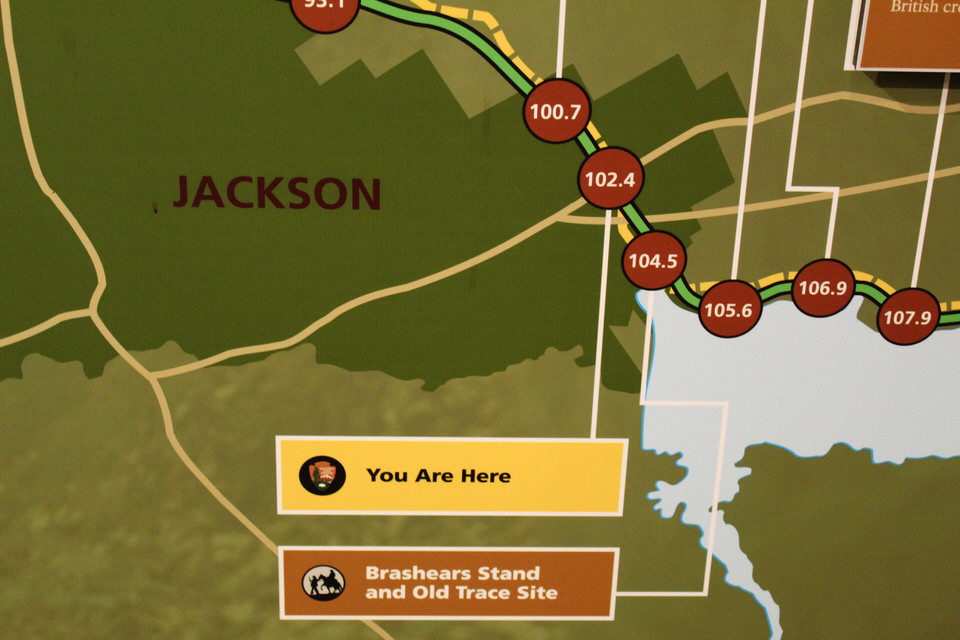
We’re going up the Natchez Trace today no matter what.  Thankfully, though it was cloudy there was no rain when we left.  This was our jumping off point, the Park Service Information Cabin at mile post 102.4.

IMG_5370

IMG_5375

IMG_5399

The first thought I had when I swung out unto the Trace was this is a narrow road.  My next thought was this is a really nice road.  Then this is a really nice ride, so many different views along the way, forests, meadow, lake and so much more.  Of course the fact that there were no trucks and few if any cars was another plus.  Then we came to our first overpass, OK, I know the clearance  for all are fourteen feet or better and we are only thirteen feet yet, approaching the first one I actually found myself sliding down a bit in my seat!

As I drove along I kept thinking about those who traversed this countryside a long, long time ago by foot or horseback.  They were burdened down with supplies they had purchased, ever on the watch for all kinds of wild animals as well as robbers.  It had to be down right tough and dangerous.  I just can’t see myself doing this trip any other way than in an RV.  Thank goodness I was not of that time nor of that class.  I would not have lasted long.

Our destination was mile marker 243 where we would turn off for our new home.  The first tip off that we were getting close was the sign telling us that we were entering

Image result for tombigbee national forest

A few miles further up the Trace and we came to our turn off.  A left, then a quick right, four miles down the road and we were there.

Image result for natchez trace davis recreation area

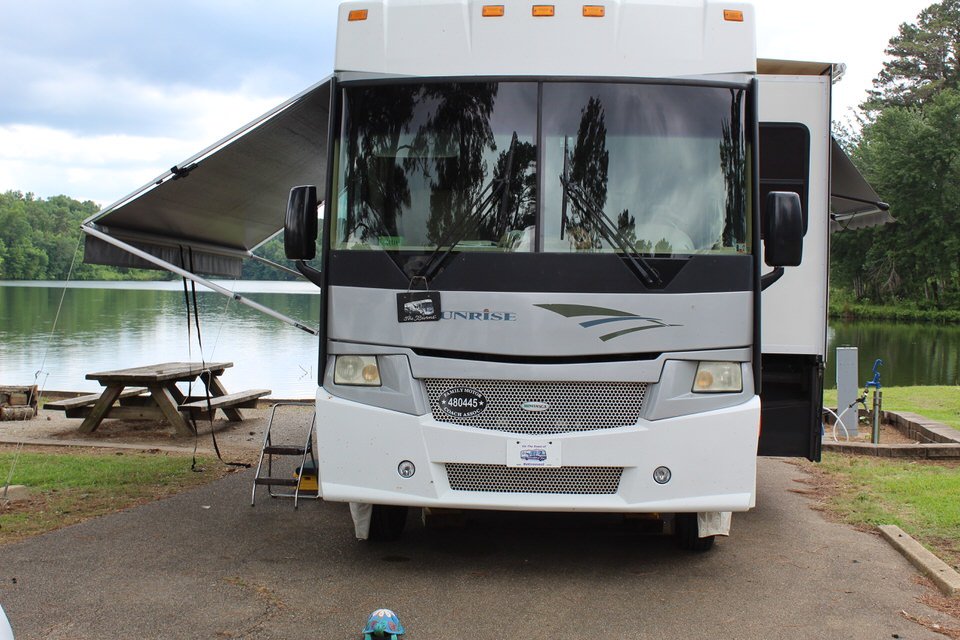
Davis Lake Recreation Area is home to beautiful Davis Lake.  The campground is situated in a hilly, mixed hardwood and pine forest that stretches along the eastern shore of the lake.  Here is our new home for the next three days.

IMG_5649

We have a paved site, perfectly level, 50 amp electric and water, with great site separation.  Nice, but not necessary since there is no one here.  I keep reading over and over about over-crowding in RV Parks everywhere.  Really?  Here we are on a weekend in another beautiful park and again not a soul in sight.  It’s been this way since St. Augustine.  Maybe we’re just in the wrong part of the country.

Here is our backyard.  One just can’t ask for a view more beautiful than this.  It’s the same looking out the front solarium window.  Breathtaking and beautiful.

IMG_5639

We’re settled in for the next three days.  This was supposed to be our let’s catch our breath and do nothing for three days.  That just may change, though,  since we’ve discovered we’re so close to the main Parkway Information center and other historical attractions in Tupelo.

IMG_5378

That was our day on The Road of Retirement.  A wonderful, relaxing ride on a beautiful Parkway.  We did stop at a few of the historical markers along the way but missed many more because we didn’t fit.  Once again we did the day our way traveling along, hand in hand, singing our song.

Thanks for joining us on our continuing adventure.  Always appreciate your company.  Catch your tomorrow.

These are the voyages of  Graybeard and it’s occupants, four paws and two humans.  Our continuing mission: to explore as many new states as possible, to seek out new acquaintances and make new friends, to boldly go where we have not been before

See you on down the road

TOUR AMERICA 2019: MISSISSIPPI, THE MAGNOLIA STATE

Home Is Where We Park It:  Timberlake Campground

June 6, 2019

Temperature: 82 Degrees

Light Rain Off and On, Winds Calm

A Little Bit of This and A Little Bit of That

National Naval Aviation Museum Re-Visited

The day dawned overcast, hot, and humid.  The forecast was for thunderstorms throughout the day.  Thankfully, this time the weatherman got it wrong.  Though we had a bit of a light rain in the late afternoon nothing major ever developed.

Today we started our day by visiting the Natchez Parkway Information Cabin.  Guess what?  They are only open Friday and Saturday.  Strike one item off our visit list while we are here.  Maybe we can make it tomorrow.  A trip to Camping World was necessary since we needed a new awning strap for our patio awning.  Somehow, the one that is there ended up ripped part way through about half way along it’s length.  No idea how a strap that simply rolls up can get ripped.  If anyone has any ideas please let me know.  Of course when we got there and began wandering the aisles we managed to find a few more things to buy.  Grocery shopping was also a must.  The cupboards were bare as was the freezer.  This was the time to do it since all major stores are within a 30 minute radius of the campground. We were also going to travel the Trace part way back to Natchez, but by the time we got done with the must do’s it was late afternoon.  Now, if we had gotten out a bit earlier in the day, but hey we’re retired and not much happens around here before 10 am.

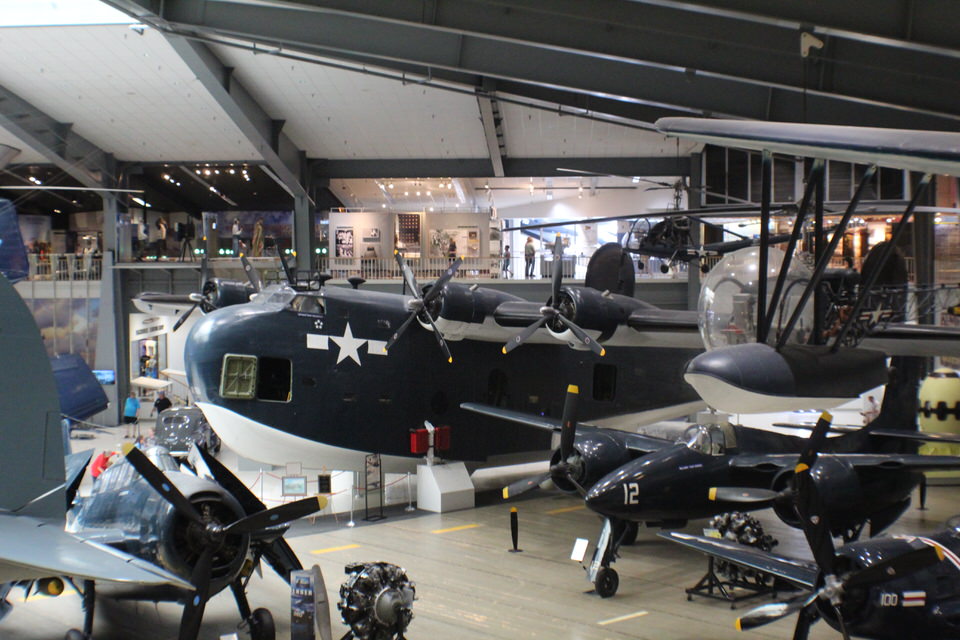
Now we’re going to jump back in time, back specifically to when we visited The National Naval Aviation Museum.  In past blogs I’ve shared with you many of the major exhibits that are there.  At this time we’re going to take a look at some of the aircraft there that are on display.  We can’t cover them all but we’ll look at some of the more notable ones on display.

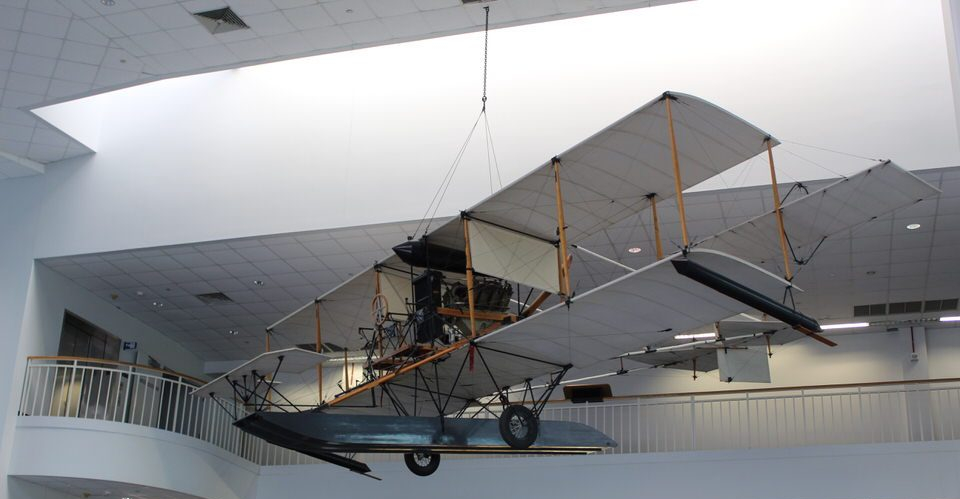
The first plane is the A-1 Triad.  This is not an original but a replica of the real thing.  The actual plane was damaged beyond repair in October of 1912 after flying 285 flights.  Triad means a group of three and the A-1 was designed to operate in three environments:  wings allowed it to soar in the air, wheels allowed it to take off and land from the ground, and a single float enabled it to take off and land on water.   It had two seats but only one control wheel,  The wheel, though, could be swung back and forth between the two seats.

IMG_2270

Next up is the JN Jenny.  Over 95 per cent of WW I naval aviators from America and Canada received some or all of their flight instruction in this airplane.  At the end of WW I this aircraft was available for purchase for just a few hundred dollars.  Many went to so called barnstormers who brought aviation to the American heartland for the first time.  Taking off from farmers fields they gave flight demonstrations and airplane rides in the 1920’s.

IMG_2154

This is the Sopwith Camel.  Mounting the machine guns in the nose created a hump on the fuselage which gave the aircraft its nickname camel.

IMG_2149

 Pilots loved the speed and agility of this aircraft but it came at a price.  The aircraft’s power came from a rotary engine, in which the entire engine spun with the propeller, throwing castor oil all over the pilot.

IMG_2156

This is the Curtis MF Flying Boat.  This aircraft flew with the Navy from 1918 to 1922 after which it entered the civilian market.  For a time it was used to give aerial tours of Atlantic City.

IMG_2129

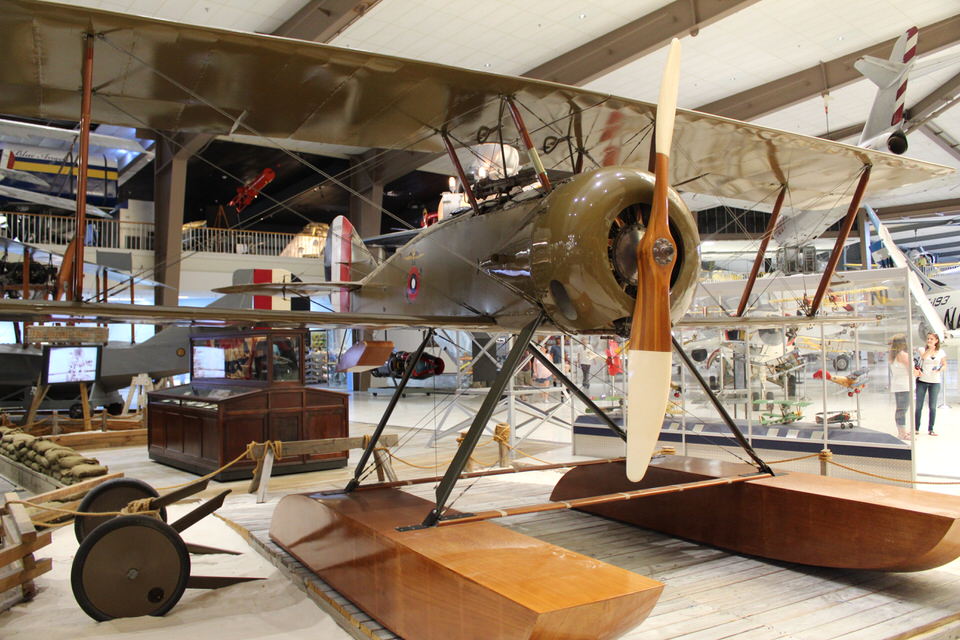
This is the Tommy S-4C.  Most were equipped with wheels but some, like this example, had wooden floats.  It is said that they leaked so bad they had to be emptied of water every night or the plane would sink when put into the water the next day!   It’s military service was short lived but it flew later on the silver screen in Hollywood Movies Hells Angles and Dawn Patrol.

IMG_2120

This is the Nieuport 28.  The Navy obtained this aircraft from the Army.  Unlike aircraft of today that have throttles to control their power, this aircraft had an engine with a blip switch which altered the number of cylinders that fired, speeding the aircraft up or slowing it down.  One of the issues with the aircraft was the tendency when in a steep dive to begin shedding fabric from it’s upper wing.

IMG_2125

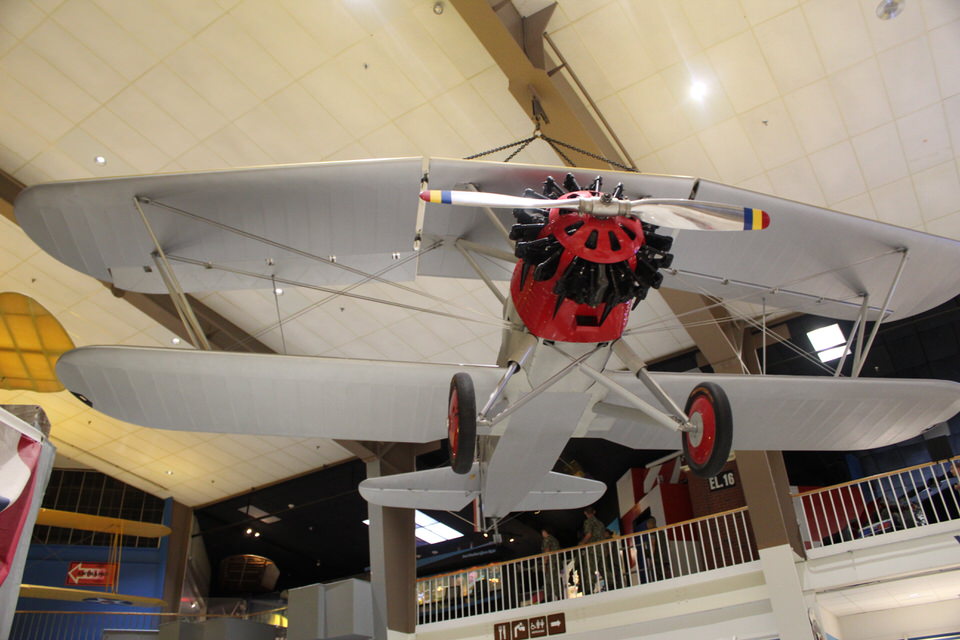
In 1925 a revolutionary new aircraft engine came on the scene.   It was an air-cooled engine that weighed less than 650 pounds and produced over 400 HP.  It was the Pratt and Whitney Wasp.  Unburdened by a cooling apparatus it was clearly superior to all of the water cooled engines that were then being used.  It’s lighter weight also allowed for lighter aircraft.   Its inherent reliability installed confidence in pilots who often had to fly long distances over water.

IMG_2141

This is the Ford Tri-motor Aircraft that saw service with the Navy and Marine corp form 1927 to 1931.  A commercial version was also very popular with the airlines and private collectors.

IMG_2331

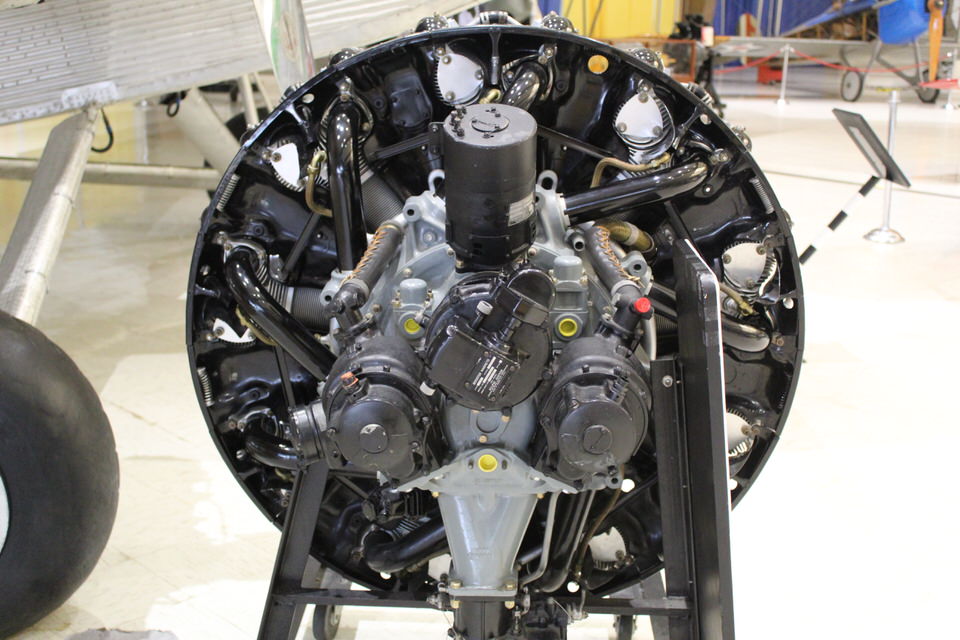
This is the engine that powered the Tri-Motor.  It was the Pratt and Whitney R-985 and was rated at 300 HP.  All total 39,000 engines were produced over its twenty three year production run.

IMG_2330

This is PB 2Y-5R.  The aircraft entered service in 1940 and primarily flew as a patrol aircraft during WW II.  This particular aircraft was fitted with amenities for transporting high ranking naval officers during WW II.  This aircraft also flew from Guam to Japan and was the first aircraft to land in Tokyo Bay for the surrender ceremonies.  This aircraft remained in the Pacific theater where it endured a typhoon while at anchor and almost sank.  It’s crew was able to patch it’s hull and ultimately fly it back to the States for repairs.

IMG_2403

IMG_2451

This is the perhaps the most famous of the big boats to serve the US Navy, the PBY Catalina.  During WW II it was one of the most versatile aircraft flown by any nation.  In addition to routine patrol flights, it flew night attack missions in the South Pacific, hunted German U-Boats in the Atlantic, and plucked many a downed aviator while on search and rescue missions.

IMG_2410

IMG_2463

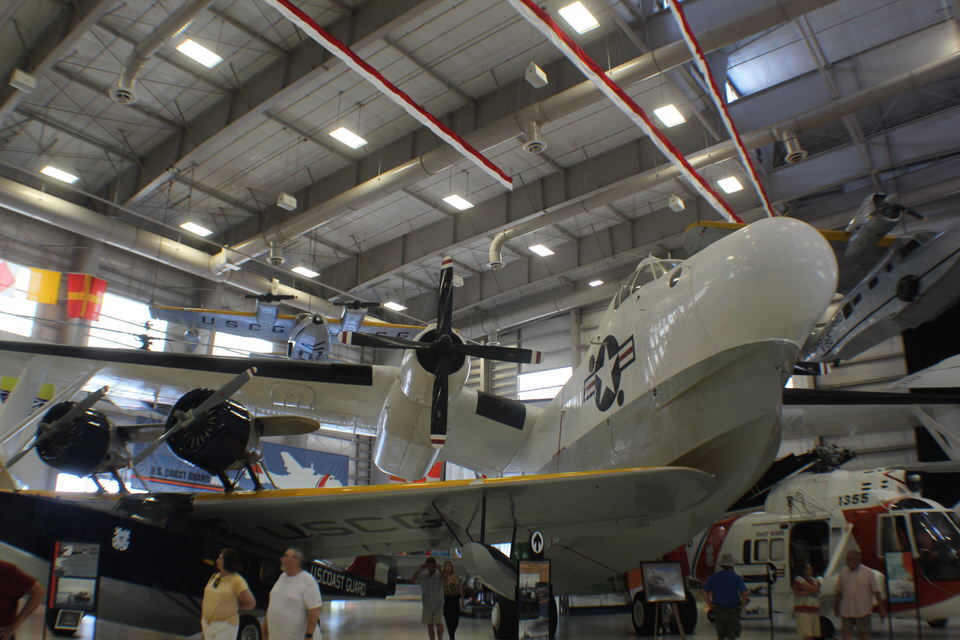
This is the Navy’s last flying boat SP-5B.  It had a height of 32 feet and a wingspan of 118 feet.  In addition to anti submarine patrols it was also used during the Vietnam war to monitor traffic off the coast.  The Navy retired its flying boat fleet in the late 60’s and the last flying boat was removed from service in July of 1968.

IMG_3542

IMG_3543

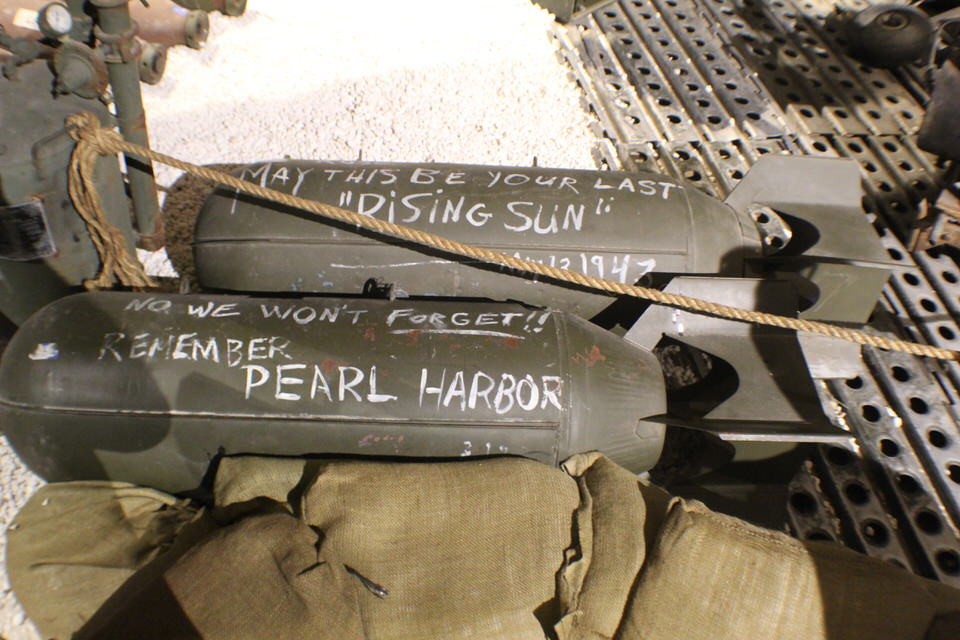
This is a display of an aircraft on a South Pacific Island during WW II.

IMG_2399

IMG_2400

This is the Neptune P2V-1 nicknamed The Turtle.   In 1946 the Navy wanted to test the long range capabilities of this it’s newest patrol aircraft as well as test the effects of long distance flights upon an aircraft’s crew.  The flight started in Perth, Australia on September 29, 1946.  The plane carried 8,476 gallons of fuel, a crew of four and a stowaway in the form of a baby kangaroo.  It was hoped that it would be able fly non-stop all the way to Bermuda but when it reached the western United States it encountered bad weather and consumed more fuel than expected.  It landed in Columbus, Ohio having flow a distance of 11, 235 miles without refueling.  It’s crew spent 55 hours in flight.

IMG_3512

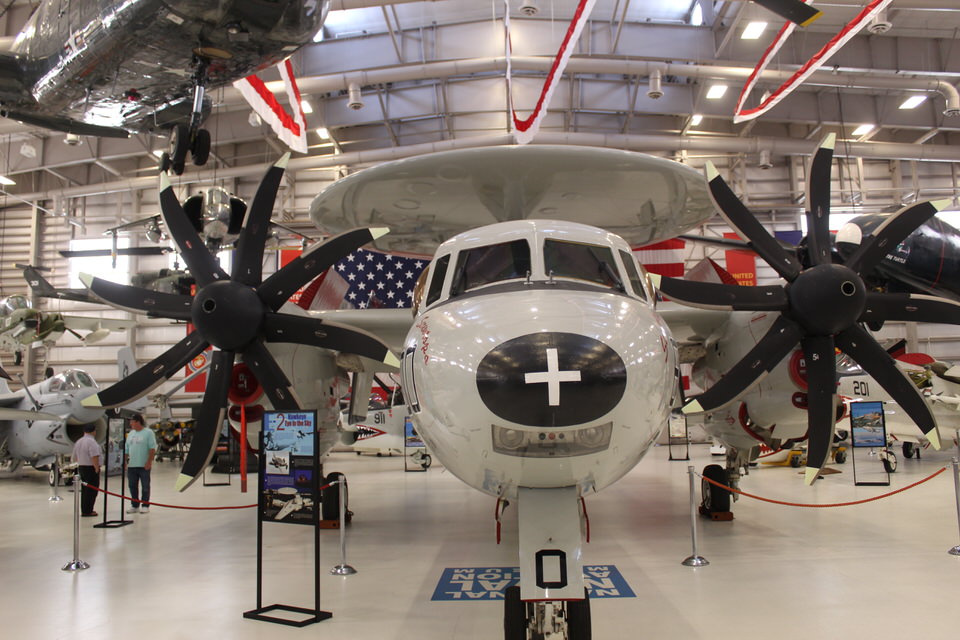
Since Vietnam the E-2 Hawkeye has served as the Navy’s Eye In The Sky.  It is the Navy’s early warning platform tracking everything from Soviet airplanes to drug runners on the high seas.  The circular rotating platform on top of the aircraft measures 24 feet in diameter and has a special cooling system to keep it within operating temperature during missions.  It has been nicknamed the hummer by those who fly it because of the humming noise, like that of a swarm of bees, the 8 bladed propellers make.

IMG_3532

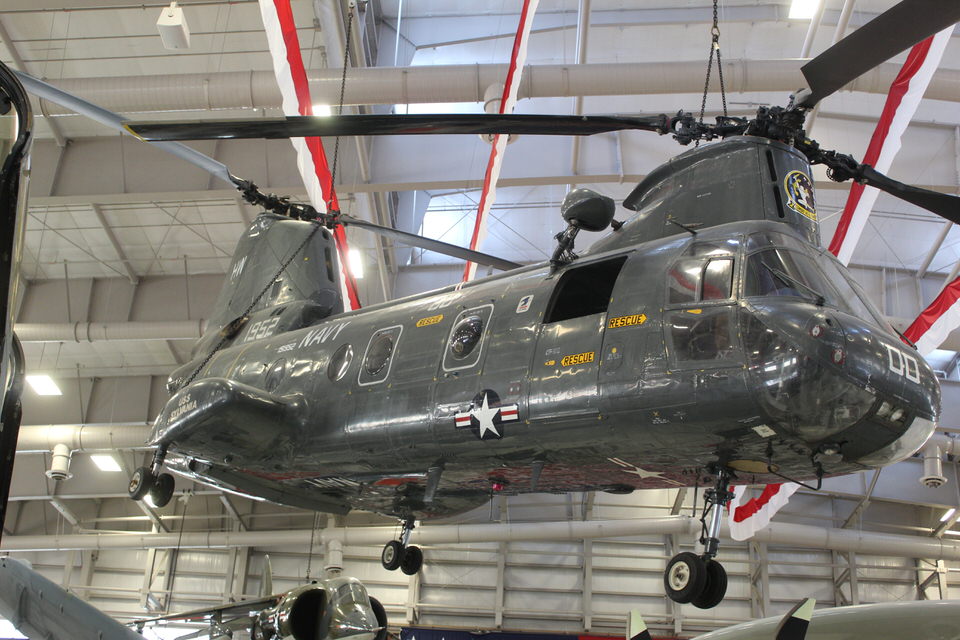
This is the oldest helicopter currently flying on the front lines, the CH-46.  It has often been likened to a flying bus with its ability to deliver troops to the front lines and evacuate the wounded.

IMG_3536

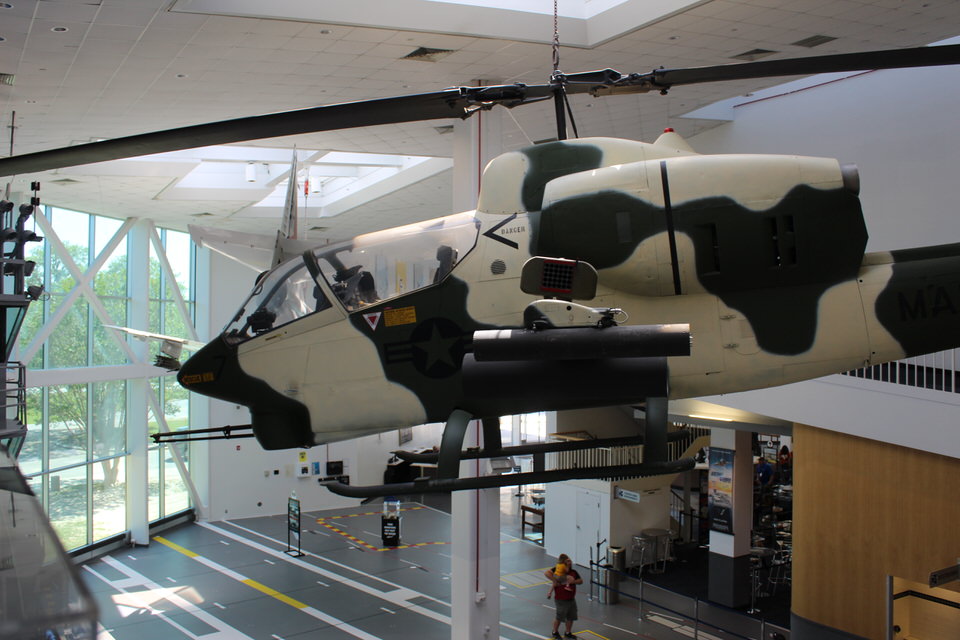
This is the AH-1 Sea Cobra which provides front line support for Marine troops on the ground.  It has a triple barrel 20 mm canon in the nose that can fire 690 rounds per minute and on either side of the fuselage it can carry a variety of missiles.  During Desert Storm these gunships were credited with destroying 97 tanks and 104 armored personal carriers and vehicles.

IMG_2204

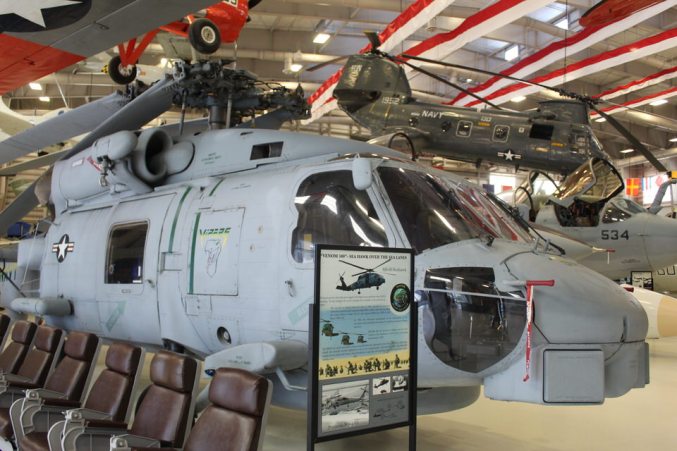
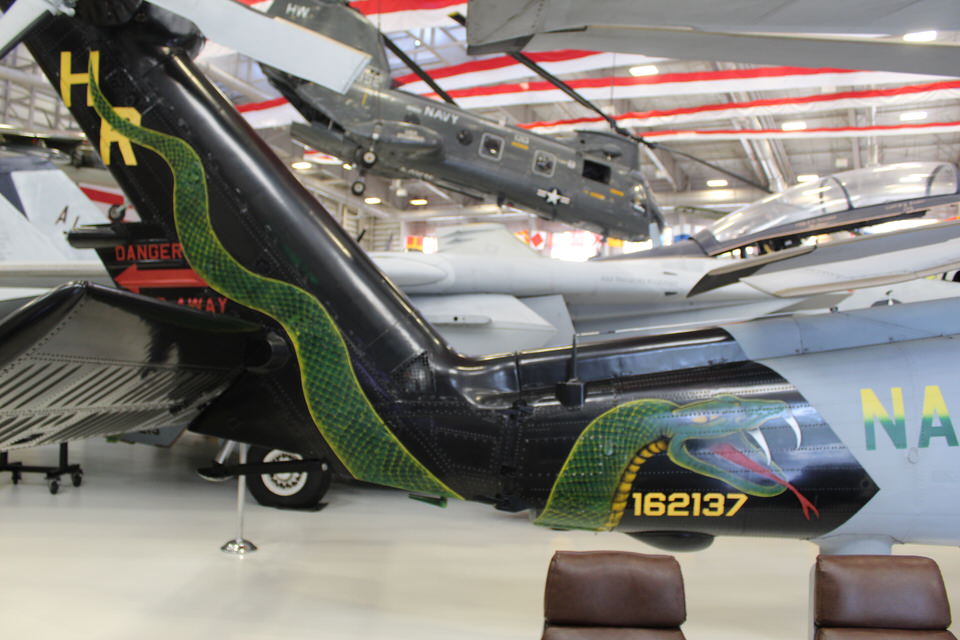
This is the Venom 500 – Sea Hawk.  It is used by Navy, Army and Coast Guard in search and rescue, antisubmarine and anit-ship roles, drug interdiction, cargo lift and insertion of special forces into hostile situations.

IMG_3465

IMG_3472

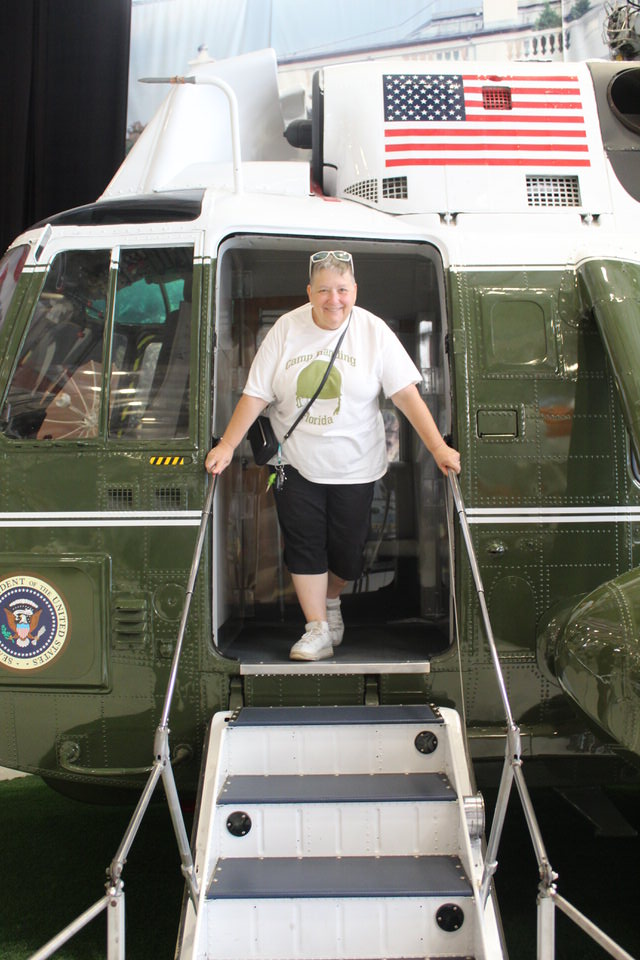
I’m sure we all recognize this, it is the President’s Own, a VH-3 Sea King.  No one helicopter is designated Marine One until the President is actually onboard.  The white top was originally designed to keep the inside cooler before AC was installed in later versions.

IMG_3467

The cockpit

IMG_3462

The President onboard.  IMG_3461

Barbara landing on the South Lawn!

IMG_3463

There are so many aircraft there, so many pictures, but we’ll call it quits for now.  This is my new favorite place to visit and I can’t wait to get back down here and visit the museum again.

IMG_3457

Time now to get busy with packing and putting things in order since we are moving on again tomorrow.

That does it then for us on The Road of Retirement.  So many days, so many places we’ve already gone, so many new places we’ve discovered, so many new things we’ve learned and we’re just getting started.  Stay tuned and we’ll take you with us to even more new discoveries.

These are the voyages of  Graybeard and it’s occupants, four paws and two humans.  Our continuing mission: to explore as many new states as possible, to seek out new acquaintances and make new friends, to boldly go where we have not been before

See you on down the road

TOUR AMERICA 2019: MISSISSIPPI, THE MAGNOLIA STATE

Home Is Where We Park It:  Timberlake Campground

June 5, 2019

Temperature: 74 Degrees

Wind:  Gusting to 20 mph with rain and Thunderstorms

The First Time The Reviews Were Wrong

Travel Day

First things first, as the world celebrates this 75th anniversary of D-Day, I encourage all everywhere to pause for a moment of silence sometime during the day to give thanks and remember those who on that day fought and in some cases gave their all to ensure the freedoms we enjoy today.

I guess I should know by now, never trust the weather forecast.   The forecast for our travel day was rain starting at around 10:30 am.  OK, that would give me time in the morning to pack up and get us on the road.  Well, the rain actually started at 4:30 am and never let up until mid afternoon.  Then only briefly.  So be it.

We got on the road around 10:30 am in heavy rain.  The first stop was for fuel.  Now we had a decision to make, take the Trace or major highways?  Given the weather we chose the major highways.  A big mistake.  This route not only took us out of our way but the roads were terrible.  I probably lost a few fillings in my teeth and goodness knows what shook loose in Graybeard.  I’ll spend the next day checking things out and making repairs as needed.

We slogged our way north and did alright until the very end.  Following the GPS we ended up not at the campground but in a church parking lot.  That was a new one.  OK, let’s figure this out.  We pulled out our phones, brought up the campground on Google Maps, asked for directions, bingo, we were only a mile away.  Off we went again.  This time we made it there with no further antics.  There being our new home for a few days.

Image result for timberlake campground mississippi

Arriving at the campground we pulled in to register and that went without a hitch.  Now on to our site.  I had chosen this campground and our site in particular because of many positive reviews I had read on the web.  All of them gave it high marks, especially the site I had chosen.  Well, like the weather forecast reviews too can be wrong.

Don’t get me wrong, the campground is neat, well groomed, and well taken care of.  What never was mentioned, though, in any of the reviews is the big flock of geese that rooms the place and of course you know what they leave behind.  You really have to watch where you walk.  We also have to keep the curtains drawn because Marti goes absolutely nuts whenever he sees them out the window.

On to our site.  I saw it from the distance and it looked absolutely fantastic.  A big, pull through concrete pad with more than enough length and width.  It was fantastic, until I got there.  It had a major down hill slope that left Graybeard way out of level.  It took two leveling blocks under each front wheel and the jacks to finally get us level enough to run the refrigerator properly.  Even still we’re not perfectly level but close enough.    The rest

IMG_5364.JPG

of the site is great.  Like I said concrete pad, all utilities are convenient to the wet bay, good water pressure, 50 amp.  Here’s a look at the section of the park we are in.  You can’t see it in the pictures but very few sites are level.  I mean it’s really weird, you go to all the trouble of putting in concrete pads but don’t ensure when you pour the concrete that they are level.  Oh well such is life.  It’s OK for the next few days

IMG_5358

Well, I got us all set up, everything hooked up and then decided since rain was on the way I’d put out the main patio awning.  This makes it easier when Marti has to go out.  That finished I came inside to relax for a minute or two.  But that’s when the sky began to get really dark, I mean like night time dark.  Suddenly the wind began to pick up.  Woe, I decided the patio awning had better come in like right now.  I’m so glad I did.  A storm came through, the rig across from us had left their patio awning out and before you knew it, it was on the roof of their rig.  Dodged a bullet this time.

It’s now Thursday and as I type this it looks like we are in for a repeat of yesterday’s storm.  Wind is picking up, sky is growing dark, rain is beginning to fall.  Here we go again.  This pattern according to the weather forecast is supposed to continue for another two to three days.  I hope they’re wrong again with their forecast.

Today we’re going to run to Camping World for some needed supplies, we’ll go drive the part of the Trace we missed coming up, we’ll do some shopping, and we’ll probably get caught up on the laundry.

That’s it for now on The Road of Retirement.  Rain, rain go away come again another day, a day real far off in the future.  Till later, have a good day wherever you might be. Thanks again for traveling with us.  We’ll catch you later.

These are the voyages of  Graybeard and it’s occupants, four paws and two humans.  Our continuing mission: to explore as many new states as possible, to seek out new acquaintances and make new friends, to boldly go where we have not been before

See you on down the road


TOUR AMERICA 2019: MISSISSIPPI, THE MAGNOLIA STATE

Home is Where We Park It:  Natchez State Park, Mississippi

Date:  June 4, 2019

Temperature:  92 Degrees

Wind:  Calm

National World War II Museum – D Day

Well it looks like our luck with the weather is about to run out.  Beginning tomorrow, Wednesday, and for the next five days we are supposed to have thunder storms and heavy rain off and on.  The question now becomes do we travel the Trace or take a more direct line to our next home?  The Trace is our goal but if we can’t take pictures at the various cut outs it doesn’t seem to make much sense to travel it.  Time will tell.

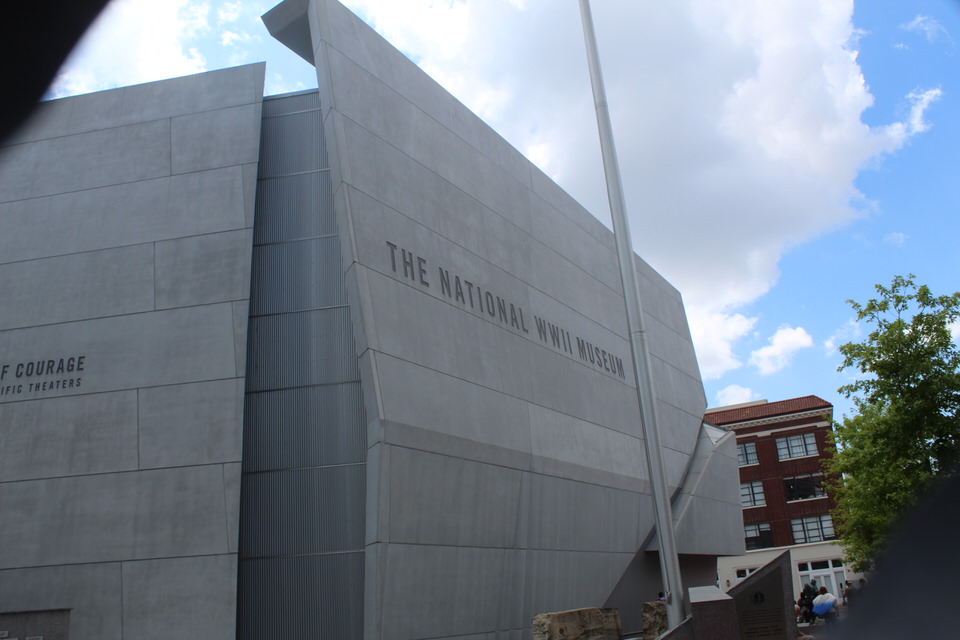
With the 75th Anniversary of D-Day and the Normandy Invasion just a few days away we’re going to step back a few days, back to New Orleans, back to the World War II Museum.  This is a must visit in my book for anyone coming to New Orleans.  Plan on spending several days here if you want to see it all.
IMG_4801

IMG_4805

The purpose of the museum as stated on their web site is:  The National WWII Museum tells the story of the American experience in the war that changed the world—why it was fought, how it was won, and what it means today—so that all generations can understand the price of freedom and be inspired by what they learn. Through exhibits, multimedia experiences, and thousands of personal accounts, the Museum takes visitors on an immersive tour of World War II in every theater of war.

Some may ask Why is the Museum located in New Orleans?  The answer is:

IMG_3987

There are a total of six buildings and in the sky above them under construction is the Bollinger Canopy of Peace.  The soaring Bollinger Canopy of Peace, set to stand 150 feet tall, will unify the Museum’s diverse campus and establish the Museum as a fixture on the New Orleans skyline. The Canopy is made possible through a generous donation from longtime Museum Board of Trustees member Boysie Bollinger.

IMG_4436

Image result for bollinger canopy of peace

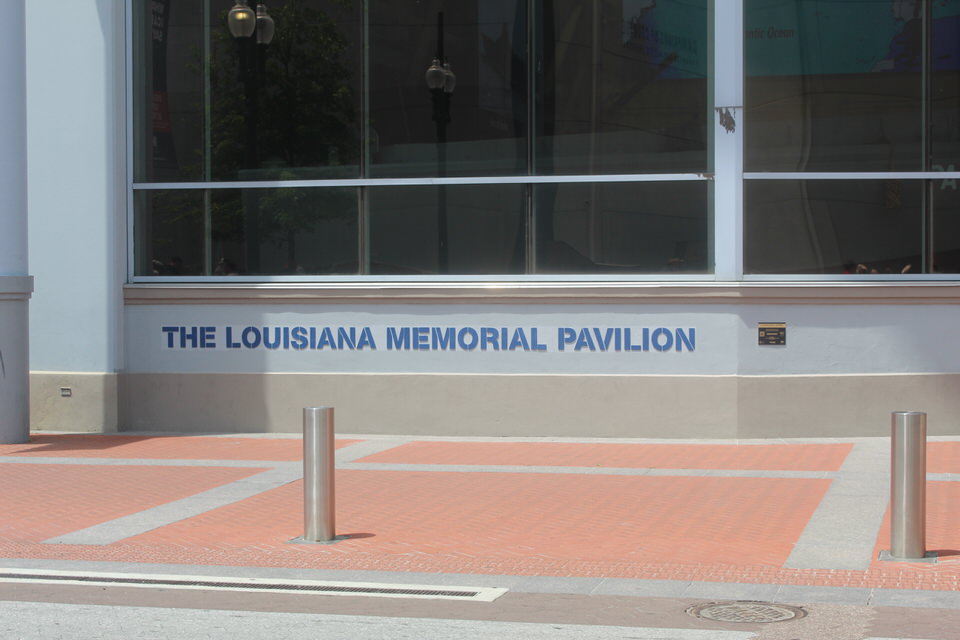
There are a total of six buildings on the campus, however, in the five hours that I spent there the only building  that I was able to get through was
IMG_4804

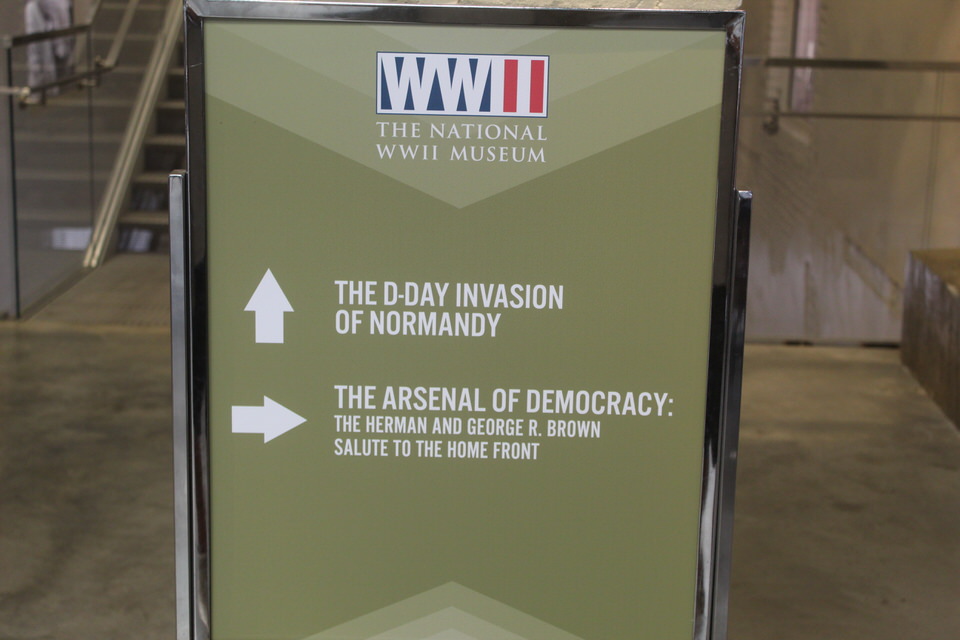
Let’s go inside and start our tour.  In this Pavilion there are two main exhibits.
IMG_4637

In this blog we’re going to go to The D-Day Invasion of Normandy.  

Since 1940 Hitler hoped to make the Northwestern coast of Europe an impossible objective for Allied forces to take.  In 1942 he began to build what came to be known as the Atlantic Wall.  This was the backbone of what he called Fortress Europe.  They included gun batteries, bunkers, observation towers and radar posts.   Some gun batteries were disguised as houses to make them more difficult to detect.

IMG_4644

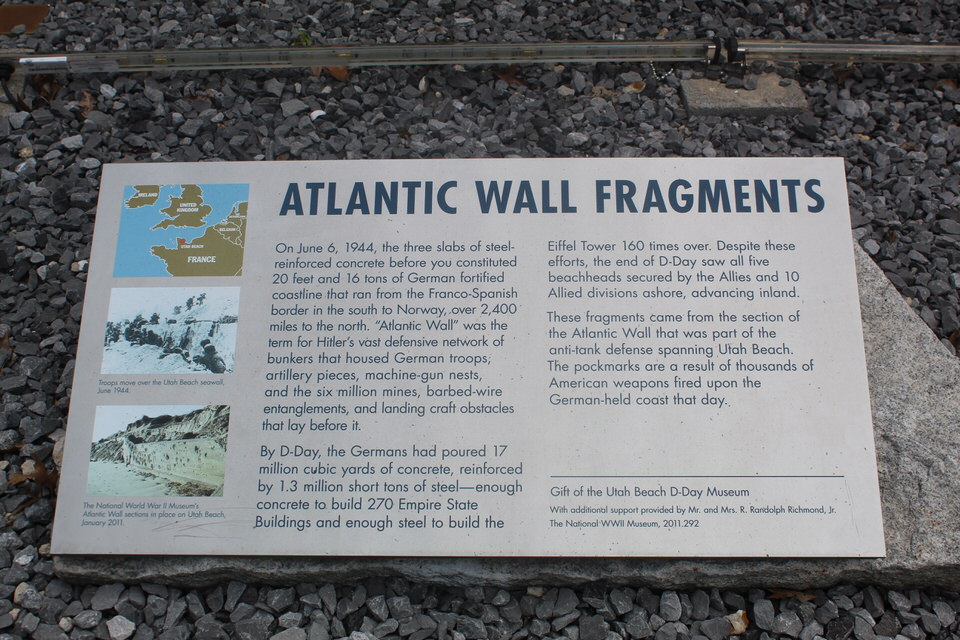
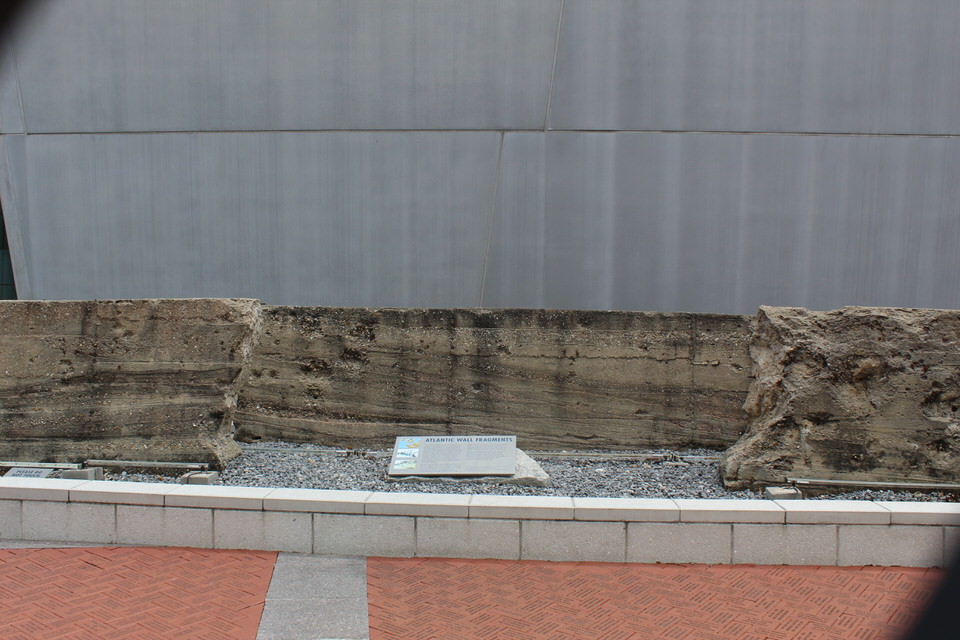
The fragments of the Atlantic Wall below came from the anti tank defense spanning Utah beach.  The pockmarks are the result of thousands of weapons fired upon the Germans the day of the invasion.
IMG_4806

IMG_4807

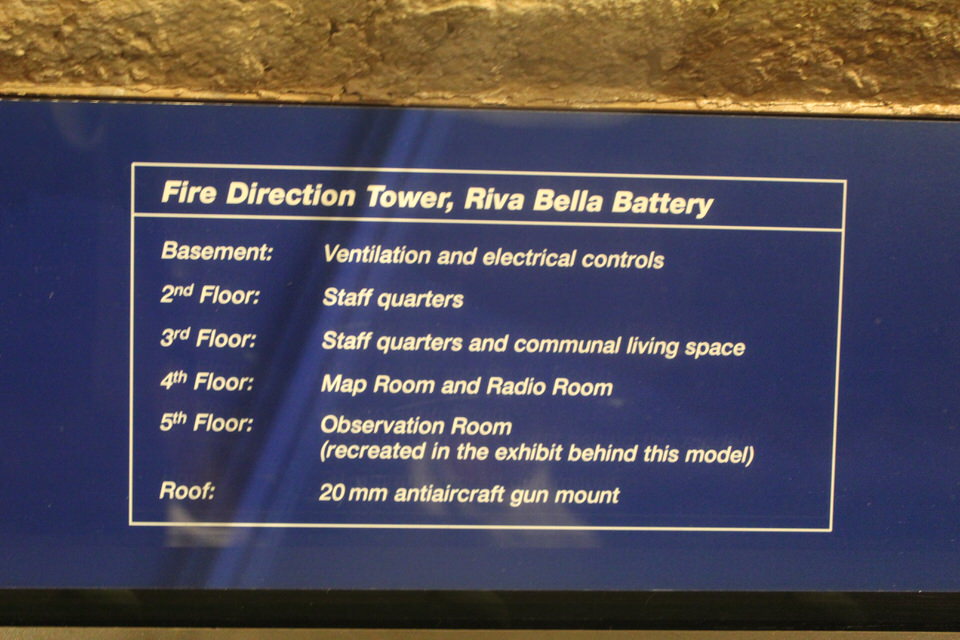
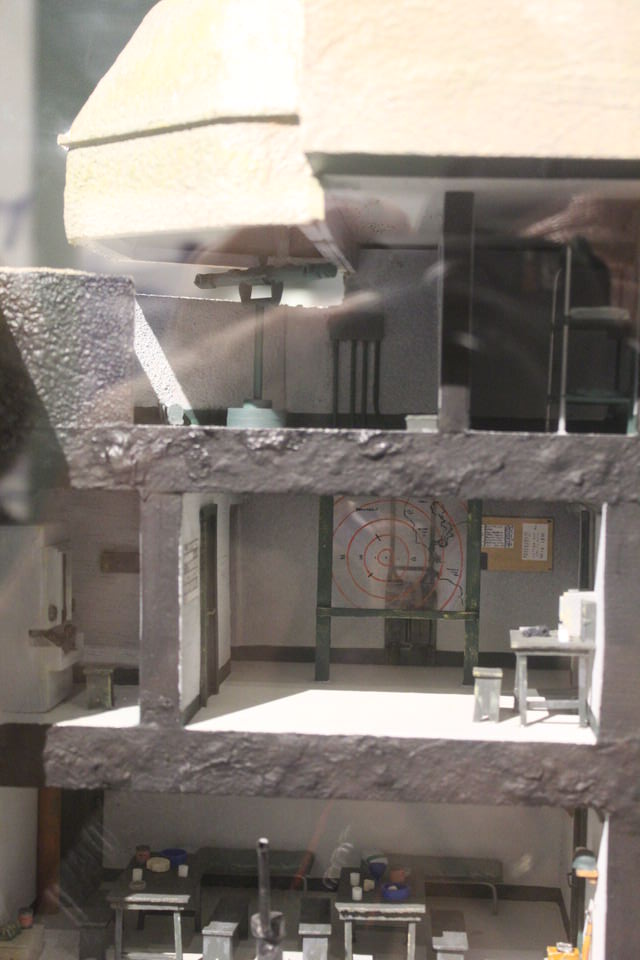
This is a model of one of the fire control/observation towers along the coast facing out toward the channel.

IMG_4656

This is the typical layout of the inside of the tower.
IMG_4653

IMG_4654

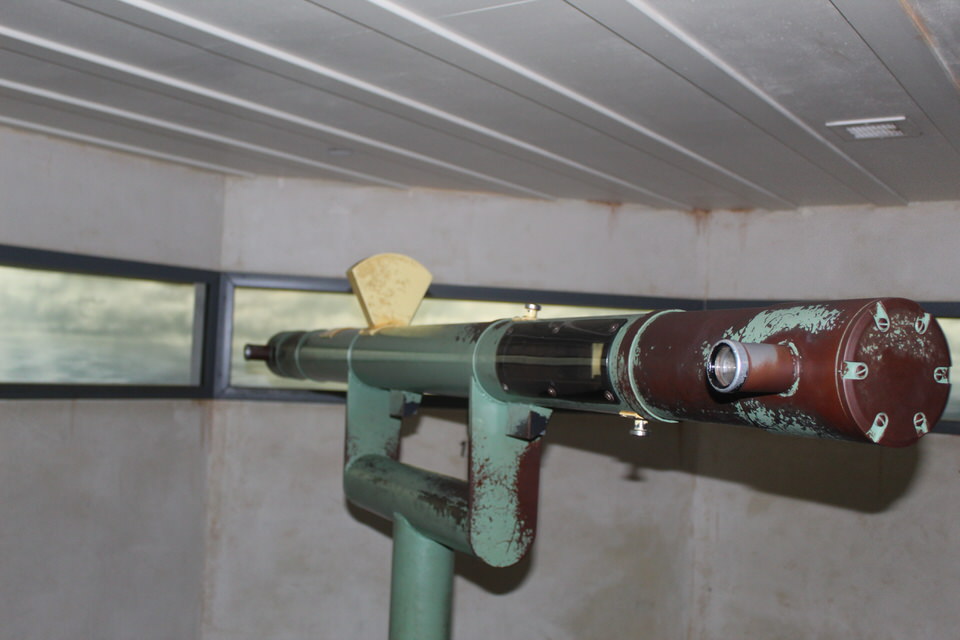
The fifth floor was the observation floor and on that floor you would find a ranger finder
IMG_4655

similar to the one below.  It was capable of scanning the horizon to a distance of over fifteen miles.  An observer looking through it would initially see two identical images of one object.  He would twist the dials until they merged into one.  This would give him the distance to the object in question.  This information would be fed to a fire control coordinator who then determined the proper fire coordinates.  This was then relayed by phone to the gun crew.
IMG_4658

As a further deterrent to invasion there were magnetic mines tethered to the bottom and lying just below the surface of the water, mines floating on rafts, mine capped wooden posts meant to tear apart landing craft; and, six foot steel girders welded together and topped with mines.  Yet despite all of this all of the Normand beaches were successfully taken on the first day of the invasion – but some beaches were taken at an enormous cost in Allied lives.

IMG_4647

IMG_4648

The Allied forces had the upmost respect for German weapons.  Huge canons positioned along the Atlantic Wall had a range of 25 miles enabling them to fire upon Allied troops before they even reached the beaches.  Some guns were fixed in place while others were on rails enabling them to be moved to were they were needed.
IMG_4672

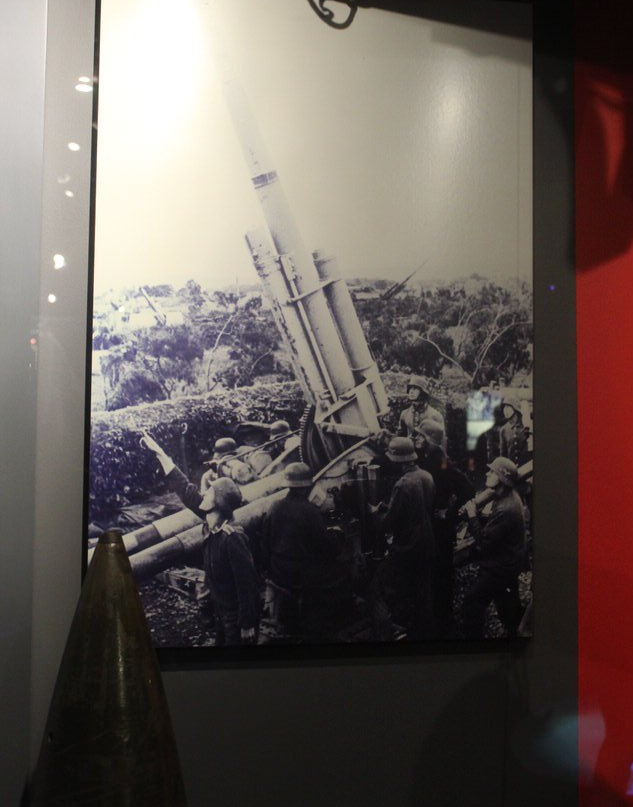
But the weapon Allied troops feared the most was the 88 mm antiaircraft gun which was also used against troops and tanks.  It’s amazing accuracy made it one of the most effective killing machines of the war.  One solider put it this way More soldiers were converted to Christianity by the 88 than by Peter and Paul.

IMG_4449

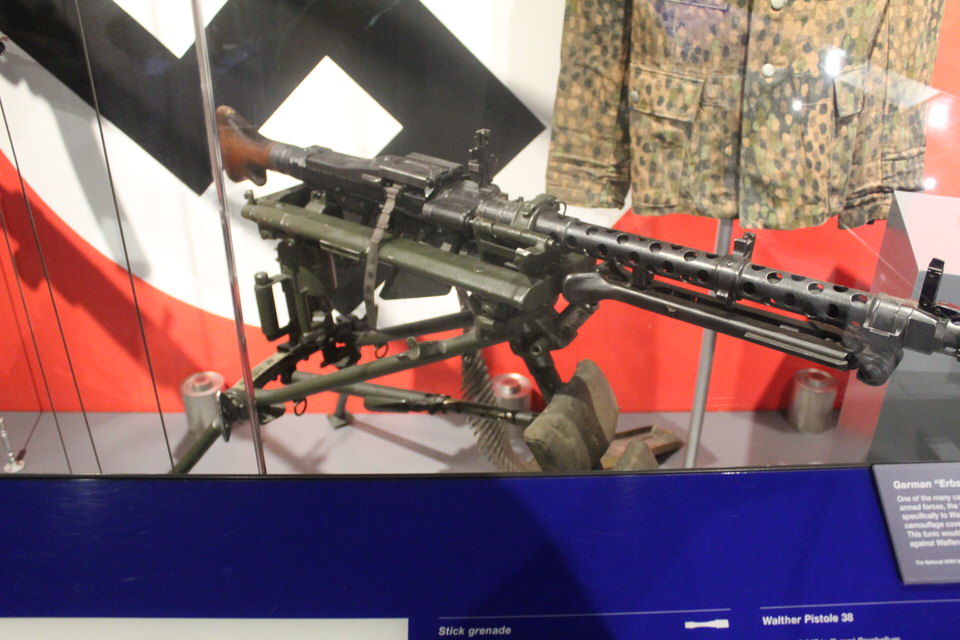
In addition to these formidable weapons the Germans could also launch a continuous barrage of fire from entrenched emplacements using machine guns and submachine guns, mortars and other small  arms.
IMG_4678

IMG_4676

On the American side, during the first wave of an assault naval firepower would be the primary firepower at their disposal.  This would include guns like the 16 inch guns that were on the Alabama.  Mine sweepers would also proceed an assault in an attempt to clear and create safe lanes for landing craft.

IMG_3011

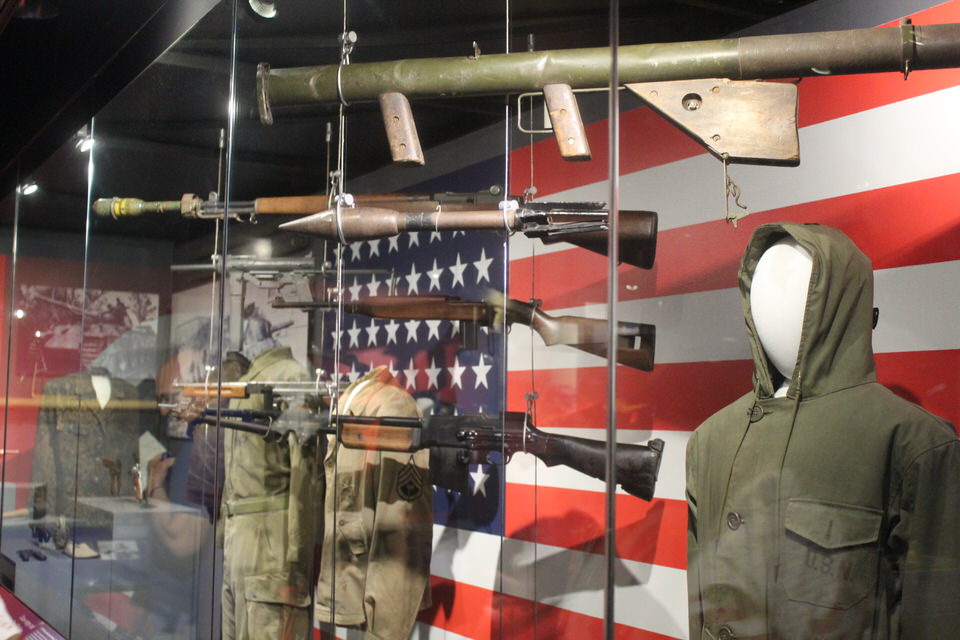
The American forces were also armed with some of the best weapons produced.  Some of them are still in use today.  Once they were on the beach the troops could begin firing machine guns, submachine guns, and rifles into German positions.  Support weapons like the bazooka and the mortar would provide additional cover for the troops.  We, however, came up short in terms of tanks and antitank weapons.
IMG_4685

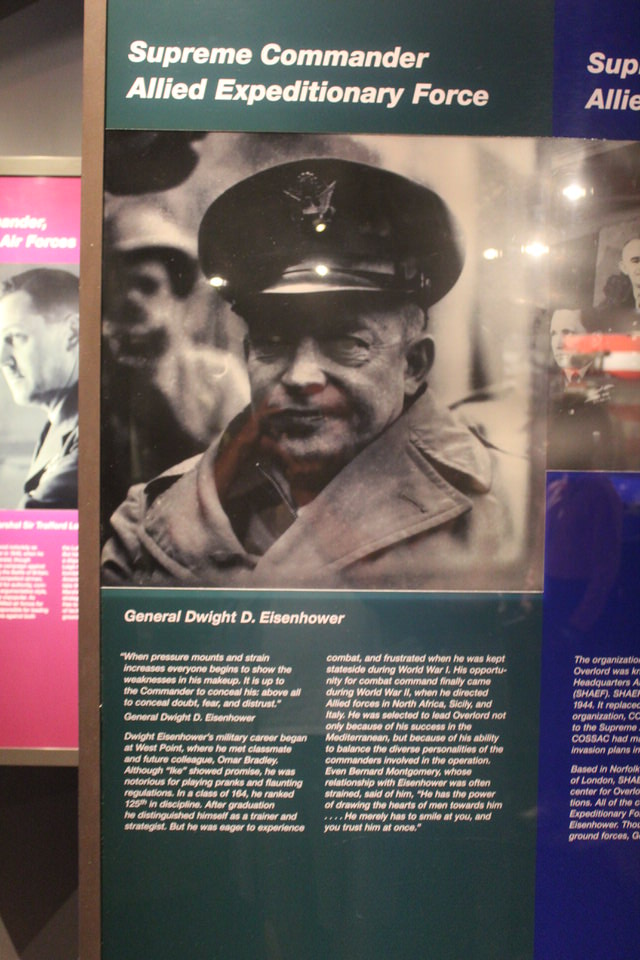
The code name for the Normandy Invasion was Operation Over Lord.  Planning for the invasion began in the early part of 1943 and in December of 1943 General Dwight Eisenhower was chosen as the Commander in Charge.
IMG_4697

A total of six men were selected in addition to Eisenhower.  They met together for the first time in January of 1944.  All had at least 30 years of  military experience and were regarded by their peers as exceptional in their fields.

IMG_4698

IMG_4700

IMG_4701

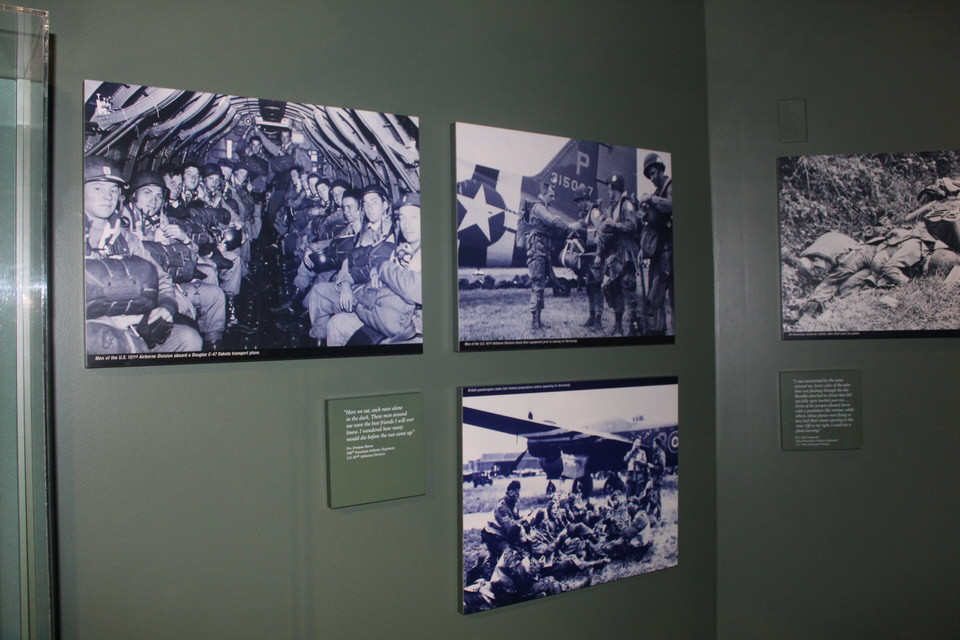
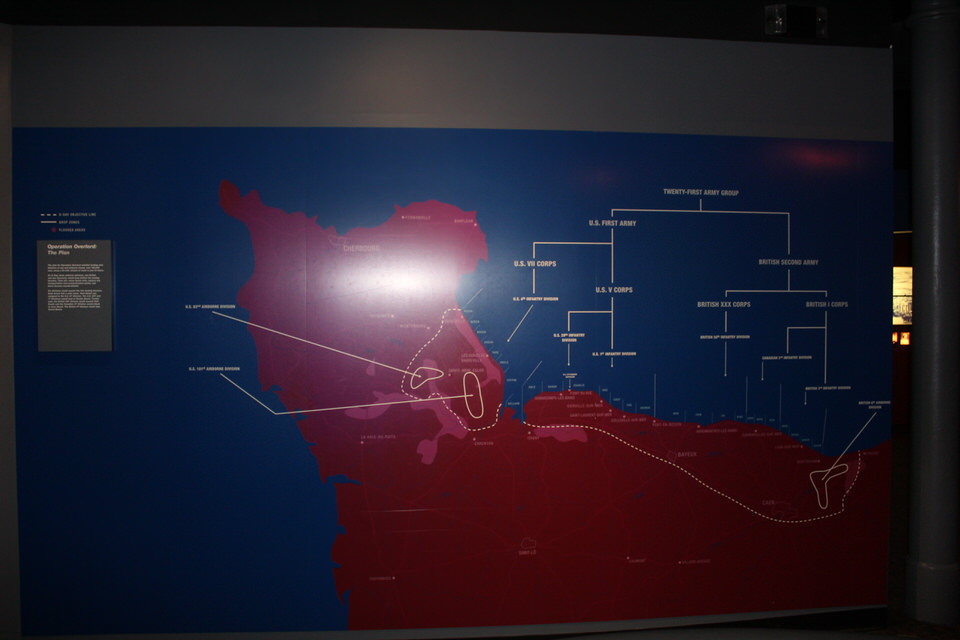
The plan they came up with entailed landing nine divisions of sea and airborne troops, over 150,000 men along a 50 mile stretch of coast in just 24 hours.   On D-Day other airborne troops and glider troops would be dropped behind enemy lines in order to cut off avenues of German resupply.
IMG_4695

Once the plan was in place the goal now was to keep the time and place a secret and to keep Hitler guessing as to where the Allied Invasion would be.  Just before the Invasion began ships were dispatched toward other beaches as if they moving there for an Invasion.  Planned  false intelligence leaks provided bogus information regarding other invasion sites.
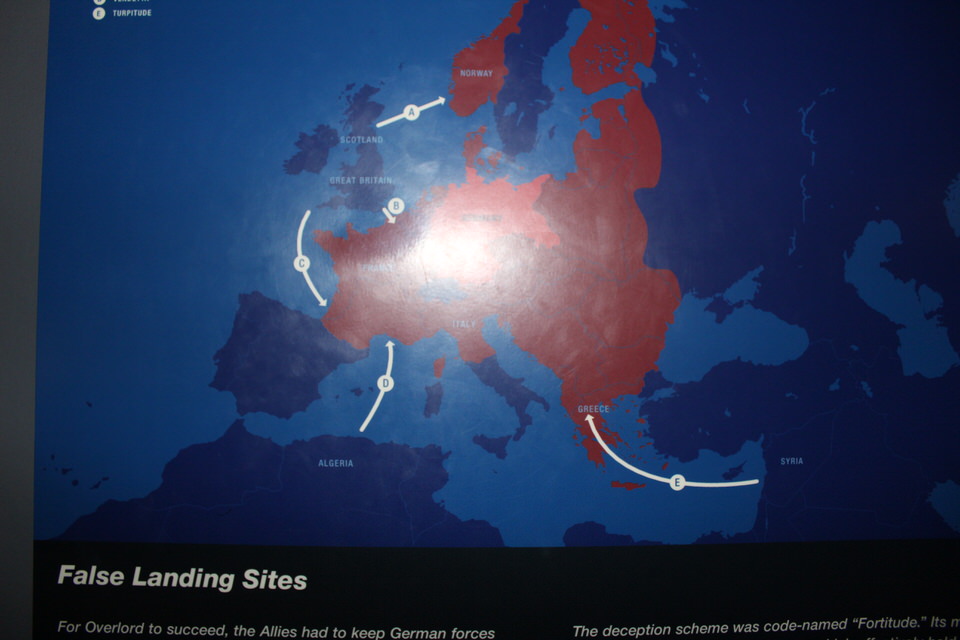
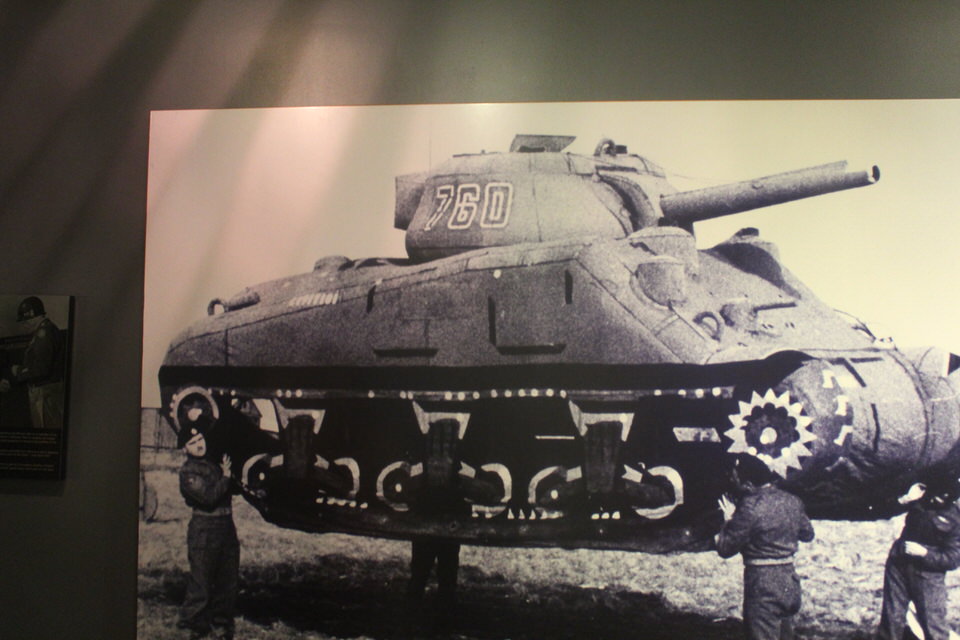
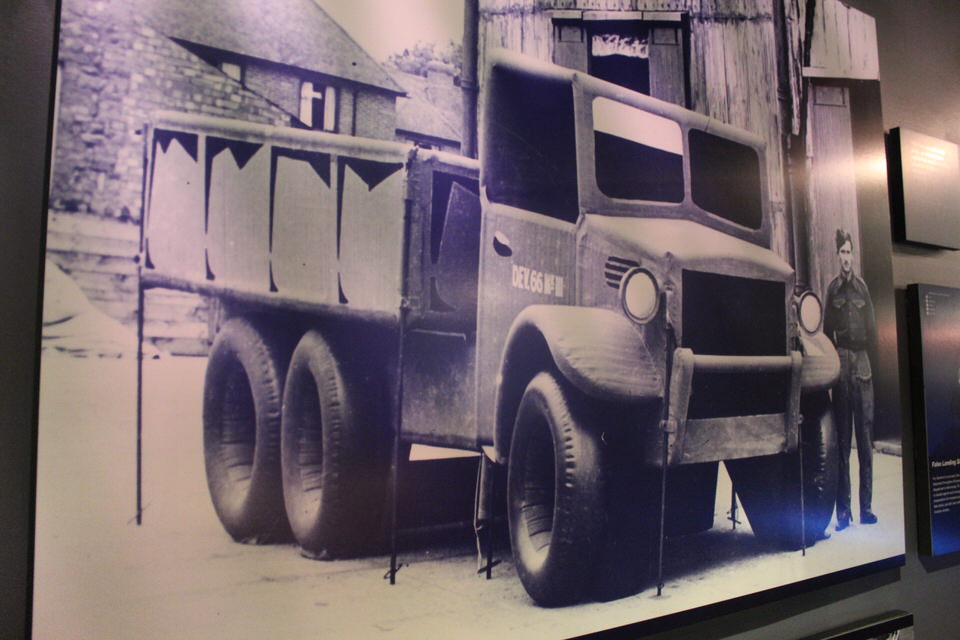
IMG_4712The most obvious site for an invasion Hitler believed was Calais, just twenty miles across the channel from England.  Hitler was almost certain that the Allied forces would attack here.  The Allied forces encouraged Hitler’s belief in various ways.  The Allied forces built phony armies, complete with dummy trucks, tanks, ships, and jeeps.  American motion picture crews also created entire army bases that looked authentic to German reconnaissance .  All of this worked perfectly and resulted in Hitler moving large forces from Normandy to the area around Calais.
IMG_4703

IMG_4709

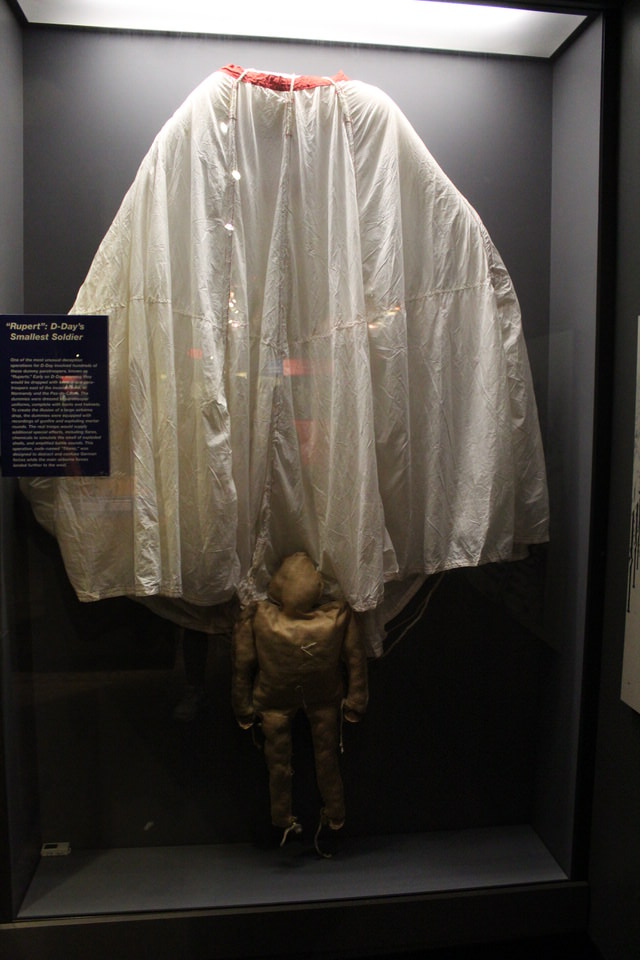
One of the most unusual deceptions that occurred on D-Day involved hundreds of dummy paratroopers known as Rupperts.  They would be dropped behind enemy lines in an attempt to draw attention away from the real paratroopers.  To make the drop appear more real they were properly equipped as paratroopers and as they drooped recordings of gunfire played.
IMG_4717

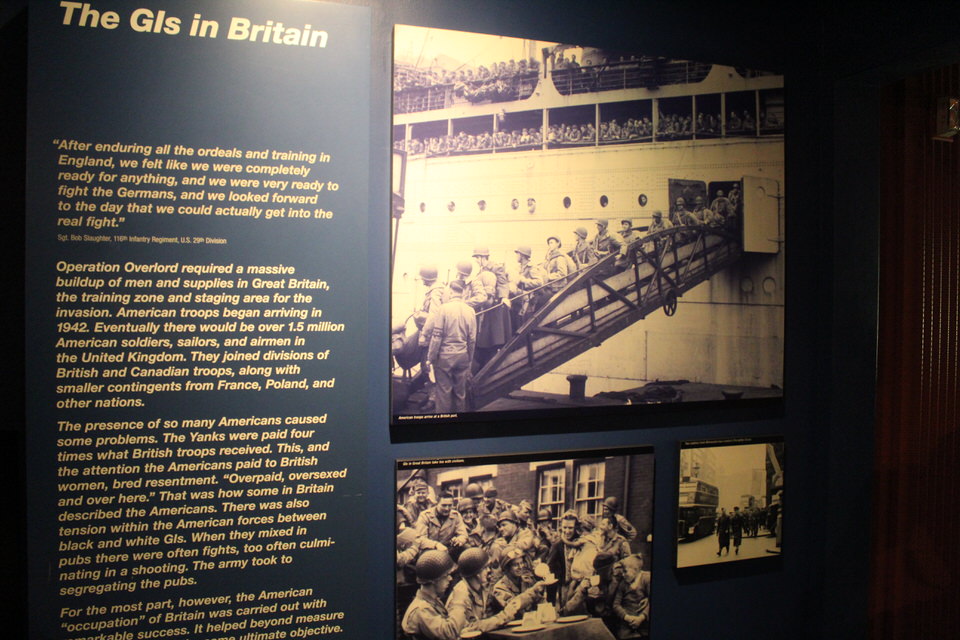
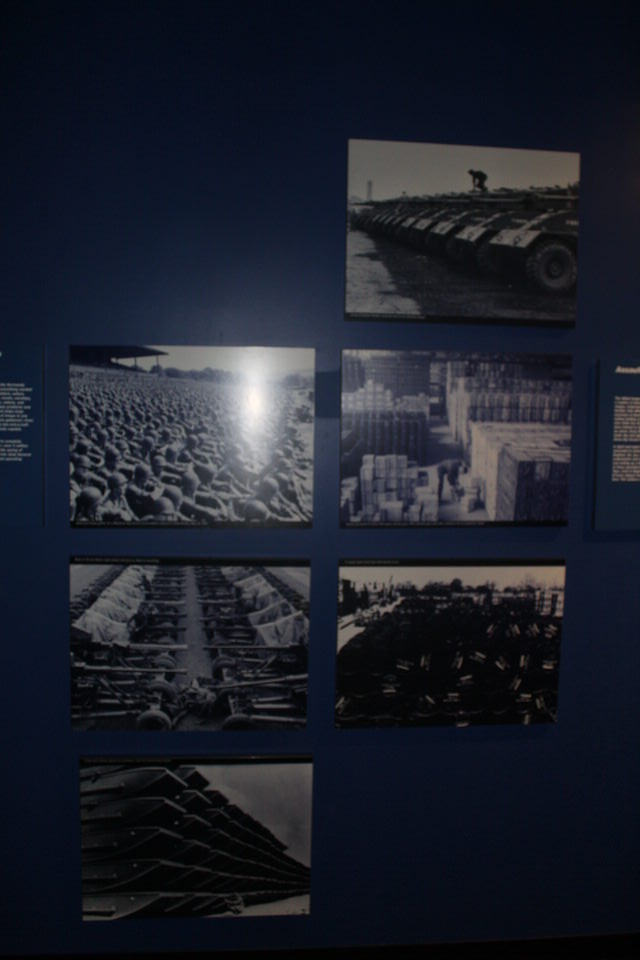
The Commanders had been chosen.  Operation Over Lord was crafted.  Now the Allied forces began to gather in England in anticipation of the greatest Invasion of all times.
IMG_4721

IMG_4725

IMG_4730

D-Day was scheduled for June 5th but a fierce storm in the English Channel put it on hold.  All everyone could do now was sit and wait.  The final decision would be up to Eisenhower alone.  He waited twenty four hours, consulted the other commanders who were split as to whether to go or not to on June 6th.  Eisenhower, though, felt the time had come and with a break in the storm foretasted he made the decision to go.

IMG_4750


IMG_4749

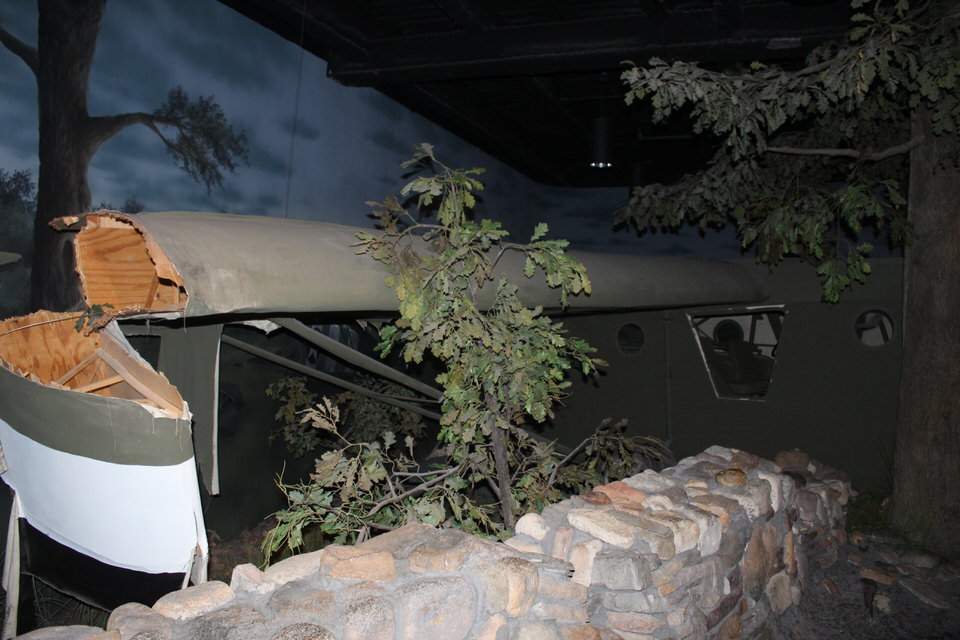
Specially designed gliders designed to transport troops, jeeps and light artillery were towed across the Channel, released, then descended to fields below.  These gliders were constructed of plywood and canvas and nicknamed flying Coffins because most of them broke up on landing.  Loses among the glidermen was high.

IMG_4737

IMG_4744

Paratroopers were dropped behind enemy lines.

IMG_4740

IMG_4743

Naval guns began to shell German positions.

IMG_4755

IMG_4754

The main invasion force was now headed to the chosen beaches.

IMG_4756

IMG_4757

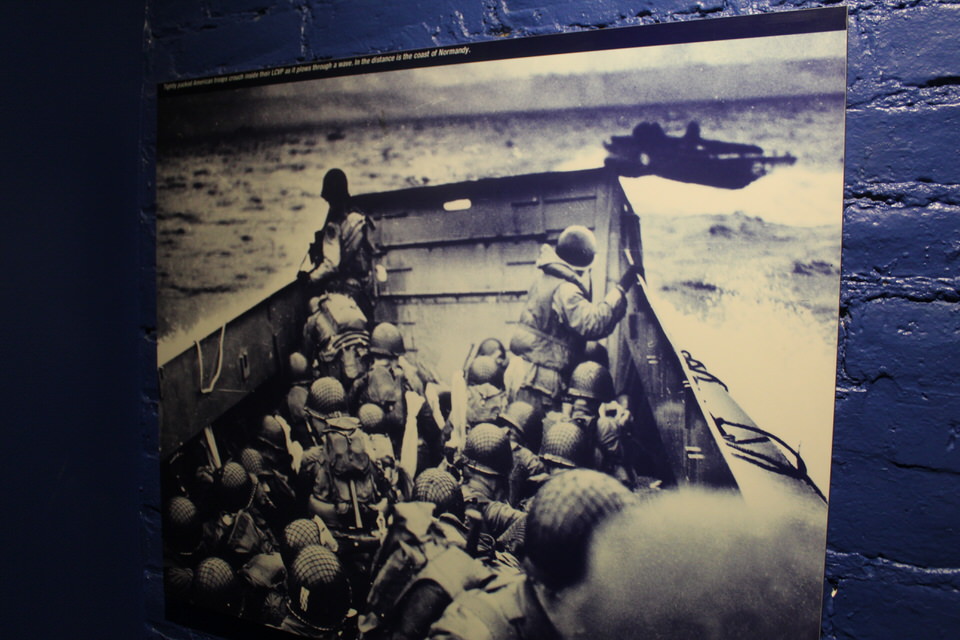
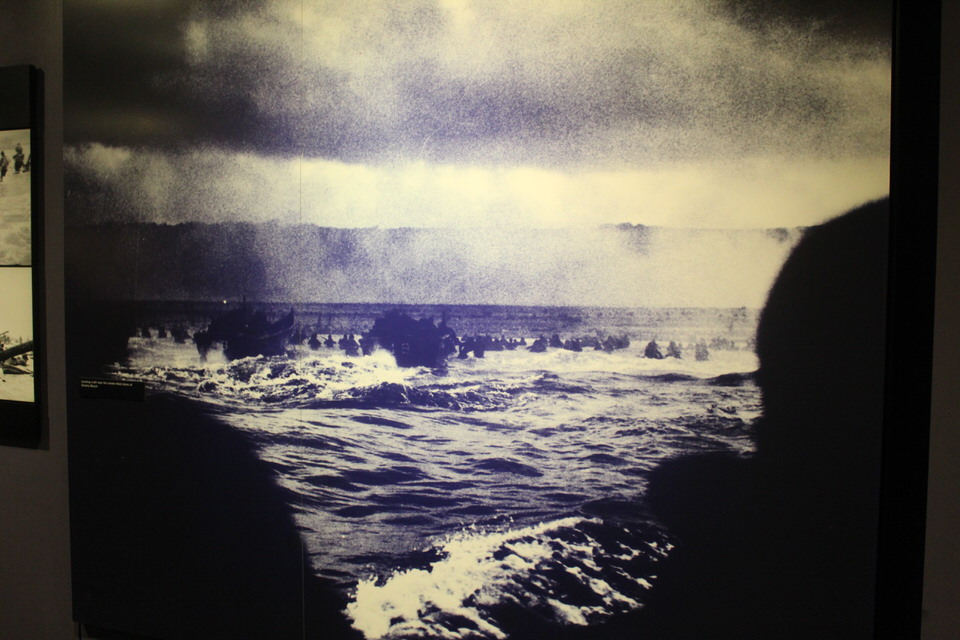
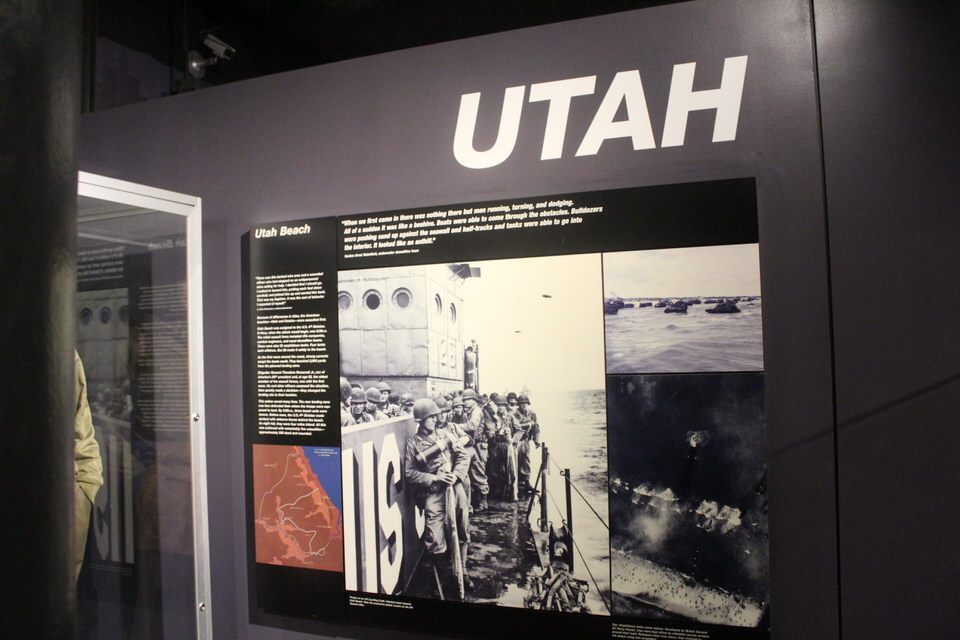
 As dawn broke Allied troops approached the beaches.  The first wave would be demolition experts and engineers.  Their job was to clear obstacles and create safe lanes across the beach.  In the landing craft men were pitched about.  Many were seasick.  Tension, fear, and anticipation were the primary emotions.  As they approached shore some landing craft hit mines ripping them apart and tossing and killing all aboard high in the air.  At 6:30 am the first landing craft hit the beach.  The Invasion was under way.

These are the Beaches of Normandy that had to be taken.  There was Utah.  Here the Germans were confused and shook up by the Naval bombardment so resistance was light.
IMG_4763

IMG_4765

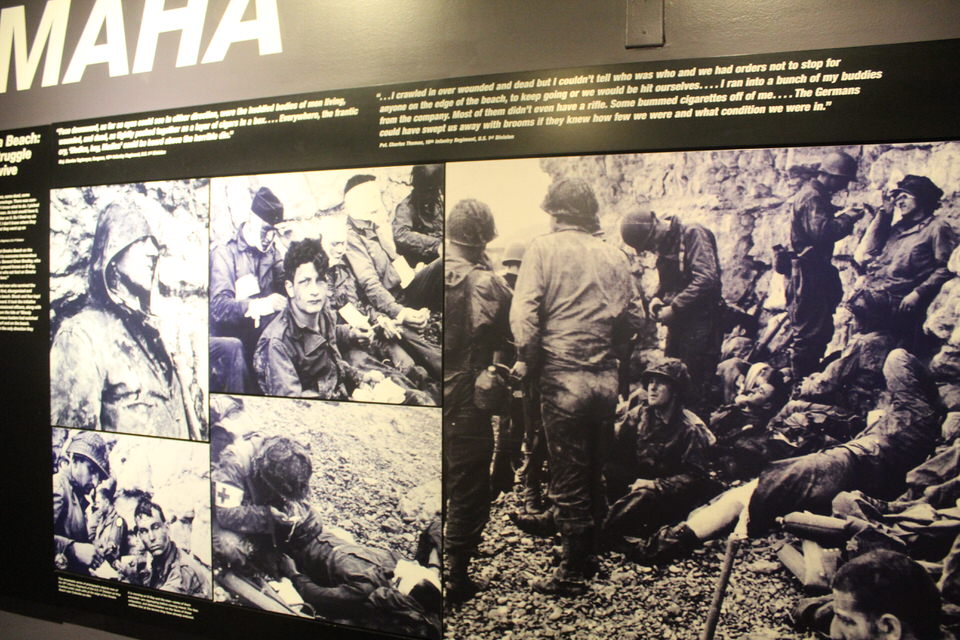
There was Bloody Omaha.  If the Germans were going to stop the Invasion they determined to do it here.  Trouble began off shore.  Thirty two of the thirty six amphibious tanks sank before making it to shore.  Strong currents pulled many boats off target.  In addition, the Germans had every inch of the beach pre-sited with cross fire.The first wave was nearly wiped out before it made it across the beach.  Some were killed before even leaving their boats.

IMG_4766

IMG_4768

The men who landed on Omaha had to overcome tremendous odds just to survive.  The commander of forces that day stated Every man who set foot on Omaha Beach that day was a hero.  The dazed and wounded men who survived the initial assault were at first, disorganized, and unable to move off the beach.  Shock and fear kept them from moving forward.  Two things happened to turn the tide:  Many Naval vessels moved in closer to land, some touching the sand bottom, in order to deliver point blank fire at German fortified positions.   Secondly, individual officers, even privates,  leading by example reorganized the remaining troops and led them forward off the beach.
IMG_4778

There was Sword Beach which was assigned to British forces.  The landing went smoothly here and most of the tanks and armored vehicles made it safely to shore.  The Invaders quickly broke through German defenses and moved inland.

IMG_4780

There was Juno Beach.  This beach was assigned to Canadian forces.  Nearly one third of their landing craft were damaged by mines or beach obstacles.  The first wave of infantry suffered terrible losses.  Nearly 1,200 died in the initial assault.

IMG_4782

There was Gold Beach.  British forces were assigned to this beach.  They ran into stiff German resistance but by afternoon their entire Division was ashore and moving inland.

IMG_4785

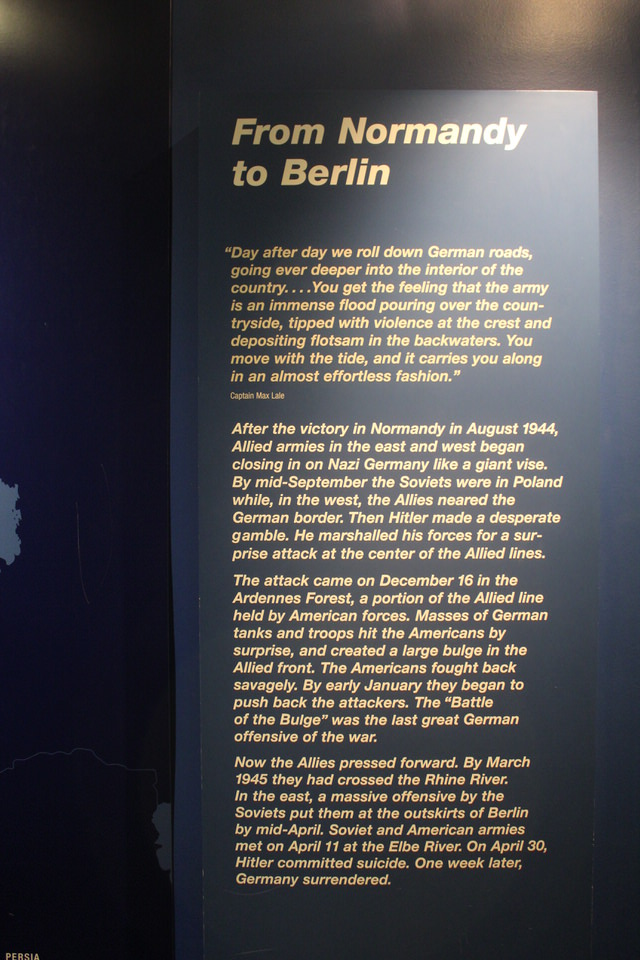
Allied Forces were now ashore, all beaches had been successfully taken.  But there was much more fighting that would take place before the war was finally over.
IMG_4792

In due time it was finally over.  On May 7, 1945 Germany surrendered unconditional.

IMG_4793

The road to victory had been a costly one.  So many died from in the bloodiest war in history.  Their legacy is a safer, more humane world.  And for this, we must be forever grateful.

IMG_4799

As the world prepares to celebrate this very special D-Day, on that day I encourage all everywhere to pause for a moment of silence sometime during the day to give thanks and remember those who on that day who fought to ensure the freedoms we enjoy today.

Our day on The Road of Retirement is now over.  Time to go pack since we are moving out tomorrow.
Thanks again for joining us on our continuing journey.  We’ll catch you again tomorrow.

These are the voyages of  Graybeard and it’s occupants, four paws and two humans.  Our continuing mission: to explore as many new states as possible, to seek out new acquaintances and make new friends, to boldly go where we have not been before

See you on down the road