Home Is Where We Park It: Stagecoach RV Park
Date: April 19, 2019
Saint Augustine Part Four
The 10th and Final Fort
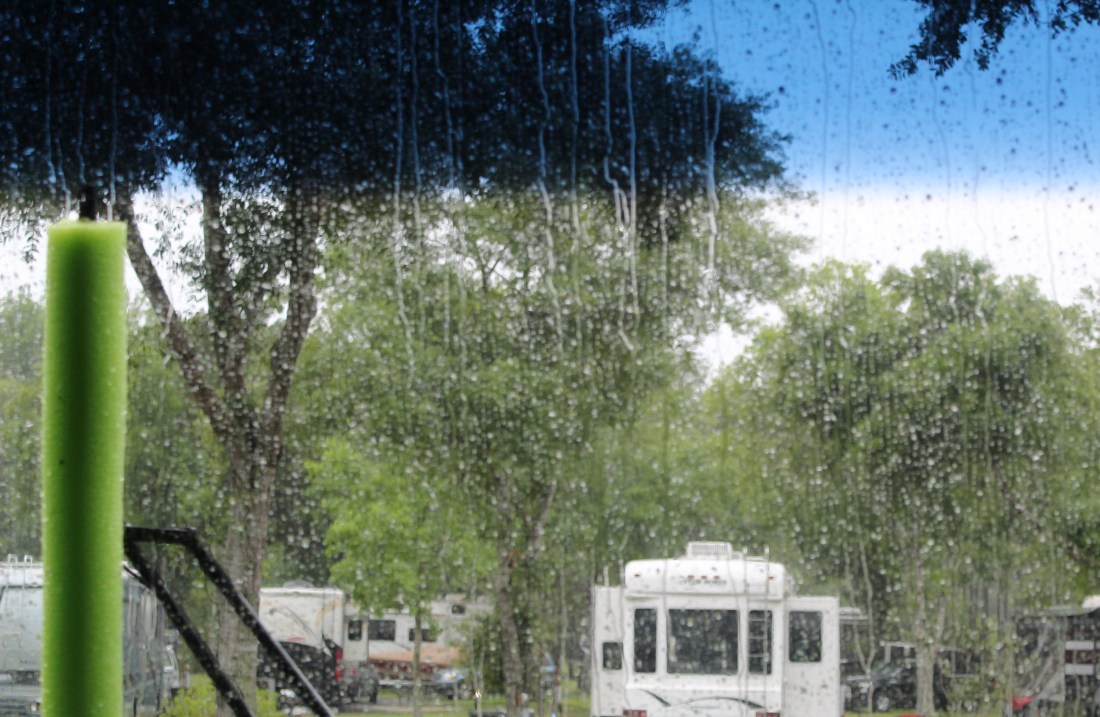
What a difference a day can make. In terms of weather that is. The last three days as I stated have been absolutely beautiful. Today, well today we had Tornado Watches posted all day. The winds blew 20 to 30 mph with higher gusts. The rain came down at times by the bucket full. This was the view out of the solarium window most of the day.
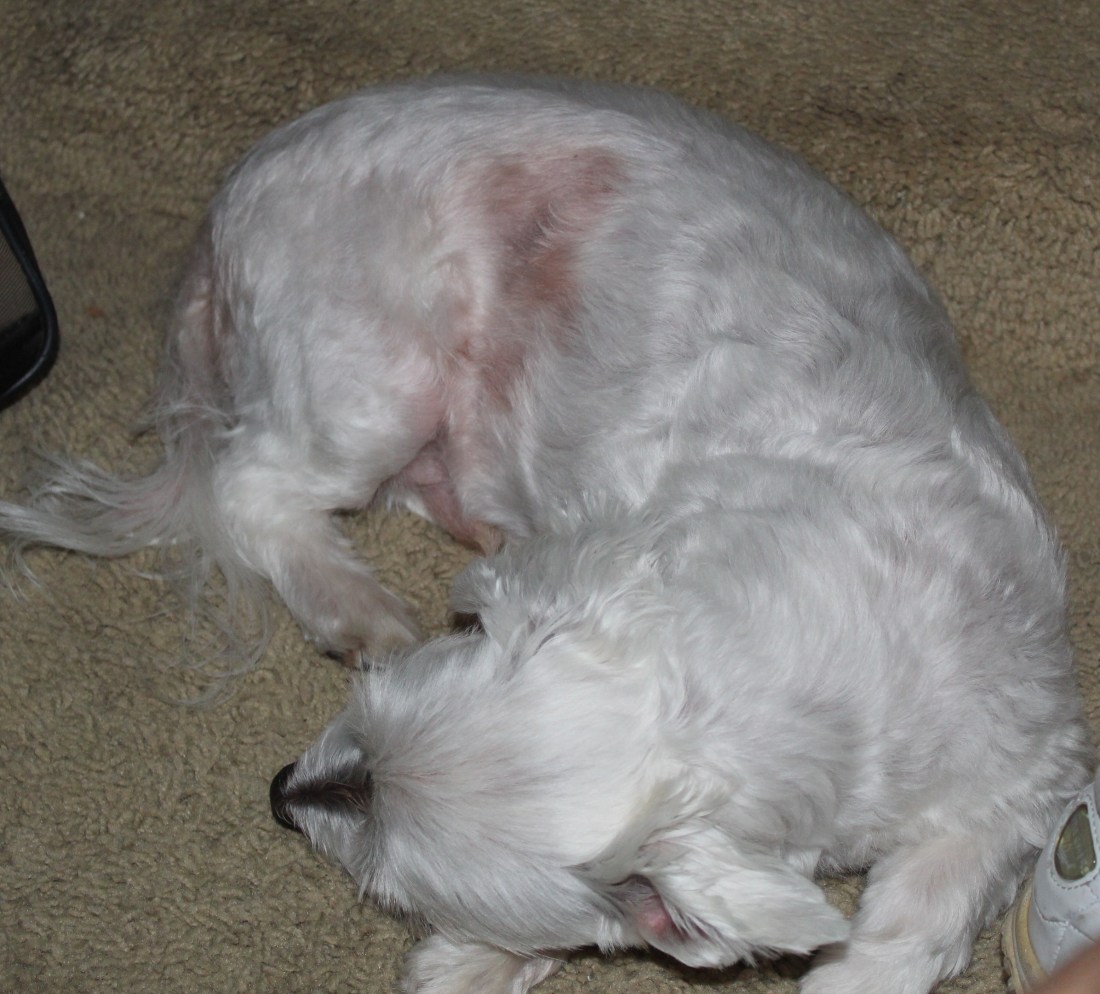
Marti wanted no part of it so he just curled up in a ball and went to sleep.
They say tomorrow and following will be absolutely beautiful again.
Let’s go sightseeing again. There is so much more we have to cover when it comes to St. Augustine. I spent three days touring the city on the trolley and truthfully I could go again another three times and not be bored. Each time around I learned even more about this delightful city and its history. Today we’ve going to look at

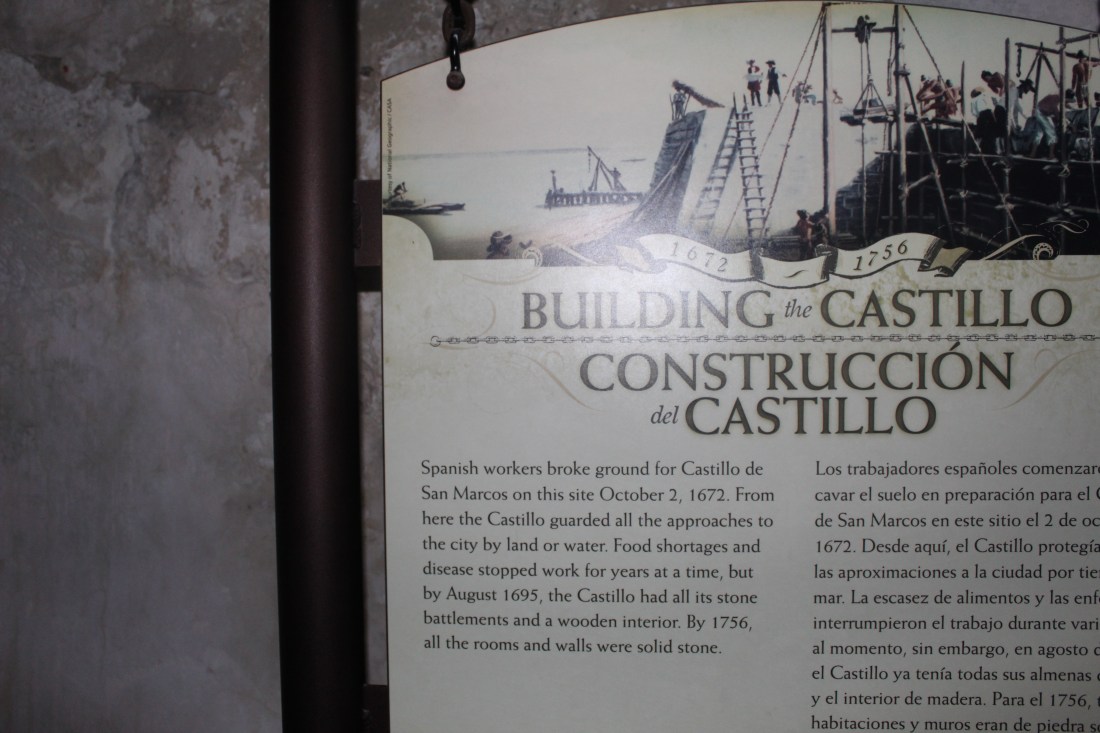
Prior to the construction of this fort St. Augustine was guarded by a series of nine wooden forts. Each in turn was ultimately destroyed. The Spanish queen finally gave the order for the building of a stone fort. Leave it to a woman to get it done. It is the oldest masonry fort in the United States.
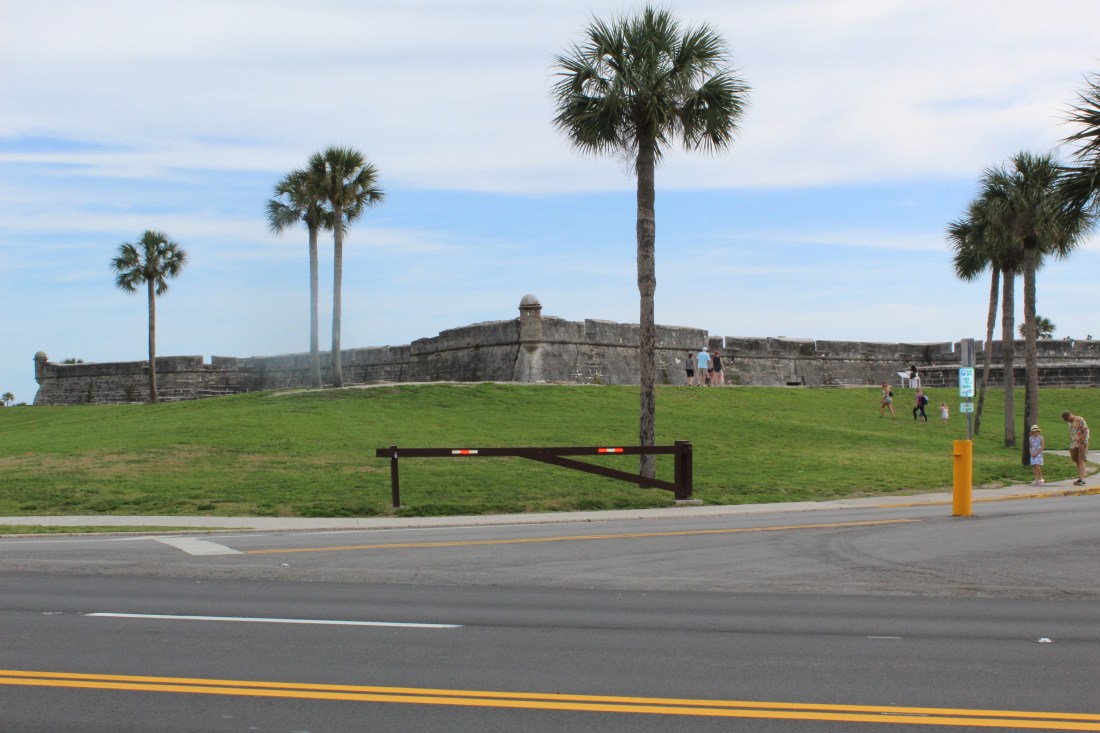
Let’s learn some more about this Spanish stronghold that was built to keep the British at bay and to keep their enemies away from the Gulf Stream shipping lanes.
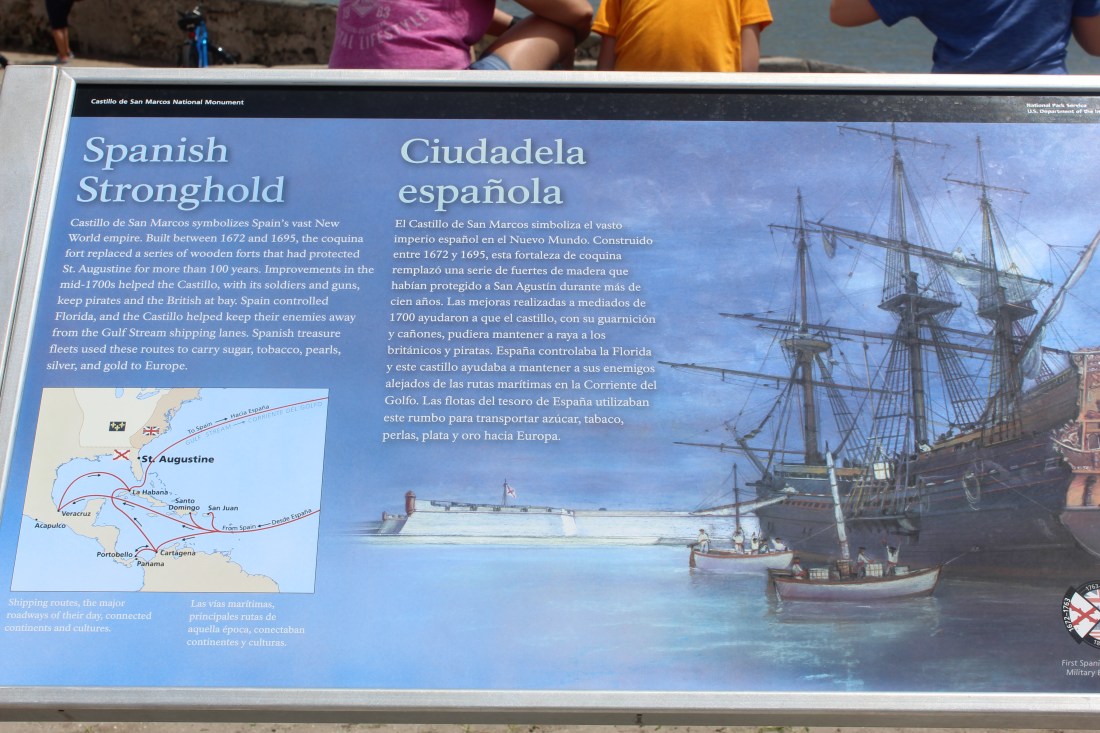
In the beginning
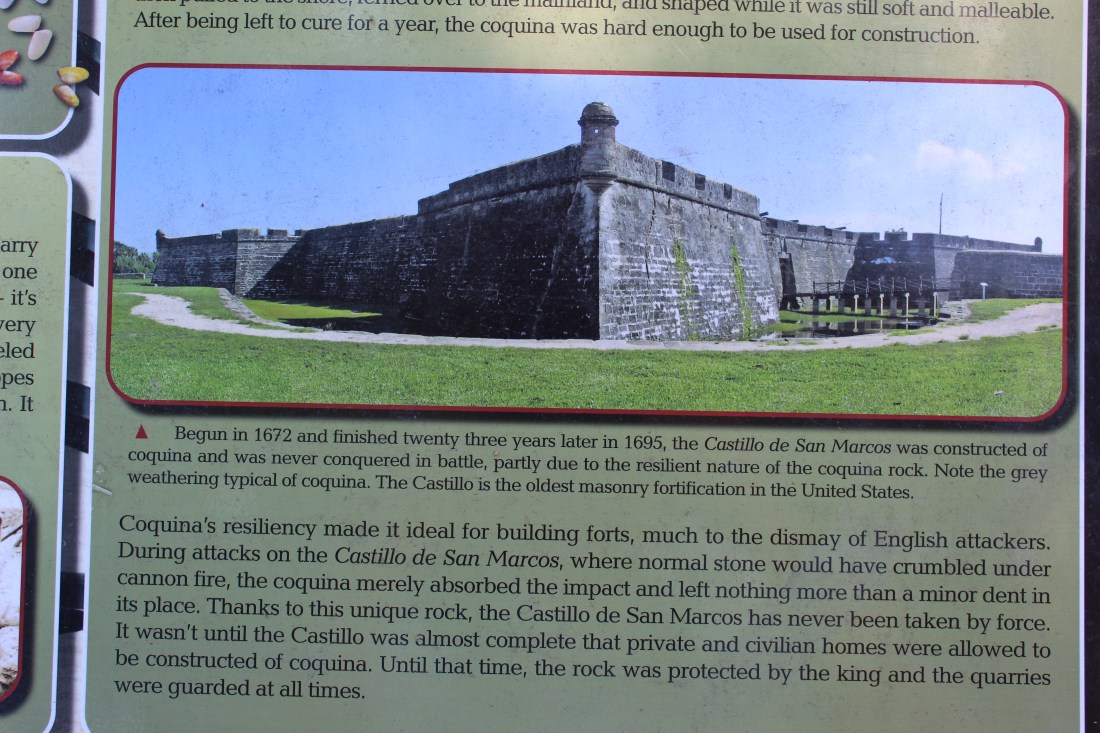
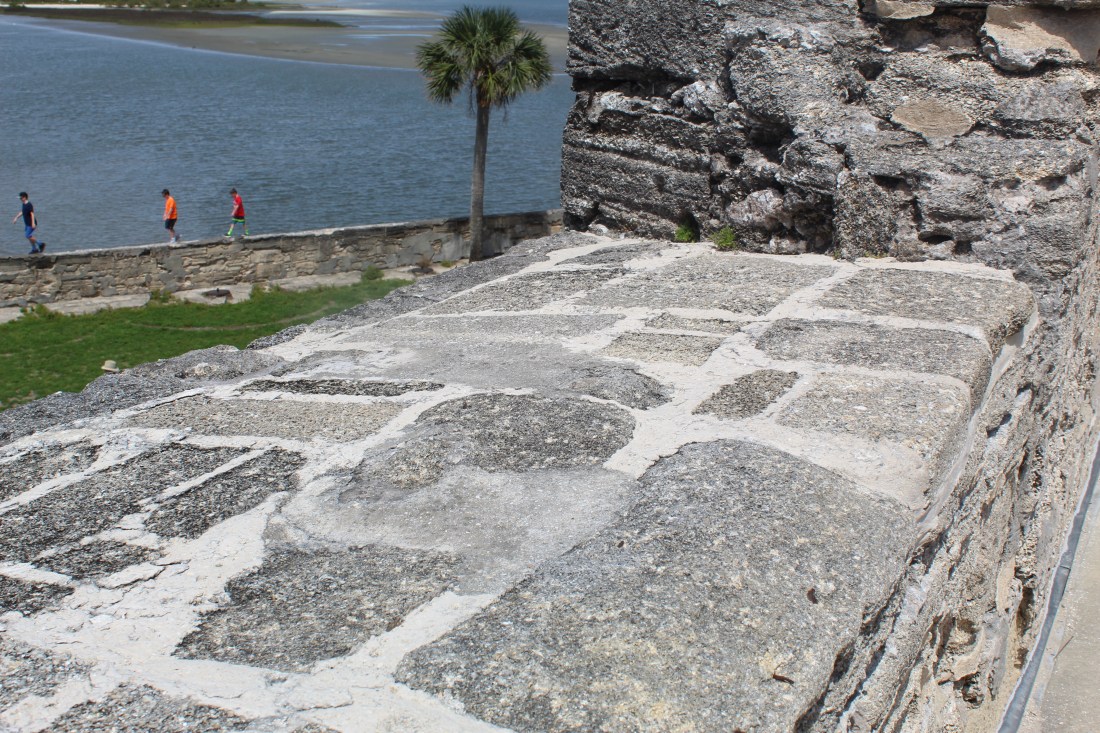
The fort was made of coquina. Coquina is a rock that is found in marine coastal areas where high tides and strong ocean waves work together to abrade, smooth, and pack the shells of tiny marine creatures over the course of millions of years. The coquina used in the fort was quarried from Anastasia island, ferried to the mainland, shaped while it was still soft, then left to harden for a year. After a year it was hard enough to use in the fort’s construction. To the dismay of those who attacked the fort, coquina merely absorbed the impact of a cannonball and left nothing more than a minor dent in the wall.
The walls of the fort are said to be thirty-three feet high and seventeen feet thick. I know I don’t have a long enough drill to get through this.
What’s the old saying there is a method to their madness? That was definitely the case
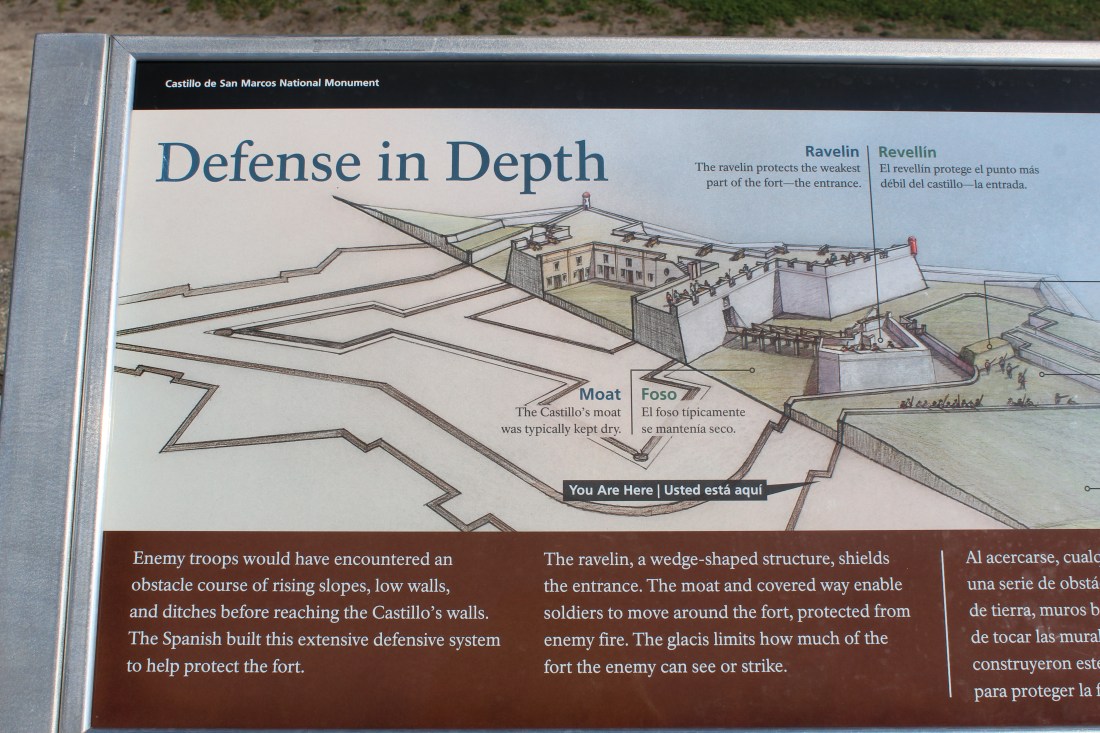
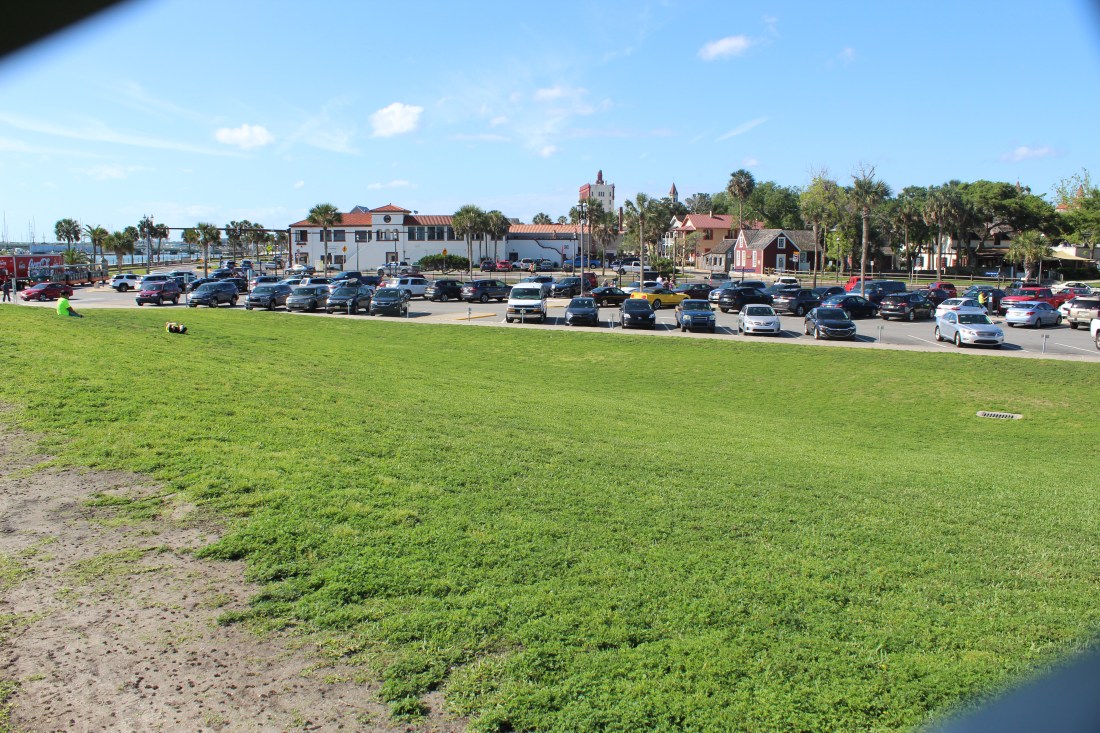
with the design of the fort. Rising slopes around the fort,
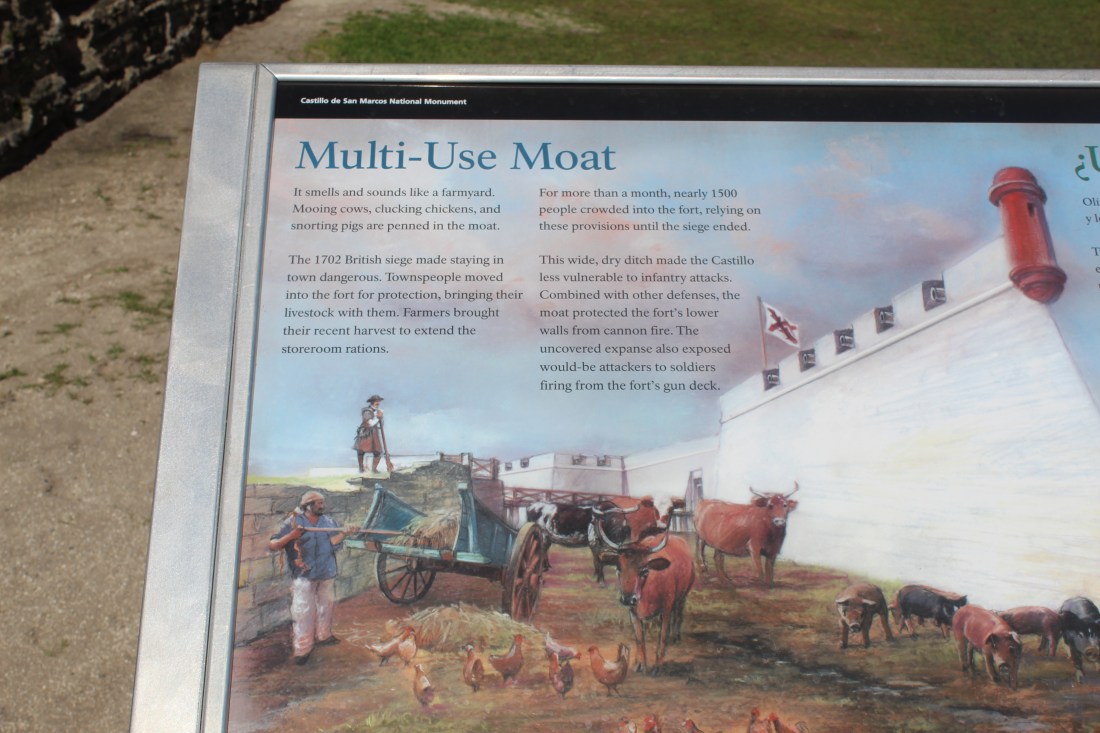
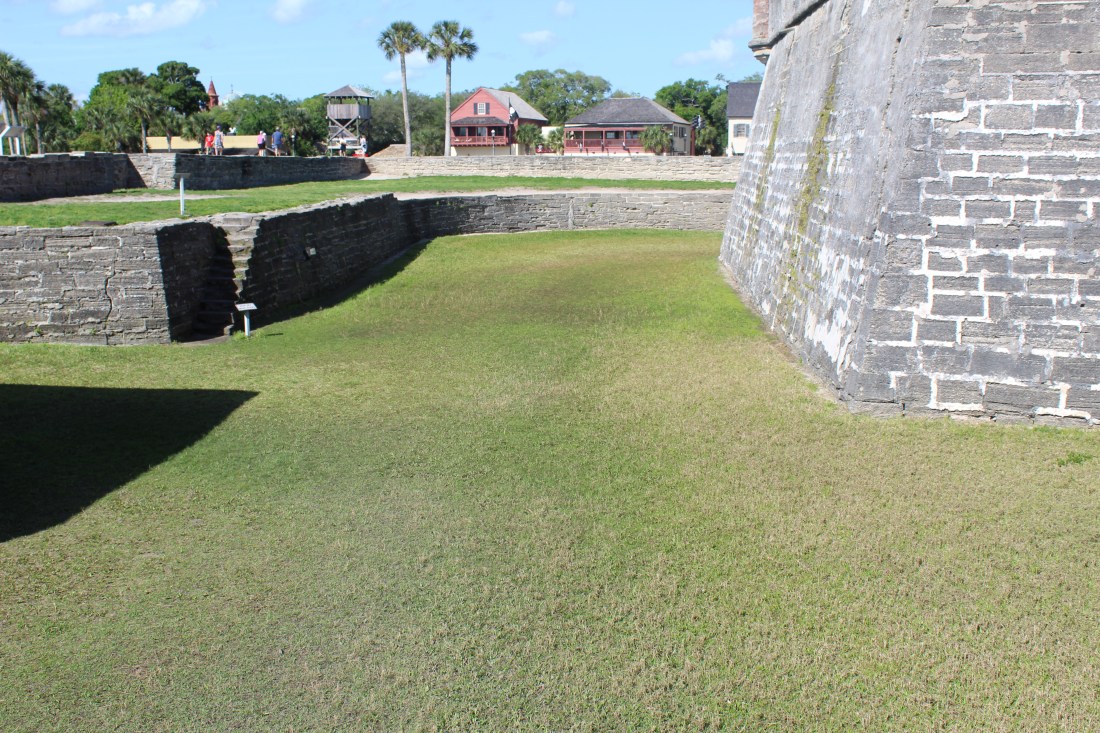
the dry multi purpose moat that circled the fort
the ravelin or wedge shaped structure, that stood in front of and protected the entrance way to the fort. On the top was an observation deck and a protected place for soldiers of the fort to fire upon an advancing enemy.

Then there was the entrance to the fort itself which was the most vulnerable part of the fort. To protect it there was a heavy grated gate, two drawbridges, and heavy wooden doors.
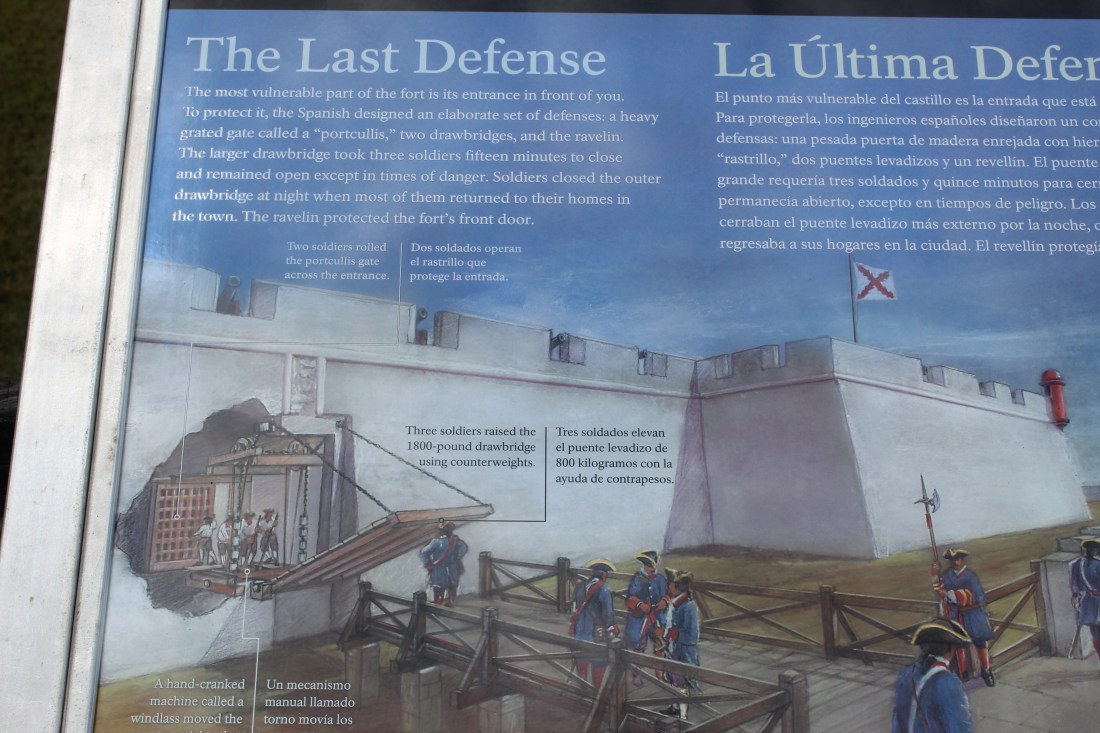
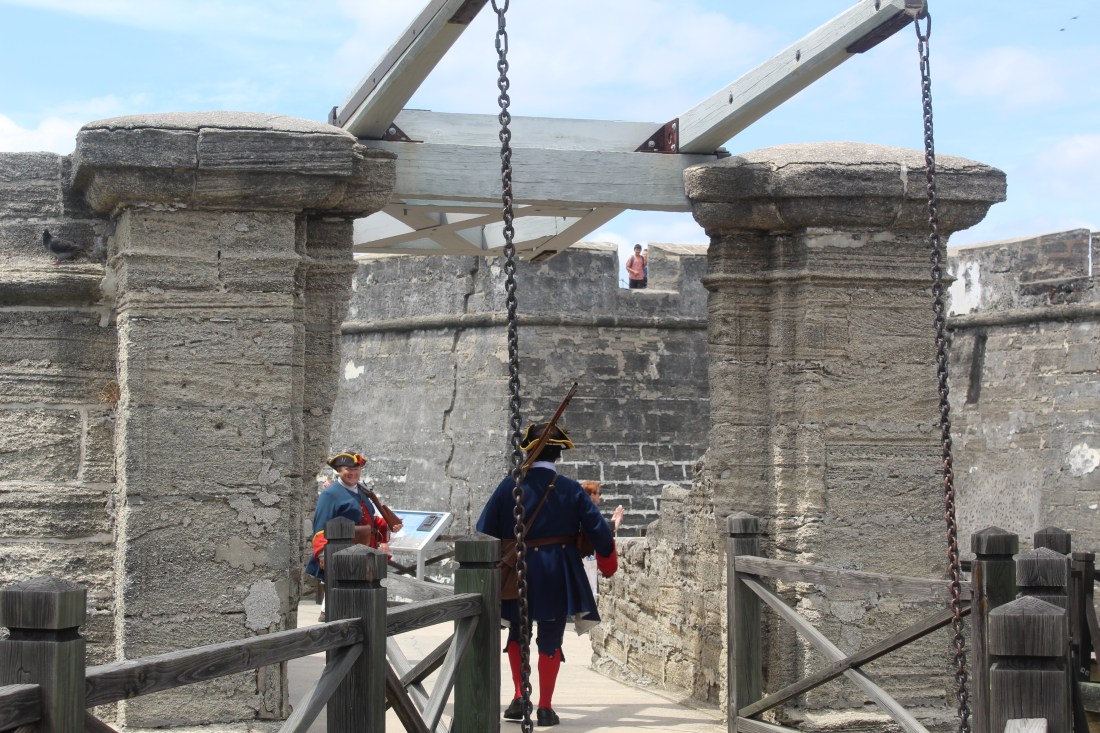
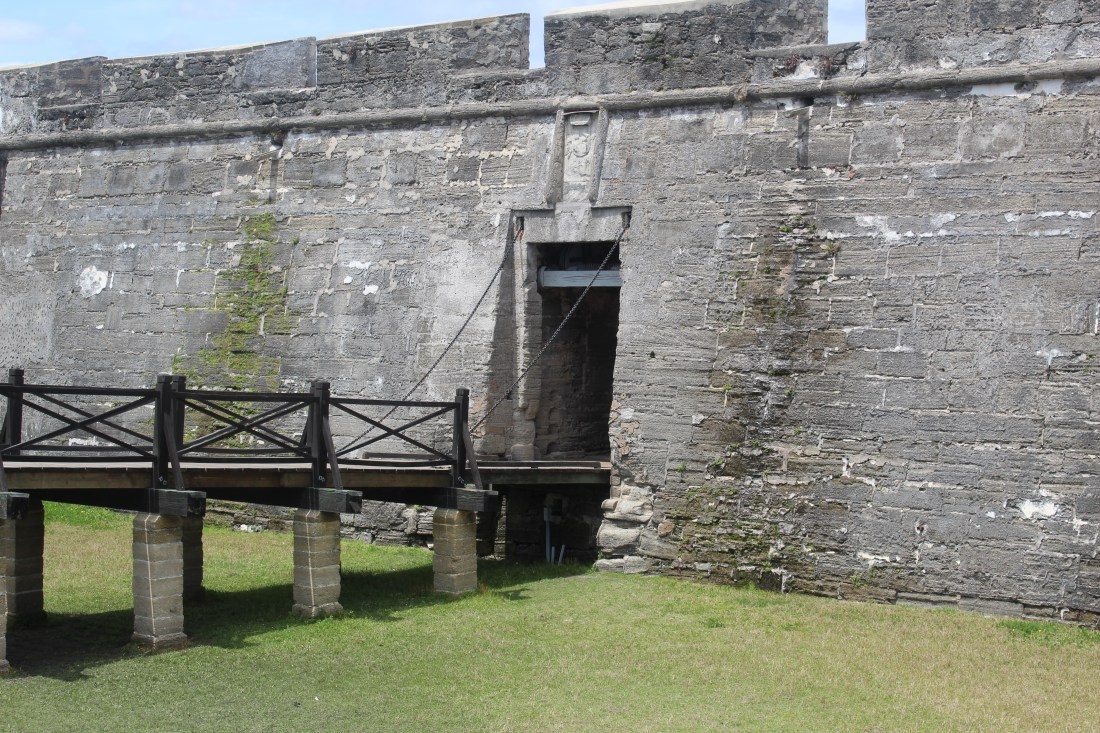
Once inside the fort you see a large central grass square with numerous rooms around the perimeter.
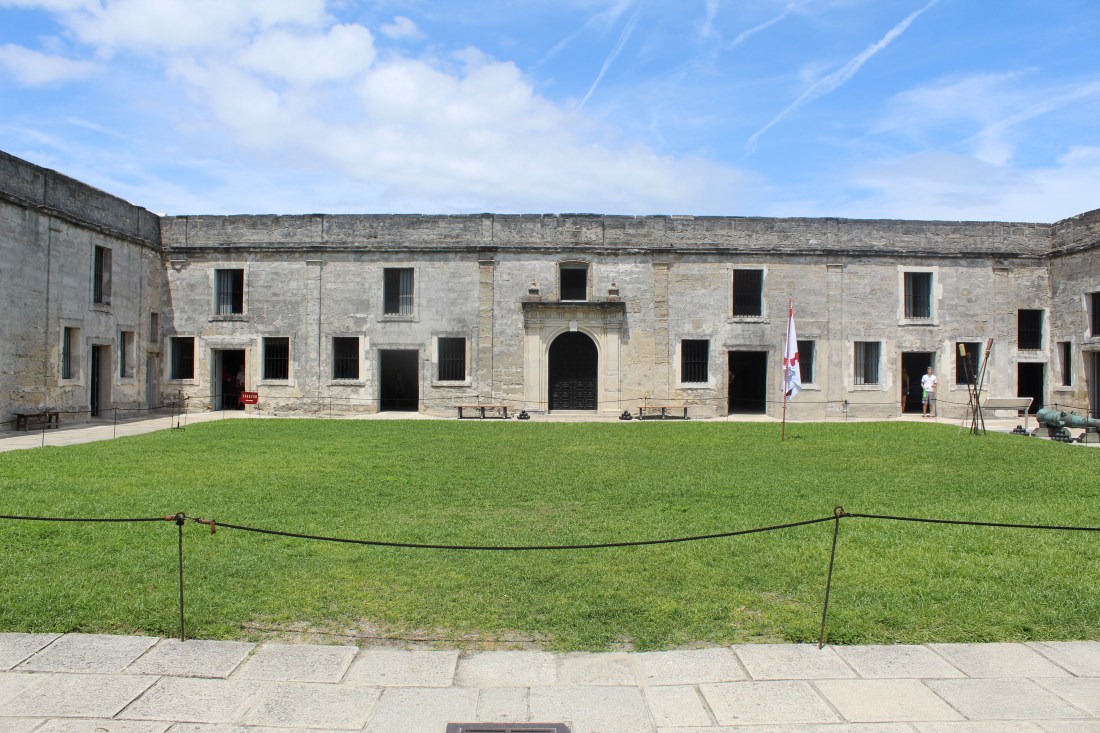
These individual rooms were called casements. Each had a designated purpose. One for the storage of rice, another wheat, vegetables, ammunition, etc. The reason for instance that all the food stuff was never kept together in one room was simple,
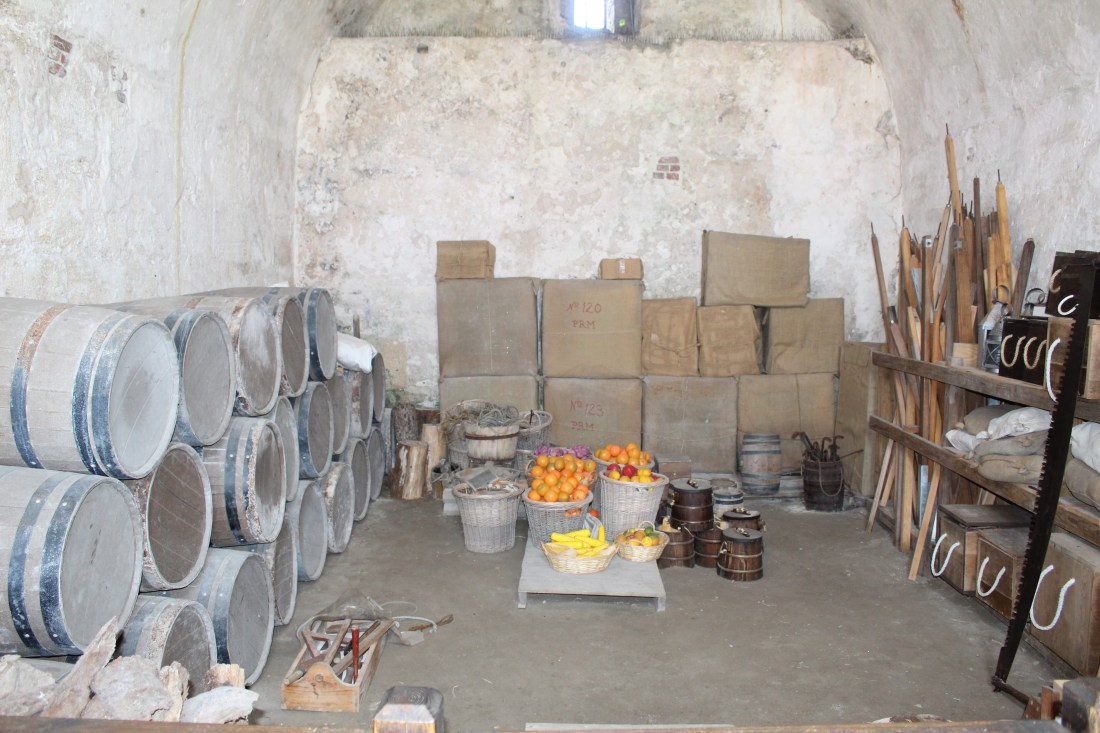
sailors back then could not read. Thus they were simply directed to go to this room and take three barrels, then go to the next room and take two barrels, and so on and so forth. No worry about having to read what barrel contained what, each room had barrels with different goods in each of them
As for the soldiers who were quarted in the fort, life was not easy.
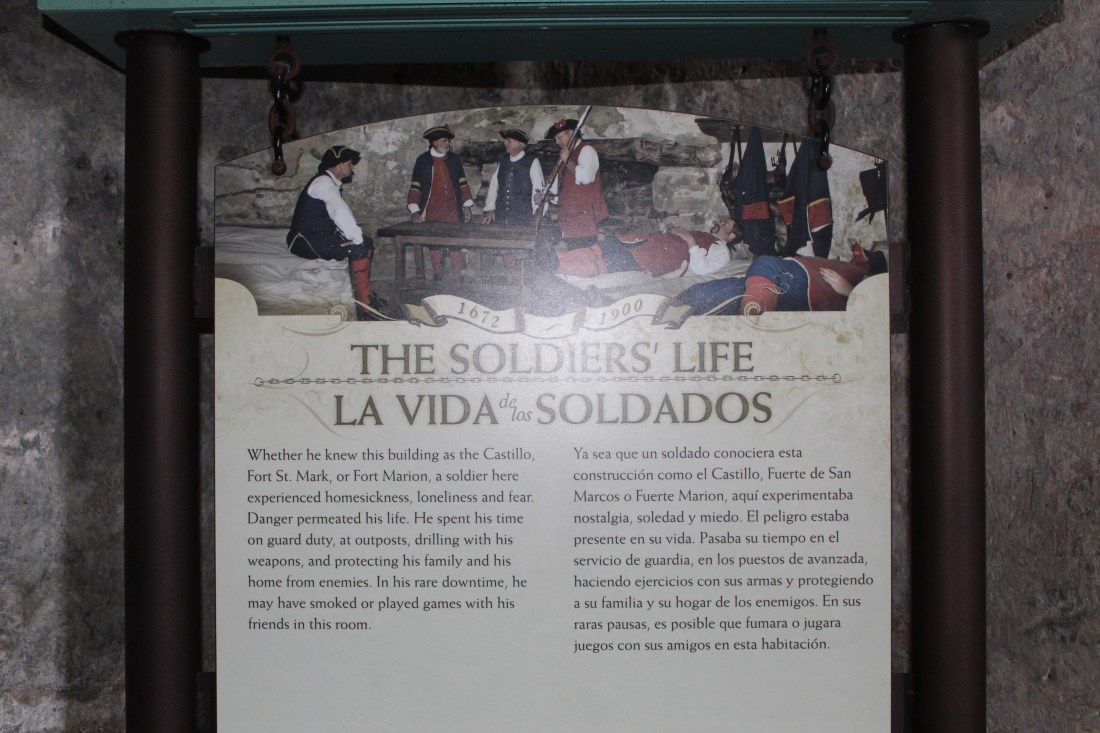
This is a typical soldiers quarters. And I thought the mattress in our rig was hard, I can’t imagine sleeping on a thin mattress on top of a wooden shelf.


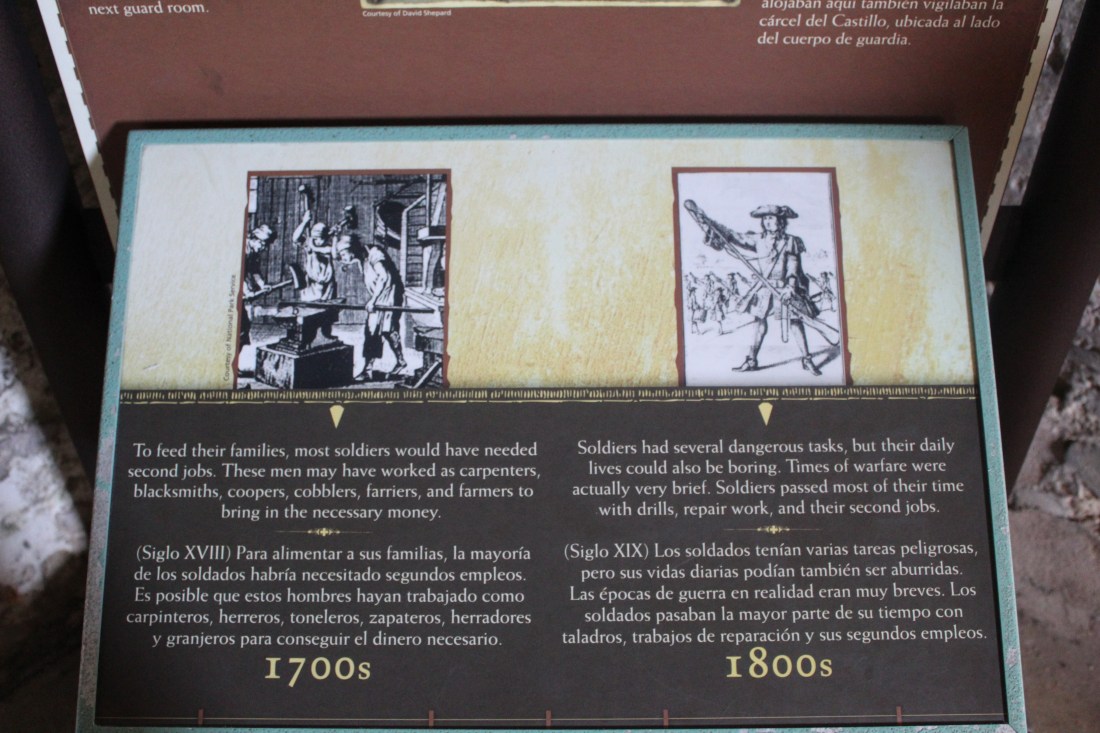
If this wasn’t bad enough I discovered that most soliders had to work a second job to make ends meet.
This is the former powder magazine which is one of the oldest rooms in the fort. It was originally designed to store gunpowder but proved to be too damp. During the siege of 1702 it was turned into a trash dump which when full was sealed off. Years later it was rediscovered by accident and when opened up numerous bones were found inside. Rumors began to circulate that the commander of the fort caught his wife cheating on him and had her and her lover imprisoned and sealed in this room. No such luck. The bones were determined to be animal only.

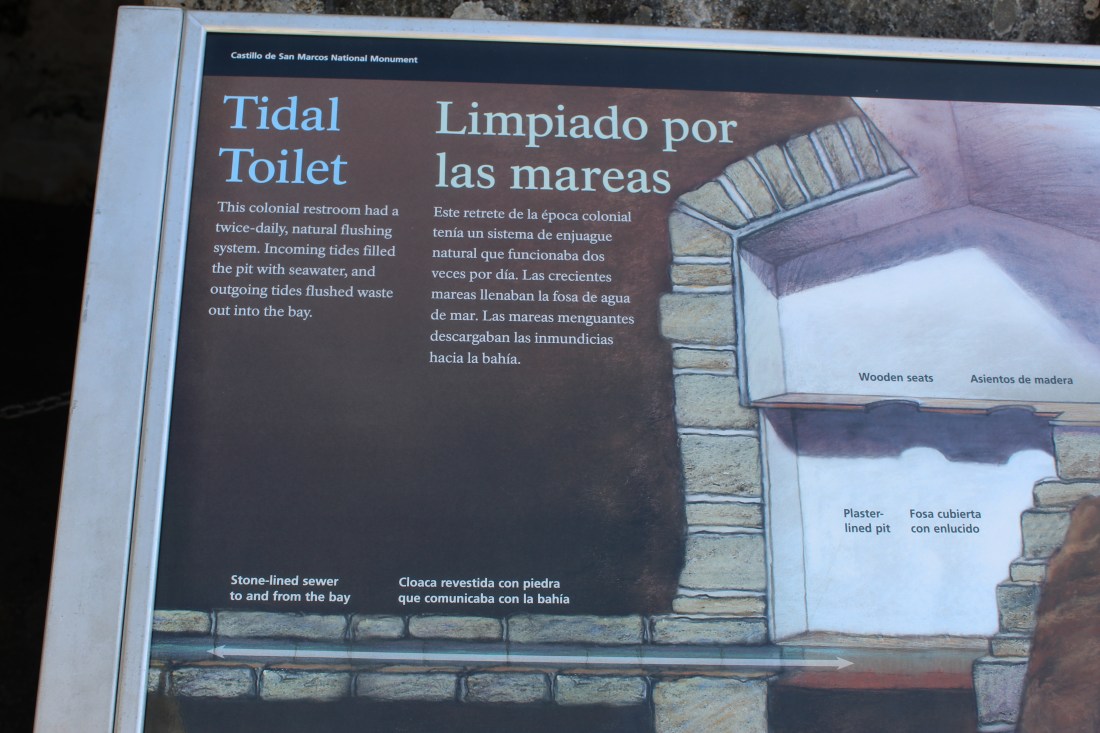
Now I don’t know of a fellow RV’er who likes his black tank, but after reading about the fort’s early waste disposal system I’ll stick with what I have in our rig!
Time to go up and take a look at the upper gun deck. Amazing, but we always seem
somehow, somewhere to discover stairs that need to be climbed.
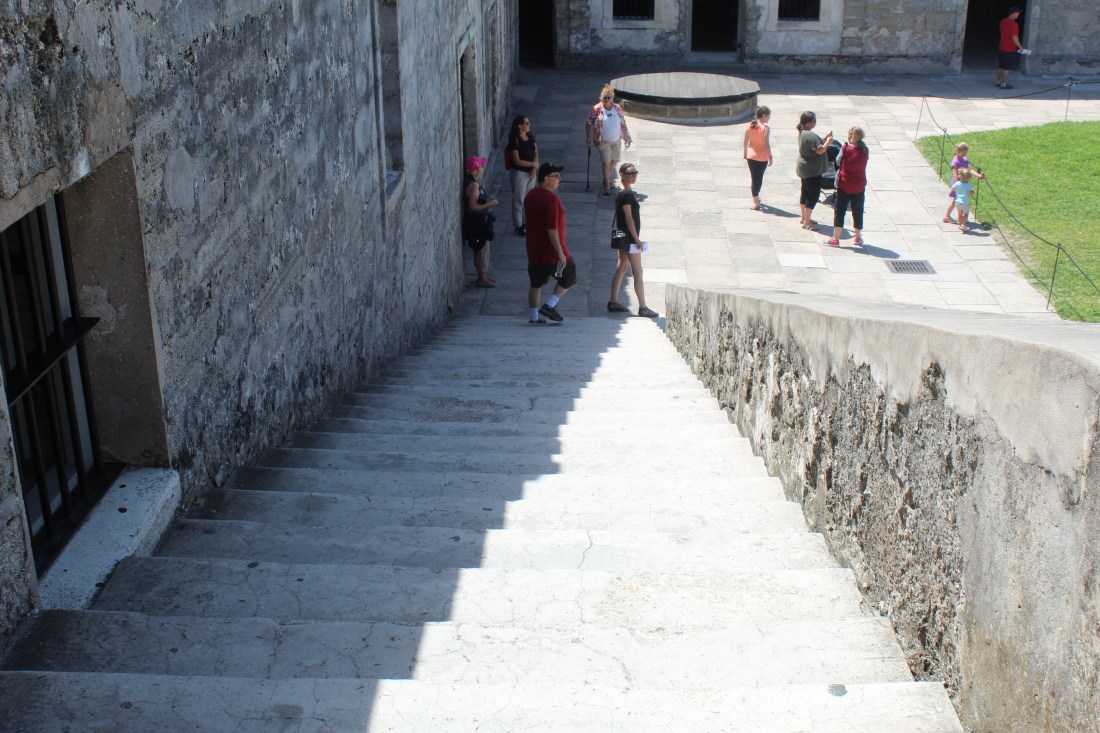
But well worth the climb for once you are up look what you see, this is in part the upper gun deck.


Now how in the world do I fire this thing?
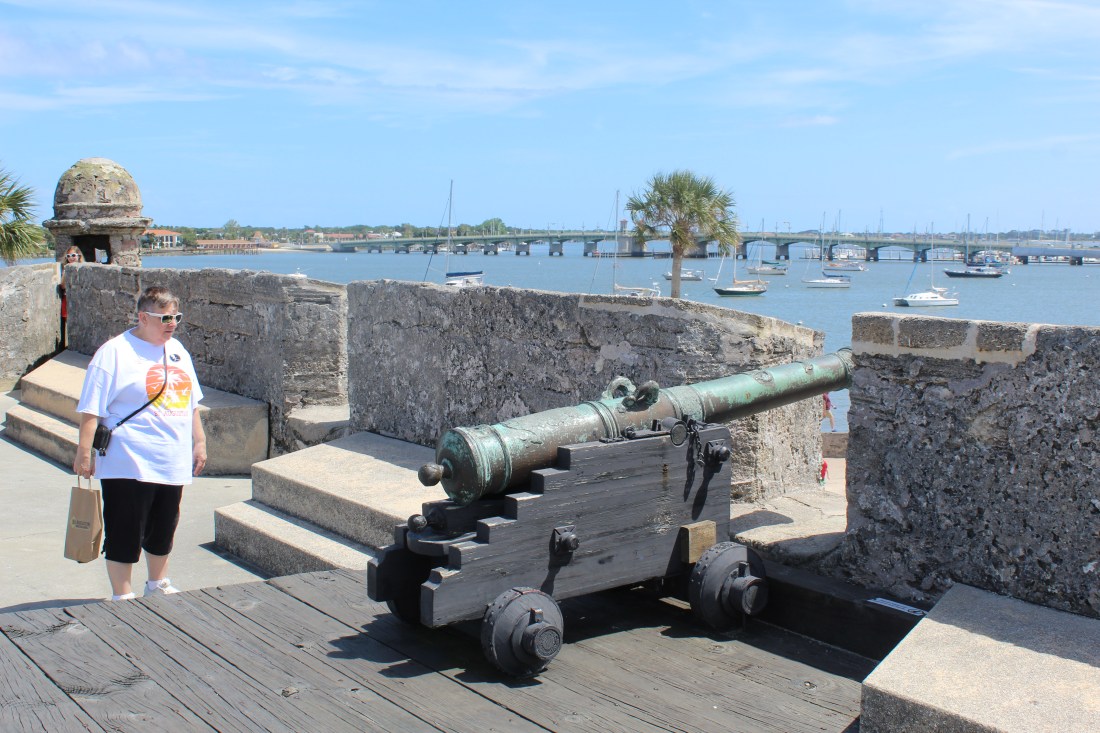
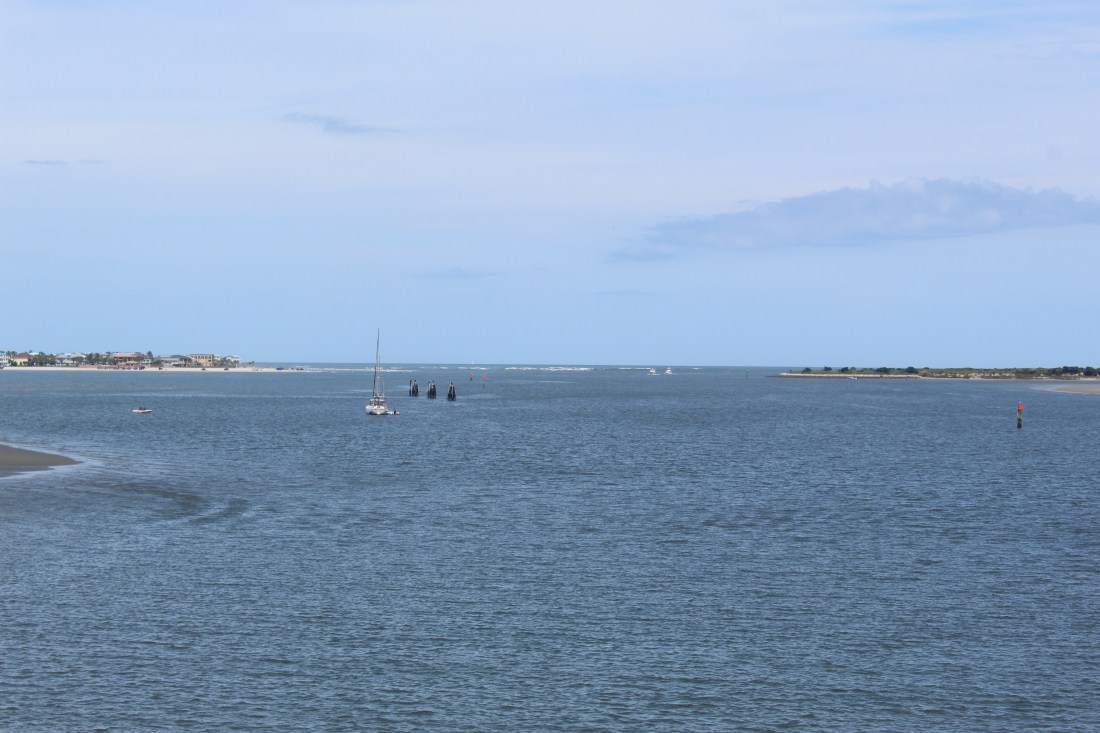
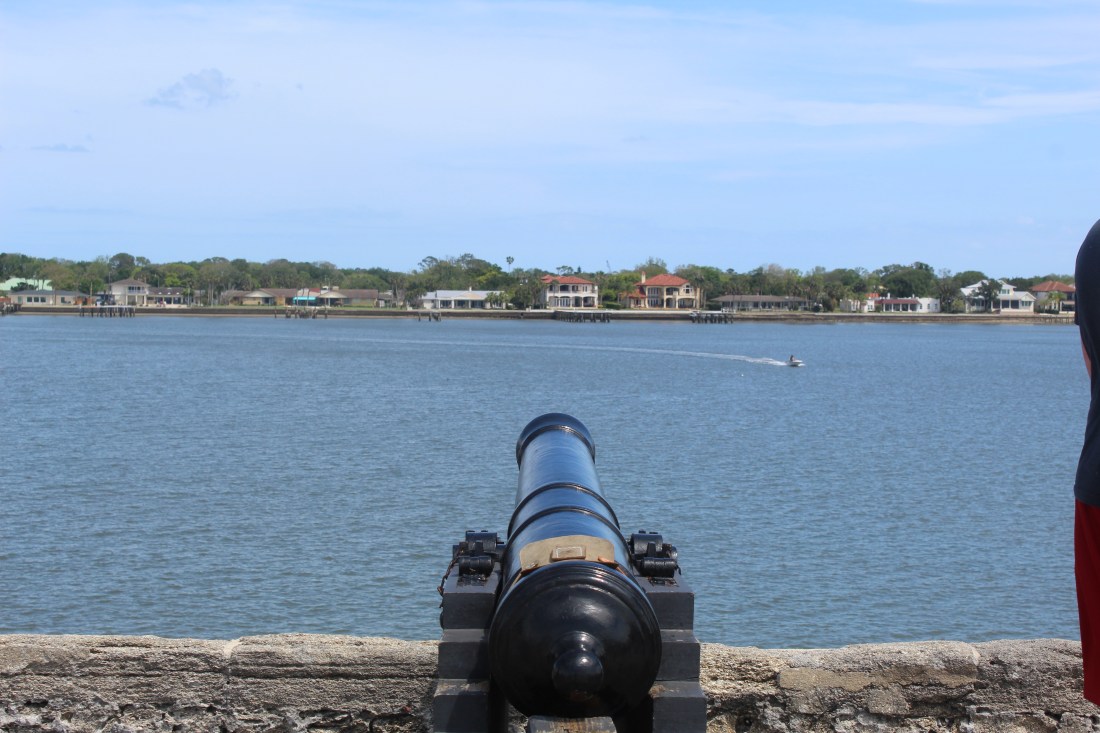
This is the breathtaking view looking out over the St. Augustine bay.


Once again there was much, much more to this fort that I simply could not put it all in one blog. I hope, however, that I’ve given you enough to whet your appetite so that one day you’ll take the time to visit it. Go, you will not be disappointed.
Well, we had a wet day today on The Road of Retirement and so spent the day hunkered down. I went through the pictures I took the last three days – about 1,000 of them – and began to put them in some sort of order. Barbara went to the Wishy Washy. Tomorrow we’ll be sightseeing again. The next couple of days I’ll continue to blog about our travels in St. Augustine. Stayed tuned there are lots of good things yet to come. Till then.
Thanks again for joining us on our journey. Till tomorrow have a good night.
These are the voyages of Graybeard and it’s occupants, four paws and two humans. Our continuing mission: to explore as many new states as possible, to seek out new acquaintances and make new friends, to boldly go where we have not been before
See you on down the road

 "On The Road of Retirement"
Thanks for bringing back memories of our tour of the Fort. Life was difficult and uncertain. I remember climbing those steps and seeing the amazing view. Thanks for sharing your day with us. Again, Great Pictures!
LikeLike